India’s education system is vast and diverse, facing several challenges such as unequal access to quality education, shortage of resources, high teacher–student ratios, and linguistic diversity. In this context, Artificial Intelligence (AI) has the potential to play a transformative role in the education sector. AI-based technologies can make education more personalized, inclusive, accessible, and effective.
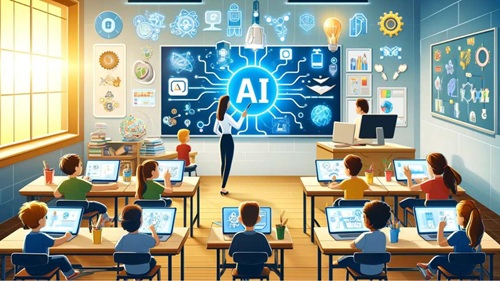
Importance of AI in Education
1. Importance for Students
AI-based systems analyze each student’s learning pace, abilities, and weaknesses to provide personalized learning.
- AI can assess a student’s performance in real time and adjust the difficulty level, format, or speed of study material accordingly.
- This allows students to learn according to their capabilities and increases their interest in learning.
- For example, platforms such as MindCraft provide study materials suited to the level and context of rural students.
2. Importance for Teachers
AI helps teachers make the teaching process more effective.
- AI-based lesson planning tools help teachers analyze the learning needs of students.
- According to an NCERT (2024) study, teachers who receive AI-assisted training can better identify the needs of students.
- AI can also reduce administrative tasks, allowing teachers to focus more on teaching.
3. Improvement in Assessment Systems
AI-based assessment systems can overcome many limitations of traditional examinations.
- Through continuous and formative assessments, students receive real-time feedback.
- It enables teachers to analyze student progress and take corrective measures when necessary.
4. Governance and Monitoring of the Education System
AI-based dashboards and predictive analytics allow education administrators to make data-driven decisions.
- It helps monitor dropout rates, learning outcomes, and resource utilization more effectively.
- Policy formulation and resource allocation can become more efficient.
5. Promotion of Inclusive Education
AI technologies can make education more inclusive.
- Assistive technologies such as speech-to-text, text-to-speech, and screen readers support students with disabilities.
- Multilingual AI tools can provide educational content in local languages, reducing language barriers.
Major Initiatives to Promote AI in Education
1. National Education Policy (NEP) 2020
The NEP 2020 emphasizes technological innovation in education and recognizes the importance of emerging technologies such as AI, Big Data, and Machine Learning.
- The aim is to make education flexible, digital, and future-oriented.
2. Integration of AI in School Education
Under NEP 2020 and the National Curriculum Framework (NCF) 2023, institutions such as CBSE and NCERT are incorporating AI into school curricula.
3. AI Courses for Students and Teachers
- DIKSHA (Digital Infrastructure for Knowledge Sharing): A national platform for sharing digital educational resources for teachers and students.
- SOAR (Skilling for AI Readiness): An initiative to develop AI awareness and skills among students of classes 6–12 and teachers.
- SWAYAM (Study Webs of Active Learning for Young Aspiring Minds): Offers free online AI courses by institutions such as IITs and IISc.
4. AI in Higher Education
The University Grants Commission (UGC) included subjects such as Artificial Intelligence, Machine Learning, Big Data Analytics, and 3D Machining in undergraduate curricula in 2022.
5. Research and Development
- The National Research Foundation (NRF) has been established to promote research.
- Initiatives like “One Nation, One Subscription” aim to ensure equal access to research resources.
Key Challenges in Adopting AI in Education
1. Lack of Digital Infrastructure
Many rural areas in India still lack proper internet connectivity and digital infrastructure, limiting the effective use of AI-based educational resources.
2. Quality and Accuracy of Content
Ensuring the accuracy, quality, and reliability of AI-generated educational content is a major challenge.
3. Linguistic Diversity
India has numerous languages and dialects. Developing high-quality localized and multilingual educational content remains a challenge.
4. Data Privacy and Security
AI systems use sensitive data of students and teachers, raising concerns about data privacy and cybersecurity.
5. Algorithmic Bias
AI algorithms often function like “black boxes”, where decision-making processes are not transparent, leading to concerns about bias and fairness.
Way Forward
- Expansion of Digital Infrastructure: Ensure internet connectivity and access to digital devices in rural and remote areas.
- Development of Multilingual AI Platforms: Create high-quality educational content in regional languages.
- Strengthening Data Protection Frameworks: Implement strong policies to protect the data of students and teachers.
- Teacher Training: Provide regular training to teachers on the use of AI-based teaching tools.
- Development of Ethical and Transparent AI: Establish clear guidelines to ensure transparency, fairness, and accountability in AI systems.






 Contact Us
  New Batch : 9555124124/ 7428085757
  Tech Support : 9555124124/ 7428085757