
- UPSC Exam
- State PCS
- One Day Exam
- Current Affairs
- PT Quiz
- Downlaods
- About Coaching
- Blog
- Videos

| Prelims: (Economy + CA) Mains: (GS 3 – Infrastructure & Energy; GS 3 – Environmental Conservation; GS 2 – Environmental Governance) |
The Karnataka High Court has issued notices to the Central and State governments regarding a Public Interest Litigation (PIL) challenging the approvals granted for the Sharavathi Pumped Storage Hydroelectric Project (PSHP).
The petition questions the legality of clearances provided by the State Wildlife Board and the in-principle approval given by the National Board for Wildlife.
The project has generated debate over the balance between renewable energy development and ecological conservation in the Western Ghats.
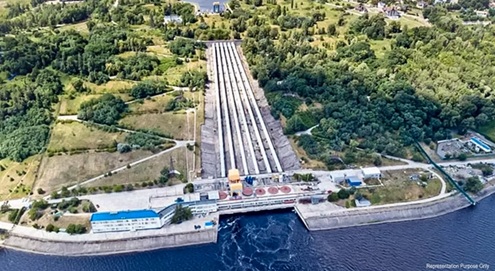
The Sharavathi Pumped Storage Hydroelectric Project is a proposed hydropower project on the Sharavathi River in Shivamogga district.
The project aims to enhance grid stability and support integration of renewable energy sources such as solar and wind.
The project is designed as a pumped storage hydropower system, which uses two reservoirs at different elevations.
Reservoir System
Talakalale dam currently regulates water for the existing Sharavathi hydropower project, while Gerusoppa will serve as the lower reservoir.
These components allow water to be pumped back to the upper reservoir during periods of low electricity demand and released during peak demand to generate power.
Beyond electricity generation, the project aims to:
The project is also partly inspired by large-scale water management systems like the Kaleshwaram Lift Irrigation Project.
It also aims to provide drinking water supply to Bengaluru, addressing the city’s growing water demand.
The project area falls within the Eco-Sensitive Zone (ESZ) of the Sharavathi Wildlife Sanctuary, which is part of the ecologically fragile Western Ghats.
The sanctuary is home to several endangered and endemic species, including:
Environmental groups argue that construction activities, tunnels, and infrastructure could fragment habitats and threaten biodiversity.
Pumped storage hydropower is a form of energy storage technology that supports renewable energy systems.
India is increasingly exploring pumped storage projects as part of its clean energy transition strategy.
The Sharavathi River is one of the major rivers of Karnataka.
Unlike most Indian rivers that flow eastwards, Sharavathi flows westward.
The river basin features diverse landscapes including:
A major attraction along its course is Jog Falls, one of the highest waterfalls in India.
1. Renewable Energy Expansion
The project will contribute 2,000 MW of clean electricity, supporting India’s renewable energy goals.
2. Grid Stability
Pumped storage projects help store excess renewable power and supply electricity during peak demand.
3. Energy Storage Infrastructure
PSHPs act as large-scale battery systems for electricity grids.
4. Water Resource Management
The project may support drinking water supply to Bengaluru, which faces increasing water stress.
5. Economic Development
Infrastructure investments can promote regional economic growth and job creation.
FAQs1. What is the Sharavathi Pumped Storage Hydroelectric Project ? It is a proposed 2,000 MW pumped storage hydropower project in Karnataka designed to store and generate electricity using two reservoirs. 2. Which company is developing the project ? The project is being developed by Karnataka Power Corporation Limited (KPCL). 3. Why is the project controversial ? It is located in the eco-sensitive zone of the Sharavathi Wildlife Sanctuary, raising concerns about biodiversity and environmental damage. 4. What is pumped storage hydropower ? It is an energy storage system that pumps water to a higher reservoir using surplus electricity and releases it to generate power during peak demand. 5. Why is the Sharavathi River important ? The river flows through the Western Ghats, forms the famous Jog Falls, and supports diverse ecosystems and water resources in Karnataka. |



Our support team will be happy to assist you!

 Contact Us
  New Batch : 9555124124/ 7428085757
  Tech Support : 9555124124/ 7428085757