
- UPSC Exam
- State PCS
- One Day Exam
- Current Affairs
- PT Quiz
- Downlaods
- About Coaching
- Blog
- Videos

| Prelims : (Economics + CA) Mains : (GS 2 – Government Policies and Interventions; GS 3 – Energy Security and Infrastructure) |
Amid escalating tensions in West Asia and disruptions in maritime movement through the Strait of Hormuz, India faces potential risks to its supply of Liquefied Petroleum Gas (LPG).
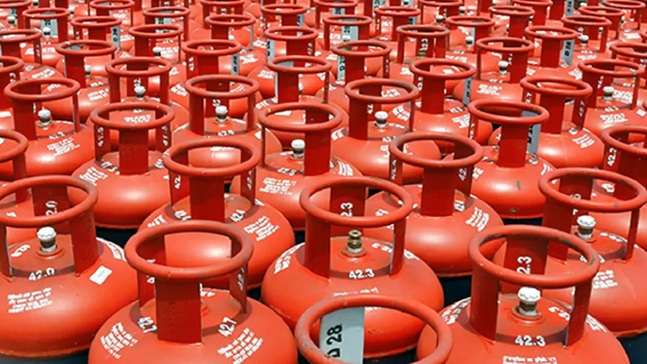
Since more than 80% of India’s LPG imports transit through this route, the Government of India has invoked emergency provisions under the Essential Commodities Act, 1955 to ensure uninterrupted cooking gas supplies for over 33 crore households.
The Ministry of Petroleum and Natural Gas (MoPNG) has directed oil refiners to maximize LPG production and prioritise domestic consumption, preventing diversion of propane and butane streams to petrochemical industries.
The government issued the directive under:
These provisions empower the government to regulate production, storage, distribution, and supply of essential commodities during emergencies.
The emergency order mandates that :
Domestic LPG supply is mainly handled by three major public sector OMCs :
These companies distribute cooking gas cylinders across India and meet almost the entire household LPG demand.
India’s LPG consumption in 2024–25 was approximately 31 million tonnes.
Although domestic refining capacity is large, limited availability of propane and butane feedstock restricts local LPG production.
India traditionally imports LPG from West Asian countries, including :
Most of these shipments pass through the Strait of Hormuz, making the route strategically critical.
The Strait of Hormuz is one of the world’s most important energy transit chokepoints.
For India, the route carries :
Any disruption in this corridor can significantly affect India’s energy security.
India has recently signed an LPG supply agreement with the United States.
Key features
Import of 2.2 million tonnes of LPG in 2026
Equivalent to about 10% of India’s annual LPG imports
Supplies from the US Gulf Coast
This agreement aims to reduce dependence on West Asian suppliers.
India is also coordinating with major international commodity traders, including :
The goal is to secure additional LPG and crude oil cargoes from alternative markets.
Current Fuel Stock Levels
Indian refiners currently maintain :
Additionally, roughly half of the crude stock is replenished regularly through shipments from non-Hormuz regions.
India maintains emergency crude oil reserves at :
These reserves serve as a buffer against global supply disruptions.
India’s daily oil consumption currently stands at around 5.6 million barrels per day (bpd).
Vulnerability in LNG Supply
India is the world’s fourth-largest importer of Liquefied Natural Gas (LNG).
However, unlike crude oil, LNG cannot be easily stored in large quantities, making supply disruptions more difficult to manage.
The state-run Petronet LNG Limited has issued force majeure notices to suppliers and domestic customers.
The supplier QatarEnergy has also warned of possible production disruptions due to the conflict.
In India, natural gas allocation prioritises key sectors such as :
If shortages intensify, the government may re-prioritise gas allocation to safeguard essential sectors.
1. Limited Domestic LPG Production
Despite large refining capacity, domestic feedstock availability remains limited.
2. LNG Storage Constraints
Building large LNG reserves is technically complex and expensive.
3. Global Price Volatility
Geopolitical conflicts often trigger sharp increases in energy prices.
4. Fiscal Pressure
Higher import costs could increase government subsidy burdens.
5. Dependence on Maritime Routes
Reliance on sea lanes makes India vulnerable to geopolitical disruptions.
India should expand LPG imports from the United States, Africa, and Latin America.
Increasing Strategic Petroleum Reserve capacity can strengthen energy security.
Enhancing gas exploration and refining efficiency can increase domestic LPG availability.
Promoting alternatives such as :
Strengthening naval presence and diplomatic coordination to ensure secure Sea Lanes of Communication (SLOCs).
Ensures uninterrupted cooking gas supply for millions of households.
Emergency regulation helps stabilise domestic energy markets.
Demonstrates proactive government intervention during global crises.
The crisis reveals India’s heavy reliance on external energy supply routes.
The situation may accelerate India’s transition to cleaner and alternative fuels.
FAQs1. Why is the Strait of Hormuz important for India’s energy supply ? A large portion of India’s LPG, crude oil, and LNG imports pass through this strategic chokepoint. 2. What emergency law has the government invoked to ensure LPG supply ? The government invoked provisions under the Essential Commodities Act, 1955. 3. Which companies supply LPG to Indian households ? Public sector oil marketing companies such as Indian Oil Corporation, BPCL, and HPCL supply most of the LPG used in India. 4. Why is LNG supply more vulnerable than crude oil supply ? LNG is difficult to store in large quantities, making supply disruptions harder to manage. 5. What long-term steps can strengthen India’s energy security ? Diversifying import sources, expanding strategic reserves, boosting domestic production, and adopting alternative energy sources. |



Our support team will be happy to assist you!

 Contact Us
  New Batch : 9555124124/ 7428085757
  Tech Support : 9555124124/ 7428085757