
- UPSC Exam
- State PCS
- One Day Exam
- Current Affairs
- PT Quiz
- Downlaods
- About Coaching
- Blog
- Videos

| Prelims: (Environment & Ecology + Current Affairs) Mains: (GS 3 – Environment, Biodiversity Conservation; GS 2 – International Environmental Agreements) |
A recent interim update to the State of the World’s Migratory Species Report has raised serious concerns about the health of migratory wildlife globally. The report warns that nearly half of the world’s migratory species populations are declining, while a significant proportion faces an increasing risk of extinction.
The findings highlight growing ecological threats such as habitat destruction, overexploitation, disease outbreaks, and climate change, emphasizing the urgent need for stronger international conservation cooperation.
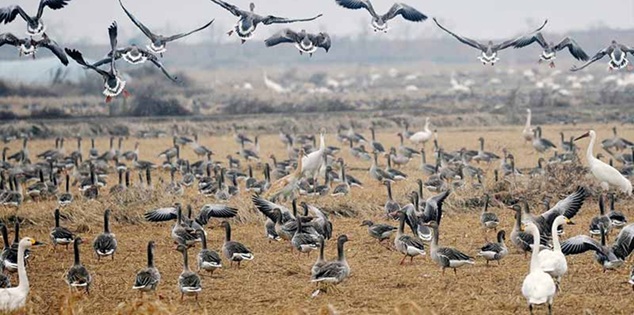
Migratory species are animals that periodically move across regions or countries as part of their life cycle, usually in search of breeding grounds, food, or favorable climatic conditions. These movements often span thousands of kilometres and involve multiple ecosystems and national jurisdictions.
Recognizing the need for coordinated international protection, the global community established the Convention on the Conservation of Migratory Species of Wild Animals (CMS) in 1979 under the United Nations Environment Programme (UNEP).
The CMS is a legally binding international treaty that focuses on:
To evaluate the status of migratory wildlife globally, CMS periodically publishes the State of the World’s Migratory Species Report, a comprehensive global assessment of migratory species and the threats they face.
The first global report released in 2024 represented the most detailed evaluation of migratory wildlife to date, covering:
The report relies on data from sources such as the International Union for Conservation of Nature (IUCN) Red List, population monitoring studies, and peer-reviewed scientific research.
Migratory species play a critical ecological and socio-economic role in maintaining environmental stability and supporting human livelihoods.
Many migratory birds assist in pollination and help control agricultural pests, contributing to food security.
Marine migratory species such as whales, sharks, and large fish maintain ocean food chains and regulate marine ecosystems.
Large terrestrial migratory animals transport nutrients across landscapes, enriching soil and supporting vegetation growth.
Migration links different ecosystems—forests, wetlands, grasslands, and oceans—helping maintain biodiversity across regions.
Migratory species also contribute to:
However, migration itself creates vulnerability. Since migratory species depend on multiple habitats along their migration routes, destruction of even a single critical site can disrupt the entire migration cycle.
Therefore, conservation of migratory species requires international cooperation and coordinated environmental policies across countries.
The report highlights a worrying decline in migratory wildlife populations worldwide.
Major statistics include:
The situation has worsened in recent years, with the proportion of declining populations increasing by around 5 percentage points within just two years.
This trend indicates growing pressure on migratory species due to human activities and environmental changes.
The report also notes an increase in extinction risks among several migratory species.
According to updated data from the International Union for Conservation of Nature Red List, 26 migratory species have moved into higher extinction-risk categories.
Among them:
Examples of affected migratory animals include:
These findings underline the growing vulnerability of migratory wildlife across terrestrial, marine, and freshwater ecosystems.
The report identifies habitat loss and overexploitation as the two biggest threats facing migratory species globally.
Human-driven changes disrupting migratory habitats include:
Infrastructure projects such as roads, railways, pipelines, and fencing are also fragmenting habitats and blocking migration corridors.
For example, fences and transport infrastructure in Central Asia have disrupted migration routes of large ungulates such as Saiga Antelope, reducing their access to seasonal grazing grounds.
Because migratory species rely on a chain of habitats along their routes, the destruction of even one link can have severe cascading effects on their survival.
Another emerging threat highlighted in the report is the growing impact of Avian Influenza, particularly the H5N1 strain, on migratory wildlife.
Highly Pathogenic Avian Influenza has caused mass mortality events among several migratory bird populations and has also affected marine mammals.
Species affected include:
Marine mammals such as the South American Sea Lion and South American Fur Seal have also been affected.
Disease outbreaks add to existing pressures from habitat destruction, climate change, and pollution.
Despite the overall decline, the report identifies some encouraging conservation successes.
Seven migratory species listed under CMS have shown improvements in their conservation status due to coordinated international efforts.
Examples include:
These cases demonstrate that strong conservation measures, habitat protection, and cross-border cooperation can reverse population declines.
The report identified 9,372 Key Biodiversity Areas (KBAs) that serve as important habitats for migratory species.
However, nearly 47% of these areas currently lack formal protection, leaving critical habitats vulnerable to:
Strengthening protection and management of these areas is essential for ensuring the survival of migratory species.
The State of the World’s Migratory Species Report has major implications for global biodiversity governance and conservation policies.
Strengthening Global Environmental Cooperation
Since migratory species cross national boundaries, the report highlights the need for international coordination and multilateral environmental agreements.
Protecting Ecosystem Services
Migratory species contribute to pollination, fisheries productivity, pest control, and ecosystem stability, which directly affect human well-being.
Supporting Global Biodiversity Targets
Conservation of migratory species is crucial for achieving the goals of global biodiversity frameworks such as the Kunming-Montreal Global Biodiversity Framework.
Informing Policy and Conservation Strategies
The report provides scientific evidence that can guide:
Habitat Fragmentation
Infrastructure and land-use changes disrupt migration routes and ecological connectivity.
Weak Cross-Border Cooperation
Migratory species often travel through multiple countries with different conservation policies.
Climate Change
Changing temperatures and rainfall patterns alter migration timings and habitat availability.
Illegal Wildlife Trade
Poaching and illegal hunting continue to threaten many migratory species.
To protect migratory species effectively, the following measures are essential:
FAQs1. What is the State of the World’s Migratory Species Report ? It is a global scientific assessment that evaluates the conservation status, population trends, and threats faced by migratory wildlife worldwide. 2. Which organisation publishes this report ? The report is prepared under the Convention on the Conservation of Migratory Species of Wild Animals (CMS), an international treaty established under the United Nations Environment Programme (UNEP). 3. What are migratory species ? Migratory species are animals that move seasonally across long distances between breeding, feeding, or wintering habitats. 4. What are the major threats to migratory species ? Key threats include habitat loss, overexploitation, infrastructure barriers, climate change, pollution, and emerging diseases such as avian influenza. 5. Why is international cooperation important for conserving migratory species ? Because migratory animals cross national boundaries, their protection requires coordinated conservation actions among multiple countries sharing the same migration routes. |



Our support team will be happy to assist you!

 Contact Us
  New Batch : 9555124124/ 7428085757
  Tech Support : 9555124124/ 7428085757