
- UPSC Exam
- State PCS
- One Day Exam
- Current Affairs
- PT Quiz
- Downlaods
- About Coaching
- Blog
- Videos

| Prelims: (International Relations + Current Affairs) Mains: (GS 2 – International Relations, Global Governance; GS 3 – Economy, Technology, Climate Diplomacy) |
The Prime Minister of India recently inaugurated the 11th edition of the Raisina Dialogue in New Delhi, reaffirming India’s growing role as a global convenor of strategic and geopolitical discussions.
The event brings together policymakers, diplomats, scholars, industry leaders, and strategic experts from across the world to deliberate on key issues shaping global politics, security, technology, and economic governance.
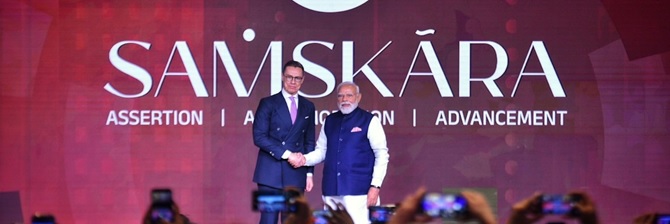
The Raisina Dialogue is India’s flagship international conference on geopolitics and geo-economics, designed to address some of the most pressing global challenges.
It is organised by the Observer Research Foundation (ORF) in partnership with the **Ministry of External Affairs, Government of India.
The conference derives its name from Raisina Hill, the seat of India’s central government institutions in New Delhi, symbolizing the country’s strategic and diplomatic vision.
The dialogue was launched in 2016 with the aim of creating a platform where global leaders could discuss security, economic cooperation, technology governance, climate change, and multilateral diplomacy.
Over time, the event has emerged as one of the most influential strategic conferences in the world, comparable to global platforms such as the Munich Security Conference and the Shangri-La Dialogue held in Singapore.
The conference is structured as a multi-stakeholder and cross-sectoral dialogue, bringing together diverse actors involved in global governance.
Participants typically include :
This broad participation reflects the changing nature of global governance, where non-state actors, private corporations, and think tanks increasingly influence international policy discussions.
The 2026 edition marks the 11th iteration of the dialogue and represents one of the largest gatherings of global strategic experts hosted by India.
The theme of Raisina Dialogue 2026 is : “Saṁskāra – Assertion, Accommodation, Advancement”
The theme reflects the evolving international order where nations must balance:
The conference has witnessed growing international participation, highlighting India’s rising diplomatic profile.
Key participation statistics include :
Participants include global political leaders, policymakers, diplomats, academics, industry experts, and civil society representatives.
The event is held over three days, featuring multiple formats such as :
These formats allow diverse perspectives to interact and generate policy ideas for global governance.
The discussions during the 2026 edition are organised around six major thematic pillars, each addressing key challenges confronting the international community.
This theme focuses on the changing global power structure, including:
The discussions explore governance of global commons, including:
It also examines new forms of international cooperation beyond traditional institutions.
This theme examines the global progress toward achieving the United Nations Sustainable Development Goals (SDGs) under the 2030 Agenda for Sustainable Development.
It evaluates challenges such as :
This pillar addresses the intersection between climate change, geopolitical conflicts, and economic stability.
Discussions focus on :
The sessions explore the rapidly evolving landscape of emerging technologies, including :
The discussions also examine how technology is reshaping international relations and economic competitiveness.
This theme focuses on global economic recovery in an era marked by:
It explores strategies to enhance resilience and reinvention of global trade systems.
The dialogue has emerged as a key platform for India’s strategic diplomacy, enabling the country to shape global policy discussions.
It reinforces India’s image as a bridge between the Global North and Global South.
In a period of geopolitical tensions and declining trust in multilateral institutions, the conference provides an informal platform for dialogue and confidence building.
The event encourages policy innovation and strategic thinking by bringing together experts from diverse fields.
The dialogue complements India’s broader diplomatic initiatives such as:
Despite its growing importance, forums like the Raisina Dialogue face several challenges:
Increasing rivalry among major powers can limit consensus on global issues.
Ideas discussed in such dialogues do not always translate into concrete policy outcomes.
Competing institutions and regional blocs sometimes weaken coordinated action.
Emerging technologies create complex challenges for international regulation.
To maximize its global impact, the Raisina Dialogue can contribute to :
As global politics becomes increasingly complex and multipolar, platforms like the Raisina Dialogue will play a critical role in shaping future global governance frameworks.
FAQs1. What is the Raisina Dialogue ? The Raisina Dialogue is India’s premier international conference on geopolitics and geo-economics that brings together global leaders, policymakers, and experts to discuss major international challenges. 2. Who organizes the Raisina Dialogue ? It is organized by the Observer Research Foundation in partnership with the Ministry of External Affairs, Government of India. 3. When was the Raisina Dialogue first held ? The conference was first held in 2016 in New Delhi. 4. What is the theme of Raisina Dialogue 2026 ? The theme for the 2026 edition is “Saṁskāra – Assertion, Accommodation, Advancement.” 5. Why is the Raisina Dialogue important for India ? It strengthens India’s global diplomatic engagement, promotes international strategic discussions, and enhances the country’s role as a major voice in shaping global governance. |



Our support team will be happy to assist you!

 Contact Us
  New Batch : 9555124124/ 7428085757
  Tech Support : 9555124124/ 7428085757