
- UPSC Exam
- State PCS
- One Day Exam
- Current Affairs
- PT Quiz
- Downlaods
- About Coaching
- Blog
- Videos


|
Particular |
Details |
|
|
Award |
Nobel Prize in Literature |
|
|
Announcement date |
8 October 2026 |
|
|
Awarding institution |
Swedish Academy |
|
|
Country |
Sweden |
|
|
Established through |
Alfred Nobel's will (1895) |
|
|
First awarded |
1901 |
|
|
First recipient |
Sully Prudhomme (France) |
|
|
Prize money in 2026 |
SEK 12 million |
|
|
Award ceremony |
10 December 2026, Stockholm |
|
|
2026 laureate |
Anne Carson |
|
|
Known for |
Poetry, essays, translations and classical studies |
|
|
Important work |
Autobiography of Red: A Novel in Verse (1998) |
|
|
Announcement date |
8 October 2026 |
|
|
Literary Work |
Year |
Key Features |
|
Eros the Bittersweet |
1986 |
Exploration of love and desire through classical literature |
|
Glass, Irony and God |
1995 |
Poetry exploring relationships, religion and identity |
|
Autobiography of Red |
1998 |
Novel in verse inspired by Greek mythology |
|
Men in the Off Hours |
2000 |
Experimental poetry and prose |
|
Nox |
2010 |
Work combining poetry, memory, translation and visual material |
|
Float |
2016 |
Collection of 22 literary chapbooks exploring different subjects |
|
Year |
Laureate |
Country |
|
2026 |
Anne Carson |
Canada |
|
2025 |
László Krasznahorkai |
Hungary |
|
2024 |
Han Kang |
South Korea |
|
2023 |
Jon Fosse |
Norway |
|
2022 |
Annie Ernaux |
France |
|
2021 |
Abdulrazak Gurnah |
United Kingdom / Tanzania-born |
|
2020 |
Louise Glück |
United States |
Prelims MCQQ. Consider the following statements regarding the Nobel Prize in Literature:
Which of the statements given above are correct? (a) 1 and 2 only (b) 2 and 3 only (c) 1 and 3 only (d) 1, 2 and 3 Mains Practice QuestionQ. Discuss the role of literature in promoting cultural understanding and preserving social memory. |
Who awards the Nobel Prize in Literature?The Swedish Academy. When will the 2026 Nobel Prize in Literature be announced?8 October 2026. Who won the Nobel Prize in Literature in 202?Anne Carson of Canada Who was the first Indian Nobel laureate in Literature?Rabindranath Tagore, in 1913. What is the Nobel Prize money in 2026?12 million Swedish kronor. |
| Prelims: RBI; Paytm Payments Bank; Scheduled Banks; Second Schedule; RBI Act, 1934; Banking Regulation Act, 1949 Mains: GS Paper III – Indian Economy; Banking Sector Regulation; Financial Sector Reforms; RBI’s Regulatory Powers Keywords: Paytm Payments Bank, RBI, Scheduled Bank, Second Schedule, Banking Regulation Act, Bank Licence Cancellation, Bank Liquidation |
The RBI cancelled PPBL’s banking licence with effect from the close of business on 24 April 2026.
The central bank cited concerns including:
The RBI also directed PPBL not to undertake banking activities or any additional banking business.
The RBI is the primary regulator of India’s banking system. Its regulatory responsibilities include:
The PPBL case demonstrates the RBI’s regulatory powers when a banking institution fails to comply with applicable regulatory requirements.
India needs to strengthen coordination between financial regulators and digital financial service providers.
Prelims Practice QuestionQ. Paytm Payments Bank has been removed by the RBI from which of the following? A. First Schedule of the RBI Act Mains Practice Question“Financial innovation must be accompanied by strong regulatory compliance.” In the context of the Paytm Payments Bank case, analyse the role of the RBI in regulating India’s banking sector. |
1. From which list has Paytm Payments Bank been removed?The RBI has removed PPBL from the list of Scheduled Banks under the Second Schedule to the RBI Act, 1934. 2. When was PPBL’s banking licence cancelled?The RBI cancelled its banking licence with effect from the close of business on 24 April 2026. 3. Who ordered the winding up of PPBL?The Delhi High Court ordered the winding up of PPBL under applicable legal provisions. 4. What is a Scheduled Bank?A Scheduled Bank is a bank whose name is included in the Second Schedule to the Reserve Bank of India Act, 1934. 5. What were the major concerns raised by the RBI?The RBI cited serious regulatory violations, concerns regarding the conduct of the bank’s affairs and non-compliance with conditions of its Payments Bank licence. |
| Prelims: Project Cheetah, Veerangana Durgavati Tiger Reserve, Nauradehi, Kuno National Park, Gandhi Sagar Wildlife Sanctuary, Vyom and Neera. Mains: GS Paper III – Environment & EcologyKeywords: Cheetah Reintroduction in India, Nauradehi Cheetah Habitat, Madhya Pradesh Cheetah Conservation, Project Cheetah, Cheetah Conservation in India. |
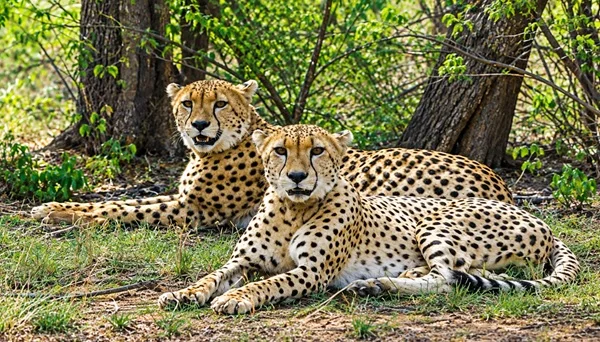
The addition of Nauradehi is significant because it provides another suitable landscape for cheetah conservation in Madhya Pradesh.
Multiple habitats can help:
The release of cheetahs in Nauradehi expands Madhya Pradesh's cheetah conservation network and provides a new landscape for the species. The initiative is expected to strengthen wildlife conservation while creating opportunities for tourism and employment in the Bundelkhand region.
Prelims Practice QuestionQ. With reference to the recent introduction of cheetahs in Nauradehi, consider the following statements:
Which of the statements given above is/are correct? A. 1 and 2 only Mains Practice QuestionQ. Discuss the significance of expanding cheetah habitats in India with special reference to the introduction of cheetahs in Nauradehi. Also examine the challenges involved in conserving large carnivores in shared landscapes. |
1. Why is Nauradehi important for cheetah conservation?Nauradehi has become Madhya Pradesh’s third cheetah habitat, expanding the geographical range available for the species. 2. Which cheetahs were introduced in Nauradehi?Two cheetahs, Vyom and Neera, were introduced in Nauradehi. 3. From where were the cheetahs brought to Nauradehi?They were brought from Kuno National Park. 4. Can cheetahs, leopards and tigers coexist in the same landscape?Yes. Differences in prey preferences, hunting strategies and habitat use can reduce direct competition among these large carnivores. 5. What is Project Cheetah?Project Cheetah is India’s programme to reintroduce and establish a viable cheetah population in the country. |
| Prelims: WWF, Living Planet Report, Living Planet Index, Zoological Society of London (ZSL), Biodiversity Loss, IUCN, Kunming–Montreal Global Biodiversity Framework. Mains: GS Paper III: Environment Conservation, Biodiversity, Climate Change, Ecosystem Degradation and Sustainable Development. |
The WWF Living Planet Report 2024 revealed that the average size of monitored wildlife populations declined by 73% between 1970 and 2020.

|
Particular |
Details |
|
Report |
Living Planet Report 2026 |
|
Released by |
World Wide Fund for Nature (WWF) |
|
Report title |
The Science of Hope |
|
Edition |
16th |
|
First published |
1998 |
|
Frequency |
Every two years |
|
Main indicator |
Living Planet Index (LPI) |
|
LPI produced by |
Zoological Society of London (ZSL) |
|
Assessment period |
1970–2022 |
|
Global average decline |
73% |
|
Vertebrate species monitored |
5,790 |
|
Population trends analysed |
35,803 |
|
Ecosystem |
Average decline |
|
Freshwater |
85% |
|
Terrestrial |
69% |
|
Marine |
59% |
|
Target 1 |
Ensure participatory, integrated and biodiversity-inclusive spatial planning to reduce biodiversity loss |
|
Target 2 |
Restore at least 30% of degraded ecosystems by 2030 |
|
Target 3 |
Effectively conserve at least 30% of terrestrial, inland water, coastal and marine areas by 2030 |
|
Target 4 |
Halt human-induced extinctions of known threatened species and support species recovery |
|
Target 19 |
Mobilise at least US$200 billion annually for biodiversity by 2030 |
Prelims MCQQ. Consider the following statements regarding the Living Planet Report:
Which of the statements given above are correct? (a) 1 and 2 only (b) 2 and 3 only (c) 1 and 3 only (d) 1, 2 and 3 Mains Practice QuestionQ. Discuss the major drivers of biodiversity loss and suggest measures for ecosystem restoration. |
Who releases the Living Planet Report?World Wide Fund for Nature (WWF). What is the latest edition?16th What is the theme of the 2026 report?The Science of Hope. What is the global wildlife population decline?73% on average among monitored vertebrate populations since 1970. Which ecosystem recorded the highest decline?Freshwater ecosystems at 85%. |
| Prelims: WHO; Child and Adolescent Obesity; Non-Communicable Diseases; Type 2 Diabetes; Cardiovascular Diseases; Multimodal Intervention; Digital Health Mains: GS Paper II - Issues Related to Health; Government Policies and Interventions; Public Health; Social Justice, GS Paper III – Science and Technology; Health and Nutrition; Non-Communicable Diseases |
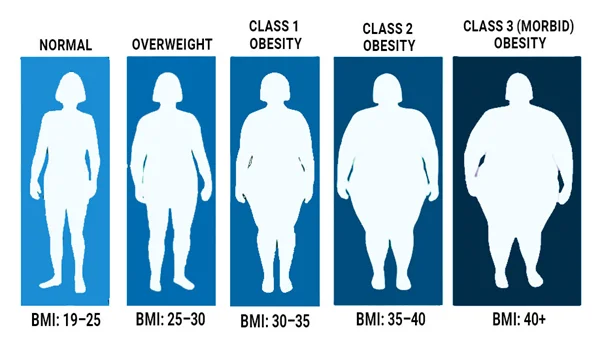
The guidelines place healthy lifestyle practices at the centre of obesity management.
This includes:
WHO emphasises that sustainable behavioural change is more important than short-term weight reduction.
Thus, WHO adopts an age-specific and stepwise approach to treatment.
Obesity during childhood and adolescence can increase the risk of developing non-communicable diseases (NCDs).
These include:
The problem also has social and psychological consequences. Stigma, discrimination and bullying can affect children's emotional health and social participation.
Therefore, childhood obesity represents a health, social and developmental challenge rather than simply an individual lifestyle issue.
This demonstrates the importance of a multisectoral approach to public health.
Prelims Practice QuestionQ. With reference to the WHO's global guidelines on child and adolescent obesity, consider the following statements:
Which of the statements given above are correct? A. 1 and 2 only Mains Practice Question“Childhood obesity is not merely an individual health problem but a multidimensional public-health and social challenge.” Discuss in the context of the WHO's first global guidelines on child and adolescent obesity. |
1. What are the new WHO guidelines on child and adolescent obesity?They provide evidence-based recommendations for the prevention and management of obesity among children and adolescents, focusing on diet, physical activity, behavioural change, mental health and long-term care. 2. How many children and adolescents aged 5–19 years were living with obesity in 2024?According to WHO, approximately 170 million children and adolescents aged 5–19 years were living with obesity in 2024. 3. Does WHO recommend medicines for children with obesity?WHO does not recommend pharmacological treatment for children aged 0–9 years. 4. Does WHO recommend bariatric surgery for adolescents?Bariatric surgery may be considered under strict conditions for adolescents with severe obesity, but it is not recommended for children aged 0–9 years. 5. Why is mental health included in obesity management?Obesity can be associated with stigma, bullying, anxiety, depression and low self-esteem. |

|
Particular |
Details |
|
Observed on |
9 October annually |
|
First declared |
1969 |
|
Commemorates |
Establishment of UPU in 1874 |
|
Organisation |
Universal Postal Union |
|
Headquarters |
Bern, Switzerland |
|
UPU status |
UN specialised agency |
|
Main objective |
Promoting accessible and reliable postal services worldwide |
|
Particular |
Details |
|
Modern postal system |
Organised in 1854 |
|
Department |
Department of Posts |
|
Ministry |
Ministry of Communications |
|
Postal Index Number (PIN) |
Introduced in 1972 |
|
PIN Code |
Six digits |
|
India Post Payments Bank |
Launched nationwide in 2018 |
|
Important services |
Mail, parcels, savings, insurance and payments |
Prelims MCQQ. Consider the following statements:
Which of the statements given above are correct? A. 1 and 2 only B. 2 and 3 only C. 1 and 3 only D. 1, 2 and 3 Mains Practice QuestionQ. Discuss the role of India Post in promoting financial inclusion and rural connectivity in India. |
|
When is World Post Day celebrated? Every year on 9 October. When was the Universal Postal Union established? 9 October 1874. Where is the headquarters of UPU? Bern, Switzerland. When is National Postal Week observed in India? Generally 9-15 October, although official dates may vary by year. When was the PIN Code introduced in India? 1972. |

Our support team will be happy to assist you!

 Contact Us
  New Batch : 9555124124/ 7428085757
  Tech Support : 9555124124/ 7428085757

