Prelims: RBI; Paytm Payments Bank; Scheduled Banks; Second Schedule; RBI Act, 1934; Banking Regulation Act, 1949
Mains: GS Paper III – Indian Economy; Banking Sector Regulation; Financial Sector Reforms; RBI’s Regulatory Powers
Keywords: Paytm Payments Bank, RBI, Scheduled Bank, Second Schedule, Banking Regulation Act, Bank Licence Cancellation, Bank Liquidation |
Why in News?
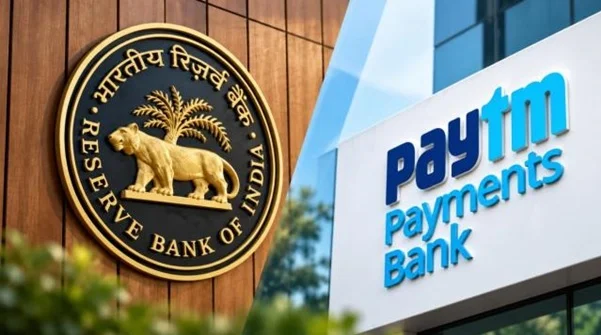
- The Reserve Bank of India (RBI) has excluded Paytm Payments Bank Limited (PPBL) from the list of Scheduled Banks under the Second Schedule to the Reserve Bank of India Act, 1934.
- The move follows the cancellation of PPBL’s banking licence by the RBI and the Delhi High Court’s order for winding up the bank under applicable laws.
What is a Scheduled Bank?
- A Scheduled Bank is a bank whose name is included in the Second Schedule of the Reserve Bank of India Act, 1934.
- Such banks are recognised under the RBI’s statutory framework and are subject to prescribed regulatory requirements.
- Scheduled Banks broadly include different categories of commercial and cooperative banks that meet the conditions specified under the RBI Act.
Why did RBI remove Paytm Payments Bank?
- The RBI issued a notification on 31 July 2026 to remove PPBL from the Second Schedule to the RBI Act.
- The decision came after a series of regulatory actions against the bank.
- The RBI had earlier raised concerns regarding serious regulatory violations, the manner in which the bank’s affairs were conducted, and non-compliance with conditions attached to its Payments Bank licence.
- According to the RBI, these concerns were also considered detrimental to the interests of the bank and its depositors.
Why was PPBL’s Banking Licence Cancelled?
The RBI cancelled PPBL’s banking licence with effect from the close of business on 24 April 2026.
The central bank cited concerns including:
- Serious regulatory violations
- Concerns regarding the conduct of the bank’s affairs
- Potential adverse implications for the interests of depositors
- Non-compliance with conditions of the Payments Bank licence
The RBI also directed PPBL not to undertake banking activities or any additional banking business.
What did the Delhi High Court Order?
- The Delhi High Court directed the winding up of PPBL through orders dated 8 July and 22 July 2026.
- According to the RBI, the winding-up process was ordered under the provisions of the Banking Regulation Act, 1949, read with the Companies Act, 2013.
- The court appointed Girikumar M. Nair, former Chief General Manager of the State Bank of India (SBI), as the Official Liquidator.
What is Winding Up?
- Winding up refers to the legal process through which a company or institution is closed and its assets and liabilities are settled according to law.
- It is different from merely cancelling a bank’s licence.
Significance of the Second Schedule
- The Second Schedule to the RBI Act, 1934 is an important component of India’s banking regulatory framework.
- Banks included in this Schedule are known as Scheduled Banks.
- Therefore, removal from the Schedule represents an important change in the regulatory status of a banking institution.
- In PPBL’s case, the notification formally removed the bank from the Scheduled Banks list following the earlier regulatory and judicial actions.
RBI’s Role in Banking Regulation
The RBI is the primary regulator of India’s banking system. Its regulatory responsibilities include:
- Maintaining financial stability
- Protecting depositors’ interests
- Ensuring regulatory compliance
- Strengthening governance in banking institutions
- Maintaining public confidence in the financial system
The PPBL case demonstrates the RBI’s regulatory powers when a banking institution fails to comply with applicable regulatory requirements.
Significance for India
- The PPBL case is significant beyond the fintech sector because it highlights the importance of financial regulation, corporate governance and depositor protection.
- As digital payments and fintech services expand in India, innovation needs to operate within a strong regulatory framework.
- The case also underlines that technological innovation cannot substitute for regulatory compliance, sound governance and customer protection.
Way Forward
India needs to strengthen coordination between financial regulators and digital financial service providers.
- Stronger compliance and internal governance mechanisms
- Regular regulatory monitoring
- Greater transparency in financial operations
- Effective consumer and depositor protection
- Clear distinction between fintech services and regulated banking activities
Prelims Practice Question
Q. Paytm Payments Bank has been removed by the RBI from which of the following?
A. First Schedule of the RBI Act
B. Second Schedule of the RBI Act
C. Third Schedule of the Banking Regulation Act
D. Second Schedule of the Companies Act
Mains Practice Question
“Financial innovation must be accompanied by strong regulatory compliance.” In the context of the Paytm Payments Bank case, analyse the role of the RBI in regulating India’s banking sector.
|
FAQs
1. From which list has Paytm Payments Bank been removed?
The RBI has removed PPBL from the list of Scheduled Banks under the Second Schedule to the RBI Act, 1934.
2. When was PPBL’s banking licence cancelled?
The RBI cancelled its banking licence with effect from the close of business on 24 April 2026.
3. Who ordered the winding up of PPBL?
The Delhi High Court ordered the winding up of PPBL under applicable legal provisions.
4. What is a Scheduled Bank?
A Scheduled Bank is a bank whose name is included in the Second Schedule to the Reserve Bank of India Act, 1934.
5. What were the major concerns raised by the RBI?
The RBI cited serious regulatory violations, concerns regarding the conduct of the bank’s affairs and non-compliance with conditions of its Payments Bank licence.
|






 Contact Us
  New Batch : 9555124124/ 7428085757
  Tech Support : 9555124124/ 7428085757