- UPSC Exam
- State PCS
- One Day Exam
- Current Affairs
- PT Quiz
- Downlaods
- About Coaching
- Blog
- Videos

| Prelims: Art & Culture + Ancient History, CA Mains: GS Paper 1 – Indian Culture, Ancient Civilization; GS Paper 3 – Water Resource Management |
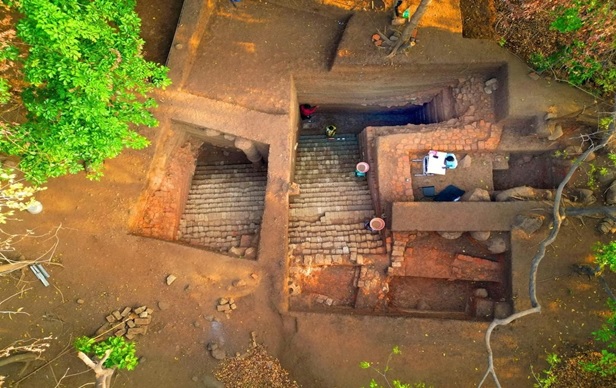
The discovery highlights how ancient communities developed sophisticated water conservation systems suited to local environmental conditions.
It reflects a strong emphasis on sustainability, efficient resource use, and ecological balance, long before modern environmental concerns.
The presence of such infrastructure suggests planned settlements with provisions for long-term habitation.
The reservoir complements the historical significance of Elephanta’s cave complexes, offering a more holistic understanding of life on the island.
|
Prelims: Q. Elephanta Caves, a UNESCO World Heritage Site, are located in: (a) Gujarat (b) Maharashtra (c) Karnataka (d) Tamil Nadu Mains: “Ancient Indian water management systems reflect a high degree of sustainability and environmental awareness. Discuss with reference to recent archaeological discoveries.” |
FAQsQ1. Where was the reservoir discovered ? On Elephanta Island near Mumbai. Q2. How old is the reservoir ? Approximately 1,500 years old. Q3. Why is the discovery important ? It highlights ancient water conservation and urban planning practices. Q4. What does it reveal ? Advanced engineering and sustainable resource management. Q5. How is it relevant today ? It offers lessons for modern water conservation strategies. |
| Prelims: Defence Exercises + International Relations + CA Mains: GS 2 – India and Bilateral Relations; GS 3 – Security, Defence Cooperation |
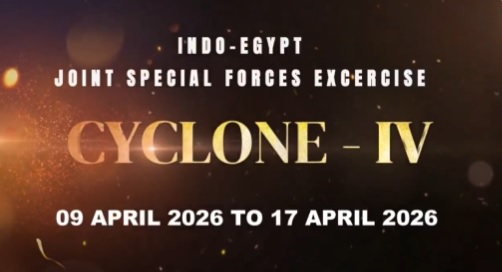
Focus on high-intensity combat scenarios and counter-terrorism operations.
Training conducted in desert and semi-desert environments, enhancing adaptability to harsh conditions.
Emphasis on coordinated planning and execution of joint missions, crucial for modern warfare.
Provides a platform for sharing operational experience, tactical knowledge, and military practices.
The exercise deepens strategic ties between India and Egypt, enhancing mutual trust and cooperation.
Joint military exercises act as tools of defence diplomacy, strengthening international partnerships.
Helps forces prepare for real-world security challenges, including terrorism and unconventional warfare.
Reflects India’s growing engagement in West Asia and Africa, reinforcing its role as a responsible security partner.
|
Prelims: Q. Exercise Cyclone is conducted between India and which country ? (a) France (b) Egypt (c) UAE (d) Saudi Arabia Mains: “Joint military exercises play a crucial role in strengthening bilateral relations and enhancing operational capabilities. Discuss with reference to Exercise Cyclone.” |
FAQsQ1. What is Exercise Cyclone ? A joint special forces exercise between India and Egypt. Q2. Which edition was held in 2026 ? The 4th edition. Q3. Where is it conducted ? In Egypt (2026 edition). Q4. What is its main objective ? To enhance interoperability and joint operational capabilities. Q5. Why is it important ? It strengthens defence cooperation and strategic partnerships. |
| Prelims: International Relations + CA Mains: GS Paper 2 – International Relations; GS Paper 3 – Energy Security, Global Stability |
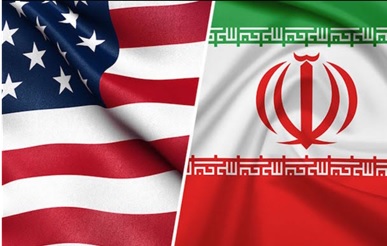
Disruptions in the Strait of Hormuz led to volatility in global oil markets, affecting energy-importing countries worldwide.
The escalation highlighted the possibility of a broader regional conflict involving multiple actors, including non-state groups.
The situation underscores the strategic importance of free navigation in global chokepoints, crucial for international trade.
India, which depends heavily on Gulf energy imports, faced supply disruptions and rising import costs, affecting economic stability.
The reopening of the Strait of Hormuz has provided significant relief by restoring energy supply routes.
The conflict affected Indian nationals in the Gulf region, raising concerns for safety and remittance flows.
India emphasised the importance of regional stability and uninterrupted trade routes, crucial for its economic interests.
|
Prelims: Q. The Strait of Hormuz connects: (a) Red Sea and Mediterranean Sea (b) Persian Gulf and Gulf of Oman (c) Arabian Sea and Bay of Bengal (d) Black Sea and Caspian Sea Mains: “Discuss the geopolitical significance of the Strait of Hormuz in the context of the US–Iran conflict. How do such conflicts impact global and Indian interests ?” |
FAQsQ1. What triggered the US–Iran conflict ? Geopolitical tensions, including nuclear issues and regional influence. Q2. Why is the Strait of Hormuz important ? It is a major global oil transit route. Q3. What is the significance of the ceasefire ? It reduces immediate tensions and opens space for negotiations. Q4. How does it affect India ? Through energy supply, economic stability, and diaspora safety. Q5. Is the ceasefire permanent ? No, it is temporary and subject to further negotiations. |
| Prelims: Polity + Constitution + CA Mains: GS Paper 2 – Representation, Parliament, Women Empowerment |
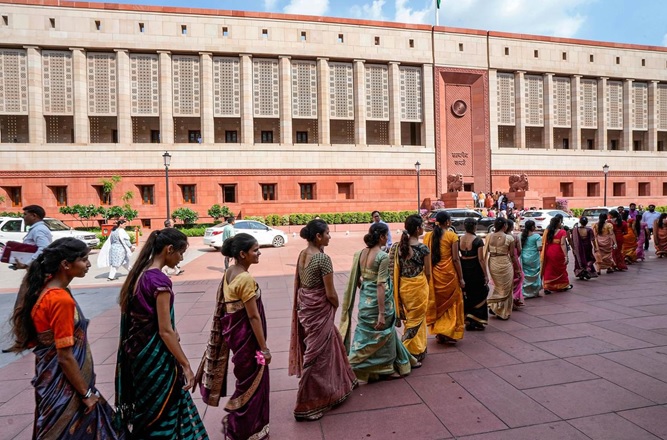
The measure will significantly increase the participation of women in legislative decision-making.
Greater representation contributes to a more inclusive and representative democratic system.
It aligns with India’s commitment to gender justice and women empowerment.
Practice QuestionsPrelims: Q. The Constitution (106th Amendment) Act, 2023 provides for: (a) Reservation for SC/ST in Parliament (b) One-third reservation for women in legislatures (c) Reservation in judiciary (d) Reservation in private sector jobs Mains: “Discuss the significance and challenges of implementing women’s reservation in legislatures in India. How can it strengthen democratic governance?” |
FAQsQ1. What does the amendment Bill aim to do ? To operationalise women’s reservation in legislatures. Q2. What percentage of seats are reserved ? One-third (33%). Q3. What is the key condition for implementation ? Delimitation based on the latest Census. Q4. Why is it important ? It enhances women’s political participation and strengthens democracy. Q5. What are the challenges ? Delay due to Census, rotation issues, and demand for sub-quotas. |
| Prelims: Environment + CA Mains: GS Paper 3 – Climate Change, Global Governance, Environmental Agreements |
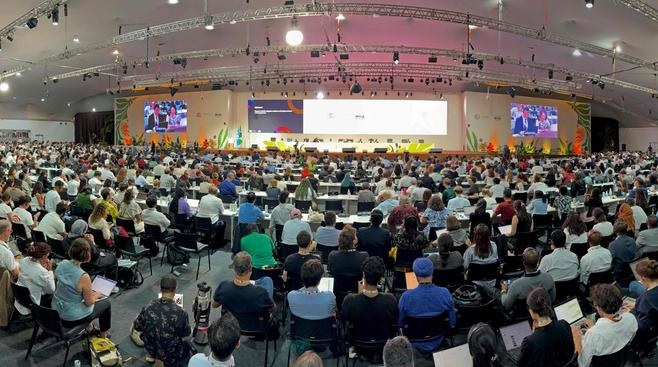
The withdrawal may be viewed as a missed opportunity to showcase India’s climate initiatives on the global stage.
It allows India to retain flexibility in negotiations, without the added burden of hosting responsibilities.
The decision highlights India’s effort to balance climate commitments with economic growth and energy security.
The withdrawal creates uncertainty regarding the next host country, affecting planning within the UNFCCC framework.
|
Prelims: Q. The Conference of Parties (COP) is associated with: (a) WTO (b) UNFCCC (c) IMF (d) World Bank Mains: “Hosting global climate summits provides both opportunities and challenges for developing countries. Discuss with reference to India’s withdrawal from hosting COP33.” |
FAQsQ1. What is COP33 ? The 33rd Conference of Parties under the UNFCCC. Q2. Why did India withdraw its bid ? After reviewing its commitments for 2028. Q3. What is the role of COP ? To negotiate and review global climate action. Q4. What is Global Stocktake ? An assessment of global progress under the Paris Agreement. Q5. What does this decision indicate ? A balance between climate commitments and national priorities. |

Our support team will be happy to assist you!

 Contact Us
  New Batch : 9555124124/ 7428085757
  Tech Support : 9555124124/ 7428085757