Prelims: Environment + CA
Mains: GS Paper 3 – Climate Change, Global Governance, Environmental Agreements |
Why in News ?
- India has withdrawn its bid to host the COP33 climate summit in 2028, a major global conference under the United Nations Framework Convention on Climate Change.
- The decision was taken after a review of national commitments for the year 2028, reflecting a cautious approach towards future responsibilities.
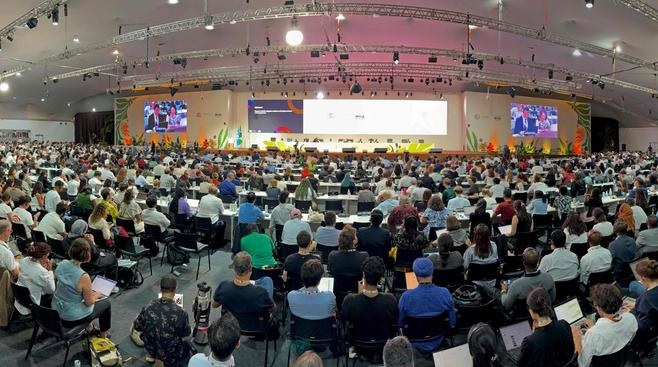
Background and Context
- The Conference of Parties (COP) is the annual global climate summit under the UNFCCC framework where countries negotiate climate action.
- India had earlier expressed its willingness to host COP33 during COP28 in Dubai (2023).
- Hosting COP involves:
- Leading global climate negotiations
- Facilitating consensus among nations
- Showcasing national climate leadership
- The hosting responsibility rotates among different UN regional groups, with Asia-Pacific countries being next in line.
What is COP ?
- COP is the decision-making body of the UNFCCC, responsible for reviewing implementation of climate agreements.
- It also serves as a platform for:
- Monitoring progress under the Paris Agreement
- Negotiating emission reduction commitments
- Mobilising climate finance and technology transfer
Reasons Behind India’s Withdrawal
- India withdrew its bid following a review of its commitments for 2028, indicating a reassessment of priorities.
- Hosting COP would require India to:
- Take a leadership role in global negotiations
- Balance domestic development needs with international expectations
- Factors that may have influenced the decision include:
- Evolving global climate dynamics
- Increased expectations from host nations
- Domestic economic and developmental priorities
Significance of COP33
- COP33 is expected to include a Global Stocktake (GST), a key mechanism under the Paris Agreement to assess global progress in limiting temperature rise.
- The host country plays a crucial role in:
- Driving ambition in climate action
- Bridging differences between developed and developing countries
Implications of India’s Decision
1. Impact on Climate Leadership
The withdrawal may be viewed as a missed opportunity to showcase India’s climate initiatives on the global stage.
2. Greater Strategic Flexibility
It allows India to retain flexibility in negotiations, without the added burden of hosting responsibilities.
3. Reflection of Development Priorities
The decision highlights India’s effort to balance climate commitments with economic growth and energy security.
4. Implications for Global Climate Governance
The withdrawal creates uncertainty regarding the next host country, affecting planning within the UNFCCC framework.
Challenges Highlighted
- Balancing developmental needs with climate obligations
- Increasing global expectations from developing countries
- Complexity of international climate negotiations
Way Forward
- Continue active participation in global climate negotiations
- Strengthen domestic climate action through:
- Renewable energy expansion
- Climate adaptation strategies
- Advocate for climate justice and equity in global forums
- Enhance cooperation with developing nations as part of Global South leadership
Practice Questions
|
Prelims:
Q. The Conference of Parties (COP) is associated with:
(a) WTO
(b) UNFCCC
(c) IMF
(d) World Bank
Mains:
“Hosting global climate summits provides both opportunities and challenges for developing countries. Discuss with reference to India’s withdrawal from hosting COP33.”
|
FAQs
Q1. What is COP33 ?
The 33rd Conference of Parties under the UNFCCC.
Q2. Why did India withdraw its bid ?
After reviewing its commitments for 2028.
Q3. What is the role of COP ?
To negotiate and review global climate action.
Q4. What is Global Stocktake ?
An assessment of global progress under the Paris Agreement.
Q5. What does this decision indicate ?
A balance between climate commitments and national priorities.
|






 Contact Us
  New Batch : 9555124124/ 7428085757
  Tech Support : 9555124124/ 7428085757