New
Hindi Medium: (Delhi) - GS Foundation (P+M) : 8th June 2026, 6:30 AM Hindi Medium: (Prayagraj) - GS Foundation (P+M) : 1st June 2026, 5:30 PM English Medium: (Prayagraj) - GS Foundation (P+M) : 7th June 2026, 8:00 AM Hindi Medium: (Delhi) - GS Foundation (P+M) : 8th June 2026, 6:30 AM Hindi Medium: (Prayagraj) - GS Foundation (P+M) : 1st June 2026, 5:30 PM English Medium: (Prayagraj) - GS Foundation (P+M) : 7th June 2026, 8:00 AM

Current Affairs for 09 May 2026

JANANI Platform- Objective , Key Features , Significance and Key Achievements .

Why in news ?

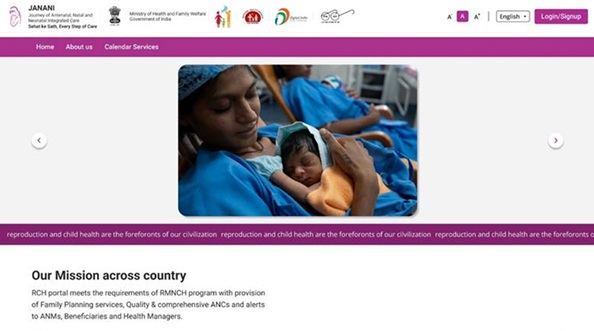
Recently, the Union Ministry of Health and Family Welfare launched the JANANI (Journey of Antenatal, Natal and Neonatal Integrated Care) platform at the National Innovation and Inclusion Summit on “Best Practices Shaping India’s Health Future.”
About JANANI Platform

  • JANANI is a service-oriented digital platform designed to comprehensively monitor and maintain digital health records of women throughout their reproductive age.
  • It has been developed as an upgraded version of the existing Reproductive and Child Health (RCH) portal. The platform creates a long-term digital health record by capturing key maternal and child health service delivery data to ensure continuity of care.

Objective

The primary objective of the JANANI platform is to ensure seamless monitoring of maternal and child health services, covering :

  • Antenatal care 
  • Delivery preparedness and childbirth 
  • Postnatal care 
  • Newborn care 
  • Home-based newborn and young child care 
  • Family planning services 

By enabling continuous monitoring and timely interventions, JANANI strengthens service delivery and ensures continuity of care at every stage.

Key Features of JANANI Platform

1. QR-enabled Digital MCH Cards

  • Introduces QR-coded Maternal and Child Health (MCH) Cards 
  • Ensures portability and easy access to health records 

2. Smart Tracking and Alerts

  • Automated alerts for high-risk pregnancies 
  • Real-time dashboards for supervisory review 
  • Due-list generation for timely follow-ups 
  • Helps in targeted health interventions 

3. Interoperability

  • Integrates with national platforms such as U-WIN and POSHAN 
  • Enables seamless data exchange across systems 
  • Improves coordination and beneficiary tracking across programmes 

4. Beneficiary Registration System

  • Uses unique identifiers like : 
    • ABHA ID 
    • Aadhaar (OTP and biometric authentication) 
    • Mobile number 
  • Provides pan-India search functionality 
  • Supports self-registration via web and mobile platforms 
  • Helps reduce duplication and ensures continuity of care for migrant populations 

5. Citizen-Centric Services

  • Enables scheduling and monitoring of antenatal visits and immunizations 
  • Sends alerts and reminders for timely health services 
  • Supports active participation of beneficiaries in their healthcare journey 

6. Additional Support Features

  • Digital MCH cards accessible to users 
  • Information on nearby health facilities 
  • Guidance on delivery planning 
  • Health education and nutrition support for informed decision-making 

Significance / Importance

JANANI represents a structural reform in maternal and child health governance by integrating :

  • Digital authentication systems 
  • Real-time monitoring 
  • Inter-sectoral coordination 

This leads to :

  • Improved service coverage 
  • Enhanced accountability 
  • Reduction in maternal and infant mortality rates over time 

Key Achievements 

  • 1.34 crore beneficiary registrations 
  • Over 30 lakh pregnant women registered 
  • More than 30 lakh MCH cards issued 
  • Over 1 lakh biometric verifications completed 

Conclusion

The launch of the JANANI platform reflects the government’s continued commitment to accessible, equitable, and quality healthcare services. With a strong focus on digital empowerment, continuity of care, and improved maternal and child health outcomes, JANANI marks a significant step toward strengthening India’s public health system.

NITI Aayog Report on the School Education System

Context

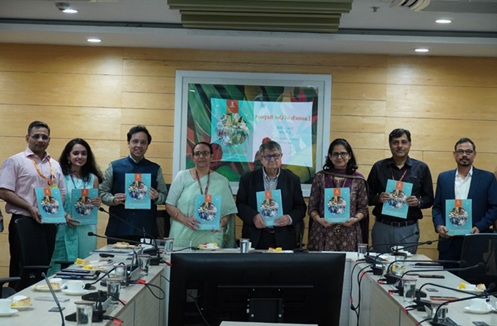
  • Recently, NITI Aayog Vice Chairman Mr. Suman Bery and CEO Mrs. Nidhi Chhibber released a comprehensive report titled 'School Education System in India: A Contemporary Analysis and Policy Framework for Quality Enhancement.'
Key Points from the NITI Aayog Report

  • India's school education system, the world's largest with 1.471 million schools and over 246.9 million students, is currently undergoing a major transformation.
  • This report is a synthesis of data from the past decade (such as UDISE+ 2024-25 and NAS 2021) and findings from national workshops, laying out a concrete blueprint for the future education system.

Achievements of the Past Decade: At a Glance

  • According to the report, India has made unprecedented progress in education infrastructure and access. The following key improvements have been highlighted through data analysis and heat maps:
  • Digital expansion : There has been a significant increase in the availability of computers, internet connectivity, and smart classrooms in schools.
  • Infrastructure : Electricity and functional sanitation (toilets) are now available in most schools.
  • Equity and inclusion : There has been a significant improvement in the participation of girl students in school. Additionally, the enrolment ratio of Scheduled Caste (SC) and Scheduled Tribe (ST) students has also seen a positive increase.
  • Learning outcomes : Despite the post-pandemic challenges, the impact of the Nipun Bharat Mission and the National Education Policy 2020 has shown signs of improvement in basic literacy and numeracy (FLN).

Future Challenges and Strategic Recommendations

The report identifies 11 key challenges and provides 13 broad recommendations to address them, divided into two main categories :

  1. Systemic Recommendations
    • Making schools more holistic through evidence-based rationalization.
    • Improving governance and establishing a district-level task force.
    • Emphasis on transparent teacher deployment and continuous professional development.
    • Empowering School Management Committees (SMCs).
  2. Academic Recommendations
    • Use of artificial intelligence for pedagogical innovation.
    • Integrating vocational education with mainstream education.
    • Strengthening early childhood care and education (ECCE).
    • Promoting understanding and skill-based assessment rather than rote learning.

Implementation Framework

  • NITI Aayog has not only provided recommendations but also outlined a 33-point roadmap for their implementation. These are divided into short-term, medium-term, and long-term perspectives.
  • The plan's most significant feature is its accountability. The report clearly defines the responsibilities of the central, state, and local bodies. More than 125 performance success indicators (KPIs) have been set to measure progress, ensuring that policies do not remain confined to paper.

Conclusion

  • This NITI Aayog report is a bold attempt to move Indian school education beyond mere literacy and toward quality and inclusive education. If these 13 recommendations are implemented correctly, India will rapidly progress on its path to becoming a global knowledge superpower.

EU-Mercosur Trade Deal Takes Effect Amid Farmers’ Fear of Unfair Competition

Why in News ?

  • The European Union (EU)-Mercosur trade agreement officially came into provisional effect on May 1, 2026.
  • The agreement, negotiated over the past 25 years, creates one of the world’s largest free trade zones covering nearly 700 million consumers.
  • The deal has sparked widespread protests by European farmers who fear unfair competition from cheaper South American agricultural imports.
  • It is also facing legal challenges within the European Union after lawmakers demanded judicial review by the European Court of Justice.

What is the EU-Mercosur Trade Deal ?

  • The agreement is a major trade partnership between the European Union and Mercosur, a South American trade bloc established in 1991.
  • Mercosur member countries :
    • Argentina
    • Brazil
    • Bolivia
    • Paraguay
    • Uruguay
  • The trade pact aims to strengthen economic ties by reducing tariffs and expanding market access between the two regions.

Agreement Enforced Despite Legal Hurdles

  • The EU-Mercosur Partnership Agreement and the Interim Trade Agreement (ITA) were signed on January 17, 2026.
  • However, the deal quickly became controversial. Just one day after signing, lawmakers in the European Parliament voted to send the agreement to the European Court of Justice for legal review.
  • Despite the legal uncertainty, European Commission President Ursula von der Leyen decided to provisionally enforce the agreement from May 1, 2026, bypassing the full ratification process in Parliament.
  • Several legal challenges against the move are now pending before EU courts, and a final judgment may take up to two years.

One of the World’s Largest Free Trade Zones

  • The agreement establishes a massive free trade area covering around 700 million consumers.

Key highlights:

  • More than 90% of tariffs on traded goods will be removed.
  • Tariff reductions will happen gradually over 10–15 years.
  • Most customs duties are expected to fall to zero after the transition period.

Who Benefits From the Deal ?

  • Mercosur exports likely to gain :
    • Agricultural products
    • Beef and poultry
    • Ethanol and biodiesel
    • Critical minerals
  • European exports likely to benefit :
    • Cars
    • Chemicals
    • Pharmaceuticals
  • The agreement is also strategically important for Europe as it seeks to reduce dependence on China and diversify supply chains.
  • Mercosur countries hold significant reserves of :
    • Lithium
    • Nickel
    • Rare earth elements
  • These minerals are vital for Europe’s clean energy and industrial sectors.

Economic Impact of the Agreement

  • According to the European Commission :
    • The agreement could eliminate over €4 billion in annual duties on EU exports.
    • Current trade between the two blocs is worth around €111 billion annually.
  • By 2040 
    • EU exports could rise by €49 billion.
    • Mercosur exports could increase by €9 billion.

Why Are European Farmers Opposing It ?

  • European farmers fear that cheaper agricultural imports from South America could hurt domestic agriculture.
  • Their main concerns include :
    • Falling prices of local farm products
    • Loss of market share for European farmers
    • Unfair competition due to different production standards
  • Since late 2025, farmer protests have intensified across Europe.

Major protests included:

  • Farmers blocking the Arc de Triomphe in Paris
  • Tractor demonstrations outside the EU Parliament in Strasbourg
  • France, Europe’s largest agricultural producer, has emerged as the biggest critic of the agreement.
  • Countries opposing the deal include :
    • France
    • Ireland
    • Poland
    • Hungary
    • Austria

EU Safeguard Measures for Farmers

  • To ease concerns, the EU has proposed safeguard mechanisms for sensitive agricultural products.
  • The EU can intervene if :
    • Import volumes rise sharply, or
    • Prices fall by more than 8% compared to the three-year average.
  • In such cases, tariff benefits can be temporarily suspended.

Sensitive products include:

  • Beef
  • Poultry
  • Milk powder
  • Cheese
  • Rice
  • Sugar
  • Honey
  • Ethanol
  • Biodiesel
  • However, experts note that these safeguards are internal EU procedures and are not formally part of the trade agreement itself.

Conclusion

The EU-Mercosur trade deal marks a major development in global trade by creating one of the world’s largest free trade zones. While the agreement promises economic growth, lower tariffs and strategic access to critical minerals, it has also raised serious concerns among European farmers over unfair competition and agricultural security.The coming years will determine whether the agreement can successfully balance free trade ambitions with the protection of domestic farming communities.

What is the gut microbiome and how does it affect our health?

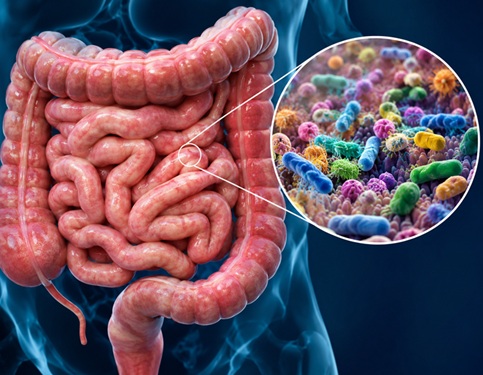
The human gut microbiome is shaped by diverse selective forces arising from host and environmental factors and significantly influences health and disease.
What is the gut microbiome ?

  • The gut microbiome is a group of trillions of microorganisms living in the human gut.
  • It primarily includes bacteria, viruses, fungi, and parasites.
  • These microorganisms help improve digestion.
  • They also play a vital role in regulating many vital biological processes in the body.

Main Functions of the Gut Microbiota

  • Obtaining Energy from Food
    • Gut microbiota assists in the digestive process.
    • It helps extract nutrients and energy from food.
  • Protection against Pathogens
    • Beneficial bacteria in the gut protect the body from harmful bacteria and pathogens.
    • It helps reduce the risk of infection.
  • Regulation of the immune system
    • Gut microbiota maintains the body's immune system.
    • It plays an important role in strengthening the immune system.
  • Intestinal protection
    • Gut microbiota strengthens the biochemical barriers of the intestines and digestive tract.
    • This improves the functioning of the digestive system and provides protection against diseases.

Why is changing the gut microbiome important ?

  • If the gut microbiota becomes out of balance, many bodily processes can be affected.
  • This is called “Gut Dysbiosis.”
  • Poor diet, stress, infections, excessive use of antibiotics, and an unhealthy lifestyle can affect the gut microbiome.

Gut Microbiome and Diseases

  • Beneficial bacteria in the gut are beneficial to the body.
  • However, sometimes harmful bacteria can also enter the digestive tract and cause infections.
  • An imbalance in the gut microbiome can cause many health problems.

Major Problems

  • Food Poisoning
  • Diarrhea
  • Vomiting
  • Digestive Infections

Inflammatory Bowel Disease (IBD)

  • Research suggests that imbalances in the gut microbiota are linked to several serious diseases, such as :
    • Crohn's Disease
    • Ulcerative Colitis
  • These are collectively called Inflammatory Bowel Disease (IBD).

Obesity and Diabetes Link

  • Scientific studies have shown :
    • Low microbial diversity in the gut is linked to obesity.
    • It may also increase the risk of type 2 diabetes.
    • Gut microbiota has also been linked to metabolic syndrome.

Effects of Antibiotics

  • Excessive or incorrect use of antibiotics can affect the balance of the gut microbiota.
  • This can destroy beneficial bacteria in the gut.
  • Disruption of the gut microbiome can increase the risk of infection.
  • This also increases the likelihood of developing antibiotic-resistant infections.

Conclusion

The gut microbiome is a vital component of human health. It plays a key role in digestion, the immune system, and disease protection. A balanced diet, regular exercise, adequate sleep, and limited use of antibiotics can help maintain good gut health. According to experts, therapies and treatments based on the gut microbiome could play a major role in the health sector in the future.

Self-employment is growing in India, but incomes are still low

Why in the news ?

The number of self-employed small traders and unregistered businesses in India is growing rapidly, but their incomes remain extremely low. The latest report from the National Statistical Office (NSO), under the Ministry of Statistics and Program Implementation, has revealed the true economic situation of small businesses in the country.

What does the Annual Survey of Unincorporated Sector Enterprises (ASUSE) 2025 report say ?

  • The National Statistical Office (NSO) released the Annual Survey of Unincorporated Sector Enterprises (ASUSE) 2025 report.
  • This report is based on the economic condition and functioning of small, unorganized, and unregistered businesses in the non-agricultural sector.
  • The survey was conducted between January 2025 and December 2025.
  • A total of 670,650 establishments were surveyed across the country.
  • These included 294,318 establishments in rural areas.
  • 376,332 establishments in urban areas were also included in the survey.

5.8 million new small businesses in a year

  • According to the report, the number of small and unorganized businesses in India is steadily increasing.
  • The total number of such businesses is projected to increase to 79.2 million by 2025, compared to 73.4 million in 2023-24.
  • This means that approximately 5.8 million new small and micro businesses were started across the country in just one year.
  • This growth has been recorded at a time when employment growth in the organized sector remains relatively slow.
  • The report indicates that a large number of people are now earning their livelihoods through small shops, home-based units, repair work, local services, self-employment, and micro-businesses.

7.5 million new jobs created

  • According to the report, the non-agricultural unorganized sector generated approximately 7.5 million new jobs in a year.
  • Approximately 128.1 million people were employed in this sector between January and December 2025.
  • This includes self-employed individuals, salaried employees, family helpers, and other workers.
  • Employment growth of 6.2 percent was recorded compared to 2023-24.

Employment Growth in Rural and Urban Areas

  • Employment in rural areas increased from 56.1 million to 60 million.
  • Employment in urban areas increased from 64.5 million to 68 million.
  • Employment growth in rural areas during this period was 6.9 percent.
  • While employment growth in urban areas was 5.6 percent.

Earnings are extremely low, even below the minimum wage.

  • While the increase in the number of businesses and employment can be considered a sign of economic activity, the report shows that the income, productivity, and social security of small businesses remain extremely weak.
  • According to the report, the average gross value added (GVA) per establishment was approximately ₹2.5 lakh per year.
  • The average GVA per worker was approximately ₹1.6 lakh per year.
  • On a daily basis, the average income of a business is approximately ₹685 per day.
  • While the average economic output per worker is approximately ₹440 per day.
  • This amount does not represent the worker's actual income, but reflects the total economic value.
  • It also includes raw materials, rent, electricity, transportation, and other operating expenses.
  • This means that actual earnings may be even lower.

Income Less Than the Minimum Wage

  • In most states, the minimum wage is set at ₹15,000 or more.
  • Despite this, reports indicate that millions of workers in the unorganized sector and small businesses are forced to work for even lower incomes.

Average Annual Salary

  • The average annual salary in the manufacturing sector was recorded at approximately ₹1.40 lakh.
  • In the business sector, it averaged ₹1.44 lakh.
  • In other service sectors, the average annual income was approximately ₹1.51 lakh.
  • On a monthly basis, this income amounts to approximately ₹12,000 to ₹13,000 per month.
  • Given rising inflation and the increasing cost of living, this income is considered extremely limited and inadequate.

Small Businesses Trapped in Debt Trap

  • According to the report, accessing credit remains a significant challenge for small businesses.
  • The average outstanding debt per establishment in the non-agricultural unorganized sector was approximately ₹42,776.
  • Although approximately 80 percent of loans were obtained from banks and other institutional sources, the average loan amount remained quite low.
  • Small businesses face numerous challenges due to limited capital and inadequate financial support.
  • Most small businesses are unable to purchase new machinery.
  • They are also unable to invest in modern technology.
  • Expanding their business also remains difficult for them.
  • This is why most small businesses in the unorganized sector are trapped in low incomes and slow economic growth.

What does this report indicate ?

  • The ASUSE 2025 report clearly shows that entrepreneurship and self-employment are growing rapidly in India.
  • A large number of people are earning their livelihoods through small businesses and the unorganized sector.
  • However, the economic situation of these small businesses remains weak.
  • The report states that low income, limited capital, weak social security, and low productivity are the major challenges facing this sector.
  • Experts believe that if small businesses receive better policy and financial support, this sector can play a major role in India's economy.

What areas need improvement ?

  • Affordable and easy credit access
  • Expanded social security
  • Technical assistance and digitization
  • Skill development and training
  • Improved market access
  • According to experts, strengthening these facilities can increase the income of small businesses and boost job creation.

Conclusion

The ASUSE 2025 report shows that unorganized and small businesses have become a major source of employment in India. Millions of people earn their livelihoods through self-employment and micro-enterprises, fostering a culture of entrepreneurship.

However, the low income, limited capital, low productivity, and weak social security of these businesses indicate that simply increasing the number of businesses is not enough. If the government strengthens financial assistance, skills development, technical support, and market access, this sector can become a major driver of India's economic growth, job creation, and self-reliance.

Deeming Clause and Anti-Defection Law

Context

  • The recent Supreme Court decision of March 10, 2026, in a cooperative societies case is currently under discussion regarding the interpretation of a crucial principle of law, the Deeming Clause. This decision not only clarifies the structure of cooperative societies but also has far-reaching implications for the interpretation of the Anti-Defection Law (Tenth Schedule), the vigilant guardian of Indian democracy. The fundamental question is whether a fiction recognized by law can replace actual facts?

Legal Fiction: Concept and Necessity

  • In the world of law, legal fiction is a device whereby a fact is assumed to be true for the purposes of justice, even if it does not actually exist. For example, treating a non-living entity such as a registered company as a person so that it can sue, or granting an adopted child the same rights as a biological child.

Historical Perspective

  • Sir Henry Maine (1861) considered it a bridge between the changing needs of society and stable laws. However, jurist Lon Fuller (1967) cautioned that legal fiction is useful only as long as we know it to be a fabricated truth. As soon as we begin to accept this fiction as absolute reality, it gives rise to legal anarchy.

The Bengal Immunity Doctrine: Setting the Limits

  • In Indian jurisprudence, Bengal Immunity Company Limited v. State of Bihar (1955) is a landmark decision that defined the legal fiction. A seven-judge bench clarified that:
    • A legal fiction is created for a specific and limited purpose.
    • It cannot be extended beyond its intended scope.
    • In other words, if the law requires an 'A' to be treated as a 'B', that person will be a 'B' only in the context for which the clause is written.

March 2026 Judgment: Registrar Cane Cooperative Societies Case

A bench of Justices P.S. Narasimha and Alok Aradhe revived this doctrine in the Registrar Cane Cooperative Societies v. Gurdeep Singh Narwal case.

  • Controversy : After the formation of Uttarakhand, some societies argued that the deeming clause automatically made them multi-state societies.
  • Court's stance : The Court clarified that the deeming clause cannot be used to overturn the statutory reorganization of an organization. The purpose of the concept was only administrative convenience, not the creation of a new legal entity.

Impact on the Anti-Defection Law (10th Schedule)

The most sensitive application of this principle can be seen in Paragraph 4 of the Tenth Schedule of the Constitution, which deals with the merger of political parties.

Merger vs. Verification

  • Paragraph 4(2) states that a merger will be deemed valid if two-thirds of the MLAs consent. However, if analyzed in light of the Bengal Immunity Doctrine:
  • The merger of the original political party must be a concrete and genuine administrative event.
  • The consent of two-thirds of the MLAs is only a criterion for verifying the merger.
  • Currently, there is a misconception that if two-thirds of the MLAs consent, it is a merger. This is a misinterpretation of the law.

Judicial Precedents and Current Challenges

  • In Rajendra Singh Rana v. Swami Prasad Maurya (2007), the Supreme Court had already clarified that a mere majority of MLAs cannot substitute for the event of a merger of the original party.
  • Despite this, the Rajya Sabha Chairman's acceptance of the merger of seven Aam Aadmi Party (AAP) MPs with the BJP in April 2026 has given rise to a serious legal debate. Experts argue that if the principles of Bengal Immunity and the Rana case were strictly applied, this faction of MLAs would not have the right to merge independently, as there was no merger of the original party.

Conclusion

  • If we consider the deeming clause constructive, we give a small faction of MLAs the power that actually belongs to the entire political party. In effect, this not only undermines the spirit of the anti-defection law but also violates the legal decorum established by Justice S.R. Das in 1955. However, keeping legal imaginations within their limited scope is the only way to maintain the sanctity of the Constitution.

Chief Minister’s Refusal to Resign

Context

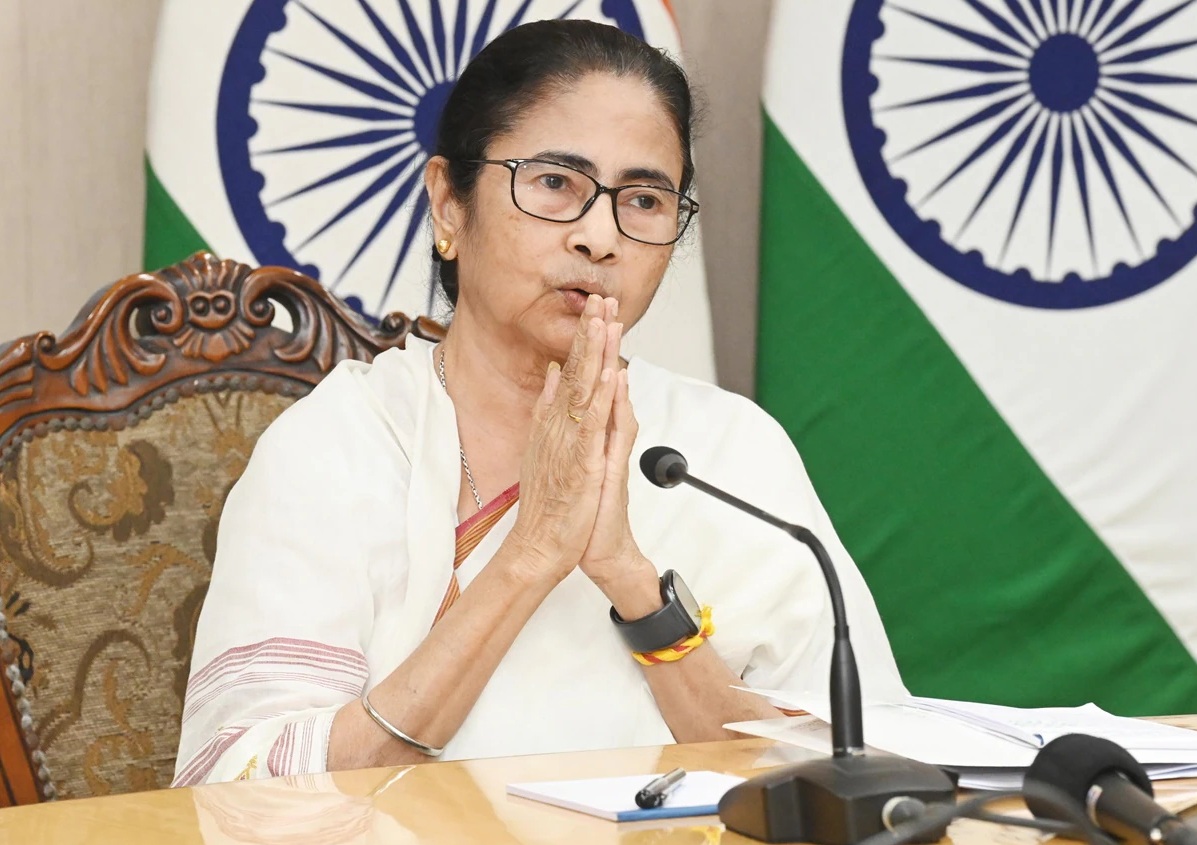
Following the 2026 West Bengal Assembly election results, in which the Trinamool Congress (TMC) faced defeat, a unique constitutional situation has emerged in the state. Party leader Mamata Banerjee stated on 5 May that she will not resign from the post of Chief Minister. She described the election outcome not as a public mandate but as a “planned conspiracy,” alleging misuse of central forces and booth capturing.

This political deadlock has brought renewed focus on the constitutional provisions governing the appointment, powers, and removal of the Chief Minister.
Appointment of the Chief Minister and Governor’s Powers

Article 164(1) of the Indian Constitution provides that the Chief Minister is appointed by the Governor. Other ministers are also appointed by the Governor, but only on the advice of the Chief Minister.

The phrase “during the pleasure of the Governor” is often misunderstood. It does not give the Governor arbitrary power to remove a Chief Minister at will.

  • Constituent Assembly Interpretation : Dr. B.R. Ambedkar clarified that the Council of Ministers remains in office as long as it enjoys majority support in the Legislative Assembly. 
  • Judicial Interpretation : In Perarivalan vs State (2022), the Supreme Court held that the Governor is a constitutional head and is generally bound by the advice of the Council of Ministers. 

Floor Test: The Final Test of Majority

When there is uncertainty regarding majority support in the Assembly, a floor test becomes the only constitutional mechanism.

  • The Chief Minister must prove majority support on the floor of the House. 
  • If the Chief Minister loses majority and refuses to resign, the Governor may dismiss the government. 
  • In case no party is able to form a government, Article 356 (President’s Rule) may be invoked. 

Term of the Legislative Assembly and Automatic Dissolution

Article 172 of the Constitution determines the duration of a State Legislative Assembly.

  • The current West Bengal Assembly began its term on 8 May 2021. 
  • Its term is scheduled to end on 7 May 2026. 

Constitutional experts argue that refusal to resign does not create a legal obstruction. According to former Lok Sabha Secretary General P.D.T. Achary, once the Assembly is dissolved on 7 May, the Chief Minister’s position automatically ceases to exist.

Thus, resignation is a democratic convention, but dissolution of the Assembly is a legal certainty.

Legal Remedies and Election Petitions

Under the Representation of the People Act, 1951, legal remedies are available to challenge election results:

  • Election Petition : Can be filed in the High Court within 45 days of result declaration. If corruption or legal violations are proven, elections can be declared void. 
  • Writ Petition : Can be filed in the High Court in cases involving voter list irregularities or procedural unfairness. 

Conclusion

In a democracy, adherence to constitutional processes is essential alongside electoral outcomes. While Mamata Banerjee may challenge the election results in court, the constitutional timeline (ending on 7 May) will pave the way for the formation of a new government.

The Governor will then have the responsibility to invite the leader of the majority party or coalition to form the government, ensuring continuity of constitutional governance.

« »
  • SUN
  • MON
  • TUE
  • WED
  • THU
  • FRI
  • SAT
Have any Query?

Our support team will be happy to assist you!

OR