
- UPSC Exam
- State PCS
- One Day Exam
- Current Affairs
- PT Quiz
- Downlaods
- About Coaching
- Blog
- Videos

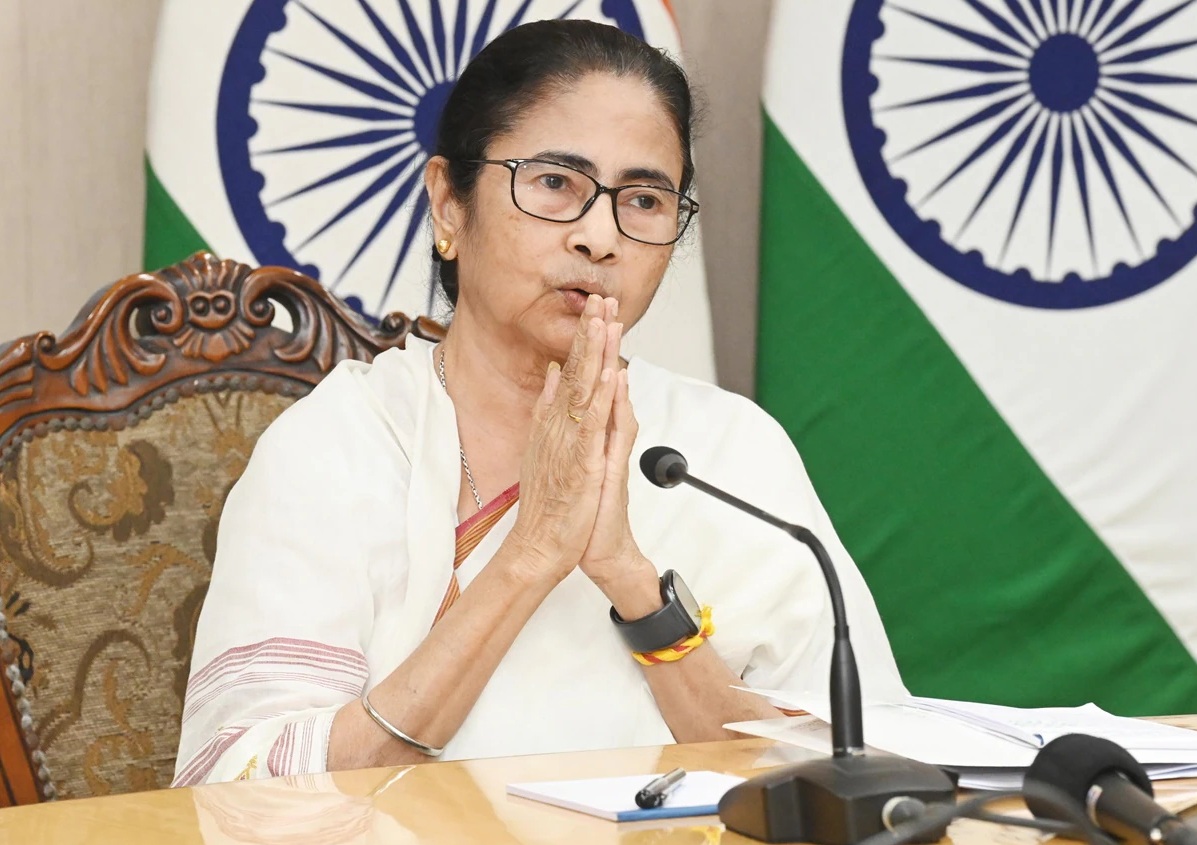
Following the 2026 West Bengal Assembly election results, in which the Trinamool Congress (TMC) faced defeat, a unique constitutional situation has emerged in the state. Party leader Mamata Banerjee stated on 5 May that she will not resign from the post of Chief Minister. She described the election outcome not as a public mandate but as a “planned conspiracy,” alleging misuse of central forces and booth capturing.
This political deadlock has brought renewed focus on the constitutional provisions governing the appointment, powers, and removal of the Chief Minister.
 Appointment of the Chief Minister and Governor’s Powers
Article 164(1) of the Indian Constitution provides that the Chief Minister is appointed by the Governor. Other ministers are also appointed by the Governor, but only on the advice of the Chief Minister.
The phrase “during the pleasure of the Governor” is often misunderstood. It does not give the Governor arbitrary power to remove a Chief Minister at will.
When there is uncertainty regarding majority support in the Assembly, a floor test becomes the only constitutional mechanism.
Article 172 of the Constitution determines the duration of a State Legislative Assembly.
Constitutional experts argue that refusal to resign does not create a legal obstruction. According to former Lok Sabha Secretary General P.D.T. Achary, once the Assembly is dissolved on 7 May, the Chief Minister’s position automatically ceases to exist.
Thus, resignation is a democratic convention, but dissolution of the Assembly is a legal certainty.
Under the Representation of the People Act, 1951, legal remedies are available to challenge election results:
In a democracy, adherence to constitutional processes is essential alongside electoral outcomes. While Mamata Banerjee may challenge the election results in court, the constitutional timeline (ending on 7 May) will pave the way for the formation of a new government.
The Governor will then have the responsibility to invite the leader of the majority party or coalition to form the government, ensuring continuity of constitutional governance.



Our support team will be happy to assist you!

 Contact Us
  New Batch : 9555124124/ 7428085757
  Tech Support : 9555124124/ 7428085757