Context
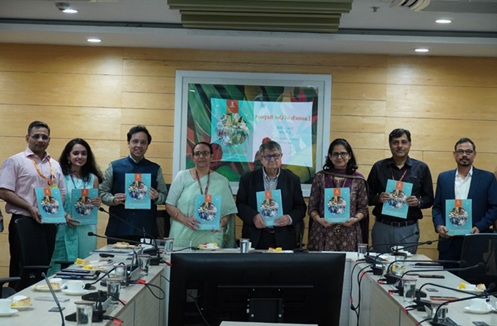
Key Points from the NITI Aayog Report
- India's school education system, the world's largest with 1.471 million schools and over 246.9 million students, is currently undergoing a major transformation.
- This report is a synthesis of data from the past decade (such as UDISE+ 2024-25 and NAS 2021) and findings from national workshops, laying out a concrete blueprint for the future education system.
Achievements of the Past Decade: At a Glance
- According to the report, India has made unprecedented progress in education infrastructure and access. The following key improvements have been highlighted through data analysis and heat maps:
- Digital expansion : There has been a significant increase in the availability of computers, internet connectivity, and smart classrooms in schools.
- Infrastructure : Electricity and functional sanitation (toilets) are now available in most schools.
- Equity and inclusion : There has been a significant improvement in the participation of girl students in school. Additionally, the enrolment ratio of Scheduled Caste (SC) and Scheduled Tribe (ST) students has also seen a positive increase.
- Learning outcomes : Despite the post-pandemic challenges, the impact of the Nipun Bharat Mission and the National Education Policy 2020 has shown signs of improvement in basic literacy and numeracy (FLN).
Future Challenges and Strategic Recommendations
The report identifies 11 key challenges and provides 13 broad recommendations to address them, divided into two main categories :
- Systemic Recommendations
- Making schools more holistic through evidence-based rationalization.
- Improving governance and establishing a district-level task force.
- Emphasis on transparent teacher deployment and continuous professional development.
- Empowering School Management Committees (SMCs).
- Academic Recommendations
- Use of artificial intelligence for pedagogical innovation.
- Integrating vocational education with mainstream education.
- Strengthening early childhood care and education (ECCE).
- Promoting understanding and skill-based assessment rather than rote learning.
Implementation Framework
- NITI Aayog has not only provided recommendations but also outlined a 33-point roadmap for their implementation. These are divided into short-term, medium-term, and long-term perspectives.
- The plan's most significant feature is its accountability. The report clearly defines the responsibilities of the central, state, and local bodies. More than 125 performance success indicators (KPIs) have been set to measure progress, ensuring that policies do not remain confined to paper.
Conclusion
- This NITI Aayog report is a bold attempt to move Indian school education beyond mere literacy and toward quality and inclusive education. If these 13 recommendations are implemented correctly, India will rapidly progress on its path to becoming a global knowledge superpower.






 Contact Us
  New Batch : 9555124124/ 7428085757
  Tech Support : 9555124124/ 7428085757