New
Hindi Medium: (Delhi) - GS Foundation (P+M) : 14th Oct. 2026, 06:00 PM Hindi Medium: (Prayagraj) - GS Foundation (P+M) : 23rd Oct. 2026, 11:00 AM English Medium: (Delhi) - GS Foundation (P+M) : 12th Oct. 2026, 5:30PM English Medium: (Prayagraj) - GS Foundation (P+M) : 19th Aug 2026, 11:00 AM Hindi Medium: (Delhi) - GS Foundation (P+M) : 14th Oct. 2026, 06:00 PM Hindi Medium: (Prayagraj) - GS Foundation (P+M) : 23rd Oct. 2026, 11:00 AM English Medium: (Delhi) - GS Foundation (P+M) : 12th Oct. 2026, 5:30PM English Medium: (Prayagraj) - GS Foundation (P+M) : 19th Aug 2026, 11:00 AM

Current Affairs for 09 October 2026

US Suspends Indian IT Giants from Green Card Filings: Reasons, PERM Rules and Impact on Indian Workers

Prelims: PERM, Green Card, H-1B Visa, US Department of Labor, Employment-Based Immigration, EB-2 and EB-3 Categories
Mains: GS Paper II – India–US Relations, Indian Diaspora and International Migration; GS Paper III – Globalisation, Employment and the IT Services Sector
Keywords: US Green Card suspension, Cognizant, Infosys, TCS, Wipro, HCL, Capgemini, Microsoft, Adobe, PERM labour certification, H-1B visa, skilled migration, Indian IT professionals and US immigration policy.

Why in News?

  • The US Department of Labor has announced the suspension of several major technology and IT services companies, including Cognizant, Infosys, Tata Consultancy Services (TCS), Wipro, HCL and Capgemini, from the Permanent Labour Certification Programme (PERM).
  • The Trump administration has cited alleged fraud, concerns over foreign labour recruitment and the displacement of American workers. Microsoft and Adobe have also reportedly faced suspension from the programme.

What is the Green Card System

  • A Green Card allows a foreign national to live and work permanently in the United States, subject to applicable immigration laws. Many skilled professionals obtain permanent residency through employment-based immigration.
  • In several employment-based categories, employers must first complete the PERM labour certification process before proceeding with an immigrant petition.
  • Indian professionals represent a significant share of skilled foreign workers in the US. However, annual limits on employment-based immigrant visas and country-specific restrictions contribute to lengthy waiting periods for Indian applicants.

What is PERM?

  • PERM stands for Program Electronic Review Management. It is the US Department of Labor's system for processing labour certification applications in many employer-sponsored Green Card cases.
  • Its primary objective is to ensure that employing a foreign worker permanently does not adversely affect the wages and working conditions of similarly employed American workers.
  • The process generally involves obtaining a prevailing wage determination, conducting prescribed recruitment to assess the availability of qualified US workers and submitting a labour certification application. If approved, the employer can proceed to the relevant immigrant petition stage, subject to applicable requirements.

PERM is not itself a Green Card or a work visa. It is an important preliminary stage in many employment-based permanent residency applications.

Why Has the US Suspended Major IT Companies?

  • Protection of American Workers: The Trump administration argues that employers should prioritise qualified American workers and prevent immigration programmes from being misused at the expense of domestic employment.
  • Concerns About Wage Competition: Authorities have raised concerns about potential wage undercutting and fraudulent filings under employment-based immigration programmes.
  • Stricter Immigration Enforcement: The suspensions reflect the administration's broader emphasis on immigration enforcement and domestic employment protection. Large IT services companies face particular scrutiny because their business models often involve international recruitment and the deployment of skilled workers across borders.

PERM Vs H-1B Visa

PERM and the H-1B visa serve different purposes.

  • PERM: A labour certification process used in many employer-sponsored employment-based Green Card cases.
  • H-1B visa: A temporary, non-immigrant classification allowing eligible US employers to hire foreign professionals in speciality occupations.

An H-1B visa does not automatically grant permanent residency. Similarly, suspension from PERM filings does not automatically cancel an employee's existing H-1B status.

Significance of the Development

  • For the US: The action highlights the government's emphasis on enforcing immigration rules and protecting domestic employment. Its actual impact on wages and job creation will depend on implementation and employer responses.
  • For India: The development could affect Indian professionals and IT companies operating in the US, an important market for India's technology services industry.
  • For skilled migration: It demonstrates how immigration regulations can influence international talent mobility and the global competition for skilled workers.
  • For India–US relations: Restrictions may create friction over skilled mobility and services trade. However, the broader impact will depend on the duration of the suspensions and subsequent policy developments.

Challenges Ahead

  • Regulatory uncertainty: Employers and employees may not know when affected filings can resume.
  • Long waiting periods: Existing Green Card backlogs may compound the impact on Indian applicants.
  • Employee retention: Immigration uncertainty may encourage professionals to explore opportunities elsewhere.
  • Compliance requirements: Companies may need stronger recruitment documentation and immigration oversight.
  • Business costs: Delays in retaining and deploying skilled workers may increase operational and administrative expenses.

Relevance for India

  • The development highlights India's need to protect the interests of its skilled workforce while strengthening domestic employment opportunities.
  • Indian IT companies can diversify their international markets, expand operations across regions and invest in advanced technologies such as artificial intelligence, cybersecurity and cloud computing.
  • The government can also engage with US counterparts through established diplomatic and economic channels to address concerns affecting Indian professionals.

Way Forward

  • The US government should ensure that enforcement action is transparent, evidence-based and consistent with applicable law. Clear communication about the scope and duration of suspensions would help employers and workers make informed decisions.
  • Indian IT companies should strengthen immigration compliance, review affected cases and provide employees with reliable legal guidance. Professionals should consult qualified US immigration counsel before making decisions about employment, travel or visa extensions.
  • India should continue promoting skilled mobility while investing in high-value domestic technology jobs and diversifying international economic opportunities.

Conclusion

  • The suspension of major IT companies from the PERM programme highlights the growing importance of immigration compliance and domestic employment priorities in US policy.
  • For Indian professionals, the immediate concern is the potential delay in employer-sponsored Green Card applications. The consequences for existing cases and H-1B extensions will depend on the specific restrictions and individual circumstances.

Prelims Practice Question

Consider the following statements about the PERM programme:

  1. It is a labour certification process used in many employer-sponsored Green Card cases.
  2. An H-1B visa automatically grants permanent residency.
  3. Labour certification requirements help protect the wages and working conditions of US workers in covered cases.

Which of the statements given above are correct?

(a) 1 and 2 only
(b) 1 and 3 only
(c) 2 and 3 only
(d) 1, 2 and 3

Mains Practice Question

Examine the implications of stricter US employment-based immigration rules for Indian IT professionals and India's technology industry.

FAQs

Q1. What is PERM?

PERM is a US labour certification process used in many employer-sponsored employment-based Green Card cases.

Q2. Which companies have reportedly been suspended?

The reported action names Cognizant, Infosys, TCS, Wipro, HCL and Capgemini. Microsoft and Adobe have also reportedly faced suspension.

Q3. Does the suspension mean Indian employees must leave the US?

No. It does not automatically cancel existing visas or require all affected employees to leave the country.

Q4. Why are Indian workers concerned?

Many rely on employer-sponsored Green Cards and already face substantial waiting periods in employment-based immigration categories.

Q5. Can affected workers extend their H-1B status?

Some workers may qualify for extensions under specific legal provisions. Eligibility depends on their individual circumstances and immigration case status.

PRASHAST: 72 Lakh Teachers Trained to Identify Students with Disabilities through Digital Screening

Prelims: Rights of Persons with Disabilities (RPwD) Act, 2016, National Education Policy (NEP) 2020, Right to Education (RTE) Act, 2009, Unique Disability ID (UDID), PM-DAKSH Scheme.
Mains: GS Paper II – Issues Relating to Education, Government Policies and Interventions, Vulnerable Sections of Society, Inclusive Education and Social Justice.
Keywords: PRASHAST Screening Tool, Disability Identification, Inclusive Education, Early Intervention, Digital Education, Children with Disabilities, RPwD Act 2016, UDID Card, NEP 2020, Educational Accessibility.

Why in News?

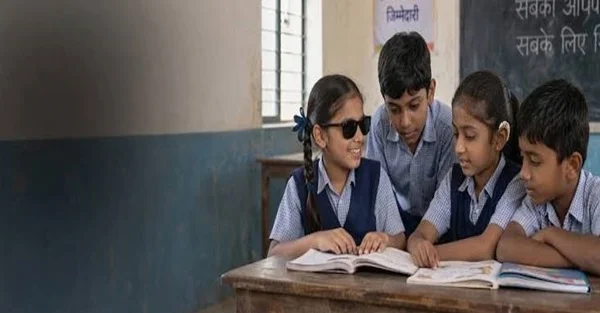
  • The Ministry of Education (MoE) has trained approximately 72 lakh teachers across up to 60,000 schools to identify students with probable disabilities using PRASHAST, a digital school-based screening tool.
  • The initiative aims to promote early identification of disability-related needs, facilitate referrals for professional assessment and improve access to educational support and government welfare schemes.

What is PRASHAST

  • PRASHAST is a school-based digital screening tool designed to help identify children who may have disabilities covered under the Rights of Persons with Disabilities (RPwD) Act, 2016.
  • Many disabilities, particularly specific learning disabilities, autism spectrum disorder and certain sensory or developmental conditions, may not be immediately visible. Without a systematic screening mechanism, students may remain unidentified and fail to receive timely educational support.
  • PRASHAST seeks to use teachers’ regular interactions with students to recognise possible signs of disability and connect children with appropriate assessment and support services.

Features of the PRASHAST Screening Tool

The Ministry of Education has conducted sensitisation and training activities for general teachers to strengthen their understanding of inclusive education.

  • Approximately 72 lakh teachers have been trained.
  • The outreach covers up to 60,000 schools.
  • The initiative promotes the systematic observation of students’ learning, communication, movement and social interaction.
  • The training also encourages respectful and inclusive practices across school environments.

Identification Across 21 Disability Categories

PRASHAST is designed to support the identification of conditions associated with the 21 disability categories listed under the RPwD Act, 2016.

Examples include:

  • Locomotor disability and cerebral palsy
  • Blindness and low vision
  • Hearing impairment
  • Speech and language disability
  • Specific learning disabilities
  • Autism spectrum disorder
  • Intellectual disability
  • Multiple sclerosis and Parkinson’s disease
  • Haemophilia and thalassemia
  • Leprosy-cured persons and dwarfism

The legal categories also cover other specified disabilities under the Act. The purpose of screening is to identify potential support needs, rather than to label students solely on the basis of classroom observations.

How Does PRASHAST Work?

The process connects classroom observation with professional assessment and educational support.

Step 1: Teacher Training: Teachers and other school personnel receive sensitisation on disability awareness, screening indicators and inclusive practices.

Step 2: School-Based Screening: Teachers use the PRASHAST checklist to record observable indicators that may suggest a disability-related need.

Step 3: Review by Special Educators: Special educators examine the findings, help identify suspected disability categories and determine whether further assessment or referral is required.

Step 4: Professional Assessment and Certification: Where necessary, students are referred for medical or other authorised assessment. Disability certification is completed through the prescribed process.

Step 5: Access to Support and Welfare Schemes: Eligible students can be connected with relevant educational accommodations, scholarships and disability-related welfare schemes, subject to the applicable eligibility requirements.

Significance of the PRASHAST Initiative

  • Early Identification of Disabilities: Early screening can help identify children whose needs may otherwise remain unnoticed. Timely recognition allows schools and families to seek professional guidance and appropriate support.
  • Promoting Inclusive Education: The initiative supports an education system in which children with disabilities can participate in learning alongside their peers, with reasonable accommodations and suitable assistance.
  • Reducing Misidentification and Stigma: A structured screening process can encourage evidence-based referrals instead of informal labelling. Appropriate assessment helps distinguish between different learning difficulties and other possible causes of a student's challenges.
  • Improving Learning Outcomes: Students who receive suitable support at an early stage may be better equipped to participate in classroom activities, develop essential skills and continue their education.
  • Strengthening Coordination: Linking screening with assessment, certification and support services can improve coordination between schools, special educators, health professionals and government agencies.

Connection with UDID and Welfare Schemes

  • Screening findings are intended to support connections with disability certification and the Unique Disability ID (UDID) system, which helps persons with disabilities access relevant benefits and services.
  • The information may also support access to schemes such as PM-DAKSH and scholarships through the National Scholarship Portal, where eligibility criteria are met. Screening alone does not automatically confer a disability certificate or entitlement to a scheme.

Implementation Roadmap

According to the plan described by the Ministry of Education:

  • July–September: Completion of the required teacher training.
  • October: Organisation of intervention camps for assessment and necessary support.
  • December: Evaluation of outcomes based on student progress and interventions.

These timelines describe the announced implementation plan; actual completion and outcomes should be assessed against subsequent official updates.

Challenges in Implementation

  • Shortage of Special Educators: Many schools may lack sufficient special educators to review screening results and support students identified through the tool.
  • Risk of Incorrect Identification: Observable behaviours can have multiple explanations. For example, reading difficulties may arise from different learning needs, language barriers or inadequate instructional support. Screening must therefore be followed by appropriate assessment.
  • Digital Accessibility and Infrastructure: Unequal access to devices, internet connectivity and digital literacy may affect implementation, particularly in remote and underserved areas.
  • Social Stigma and Awareness: Negative attitudes towards disability can discourage families from seeking assessment or accepting support. Schools must communicate findings sensitively and protect students from discrimination.
  • Data Privacy and Confidentiality: Disability-related information is sensitive. Its collection, storage, sharing and use must follow applicable privacy requirements and appropriate safeguards.
  • Continuity of Support: Identification alone cannot ensure inclusion. Students also need accessible classrooms, assistive devices where appropriate, trained personnel, reasonable accommodations and continued academic support.

Way Forward

  • Strengthen Special Educator Networks: Schools should have access to trained special educators through dedicated appointments, resource centres or shared specialist services.
  • Ensure Timely Professional Assessment: Clear referral pathways should connect schools with authorised assessment facilities and relevant health professionals.
  • Improve Teacher Capacity: Training should be supported by refresher courses, practical guidance and regular mentoring.
  • Promote Accessible School Infrastructure: Schools should improve physical accessibility, learning materials, communication support and the availability of assistive technologies.
  • Protect Student Privacy: Access to screening records should be restricted to authorised purposes, with safeguards against unauthorised disclosure and discriminatory use.
  • Engage Parents and Communities: Families should receive clear information about screening, assessment, available services and their children’s educational rights.
  • Monitor Outcomes: Evaluation should consider not only the number of students screened but also the time taken for assessment, access to support, attendance, participation and learning progress.

Conclusion

  • PRASHAST represents an important step towards making schools more responsive to the needs of children with disabilities. By training teachers to recognise possible indicators and connecting screening with specialised assessment, the initiative can help reduce delays in identifying support needs.
  • However, its long-term success will depend on adequate special educator capacity, reliable referral systems, privacy safeguards and accessible learning environments. The ultimate objective is not merely to identify disability, but to ensure that every child receives the support needed to learn, participate and progress with dignity.

Prelims Practice Question

Q. With reference to PRASHAST, consider the following statements:

  1. It is a school-based tool designed to support the early identification of children with probable disabilities.
  2. It is associated with the Rights of Persons with Disabilities Act, 2016.
  3. Screening through PRASHAST automatically grants a child a disability certificate and a UDID card.

Which of the statements given above is/are correct?

(a) 1 and 2 only
(b) 2 and 3 only
(c) 1 and 3 only
(d) 1, 2 and 3

Mains Practice Question

Q. Discuss the role of digital screening tools such as PRASHAST in promoting inclusive education in India. Examine the key challenges in their implementation and suggest measures to ensure effective support for children with disabilities. (250 words)

Frequently Asked Questions (FAQs)

Q1. What is PRASHAST?

PRASHAST is a school-based digital screening tool developed to help identify children who may have disabilities and require further assessment or educational support.

Q2. Which ministry is associated with the PRASHAST initiative?

The initiative is associated with the Ministry of Education, Government of India.

Q3. How many disability categories does PRASHAST cover?

It is designed to support screening for conditions associated with the 21 disability categories listed under the RPwD Act, 2016.

Q4. What is the role of special educators?

Special educators review screening findings, help identify suspected disability categories and facilitate referrals for further assessment.

Q5. How is PRASHAST related to inclusive education?

It can help schools identify students who need additional support and connect them with appropriate services, educational accommodations and learning interventions.

Central Armed Police Forces Act, 2026: Key Provisions, Supreme Court Challenge and Implications

Why in News?

  • The Central Armed Police Forces (General Administration) Act, 2026 has come into force after being notified by the Ministry of Home Affairs (MHA). The Act establishes a common framework for the recruitment, promotion and service conditions of Group A officers in the five Central Armed Police Forces (CAPFs), while prescribing quotas for Indian Police Service (IPS) officers in senior positions.
  • The legislation comes amid an ongoing dispute over IPS deputation to senior CAPF posts. In its judgment of 23 May 2025, the Supreme Court directed that such deputation should be progressively reduced. The Act’s validity is now under challenge before the Court, which is scheduled to hear the related petitions on 15 October.

What Is the Central Armed Police Forces Act, 2026?

  • The Act provides a common legal framework for the senior executive cadre, comprising Group A officers, of the five CAPFs. It empowers the Central Government to frame rules governing their recruitment, promotion and service conditions.
  • The five forces covered under the Act are:
    • Central Reserve Police Force (CRPF)
    • Border Security Force (BSF)
    • Central Industrial Security Force (CISF)
    • Indo-Tibetan Border Police (ITBP)
    • Sashastra Seema Bal (SSB)
  • Officers in these forces generally enter the officer cadre as Assistant Commandants and progress through the ranks. IPS officers are also appointed to senior CAPF positions on central deputation.

Key Provisions of the Act

1. Reservation of Senior Posts for IPS Officers

  • The Act provides for the reservation of 50% of Inspector General (IG) posts and at least 67% of Additional Director General (ADG) posts for IPS officers on deputation. 
  • It also reserves all Special Director General and Director General posts for deputation.

2. Common Service Framework

  • The legislation establishes a common framework for Group A officers across the five CAPFs, allowing the Centre to prescribe recruitment, promotion and service-related rules.

3. Rules Despite Conflicting Court Directions

  • The Act contains a provision stating that rules framed under it will remain valid even if they are inconsistent with a court judgment. 
  • This provision has become a key point of contention in the legal challenge to the legislation.

What Did the Supreme Court Direct in 2025?

  • On 23 May 2025, the Supreme Court issued directions concerning cadre management and IPS deputation in the CAPFs. It directed that the deputation of IPS officers to senior positions should be progressively reduced.
  • The dispute concerns the career progression of CAPF officers, who argue that the appointment of IPS officers to senior posts limits their opportunities for promotion to higher ranks.

Status of the Legal Proceedings

  • Three major developments have brought the issue before the Supreme Court:
    • Contempt petitions: Petitioners allege that the Union Government has not fully complied with the Court’s 2025 directions. The Ministry was also required to explain the induction of 46 IPS officers into the forces in the context of those directions.
    • Challenge to the Act: Serving CAPF officers have challenged the constitutional validity of the 2026 legislation.
    • Joint hearing: A two-judge Bench has decided to hear the contempt petitions alongside three writ petitions challenging the Act on 15 October.

One of the petitioners is Bibhor Kumar Singh, a CRPF Assistant Commandant and Shaurya Chakra awardee who lost both legs during an anti-Maoist operation.

Why Is the Centre Supporting IPS Deputation to CAPFs?

  • The Ministry of Home Affairs argues that CAPFs have important operational responsibilities and should not be treated in the same way as civilian Group A services.
  • According to the Centre, IPS officers help coordinate between the Union Government and State police forces, particularly when CAPFs are deployed in different States.
  • However, the deputation system presents a practical difficulty. Although the Act reserves senior positions for IPS officers, the Centre has reportedly faced challenges in filling some of these posts because State governments may be reluctant to release officers for central deputation.
  • The disagreement therefore involves two competing considerations: the Centre’s demand for administrative and operational coordination, and the career progression of officers belonging to the CAPF cadres.

Key Challenges Associated with the Act

1. Conflict Between Legislation and Judicial Directions

  • Parliament can amend the legal framework underlying a judicial decision, subject to constitutional limitations. However, legislation cannot simply declare a binding judicial judgment ineffective. 
  • The provision seeking to preserve rules despite conflicting court judgments is therefore open to judicial scrutiny.

2. Limited Promotion Opportunities for CAPF Officers

  • The reservation of senior posts for deputation may restrict the number of positions available for cadre officers.
  • This can delay promotions, affect morale and raise concerns about long-term career progression.

3. Overlapping Legal Proceedings

  • The contempt petitions and the petitions challenging the Act raise distinct legal questions. The contempt proceedings concern compliance with the earlier judicial directions, while the writ petitions question the validity of the new legislation.
  • Hearing them together may help the Court examine their relationship, but each issue requires separate legal consideration.

4. Administrative and Operational Requirements

  • The Centre must balance the need for coordination between Central and State police establishments with the need to maintain a clear and fair promotion structure for CAPF officers.

Way Forward

1. Conduct a Time-Bound Cadre Review

  • The Ministry of Home Affairs should review the organisational structure and senior-level vacancies in the CAPFs. 
  • Where operationally justified, additional senior posts could improve promotion opportunities for cadre officers.

2. Ensure Predictable Career Progression

  • Service rules should provide transparent promotion criteria and examine ways to ensure career progression does not depend entirely on the availability of vacancies. 
  • Any financial or non-functional advancement mechanism should be designed in accordance with applicable service rules.

3. Rationalise IPS Deputation

  • Deputation should be aligned with clearly identified operational and coordination requirements. 
  • A transparent policy, including a phased schedule where appropriate, could provide greater certainty to both IPS officers and CAPF cadre officers.

4. Respect Judicial Review

  • The constitutional validity of the Act and the question of compliance with the 2025 judgment should be resolved through the judicial process. 
  • An early and clear ruling would reduce uncertainty over the implementation of the new framework.

Conclusion

  • The Central Armed Police Forces (General Administration) Act, 2026, has raised concerns over the appointment of IPS officers to senior CAPF posts. While the Centre highlights the need for better coordination, CAPF officers are concerned about their promotion opportunities and the implementation of the Supreme Court’s earlier directions.
  • The Supreme Court hearing scheduled for 15 October will examine the government’s compliance with its 2025 judgment and the validity of the new law. The decision will affect senior appointments, promotions and the rules governing CAPF officers.

Prelims Practice Question 

The Central Armed Police Forces (General Administration) Act, 2026, primarily deals with which of the following?

(a) Recruitment of personnel in State police forces 

(b) Recruitment, promotion and service conditions of Group A officers in CAPFs 

(c) Establishment of a new intelligence agency 

(d) Deployment of the Indian Army in border areas

Mains Practice Question

Q. “The Central Armed Police Forces (General Administration) Act, 2026, raises important questions regarding the relationship between legislative authority and judicial review.” Discuss the key provisions of the Act and examine its implications for CAPF cadre management, career progression and the separation of powers. 

FAQs

1. What is the Central Armed Police Forces (General Administration) Act, 2026?

It is a law that establishes a common framework for the recruitment, promotion and service conditions of Group A officers in the five CAPFs.

2. Which five forces are covered under the Act?

The CRPF, BSF, CISF, ITBP and SSB are covered under the legislation.

3. What is IPS deputation in CAPFs?

IPS deputation refers to the appointment of Indian Police Service officers to positions in CAPFs for a specified period, including senior leadership posts.

4. Why has the Act been challenged in the Supreme Court?

Serving CAPF officers have challenged its validity amid concerns that its deputation provisions conflict with the Supreme Court's 2025 directions to progressively reduce IPS deputation to senior posts.

5. What did the Supreme Court direct in its 2025 judgment?

On 23 May 2025, the Court directed that IPS deputation to senior CAPF posts should be progressively reduced.

57th GST Council Meeting 2026: Key Facts, Voting Structure, Major Reforms, Inverted duty structure, Significance and Challenges

Prelims: Goods and Services Tax (GST), GST Council, Article 279A, GST Registration, Input Tax Credit (ITC), GST Refunds, Inverted Duty Structure and GST Appellate Tribunal (GSTAT).
Mains: GS Paper III: Indian Economy, Taxation Reforms, Ease of Doing Business, Fiscal Federalism, MSMEs and Economic Growth.

Why in news?

The GST Council has announced reforms aimed at simplifying GST registration, accelerating refund processing and reducing tax-related litigation.

Key Facts

Particular

Details

Reform Area

GST Administration and Compliance

Constitutional Body

GST Council

Constitutional Provision

Article 279A

Chairperson

Union Finance Minister

GST Implementation

1 July 2017

Major Focus

Refunds, Registration and Dispute Resolution

Beneficiaries

MSMEs, Exporters, Startups and Businesses

Key Institution

GST Appellate Tribunal (GSTAT)

Main Objective

Ease of Doing Business and Reduced Compliance Burden

What is the GST Council?

  • The Goods and Services Tax Council is a constitutional body established under Article 279A of the Indian Constitution. The Council is chaired by the Union Finance Minister.
  • It makes recommendations to the Union and State governments on important GST-related matters, including tax rates, exemptions and administrative reforms.
  • Its members include the Union Minister of State responsible for Revenue or Finance and the Finance or Taxation Ministers nominated by the States.
  • The Council represents an important example of cooperative fiscal federalism in India.

GST Council Voting Structure

Component

Voting Weight

Central Government

One-third

State Governments collectively

Two-thirds

Majority required for a decision put to vote

At least three-fourths of weighted votes of members present and voting

Major Reforms Announced at the 57th GST Council Meeting

The 57th GST Council meeting was held on 8 October 2026 in New Delhi, chaired by Union Finance Minister Nirmala Sitharaman. 

  • Simplification of GST Registration
    • Clearer documentation requirements and a more user-friendly GST registration portal have been recommended.
    • Eligible registration amendments will be accepted automatically, reducing unnecessary interaction with tax officers.
    • Registration cancellation will be simplified through a phased, system-based mechanism.
    • Small e-commerce sellers will be able to use an eligible platform operator's warehouse as their principal place of business in another state, subject to conditions.
    • These reforms aim to reduce registration delays and help smaller businesses expand across states.
  • Faster GST Refunds

Reform

Proposed Change

Refund acknowledgement

Time limit reduced from 15 to 10 days

Excess cash-ledger balance

Automatic full refund sanction

Zero-rated supplies

Risk-based provisional sanction of 90% of the claim

Inverted duty structure

Risk-based provisional sanction of 90% of the claim

Refund applications

Greater use of system-readable information

  • Reforms to Reduce GST Litigation
    • A ₹10,000 minimum tax-amount threshold was recommended for issuing show-cause notices, with provisions addressing certain pending cases.
    • The maximum general penalty under Section 125 of the CGST Act was proposed to be reduced from ₹25,000 to ₹10,000.
    • A reduced penalty of 5% was recommended in specified non-fraud cases where tax and interest are paid within the prescribed period.
    • Common guidelines will improve the quality of notices, adjudication orders and personal hearings.
    • Limits on pre-deposits for appeals involving only penalties are intended to reduce financial barriers to dispute resolution.
    • Changes to Arrest and Prosecution Provisions

The Council recommended:

  • Removing GST arrest powers by omitting Section 69 of the CGST Act, 2017.
    • Increasing the monetary threshold for prosecution from ₹1 crore to ₹5 crore.
    • Rationalising punishment provisions while retaining action against specified fraudulent activities.
    • The objective is to move towards a more trust-based tax administration without eliminating safeguards against serious fraud. 
  • Input Tax Credit Reforms
    • Input Tax Credit (ITC) allows eligible businesses to offset GST paid on purchases against GST payable on their sales.
    • The Council recommended expanding ITC refund eligibility for specified capital goods and input services, removing certain restrictions on blocked ITC, improving invoice reconciliation and correction mechanisms and providing taxpayers an opportunity to object and seek a personal hearing when credit in their electronic credit ledger is blocked.
    • These changes aim to reduce cascading taxation, working-capital blockage and disputes arising from mismatched returns.
  • Easier GST Compliance for Small Businesses
    • The Council approved in principle an optional Annual Return Quarterly Payment (ARQP) scheme for eligible businesses with turnover up to ₹5 crore that exclusively supply to unregistered customers.
    • Conditional late-fee relief was recommended for certain small taxpayers.
    • Return-filing improvements are intended to reduce mismatches between GST declarations and available tax credits.
  • Reforms for Exporters and Interstate Trade
    • The Council recommended changes to clarify export-of-services eligibility and related refund provisions.
    • E-way bill enforcement would become more intelligence-based, with specified restrictions on vehicle interception in transit states.
    • These measures are intended to reduce unnecessary logistical delays and improve cross-border business operations.

What is an inverted duty structure?

  • It occurs when the GST rate on inputs is higher than the rate on the finished product, potentially leading to accumulated Input Tax Credit.
  • The reforms aim to improve business liquidity and reduce delays in receiving eligible refunds. 

Significance of the Reforms

  • Ease of Doing Business: Simpler registration and compliance procedures can reduce administrative costs.
  • MSME Development: Faster refunds can improve liquidity for smaller businesses.
  • Reduced Litigation: Clearer procedures and proportionate penalties may reduce unnecessary disputes.
  • Digital Governance: Automated processing can improve transparency and consistency.
  • Export Competitiveness: Improved refund and credit mechanisms can reduce working-capital pressures on exporters.
  • Cooperative Federalism: GST Council decisions demonstrate coordination between the Union and States on indirect taxation.

Challenges

  • Implementation: Legislative amendments, notifications and portal upgrades are required
  • Technology Dependence: Automated systems must be accurate, accessible and reliable
  • Fraud Prevention: Faster processing must be balanced with effective risk assessment
  • Centre-State Coordination: Consistent implementation across jurisdictions is essential
  • Taxpayer Awareness: Small businesses need guidance on revised procedures

Prelims MCQ

Q. With reference to the GST Council and its recent reforms, consider the following statements:

  1. The GST Council is constituted under Article 279A of the Constitution.
  2. The Council has recommended increasing the GST prosecution threshold from ₹1 crore to ₹5 crore.
  3. The GST Council is chaired by the Governor of the Reserve Bank of India.

Which of the statements given above are correct?

(a) 1 and 2 only 

(b) 2 and 3 only 

(c) 1 and 3 only 

(d) 1, 2 and 3

Mains Practice Question

Q. Discuss how recent GST administrative reforms can improve ease of doing business and reduce tax litigation in India.

FAQs

When was the 57th GST Council meeting held?

8 October 2026, in New Delhi.

Who chaired the meeting?

Union Finance Minister Nirmala Sitharaman.

What was the main focus of the reforms?

Simpler registration, faster refunds, improved ITC and reduced litigation.

What is the proposed minimum threshold for GST show-cause notices?

₹10,000 in tax amount.

What is the proposed refund acknowledgement period?

10 days instead of 15 days.

Nobel Peace Prize 2026: Navanethem

Why in News?

  • The Nobel Peace Prize 2026 is scheduled to be announced on 9 October 2026 by the Norwegian Nobel Committee in Oslo, Norway.
  • Navanethem "Navi" Pillay  is awarded the Nobel Peace Prize 2026. 

Key Facts 

Particular

Details

Award

Nobel Peace Prize

Announcement date

9 October 2026

Announcing institution

Norwegian Nobel Committee

Location

Oslo, Norway

Total nominations

287

Individual nominees

208

Organisational nominees

79

Prize money

12 million Swedish kronor

Award ceremony

10 December 2026

2026 laureate

Navanethem "Navi" Pillay 

Who Is Navi Pillay?

  • Navanethem "Navi" Pillay was born in Durban, South Africa, in 1941. She built her legal career during apartheid, a system of institutionalised racial segregation and discrimination.
  • She became the first woman to establish her own law practice in Natal and later served in prominent national and international judicial positions. 

Particular

Details

Full name

Navanethem "Navi" Pillay 

Popularly known as

Navi Pillay

Country

South Africa

Born

23 September 1941

Profession

Lawyer, judge and human rights advocate

UN High Commissioner for Human Rights

2008–2014

Major areas of work

Human rights, international justice and accountability

Major Contributions

  • Fight Against Apartheid:  "Navi" Pillay challenged racial discrimination and worked to protect the legal rights of marginalised communities under South Africa's apartheid system.
  • International Criminal Justice: She served as a judge at the International Criminal Tribunal for Rwanda (ICTR) and later at the International Criminal Court (ICC), contributing to the development of international criminal jurisprudence.
  • United Nations Human Rights Leadership: As UN High Commissioner for Human Rights from 2008 to 2014, she addressed discrimination, political repression, violence against civilians and other serious human rights concerns.
  • Women's Rights: She co-founded Equality Now, an organisation working to advance women's and girls' rights internationally. 

Navi Pillay's Role in Investigating the Israel-Palestine Conflict

  • Pillay also chaired the UN Independent International Commission of Inquiry on the Occupied Palestinian Territory, including East Jerusalem, and Israel.
  • In September 2025, the Commission concluded that Israel had committed genocide against Palestinians in Gaza. 
  • These were findings of the UN investigative commission, not a final judgment by an international court. Israel has rejected allegations of genocide. 
  • In October 2025, Pillay called for accountability, justice for victims and a political process capable of supporting lasting peace. She subsequently left the Commission, and new members were appointed in November 2025.

Background 

  • The Nobel Peace Prize was established through the will of Alfred Nobel, a Swedish inventor, industrialist and philanthropist.
  • Unlike the other original Nobel Prizes, which are awarded by Swedish institutions, the Peace Prize is awarded by a committee appointed by the Norwegian Parliament.
  • According to Alfred Nobel's will, the prize should recognise contributions towards promoting fraternity between nations, reducing or abolishing standing armies and promoting peace congresses and international cooperation.

Nominations and Selection Process

  • The identities of officially nominated candidates remain confidential for 50 years. Public speculation about potential winners does not constitute confirmation of their nomination by the Nobel Committee.
  • The selection process involves nominations by eligible individuals, examination of candidates, committee deliberations and the final decision.
  • Nobel Peace Prize Selection Process
  • Nominations by Eligible Persons
  • Review and Shortlisting
  • Expert Assessments and Committee Deliberations
  • Final Selection by Norwegian Nobel Committee
  • Announcement and Award Ceremony

Major Themes Surrounding the 2026 Nobel Peace Prize

  • Conflict Resolution: Diplomatic efforts to prevent and end armed conflicts.
  • Humanitarian Assistance: Protection of civilians and delivery of emergency relief.
  • International Cooperation: Strengthening multilateral institutions and international dialogue.
  • Human Rights and Democracy: Protecting fundamental freedoms and democratic institutions.
  • International Justice: Promoting accountability through international legal mechanisms.

Previous Nobel Peace Prize Winners

Year

Laureate

Contribution

2025

María Corina Machado

Promoting democratic rights in Venezuela

2024

Nihon Hidankyo

Efforts towards a world free of nuclear weapons

2023

Narges Mohammadi

Fighting oppression of women in Iran

2022

Ales Bialiatski, Memorial and Center for Civil Liberties

Human rights, civil society and documentation of abuses

2021

Maria Ressa and Dmitry Muratov

Defending freedom of expression

Indian Nobel Peace Prize Laureates

Year

Laureate

Contribution

1979

Mother Teresa

Recognised for her humanitarian work among poor and suffering people, particularly in Kolkata.

2014

Kailash Satyarthi

Recognised for his struggle against child labour and exploitation and for promoting children's right to education. He shared the prize with Malala Yousafzai of Pakistan.

Significance 

  • Promoting Global Peace: The award highlights individuals and institutions working to resolve conflicts through peaceful means.
  • Strengthening Multilateralism: It encourages international cooperation and respect for international law.
  • Supporting Human Rights: It brings global attention to democracy, civil liberties and humanitarian protection.
  • Encouraging Peacebuilding: Recognition can increase international visibility and support for long-term peace initiatives.

Prelims MCQ

Q. onsider the following statements regarding the Nobel Peace Prize:

  1. The Nobel Peace Prize is awarded in Oslo, Norway.
  2. Mother Teresa received the Nobel Peace Prize in 1979.
  3. Kailash Satyarthi shared the Nobel Peace Prize with Malala Yousafzai in 2014.

Which of the statements given above are correct?

(A) 1 and 2 only

(B) 2 and 3 only

(C) 1 and 3 only

(D) 1, 2 and 3

Mains Practice Question

Q. Discuss the role of international recognition and multilateral institutions in promoting global peace and conflict resolution.

Frequently Asked Questions

Who won the Nobel Peace Prize 2026?

Navanethem "Navi" Pillay 

How many candidates were nominated in 2026?

A total of 287 candidates: 208 individuals and 79 organisations.

Who selects the Nobel Peace Prize winner?

The Norwegian Nobel Committee.

Where is the Nobel Peace Prize awarded?

Oslo, Norway.

Who received the Nobel Peace Prize in 2025?

María Corina Machado of Venezuela.

World day against the Death Penalty: Key Facts, History, Human Rights, Death Penalty in India, Important Judgments, Importance and Challenges

Why in News?

World Day against the Death Penalty is observed every year on 10 October to raise awareness about capital punishment and promote its abolition worldwide.

Key Facts

Fact

Detail

Observance

World Day Against the Death Penalty

Date

10 October

First Observed

2003

2026 Edition

24th

2026 Theme

Stories for Life

Initiated By

World Coalition Against the Death Penalty

Main Objective

Global abolition of capital punishment

Important International Treaty

Second Optional Protocol to the ICCPR (1989)

India's Position

Retains the death penalty for certain serious offences

Important Indian Judgment

Bachan Singh Case (1980)

What Is the Death Penalty?

  • The death penalty, also known as capital punishment, is a legal punishment in which a person convicted of certain serious crimes is sentenced to death by a court.
  • It is generally associated with offences such as murder, terrorism and other exceptionally serious crimes, depending on national laws.
  • Capital punishment remains controversial because of concerns about wrongful convictions, discrimination, human dignity and the possibility of judicial errors.

History of the day

  • The first World Day against the Death Penalty was observed on 10 October 2003, following an initiative by the World Coalition against the Death Penalty.
  • The coalition brings together non-governmental organisations, legal professionals, human rights defenders and civil society groups.
  • The day aims to strengthen international cooperation and encourage governments to reconsider the use of capital punishment.
  • Unlike some international observances, World Day against the Death Penalty was initiated by a global civil society coalition rather than being established as an official United Nations international day.

International Human Rights Framework

  • Universal Declaration of Human Rights (1948)
  • Article 3 recognises the right to life, liberty and security of person.
  • Article 5 prohibits torture and cruel, inhuman or degrading treatment or punishment.
  • International Covenant on Civil and Political Rights (1966)
  • Article 6 protects the right to life.
  • In countries that have not abolished capital punishment, the covenant restricts its use and requires strict legal safeguards.
  • India is a party to the ICCPR.
  • Second Optional Protocol to the ICCPR (1989)
  • Adopted by the United Nations General Assembly in 1989.
  • Its primary objective is the abolition of the death penalty.
  • India is not a party to this protocol.

Global Status of the Death Penalty

  • More than two-thirds of countries worldwide have abolished the death penalty in law or practice. 
  • However, executions continue in some countries, making capital punishment an important issue in international human rights discussions.

Category

Meaning

Abolitionist for All Crimes

Countries that have completely abolished the death penalty in law

Abolitionist for Ordinary Crimes

Countries retaining it only for exceptional offences, such as certain military crimes

Abolitionist in Practice

Countries retaining it in law but not carrying out executions for a prolonged period

Retentionist

Countries that continue to retain and use capital punishment

Death Penalty in India

  • India has not abolished capital punishment. However, the Supreme Court has restricted its use through the rarest of rare doctrine.
  • Under the Bharatiya Nyaya Sanhita, 2023, capital punishment continues to be prescribed for certain serious offences.

Constitutional Provisions

  • Article 21: Protects life and personal liberty except according to procedure established by law.
  • Article 72: Empowers the President to grant pardons, reprieves, respites, remissions, suspensions or commutations in specified cases, including death sentences.
  • Article 161: Provides clemency powers to Governors within their constitutional jurisdiction.

Important Supreme Court Judgments

Judgment

Significance

Jagmohan Singh v. State of Uttar Pradesh (1973)

Upheld the constitutional validity of capital punishment

Bachan Singh v. State of Punjab (1980)

Established the rarest of rare doctrine

Machhi Singh v. State of Punjab (1983)

Elaborated principles for applying the rarest of rare doctrine

Shatrughan Chauhan v. Union of India (2014)

Recognised circumstances in which death sentences may be commuted, including inordinate delays in deciding mercy petitions

Arguments For and Against the Death Penalty

Arguments for Retention

Arguments for Abolition

Considered appropriate punishment for exceptionally serious crimes

Raises concerns about the right to life

Supporters argue that it may deter serious crimes

Its additional deterrent effect over imprisonment is not conclusively established

Viewed by some as providing justice to victims

Wrongful executions are irreversible

Considered necessary in exceptional circumstances

Life imprisonment offers an alternative punishment

Importance 

  • Human Rights Protection: Encourages respect for life, dignity and fundamental freedoms.
  • Judicial Accountability: Highlights the importance of fair trials, legal assistance and safeguards against wrongful convictions.
  • Legal Reforms: Promotes discussion on alternatives to capital punishment.
  • International Cooperation: Encourages governments and civil society organisations to exchange experiences and strengthen justice systems.
  • Public Awareness: Educates people about the legal, ethical and social consequences of the death penalty.

Challenges

  • Wrongful Convictions: Judicial errors may lead to irreversible consequences.
  • Socioeconomic Inequality: Poor and marginalised individuals may face disadvantages in accessing quality legal representation.
  • Public Opinion: Support for capital punishment in cases involving particularly serious crimes can make legal reform politically challenging.
  • Unequal Application: Concerns remain about inconsistent sentencing and discrimination within criminal justice systems.
  • National Sovereignty: Countries maintain different legal, cultural and political approaches towards capital punishment.

Prelims MCQ

Q. Consider the following statements regarding World Day against the Death Penalty:

  1. It is observed annually on 10 October.
  2. It was first observed in 2003.
  3. It was established by the United Nations General Assembly.

Which of the statements given above is/are correct?

(a) 1 and 2 only

(b) 2 and 3 only

(c) 1 and 3 only

(d) 1, 2 and 3

Mains Practice Question

Q. Discuss the constitutional and ethical issues surrounding capital punishment in India.

FAQs

When is World Day against the Death Penalty observed?

Every year on 10 October.

When was the first World Day against the Death Penalty observed?

2003.

What is the theme of World Day against the Death Penalty 2026?

Stories for Life

Which organisation initiated World Day against the Death Penalty?

The World Coalition against the Death Penalty.

Which case established the rarest of rare doctrine in India?

Bachan Singh v. State of Punjab (1980).

upsc english
« »
  • SUN
  • MON
  • TUE
  • WED
  • THU
  • FRI
  • SAT
Have any Query?

Our support team will be happy to assist you!

OR