New
GS Foundation (P+M) - Delhi : 05th Jan., 2026 Winter Sale offer UPTO 75% + 10% Off GS Foundation (P+M) - Prayagraj : 15th Dec., 11:00 AM Winter Sale offer UPTO 75% + 10% Off GS Foundation (P+M) - Delhi : 05th Jan., 2026 GS Foundation (P+M) - Prayagraj : 15th Dec., 11:00 AM

Current Affairs for 10 December 2025

PM Surya Ghar Scheme

Prelims: (Polity + CA)
Mains: (GS 2 – Government Policies & Interventions; GS 3 – Environment)

Why in News ?

The Parliamentary Standing Committee has expressed concern over the slow progress of the PM Surya Ghar: Muft Bijli Yojana, which aims to install 1 crore rooftop solar systems by FY27.

As of June 2025:

  • 16 lakh rooftop systems (16%) have been installed,
  • While the government reports 24 lakh beneficiary households (24%).

The Committee noted inconsistencies, slow implementation, and logistical bottlenecks.

Background & Context

  • India is pursuing an energy transition to reduce dependence on fossil fuels and achieve its COP26 climate commitments.
  • Rooftop solar is one of the most cost-effective and people-centric solutions for clean energy adoption, but historically, rooftop solar penetration in India has been low (only 8–9% of India’s installed solar capacity).
  • To rapidly scale up domestic solar adoption, the government launched its largest-ever residential solar scheme — the PM Surya Ghar initiative — in 2024.
  • The scheme is central to India's push for distributed renewable energy, reducing household electricity burden and supporting grid decentralisation.

What is PM Surya Ghar: Muft Bijli Yojana ?

About the Scheme

  • Launched: February 2024 by the Ministry of New & Renewable Energy (MNRE).
  • Objective: Install rooftop solar systems on 1 crore households by March 2027.
  • Execution:
    • National Programme Implementation Agency (NPIA) – central-level coordination
    • State Implementation Agencies (SIAs) – state-level monitoring & execution

It is the world’s largest residential rooftop solar programme.

Objectives of the Scheme

  • Provide up to 300 units of free electricity per month to households having rooftop solar.
  • Promote solar adoption through clear annual milestones:
    • 10 lakh systems by March 2025
    • 20 lakh by October 2025
    • 40 lakh by March 2026
    • 100 lakh (1 crore) by March 2027
  • Integrate rooftop solar into India’s broader climate commitments and reduce power subsidy burden on states.

Eligibility

  • All residential households with a suitable rooftop are eligible.
  • Households must apply via the National Solar Rooftop Portal.
  • DISCOM clearance, net-metering readiness, and verified installation are required.

Key Components of the Scheme

1. Central Financial Assistance (CFA)

  • Direct subsidy up to 40% of the cost of rooftop solar installation.
  • Disbursed through the National Portal directly to the consumer.

2. Model Solar Village

  • One solar village per district to showcase solar adoption.
  • Eligibility:
    • Population > 5,000 (normal states)
    • Population > 2,000 (special category states)

3. Loan Support

  • Collateral-free, low-interest loans (~7%) available for up to 3 kW rooftop solar systems.

Key Benefits of the Scheme

1. Energy & Climate

  • Adds 30 GW rooftop solar capacity.
  • Reduces 720 million tonnes of CO₂ over 25 years.

2. Economic

  • Expected Rs 75,000 crore annual savings** for the government** on electricity subsidies.
  • Households generating surplus power can earn up to Rs 18,000/year by selling excess electricity.

3. Employment

  • Creates 17 lakh direct jobs in installation, maintenance, manufacturing & logistics.

4. Grid Stability

  • Promotes decentralised renewable energy, easing pressure on thermal power and transmission networks.

Role in Achieving India’s COP26 Commitments

The scheme directly supports India’s commitments announced at Glasgow (COP26):

  • 500 GW renewable energy capacity by 2030
  • 50% electricity from renewable sources by 2030
  • Reduce projected carbon emissions by 1 billion tonnes (by 2030)
  • Reduce carbon intensity by <45%
  • Achieve Net Zero by 2070

Role of DISCOMs in PM Surya Ghar

DISCOMs act as State Implementation Agencies (SIAs) and are responsible for:

  • Promoting rooftop solar adoption
  • Conducting feasibility assessments
  • Installing net meters
  • Approving applications on the National Portal
  • Supervising commissioning of rooftop solar units

Their efficiency largely determines the success of the scheme.

Challenges Identified by the Parliamentary Committee

  • Slow pace of installations
  • Inadequate coordination between DISCOMs and households
  • Delays in net-metering approvals
  • Supply chain constraints for solar equipment
  • Limited awareness at the household level
  • Inconsistency in reporting installed vs. benefitted households

FAQs

1. Who is eligible for PM Surya Ghar ?

Any residential household with a suitable rooftop, subject to DISCOM approval.

2. How much electricity is provided free under the scheme ?

Up to 300 units per month.

3. What is the maximum subsidy available ?

Up to 40% of the installation cost for rooftop solar.

4. Can households sell surplus electricity ?

Yes. Through net metering, households can earn up to Rs 18,000 annually.

5. How does the scheme support India’s climate goals ?

By adding 30 GW rooftop solar, reducing emissions, and expanding clean energy adoption.

Human Rights Day

Prelims: (Polity + CA)
Mains: (GS 2 – Governance, Constitution)

Why in News ?

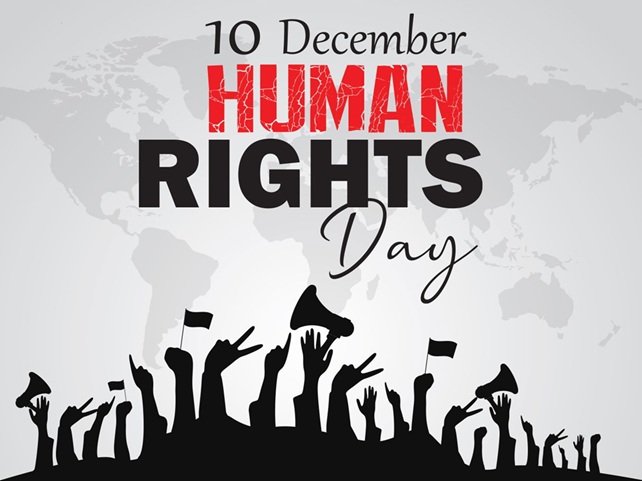
Human Rights Day is observed every year on 10 December, marking the anniversary of the Universal Declaration of Human Rights (UDHR) adopted in 1948.
The day reaffirms the global commitment to dignity, equality, justice, and freedom for all. The 2025 theme, “Everyday Essentials”, highlights access to basic services as a fundamental human right.
Background & Context

  • The UDHR, drafted in the aftermath of World War II, was adopted by the UN General Assembly on 10 December 1948.
    It is considered one of the most influential documents in modern human rights discourse.
  • Human Rights Day was formally established in 1950 when the UNGA urged all nations to commemorate the adoption of the UDHR annually.
  • Although the UDHR is not legally binding, it has shaped:
    • modern constitutions
    • global human rights treaties
    • domestic jurisprudence
  • civil liberties movements across the world
  • The global conversation on human rights now encompasses digital rights, environmental justice, gender equality, refugees’ rights, and socio-economic entitlements, complementing the core civil and political rights laid out in the UDHR.

Human Rights Day: Key Highlights

Origin

  • Observed every year on 10 December.
  • Established through UNGA Resolution (1950).
  • Celebrates the legacy and ideals of the UDHR, a universal commitment to fundamental freedoms.

Theme 2025 — “Everyday Essentials”

  • Emphasises basic rights such as:
    • clean drinking water
    • health services
    • housing & sanitation
    • education
    • food and livelihood
  • Positions these as non-negotiable human rights, not privileges.

Human Rights Framework in India

Constitutional Foundation

Human rights in India derive primarily from:

  • Fundamental Rights (Part III): Right to equality, liberty, life and personal liberty, freedoms, protection against discrimination.
  • Directive Principles of State Policy: Promote welfare, education, health, environment, and equal opportunity.

Protection of Human Rights Act, 1993

  • Defines Human Rights as rights relating to life, liberty, equality, and dignity guaranteed by the Constitution or international covenants enforceable by Indian courts.
  • Provides statutory backing for the creation of:
    • National Human Rights Commission (NHRC)
    • State Human Rights Commissions (SHRCs)
    • Human Rights Courts at district level

National Human Rights Commission (NHRC)

About NHRC

  • An independent statutory body created under the Protection of Human Rights Act, 1993.
  • Functions in accordance with Paris Principles (1991) — the global standards for National Human Rights Institutions.

Mandate

  • Investigates complaints of human rights violations.
  • Takes suo motu cognizance of incidents.
  • Conducts research, field investigations, camp sittings.
  • Advises governments on human-rights-friendly policies.
  • Promotes awareness and human rights literacy.

Achievements

  • Since 1993, NHRC has:
    • Registered 23.8 lakh+ complaints
    • Recommended Rs 264 crore+ as monetary relief to victims
    • Undertaken major inquiries into custodial violence, bonded labour, trafficking, environmental hazards, and rights of vulnerable groups

Significance of Human Rights Day

  • Reinforces India’s constitutional values of justice, liberty, equality and fraternity.
  • Encourages governments to uphold accountability and transparency.
  • Promotes awareness among citizens about their rights and duties.
  • Highlights the importance of socio-economic and digital rights in a rapidly changing world.

FAQs

1. Why is Human Rights Day celebrated on 10 December ?

Because the Universal Declaration of Human Rights was adopted on this day in 1948 by the UN General Assembly.

2. Is the UDHR legally binding on countries ?

No, but it serves as a moral and guiding framework for laws, constitutions, and global human rights treaties.

3. What is the theme for Human Rights Day 2025 ?

“Everyday Essentials”, focusing on access to basic services as a human right.

4. What is the role of NHRC ?

NHRC protects and promotes human rights through investigations, advisory functions, awareness, and monitoring government actions.

5. What qualifies as “human rights” under Indian law ?

Rights relating to life, liberty, equality and dignity, guaranteed by the Constitution or recognised in international covenants enforceable by courts.

Judicial Accountability: Impeachment & In-House Inquiry Explained

Prelims: (Polity + CA)
Mains: (GS 2 – Governance)

Why in the News ?

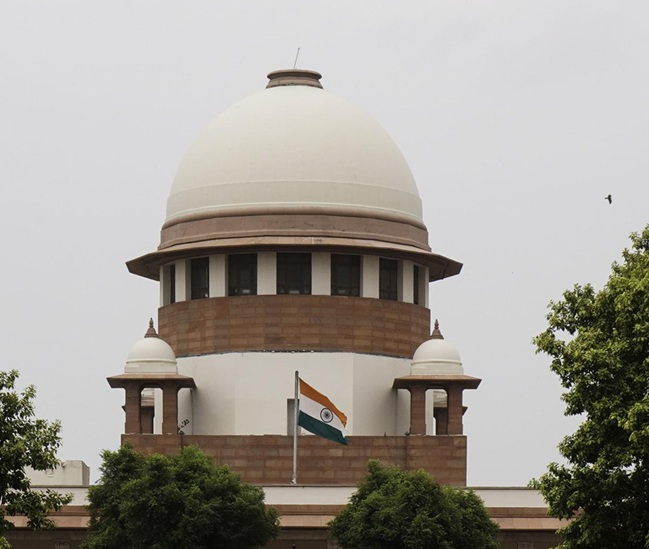
Members of the INDIA bloc intend to submit an impeachment motion in Parliament against Justice G.R. Swaminathan of the Madurai Bench of the Madras High Court. The move follows his direction to the Subramaniya Swamy Temple authorities to ensure the lighting of a lamp near a dargah during the Karthigai Deepam festival—an order that triggered political and constitutional debate.
Background & Context

  • India’s Constitution provides very limited grounds and an extremely rigorous process for removing judges of the Supreme Court and High Courts.
  • This strict design aims to ensure judicial independence, preventing the Executive or Legislature from misusing impeachment for political reasons.
  • However, the absence of a mechanism to address less severe misconduct created a gap—leading to the Supreme Court formulating the In-House Procedure (1999).
  • India has seen several attempted impeachments, but no judge has ever been successfully removed, largely due to the very high voting threshold and political complexities.
  • The current controversy revives older debates on judicial accountability, institutional autonomy, and the need for reforms in disciplinary mechanisms for judges.

Impeachment Process for Judges in India

1. Constitutional & Legal Foundation

  • Article 124(4): Provides the process for removal of Supreme Court judges.
  • Article 218: Extends the same procedure to High Court judges.
  • Judges (Inquiry) Act, 1968 provides the statutory framework.
  • Grounds for removal:
    • Proved misbehaviour
    • Incapacity (physical or mental inability to discharge duties)

Note: The word “impeachment” is used in public discourse, though the Constitution does not explicitly use it for judges.

2. How the Impeachment Process Works

Step 1: Initiating the Motion

  • Can be introduced in either House of Parliament.
  • Requires support of:
    • 100 MPs in Lok Sabha or
    • 50 MPs in Rajya Sabha
  • Motion proceeds only if Speaker/Chairman admits it.

Step 2: Inquiry Committee

Constituted under the Judges (Inquiry) Act.

Composition (3 members):

  • A Supreme Court judge (or CJI)
  • Chief Justice of a High Court
  • An eminent jurist

Role:

  • Conducts a quasi-judicial inquiry
  • Examines evidence, witnesses, and written submissions
  • Determines whether charges are proved

Step 3: Committee Report & Parliamentary Vote

  • If the judge is found guilty, both Houses debate the motion.
  • The motion must pass with a special majority:
    • 2/3rd of members present and voting, and
    • Majority of total membership of the House
  • Upon approval, the President issues the removal order.

Limitations & Realities

  • If the judge resigns during proceedings, the process typically ends.
  • No judge has been removed in India so far due to the extremely high threshold.

In-House Inquiry Procedure (1999)

Origin

  • Introduced by the Supreme Court following the C. Ravichandran Iyer vs Justice A.M. Bhattacharjee (1995) case.
  • The case exposed the absence of a mechanism to address misconduct below impeachment level, prompting the judiciary to create an internal system.

Purpose

  • To examine complaints of misconduct not grave enough for impeachment, but serious enough to require scrutiny.
  • Preserves judicial independence while enabling institutional self-regulation.

How the In-House Process Works                                                                                                                                                                                                                                     

1. Screening of Complaints

  • Complaints are reviewed by:
  • Chief Justice of the concerned High Court, or
  • Chief Justice of India (CJI)
  • Frivolous or baseless complaints are discarded.
  • Serious allegations require a written response from the judge.

2. Constitution of Inquiry Committee

If further inquiry is needed, the CJI constitutes a committee:

For a High Court Judge:

  • 2 Chief Justices of other High Courts
  • 1 High Court Judge

For a High Court Chief Justice:

  • 1 Supreme Court Judge
  • 2 High Court Chief Justices

For a Supreme Court Judge:

  • 3 Supreme Court Judges

For the CJI:

  • No specific in-house mechanism exists.

3. Inquiry Process

  • Conducted with adherence to natural justice.
  • Judge is given full opportunity to respond, submit documents, and be heard.

4. Outcomes

  • If misconduct is proved:
    • Judge may be advised to resign or take voluntary retirement.
    • If refused, the CJI may recommend impeachment.
  • If misconduct is minor:
    • Judge is cautioned; report kept on record.

FAQs

1. Has any judge been impeached in India ?

No. Several attempts were initiated, but none resulted in removal.

2. Can impeachment motions be politically motivated ?

While MPs initiate motions, the multi-layered process aims to prevent misuse.

3. What happens if a judge resigns during impeachment ?

Proceedings usually terminate because the purpose—removal—becomes redundant.

4. Why was the in-house procedure created ?

To handle misconduct not serious enough for impeachment but still requiring scrutiny.

5. Who chairs the in-house inquiry for High Court judges ?

A committee of senior judges—typically two Chief Justices of High Courts and one High Court judge.

Diwali as an Intangible Cultural Heritage

(Preliminary Examination: Current Events of National and International Importance)
(Mains Examination, General Studies Paper 1: Key Aspects of Art Forms, Literature, and Architecture in Indian Culture from Ancient to Modern Times)

Context

India is hosting the 20th Session of the UNESCO Intergovernmental Committee for the Safeguarding of the Intangible Cultural Heritage in New Delhi from December 8 to 13, 2025.
Key Points

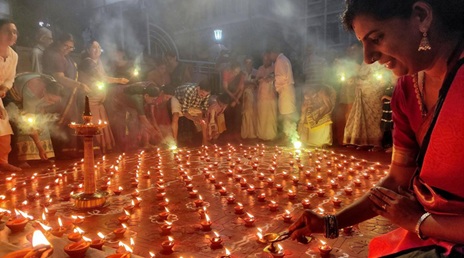
  • At this session held at the Red Fort, UNESCO included Diwali, among others, on the Representative List of the Intangible Cultural Heritage of Humanity. This also includes cultural symbols from several countries, including Ghana, Georgia, Congo, Ethiopia, and Egypt.
  • India has 15 Intangible World Heritage sites on its list. These include Durga Puja, Kumbh Mela, Vedic Chanting, Ramlila, and Chhau Dance.

Deepawali

  • Deepawali, also known as Diwali, is celebrated annually by various people and communities in India. It marks the end of the year's harvest and the beginning of a new year and a new season. According to the lunar calendar, it falls on the new moon day in October or November and lasts for several days. This joyous occasion symbolizes the victory of light over darkness and good over evil. During this time, people clean and decorate their homes and public places, light lamps and candles, set off fireworks, and pray for prosperity and a new beginning.
  • In India, Diwali is celebrated as the return of Lord Rama to Ayodhya, where he killed Ravana and restored righteousness and justice. This makes the festival a symbol of celebration, light, and new beginnings. Diwali is also deeply connected to the worship of Lakshmi, the goddess of wealth and prosperity. People buy new goods on this day, and business is also considered auspicious.

About the Intergovernmental Committee for the Safeguarding of Intangible Cultural Heritage

  • According to UNESCO, intangible cultural heritage (ICH) includes those practices, knowledge, expressions, objects, and places that communities view as part of their cultural identity.
  • UNESCO adopted the 2003 Convention for the Safeguarding of ICH during its 32nd General Conference in Paris on 17 October 2003.
  • This Convention formally established mechanisms for international cooperation, support, and recognition and laid the foundation for UNESCO's ICH lists and the subsequent work of the Intergovernmental Committee.
  • The objectives of the Convention are-
    • Safeguarding ICH
    • Ensuring respect for ICH by the communities, groups, and individuals concerned
    • Ensuring respect for ICH To raise awareness and ensure mutual appreciation for the importance of ICH at the local, national, and international levels.
    • To provide global cooperation and support.
  • The Intergovernmental Committee for the Safeguarding of ICH advances the objectives of the 2003 Convention and ensures their effective implementation in Member States.
  • In fulfilling this mandate, the Committee:
    • Promotes and monitors the objectives and implementation of the 2003 Convention.
    • Provides guidance on best practices and recommends measures for the safeguarding of ICH.
    • Prepares and submits a draft plan for the use of the Intangible Cultural Heritage Fund to the General Assembly.
    • Mobilizes additional resources for the Fund in accordance with the provisions of the Convention.
    • Drafts and proposes operational instructions for the implementation of the Convention.
    • Examines periodic reports submitted by Member States and compiles a summary for the General Assembly.
    • Evaluates requests from Member States and makes decisions regarding:
      • Inscription of elements on UNESCO's ICH Lists (in accordance with Articles 16, 17, and 18)
      • Providing international assistance

Committee Membership

It consists of 24 members, elected for four-year terms. New members are elected every two years during the ordinary session of the General Assembly of Member States. India is currently a member of the Committee (2022-2026).

India now has 16 Intangible World Heritage Sites

No.

Intangible World Heritage of India

Year of Inscription

1

Veda Recitation

2008

2

Kutiyattam (Kerala)

2008

3

Ramlila

2008

4

Ramman (Uttarakhand)

2009

5

Mudiyettu (Kerala)

2010

6

Kalbelia Folk Song and Dance (Rajasthan)

2010

7

Chhau Dance (Eastern India)

2010

8

Buddhist Recitation in Ladakh

2012

9

Sankirtana in Manipur

2013

10

Thathera Pottery Making at Jandiala Guru (Punjab)

2014

11

Yoga

2016

12

Navroz

2016

13

Kumbh Mela

2017

14

Durga Puja in Kolkata

2021

15

Garba in Gujrat 

2023

16

Diwali

2025

Cosmic Filament

Recently, researchers at the University of Oxford reported the discovery of a cosmic filament approximately 50 million light-years long, strung by at least 14 galaxies.

About Cosmic Filaments

  • Cosmic or galaxy filaments are the largest threads in the universe's cosmic web. A single cosmic filament structure extends for millions of light-years.
  • These filaments are the largest structures known in the universe, vast, thread-like structures of galaxies and dark matter that form a cosmic scaffolding.
  • These cosmic web filaments act as nurseries where galaxies grow by accumulating the pristine gas that fuels their star formation.
  • It forms as a result of gravity pulling gas, dark matter, and galaxies into long, thin strands that connect massive clusters of galaxies.
  • These filaments also surround vast, empty regions of space called voids. Where sheets of matter intersect and collapse, a filament forms. They also act as highways along which gas and small galaxies 'flow' toward larger clusters.
  • These filaments help determine where galaxies form, how fast they grow, and how much fresh gas they receive over billions of years.

Sudden Stratospheric Warming and Its Global Weather Impacts

Prelims: (Geography + CA)
Mains: (GS 1 – Geography; GS 3 - Environment)

Why in News ?

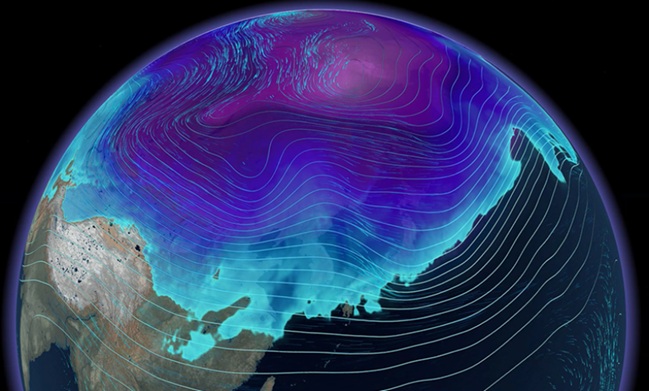
Meteorologists have issued warnings about a potential Sudden Stratospheric Warming (SSW) event that may trigger below-normal temperatures across several parts of the United States later this month. SSW events are known to influence global winter weather patterns, affecting temperature, storm tracks, and jet stream behaviour across North America, Europe, and sometimes Asia.
Background & Context

  • SSW events were first identified by scientists in the 1950s, and since then, they have become a crucial element in long-range winter forecasting.
  • The Northern Hemisphere is more prone to SSW events due to the presence of large landmasses and stronger planetary waves.
  • Major SSW events occur roughly every 2–3 years, though minor warmings are more frequent.
  • Historically significant SSW events (e.g., 2009, 2013, 2018) caused severe cold waves in the U.S. and Europe, highlighting their direct societal and economic impacts.
  • As global warming accelerates, scientists are studying whether climate change is altering the frequency and intensity of SSW events — though research remains inconclusive.

What is a Sudden Stratospheric Warming (SSW) Event ?

Definition

A Sudden Stratospheric Warming is a dramatic, rapid rise in stratospheric temperatures — sometimes by 40–50°C within a few days — over the Arctic region.
This disrupts the polar vortex, a massive atmospheric circulation that usually confines cold air to the poles.

How Do SSW Events Occur ?

1. Upward Propagation of Rossby Waves

  • Large-scale atmospheric disturbances called Rossby waves (generated by mountains, land–sea interactions, and temperature contrasts) propagate upward into the stratosphere.
  • When these waves intensify, they disturb the polar vortex.

2. Wave "Breaking" and Vortex Disruption

  • Like ocean waves crashing onshore, Rossby waves may break at high altitudes.
  • This breaking injects momentum into the stratosphere, causing:
    • Weakening of the polar vortex
    • slowing of westerly winds
    • or even wind reversal (westerlies → easterlies)

3. Rapid Warming Mechanism

  • As the vortex collapses, cold air sinks downward, compresses, and heats rapidly, causing stratospheric temperatures to spike.

4. Splitting or Displacement of the Polar Vortex

Major SSW events result in:

  • Displacement: the vortex shifts away from the pole
  • Split: the vortex divides into two smaller circulations

This breakdown allows cold Arctic air to spill into mid-latitudes, affecting weather thousands of kilometres away.

How SSW Influences Surface Weather

1. Jet Stream Distortion

  • The jet stream typically flows in a stable west-to-east pattern.
  • SSW disrupts this, making the jet stream wave-like and erratic.

2. Cold Air Outbreaks

  • A weakened jet stream allows Arctic air to plunge southward.
  • This leads to:
    • Intense cold waves
    • Sudden temperature drops
    • Heavy snowfall in the U.S. and Europe

3. Blocking Highs

  • SSW can create blocking high-pressure systems, which lock cold air masses in place for extended periods.

4. Impacts Beyond the U.S.

SSW effects can be felt across:

  • North America severe cold snaps
  • Europe prolonged freezing spells
  • Asia altered winter monsoon patterns

India is less directly affected, but SSW can indirectly modify the Western Disturbance patterns, influencing North India’s winter rainfall.

What is the Polar Vortex ? 

Structure

A large region of low pressure and extremely cold air that circulates around both poles.

Vertical Extent

  • Span: Tropopause → Stratosphere → Mesosphere

Seasonal Dynamics

  • Strengthens in winter
  • Weakens in summer

Weather Influence

In winter, especially in the Northern Hemisphere, the polar vortex can expand, leading to:

  • Jet stream dips
  • Arctic outbreaks
  • Extreme temperature drops

This occurs regularly, but becomes more severe during or after SSW events.

Why SSW Events Matter

  • Weather Forecasting: Provides early warning for extreme cold events.
  • Energy Sector: Helps predict spikes in heating demand.
  • Agriculture: Identifies risks of frost, crop damage, livestock stress.
  • Public Safety: Enables preparation for snowstorms and infrastructure strain.
  • Aviation: Affects jet stream patterns and flight paths.

Understanding SSW is critical for climate scientists, meteorologists, and disaster management agencies.

FAQs

1. How common are Sudden Stratospheric Warming events ?

Major SSW events occur roughly every 2–3 years, while minor warmings happen more frequently during winter.

2. Do SSW events always lead to extreme cold weather ?

Not always. While many SSWs weaken the polar vortex and allow cold air outbreaks, the extent of surface impact depends on jet stream behaviour.

3. How quickly can SSW change the weather at ground level ?

Surface impacts usually appear 1–2 weeks after the initial stratospheric warming.

4. Can SSW events affect India ?

India is rarely directly affected. However, SSW can alter the path of Western Disturbances, influencing winter rainfall in North India.

5. Is climate change increasing SSW frequency ?

Research is ongoing. Some studies suggest warming Arctic conditions might destabilise the polar vortex more often, but scientific consensus is not yet strong.

Satellite Internet - How It Works and Why the World Needs It

The world is rapidly moving toward advanced digital infrastructure, yet millions of people still live in areas where traditional fiber, cable, or mobile-tower–based internet cannot reach.
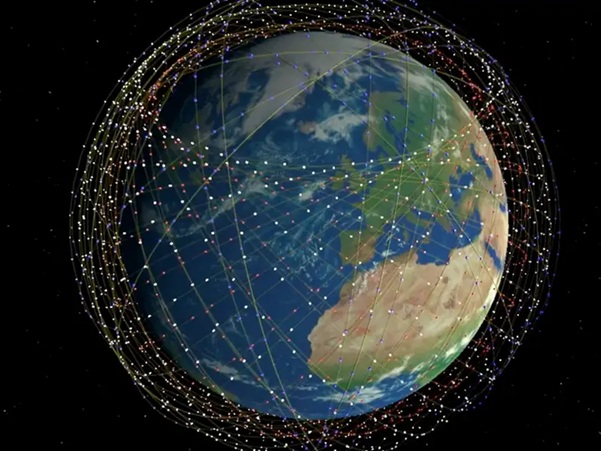
In such regions, Satellite Internet is emerging as a game-changing technology. Companies like Starlink (SpaceX) are deploying thousands of small satellites in Low Earth Orbit (LEO) to provide high-speed, global internet coverage.
How Satellite Internet Works

(Three-Link Architecture Model)

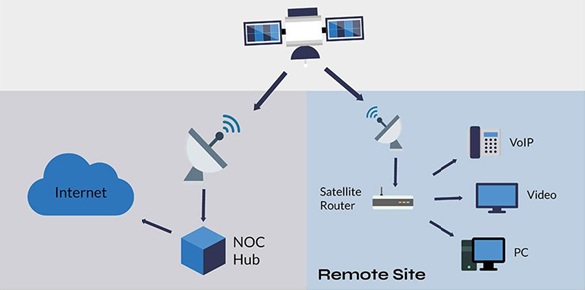
The basic architecture of satellite internet consists of three key components:

A. User Satellite Dish (User Terminal)

  • Installed on rooftops or open areas
  • Capable of both receiving and transmitting data
  • Communicates directly with satellites through radio waves

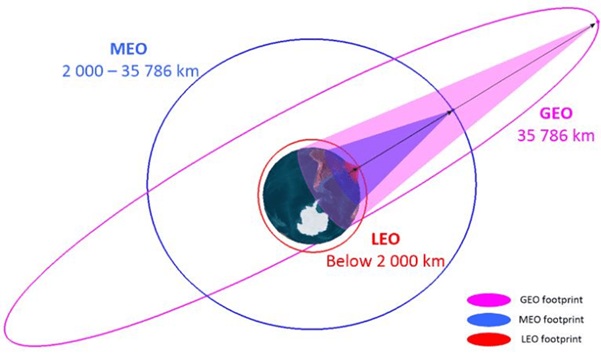
B. Satellites (LEO / MEO / GEO)

  • Route the data between the user and the internet
  • Act as space-based relay nodes

C. Ground Stations / Data Centers

  • Connected to the global internet backbone
  • Process user requests (web pages, streaming, etc.) and send data back via satellites

Data Flow Process

  1. User Terminal → Satellite → Ground Station
  2. Ground Station → Satellite → User Terminal

Thus, the internet is delivered through a space-based relay network.

Why Is Satellite Internet Needed?

Limitations of Ground-Based Networks

  • Extremely expensive and difficult to lay fiber/towers in remote or mountainous areas
  • Forests, islands, deserts remain mostly unconnected
  • Natural disasters can damage terrestrial infrastructure
  • Temporary connectivity requirements (mining zones, defense, disaster response) are not feasible with traditional networks

How Satellite Systems Solve These Challenges
  • Space-based coverage enables connectivity anywhere on Earth
  • Network remains operational even during disasters
  • Helps bridge the global digital divide
  • Ensures equitable connectivity in both dense cities and isolated locations

Types of Satellite Orbits for Internet

Feature

GEO

MEO

LEO

Altitude

35,786 km

2,000–35,786 km

< 2,000 km

Latency

High (600–900 ms)

Medium (150–300 ms)

Very Low (20–40 ms)

Coverage

Very large (3 satellites cover globe)

Medium

Small (requires thousands)

Examples

Viasat, Inmarsat

O3b

Starlink, OneWeb

LEO is preferred for high-speed, low-latency internet. Starlink currently has 7,000+ satellites in operation (aim: 42,000).

Advantages and Disadvantages of Satellite Internet

Advantages

  1. Connectivity in remote & inaccessible areas
    • Mountains, oceans, deserts, forests — everywhere.
  2. Highly resilient during disasters
    • Less affected by floods, earthquakes, and storms.
  3. On-demand deployment
    • Useful in defense, emergency response, expeditions.
  4. Competition is driving better speeds and lower costs
    • (Starlink, OneWeb, Amazon Kuiper)

Disadvantages

  1. High user-terminal cost (dish + router)
  2. Latency issues with GEO/MEO systems
  3. Space debris concerns: Risk of satellite collisions increases
  4. High launch and maintenance expenses: Especially with large constellations

Conclusion

Satellite Internet is not just a technological innovation — it is a necessity for global digital inclusion. By providing reliable connectivity to underserved regions and ensuring network resilience during crises, it is poised to become a crucial part of the world’s communication ecosystem. As technology improves and more satellites are deployed, seamless internet everywhere may soon become a reality.

« »
  • SUN
  • MON
  • TUE
  • WED
  • THU
  • FRI
  • SAT
Have any Query?

Our support team will be happy to assist you!

OR