
- UPSC Exam
- State PCS
- One Day Exam
- Current Affairs
- PT Quiz
- Downlaods
- About Coaching
- Blog
- Videos

| Prelims: (Geography + CA) Mains: (GS 1 – Geography; GS 3 - Environment) |
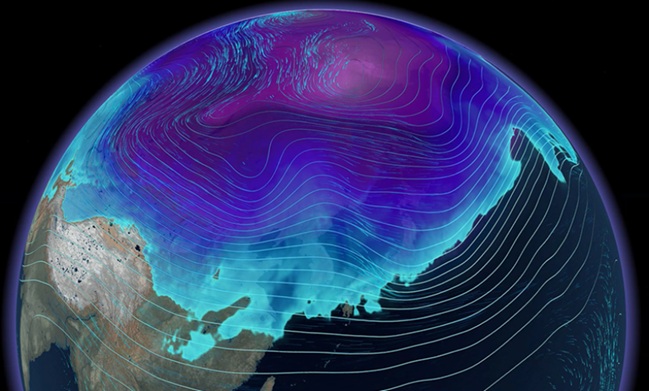
Meteorologists have issued warnings about a potential Sudden Stratospheric Warming (SSW) event that may trigger below-normal temperatures across several parts of the United States later this month. SSW events are known to influence global winter weather patterns, affecting temperature, storm tracks, and jet stream behaviour across North America, Europe, and sometimes Asia.
Definition
A Sudden Stratospheric Warming is a dramatic, rapid rise in stratospheric temperatures — sometimes by 40–50°C within a few days — over the Arctic region.
This disrupts the polar vortex, a massive atmospheric circulation that usually confines cold air to the poles.
1. Upward Propagation of Rossby Waves
2. Wave "Breaking" and Vortex Disruption
3. Rapid Warming Mechanism
4. Splitting or Displacement of the Polar Vortex
Major SSW events result in:
This breakdown allows cold Arctic air to spill into mid-latitudes, affecting weather thousands of kilometres away.
1. Jet Stream Distortion
2. Cold Air Outbreaks
3. Blocking Highs
4. Impacts Beyond the U.S.
SSW effects can be felt across:
India is less directly affected, but SSW can indirectly modify the Western Disturbance patterns, influencing North India’s winter rainfall.
Structure
A large region of low pressure and extremely cold air that circulates around both poles.
Vertical Extent
Seasonal Dynamics
Weather Influence
In winter, especially in the Northern Hemisphere, the polar vortex can expand, leading to:
This occurs regularly, but becomes more severe during or after SSW events.
Understanding SSW is critical for climate scientists, meteorologists, and disaster management agencies.
FAQs1. How common are Sudden Stratospheric Warming events ? Major SSW events occur roughly every 2–3 years, while minor warmings happen more frequently during winter. 2. Do SSW events always lead to extreme cold weather ? Not always. While many SSWs weaken the polar vortex and allow cold air outbreaks, the extent of surface impact depends on jet stream behaviour. 3. How quickly can SSW change the weather at ground level ? Surface impacts usually appear 1–2 weeks after the initial stratospheric warming. 4. Can SSW events affect India ? India is rarely directly affected. However, SSW can alter the path of Western Disturbances, influencing winter rainfall in North India. 5. Is climate change increasing SSW frequency ? Research is ongoing. Some studies suggest warming Arctic conditions might destabilise the polar vortex more often, but scientific consensus is not yet strong. |



Our support team will be happy to assist you!

 Contact Us
  New Batch : 9555124124/ 7428085757
  Tech Support : 9555124124/ 7428085757