New
GS Foundation (P+M) - Delhi : 19th Jan. 2026, 11:30 AM Spring Sale UPTO 75% + 10% Off, Valid Till : 6th Feb., 2026 GS Foundation (P+M) - Prayagraj : 09th Jan. 2026, 11:00 AM Spring Sale UPTO 75% + 10% Off, Valid Till : 6th Feb., 2026 GS Foundation (P+M) - Delhi : 19th Jan. 2026, 11:30 AM GS Foundation (P+M) - Prayagraj : 09th Jan. 2026, 11:00 AM

Current Affairs for 10 February 2026

Reviving the Western Ghats Tiger Landscape: Sahyadri Tiger Reserve and Conservation Rewilding

Prelims: (Environment + CA)
Mains: (GS 3 – Environment, Biodiversity Conservation, Wildlife Management)

Why in the News?

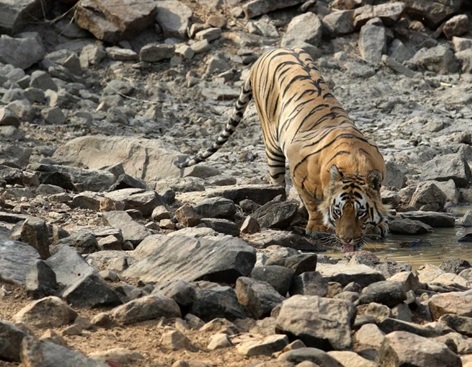
In a significant boost to tiger conservation in western Maharashtra, a third tigress was recently released into the wild at the Sahyadri Tiger Reserve (STR) as part of ongoing rewilding and population restoration efforts.
western-ghats-tiger-landscape

Background: Tiger Conservation in the Western Ghats

India’s tiger conservation strategy has traditionally focused on central and eastern forest landscapes, where contiguous habitats and established tiger populations exist. However, the Western Ghats, despite being a global biodiversity hotspot, witnessed a decline in tiger numbers due to habitat fragmentation, human pressure, and loss of prey base.

The Sahyadri landscape once supported a thriving tiger population but experienced local extinction in the early 21st century. Recognising the ecological importance of restoring apex predators, Maharashtra initiated a reintroduction and habitat recovery programme at STR, supported by scientific monitoring, prey augmentation, and community engagement.

The recent release of a third tigress reflects the gradual revival of this critical tiger landscape.

About Sahyadri Tiger Reserve (STR)

Sahyadri Tiger Reserve is located in the Sahyadri ranges of the Western Ghats in Maharashtra and represents a unique protected area configuration.

Geographic and Administrative Features

  • The reserve spans two protected areas:
    • Koyana Wildlife Sanctuary (KWLS)
    • Chandoli National Park (CNP)
  • The central portion of STR is occupied by:
    • The Shivsagar reservoir of the Koyana River
    • The Vasant Sagar reservoir of the Warana River

This reservoir-dominated landscape creates a mosaic of forested plateaus, valleys, and aquatic ecosystems.

Vegetation

The reserve hosts a diverse range of forest types, including:

  • Moist evergreen forests
  • Semi-evergreen forests
  • Moist deciduous forests
  • Dry deciduous forests

It is one of the few landscapes where climax and near-climax vegetation are well preserved, and future anthropogenic pressure is minimal.

Flora

Dense forest cover includes species such as:

  • Teak
  • Bamboo
  • Indian laurel
  • Jamun

Medicinal plants like Asparagus racemosus and Aegle marmelos grow abundantly. The reserve also harbours unique Western Ghats endemics, including rare orchids and shrubs thriving in its humid microclimates.

Fauna

STR supports a rich assemblage of wildlife, including:

  • Top carnivores: Tiger, Leopard, Wild dog (Dhole)
  • Herbivores: Gaur, Sambar, Four-horned antelope, Mouse deer, Giant squirrel
  • Avifauna: Hornbills and many endemic bird species

Strategic Significance

Restoration of Apex Predators

The reintroduction of tigers helps restore ecological balance by regulating herbivore populations and strengthening trophic cascades, enhancing overall forest health.

Strengthening the Western Ghats Tiger Corridor

STR plays a crucial role in reconnecting fragmented tiger habitats across the Western Ghats, contributing to long-term genetic viability and landscape-level conservation.

Biodiversity Conservation in a Global Hotspot

As part of a UNESCO-recognised biodiversity hotspot, STR safeguards rare endemic species, unique vegetation types, and critical ecosystem services.

Community and Eco-Tourism Potential

A revived tiger population enhances eco-tourism prospects, creating sustainable livelihood opportunities for local communities while promoting conservation awareness.

Challenges and Way Forward

Despite progress, several challenges persist:

  • Ensuring adequate prey base and habitat connectivity
  • Managing human–wildlife conflict in surrounding buffer zones
  • Preventing poaching and illegal activities
  • Sustaining long-term ecological monitoring

Going forward, conservation success will depend on:

  • Scientific population monitoring and adaptive management
  • Strengthening community participation and benefit-sharing
  • Expanding habitat corridors and landscape connectivity
  • Integrating conservation with regional development planning

FAQs

1. Where is Sahyadri Tiger Reserve located?

It is located in the Sahyadri ranges of the Western Ghats in Maharashtra.

2. Which protected areas form the Sahyadri Tiger Reserve?

Koyana Wildlife Sanctuary and Chandoli National Park.

3. Why is the release of tigresses in STR important?

It aims to restore tiger populations in a landscape where they had become locally extinct, strengthening ecosystem balance.

4. What types of vegetation are found in STR?

Moist evergreen, semi-evergreen, moist deciduous, and dry deciduous forests.

5. What major wildlife species are found in STR?

Tigers, leopards, wild dogs, gaur, sambar, four-horned antelope, mouse deer, giant squirrel, and endemic birds.

India Semiconductor Mission 2.0: A Decisive Step Towards Technological Sovereignty

Context

The Union Budget 2026–27 announced the India Semiconductor Mission (ISM) 2.0, giving a new direction to India's technological aspirations. At a time when semiconductors have become the foundation of almost every modern digital and industrial system, this initiative provides a clear policy signal to deepen domestic capabilities and make India a strong partner in the global semiconductor value chain.

ism

Semiconductors: The Invisible Backbone of the Modern Economy

  • Semiconductors are the foundation of technologies such as computing, mobile communications, telecommunications, automobiles, defense systems, and artificial intelligence.
  • Under ISM 1.0, India has made solid progress towards developing a full-stack semiconductor ecosystem, including design, manufacturing, assembly, and testing. This journey reflects the comprehensive vision of 'Atmanirbhar Bharat' and India's transition from policy-making to production-readiness.
  • Building on these achievements, ISM 2.0 aims to establish India as a reliable, competitive, and long-term partner in the global semiconductor network.

Regional Perspective: India's Emerging Semiconductor Ecosystem

  • India is gradually emerging as a global semiconductor hub. Large investments, expanding manufacturing capacity, and international platforms like Semicon India 2025 reflect growing global confidence in India's potential. According to industry estimates, the Indian semiconductor market could reach-
  • approximately $38 billion in 2023
  • $45–50 billion in 2024–25, and
  •  $100–110 billion by 2030.
  • This growth is driven by the 'Make in India' and 'Make for the World' strategies, which are positioning India not only as a manufacturing base but also as a global supplier.

Foundation of India Semiconductor Mission 1.0

  • Approved in December 2021, ISM 1.0 is supported by a ₹76,000 crore incentive package that includes:
  • Silicon fabs
  •  Compound semiconductor units
  • Assembly, testing, and packaging facilities
  • Up to 50% financial assistance is provided for chip design.
  • By December 2025, 10 projects with an investment of ₹1.60 lakh crore have been approved in 6 states. These projects are building a resilient and indigenous semiconductor ecosystem.

Towards Semiconductor 2.0

  • The focus under ISM 2.0 is not limited to chip manufacturing but also includes the production of semiconductor equipment and materials, the development of full-stack Indian semiconductor intellectual property (IP), and the strengthening of domestic and global supply chains.
  • The mission has been allocated ₹1,000 crore for the fiscal year 2026–27, with a special emphasis on industry-led research, training, and skill development centers to accelerate technological innovation and create a future-ready workforce.
  • India's next goal is to enter advanced technology nodes. A clear roadmap has been developed to reach the 3-nanometer and 2-nanometer nodes under ISM 2.0.
  • India aims to be among the top semiconductor countries in the world by 2035, while achieving the capability to design and manufacture 70–75% of its chips domestically by 2029.

Approved Semiconductor Projects: Diversity and Scale

Approved projects in India will meet growing demand in sectors such as consumer electronics, automobiles, telecommunications, aerospace, and power electronics. It is particularly noteworthy that many projects are using indigenous assembly, testing and packaging technologies, which will reduce external dependence and increase technological depth.

ISM Key Schemes Under

  • Semiconductor Fabs Scheme: Up to 50% financial assistance to wafer fabrication units
  • Display Fabs Scheme: Support for AMOLED and LCD display manufacturing
  • Compound Semiconductor and ATMP/OSAT Scheme: Capital assistance for packaging and testing units
  • Design Linked Incentive (DLI): ₹1,000 crore for chip design startups and MSMEs

Expected Impact in 2026–27

  • The revised semiconductor program aims to:
  • Accelerate capital investment
  • Create high-quality jobs
  • and expand domestic capabilities in design and manufacturing
  • With an estimated financial outlay of ₹8,000 crore in fiscal year 2026–27, the program will elevate India's technological competitiveness.

Importance of the India Semiconductor Mission

  • According to the Economic Survey 2025–26, semiconductors are fundamental to energy networks, financial markets, telecommunications, healthcare, transportation, and defense systems. The COVID-19 pandemic exposed the vulnerabilities of global supply chains, highlighting the significant risks of excessive dependence on a select few countries.
  • The India Semiconductor Mission is a strategic response to this challenge—by developing indigenous capabilities in design, manufacturing, and innovation, India is not only strengthening its technological sovereignty but also making global supply chains more resilient.

Design, Microprocessors, and Talent Development

  • The Design Linked Incentive Scheme, indigenous microprocessors like DHRUVA 64, and RISC-V-based initiatives are making India self-reliant in core semiconductor technologies.
  • Additionally, a strong semiconductor network is being developed through Chips to Startups, the AICTE program, NIELIT Smart Labs, and industry partnerships.

Conclusion

India Semiconductor Mission 2.0 is a decisive step forward in moving beyond ecosystem creation to its consolidation and global integration. Increased budgetary support, a clear technology roadmap, and a robust design and skills strategy lay the foundation for India to become a trusted global hub for semiconductor design, manufacturing, and innovation. In the coming decade, this mission will not only make India technologically self-reliant but will also play a crucial role in establishing it among the world's leading semiconductor nations.

The AYUSH System in India

Context

India's health policy is witnessing a revolutionary shift. The Union Budget 2026-27 has made it clear that traditional medical systems—Ayurveda, Yoga, Unani, Siddha, and Homeopathy (AYUSH)—are no longer just alternatives but are becoming the cornerstone of mainstream healthcare. With a massive budget allocation of ₹4,408 crore, the government has reiterated its commitment to strengthening AYUSH domestically and establishing it as a 'soft power' on the global stage.

AYUSH

Institutional Strengthening and Infrastructure Expansion

  • The sector, governed by the Ministry of AYUSH, has grown into a vast network. Traditional medicine is being taken to primary health centers through the National AYUSH Mission (NAM).
  • The biggest achievement of this budget is the announcement of three new All India Institutes of Ayurveda (AIIA). These institutes, modeled after AIIMS, will not only treat patients but also standardize Ayurveda through high-level research and education.
  • Additionally, the upgradation of the WHO Global Traditional Medicine Centre in Jamnagar is a major step towards making India a global rule-maker for traditional medicine.

Integrating Technology and Farmers: 'Bharat-Vistaar'

  • The backbone of the AYUSH sector is its supply chain and medicinal plants. To this end, the government has launched a revolutionary AI-based digital assistant called 'Bharat-Vistaar'.
  • Objective: To provide real-time data to farmers cultivating medicinal plants.
  • Benefits: Improved crop quality, information on market prices, and ease of export certification.

Global Markets and the India-EU Agreement

  • The Free Trade Agreement (FTA) between India and the European Union (EU) is proving to be a milestone for AYUSH. Following this agreement:
  • Indian doctors will be able to provide services in European countries based on their degrees.
  • Mutual recognition of safety certificates for the export of Ayurvedic products will reduce trade barriers.
  • Global recognition of the Traditional Knowledge Digital Library (TKDL) will curb biopiracy of Indian medicinal sources.

Challenges: Authenticity and the 'Mixopathy' Controversy

  • This rapidly growing field faces some serious challenges. Organizations like the Indian Medical Association (IMA) often question the lack of clinical evidence.
  • Safety: The presence of heavy metals (such as lead and mercury) in medicines remains a matter of international concern.
  • Regulatory Clarity: The decision to allow AYUSH doctors to perform certain surgeries and prescribe allopathic medicines has given rise to the 'Mixopathy' controversy. Experts believe that scientific rigor and strict regulatory oversight are essential to maintain the credibility of AYUSH.

Conclusion

Budget 2026-27 has provided a new direction and substantial energy to the AYUSH sector. If India succeeds in integrating its ancient medical practices with modern scientific evidence, AYUSH will not only achieve self-reliance in the health sector but will also lead the global wellness economy.

Harnessing Western Rivers: Sawalkote Hydropower Project and India’s Strategic Water-Energy Push

Prelims: (Geography + CA)
Mains: (GS 1 – Geography; GS 3 – Energy, Infrastructure, Water Resources)

Why in the News?

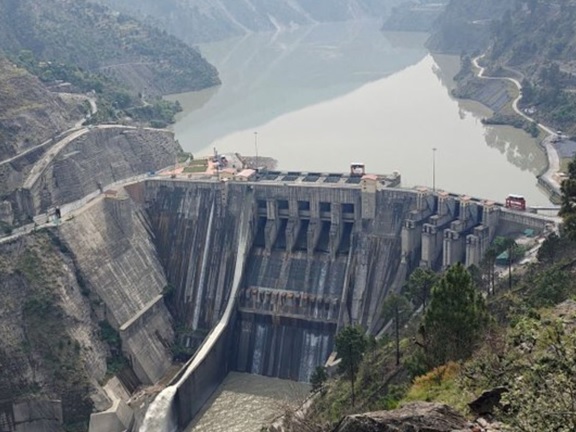
India has recently commenced work on the Sawalkote Hydroelectric Project on the River Chenab in Jammu and Kashmir. This is the first major new hydropower project to receive government approval after changes in India’s approach to the Indus Waters Treaty (IWT).
harnessing-western-rivers

Background: Hydropower and the Indus Waters Framework

The Indus Waters Treaty (1960) between India and Pakistan allocates the eastern rivers (Ravi, Beas, Sutlej) to India and the western rivers (Indus, Jhelum, Chenab) primarily to Pakistan, while permitting India limited non-consumptive uses such as hydropower generation on the western rivers.

For decades, India underutilised its permissible share of water from the western rivers due to political sensitivities, regulatory constraints, environmental concerns, and security challenges in Jammu and Kashmir.

In recent years, however, India has sought to fully realise its rights under the treaty by accelerating run-of-the-river hydropower projects, especially on the Chenab and Jhelum, to enhance energy security, economic development, and regional integration.

The Sawalkote project represents a significant step in this strategic recalibration of water and energy policy.

About the Sawalkote Hydroelectric Project

The Sawalkote project is a 1,856 MW run-of-the-river hydropower plant located on the Chenab River in the Ramban District of Jammu and Kashmir.

Key Features

  • Implementing Agency: National Hydroelectric Power Corporation (NHPC)
  • Type: Run-of-the-river (non-storage) hydropower project
  • Installed Capacity: 1,856 MW — one of the largest hydropower projects in the region

Operational Benefits

  • Ensures a reliable power supply to Jammu and Kashmir, especially during harsh winter months when electricity demand peaks and shortages are common.
  • Has the potential to transform Jammu and Kashmir into a power-surplus region, enabling the export of surplus electricity to the national grid.
  • Contributes to India’s renewable energy targets and reduces dependence on fossil fuels.

Strategic Water Utilisation

The project is a key part of India’s plan to fully utilise its share of water from the western rivers under the Indus Waters Treaty, within the treaty’s provisions.

Strategic Significance

Energy Security and Regional Development

Sawalkote strengthens India’s energy security by adding substantial renewable capacity in a strategically important border region, supporting industrial growth, infrastructure development, and employment generation.

Optimising Treaty Rights

By developing run-of-the-river projects on the Chenab, India is operationalising its lawful entitlements under the IWT, ensuring that water resources allocated to India are productively and efficiently used.

Climate and Sustainability Goals

Hydropower from Sawalkote supports India’s climate commitments by expanding clean energy capacity and contributing to long-term decarbonisation of the power sector.

Geopolitical and Strategic Signalling

The project signals India’s intent to assert its water and energy rights within international legal frameworks, reinforcing strategic autonomy while remaining compliant with treaty obligations.

Challenges and Way Forward

Despite its benefits, the project faces several challenges:

  • Environmental concerns, including ecological impacts on riverine systems
  • Rehabilitation and resettlement issues for affected communities
  • Geopolitical sensitivities related to transboundary rivers
  • Construction challenges in difficult Himalayan terrain

Going forward, India must:

  • Ensure transparent environmental assessments and stakeholder engagement
  • Strengthen inter-agency coordination for timely project execution
  • Maintain treaty compliance while safeguarding national interests
  • Integrate hydropower planning with broader water, climate, and regional development strategies

FAQs

1. What is the Sawalkote Hydroelectric Project?

It is a 1,856 MW run-of-the-river hydropower project on the Chenab River in Jammu and Kashmir.

2. Who is implementing the Sawalkote project?

The National Hydroelectric Power Corporation (NHPC) is the implementing agency.

3. Why is the Sawalkote project strategically important?

It strengthens energy security, supports regional development, and helps India fully utilise its water entitlements under the Indus Waters Treaty.

4. How does the project benefit Jammu and Kashmir?

It ensures reliable winter power supply and can turn the region into a power-surplus area capable of exporting electricity.

5. Is the project compliant with the Indus Waters Treaty?

Yes, it is a run-of-the-river project and operates within the permissible uses allowed to India under the treaty.

Shaping Global AI Governance from the Global South: India and the AI Impact Summit 2026

Prelims: (Economics + CA)
Mains: (GS 2 – International Relations, Governance; GS 3 – Science & Technology, Economy, Innovation)

Why in the News?

  • India will host the AI Impact Summit 2026 from February 16 to 20, marking the first time this global AI governance forum is being held in the Global South.
  • The summit aims to generate actionable, long-term policy recommendations rather than impose immediate binding regulations. It seeks to align AI governance with inclusive growth, sustainability, and social impact.

ai-impact-summit-2026

Background: Evolution of Global AI Summits

The AI Impact Summit builds upon a series of international meetings focused on governing artificial intelligence:

  • Bletchley Park AI Safety Summit (2023): Focused on identifying catastrophic and existential AI risks.
  • Seoul Summit (2024): Expanded the agenda to include innovation, inclusivity, and global participation.
  • Paris AI Action Summit (2025): Shifted attention toward implementation, deployment, and economic opportunities.

Each iteration has gradually broadened the focus beyond safety toward practical, developmental, and governance challenges associated with AI adoption at scale.

India’s Distinct Approach

Unlike earlier summits centred primarily on regulation and risk containment, India is steering the discussion toward the triad of “People, Planet, and Progress.”

The emphasis is on:

  • Developing AI solutions for real-world challenges
  • Addressing developmental priorities of emerging and developing economies
  • Promoting ethical, inclusive, and sustainable AI deployment

This approach reflects India’s dual role as both an emerging AI power and a representative voice of the Global South.

Through this summit, India aims to secure a larger role in shaping global AI governance frameworks and capturing greater economic and developmental benefits from AI technologies.

India AI Impact Summit 2026: What to Expect

Scale and Significance

Described by the Union IT Minister as the largest global AI gathering to date, the summit has attracted strong international interest.

High-Level Global Participation

  • Representatives from over 100 countries
  • 15–20 heads of government
  • More than 50 ministers
  • Over 40 CEOs from leading global and Indian companies

The Prime Minister will inaugurate the summit, host a leaders’ dinner, and address a CEO roundtable.

Diverse Stakeholder Engagement

Participants will include:

  • Governments
  • Industry leaders
  • Researchers and academic institutions
  • Civil society organisations
  • International bodies

This multi-stakeholder format reflects the complexity of AI governance and development.

Key Themes and Deliberations

Working groups and sessions will address:

  • AI’s impact on jobs and the future of work
  • Trust, safety, and accountability frameworks
  • AI applications across sectors such as healthcare, agriculture, education, governance, and manufacturing

India’s AI Push and Model Launches

Under the ₹10,370 crore IndiaAI Mission, the government will launch several indigenous AI models during the summit, including:

  • Foundational language models
  • Small and specialised language models

These launches aim to strengthen India’s sovereign AI ecosystem.

Startup and Innovation Showcase

  • Over 500 AI startups will be showcased
  • Around 500 sessions will be hosted alongside the main programme

This makes the summit one of the most comprehensive global forums focused on artificial intelligence.

Opening Up to China at the AI Impact Summit

Chinese Participation

China is expected to send a delegation following a formal invitation from India, as both countries seek to strengthen domestic AI capabilities.

Summit Format and Diplomatic Discretion

The AI Impact Summit is not a formal multilateral grouping. Participation is determined by the host country, giving India discretion to invite China despite geopolitical sensitivities.

Precedents from Earlier Summits

  • The UK invited China to the first AI Safety Summit despite opposition.
  • China also participated in the Seoul and Paris summits.

Signal of Easing India–China Relations

India’s invitation reflects a gradual thaw in bilateral ties:

  • Direct flights between India and China resumed earlier this year after a gap of over five years.
  • China has begun clearing applications from firms supplying rare earth components to Indian automobile manufacturers, easing earlier trade restrictions.

Hardware and Energy: India’s Key AI Constraints

Dependence on Imported Computing Hardware

India lacks domestically produced advanced AI hardware, particularly high-end GPUs, making it dependent on imports and limiting strategic autonomy.

Hopes from India–US Technology Trade

The proposed interim India–US trade agreement is expected to:

  • Expand trade in technology products, including GPUs and data centre equipment
  • Deepen bilateral cooperation in advanced technologies

Policy Push for Data Centres

India has announced a tax holiday until 2047 for foreign companies setting up data centres, aiming to:

  • Attract global investment
  • Build domestic AI infrastructure

However, reliance on imported hardware continues.

Budget Signals and AI Mission

In the Union Budget 2026–27, the allocation for subsidising compute under the IndiaAI Mission was halved, even as electronics manufacturing and iPhone exports saw strong growth, indicating shifting fiscal priorities.

Energy Needs and Nuclear Power

Powering energy-intensive AI data centres is emerging as a critical challenge. The government is exploring nuclear energy as a long-term, stable solution for AI infrastructure.

Significance and Way Forward

Hosting the AI Impact Summit 2026 positions India as a central actor in shaping global AI governance from the perspective of the Global South.

It enables India to:

  • Influence international AI norms and standards
  • Promote inclusive and development-oriented AI frameworks
  • Showcase indigenous AI capabilities and startups
  • Strengthen technological diplomacy and strategic partnerships

However, to fully capitalise on this leadership role, India must:

  • Reduce dependence on imported AI hardware
  • Strengthen domestic semiconductor and GPU manufacturing
  • Ensure reliable, sustainable energy supply for AI infrastructure
  • Align regulatory frameworks with innovation and global best practices

If effectively leveraged, the summit could significantly enhance India’s role in the global AI economy and governance architecture.

FAQs

1. Why is the AI Impact Summit 2026 significant for India?

It marks the first time the summit is held in the Global South and positions India as a leader in shaping global AI governance.

2. How is India’s approach different from earlier AI summits?

India emphasises inclusive growth, sustainability, and real-world impact rather than only regulation and risk containment.

3. What major initiatives will India showcase at the summit?

Launch of indigenous AI models under the IndiaAI Mission and a large-scale startup and innovation showcase.

4. Why is China’s participation noteworthy?

It reflects diplomatic flexibility, easing bilateral tensions, and recognition that AI governance requires broad global engagement.

5. What are India’s main constraints in becoming an AI powerhouse?

Dependence on imported AI hardware, energy constraints, and the need for stronger domestic manufacturing and infrastructure.

INCOIS Expands India’s Ocean Intelligence and Early Warning Capabilities

Prelims: (Science & Technology + CA)
Mains: (GS 1 – Physical Geography, GS 3 – Disaster Management, Science & Technology, Blue Economy)

Why in News?

The Indian National Centre for Ocean Information Services (INCOIS) is launching three new ocean information services—JellyAIIP, SAMUDRA 2.0 Mobile App, and SIVAS—along with a new institutional logo during its foundation day celebrations.
INCOIS

Background and Context: India’s Growing Ocean Governance Architecture

India, with a coastline of over 7,500 km and a vast Exclusive Economic Zone (EEZ), faces increasing challenges related to coastal hazards, marine resource management, climate change, and maritime safety. Rapid coastal urbanisation, rising sea levels, intensifying cyclones, and growing dependence on marine livelihoods have made timely and accurate ocean information a governance imperative.

Recognising this, the Government of India institutionalised ocean observation and advisory services under the Ministry of Earth Sciences (MoES) to support disaster risk reduction, maritime operations, fisheries management, and climate resilience. INCOIS emerged as a key operational agency translating ocean science into actionable public services, particularly for coastal communities and maritime stakeholders.

The launch of advanced digital platforms and early warning systems reflects India’s shift towards data-driven ocean governance, aligned with national priorities such as the Blue Economy, Disaster Resilient Infrastructure, and coastal zone management.

About Indian National Centre for Ocean Information Services (INCOIS)

The Indian National Centre for Ocean Information Services (INCOIS) is an autonomous institution under the Ministry of Earth Sciences (MoES).

Mandate

It is mandated to provide ocean information and advisory services to society, industry, government agencies, and the scientific community through sustained ocean observations and continuous improvement via focused research.

Institutional Role

  • It established the Indian Tsunami Early Warning Centre (ITEWC), which provides tsunami alerts to India and 28 Indian Ocean countries, strengthening regional disaster preparedness.
  • INCOIS is a permanent member of UNESCO’s Intergovernmental Oceanographic Commission (IOC), reflecting its global scientific standing.
  • It is located in Hyderabad, Telangana, serving as India’s operational hub for ocean forecasting and marine hazard advisories.

Key Initiatives of INCOIS

  • Search and Rescue Aided Tool (SARAT): Assists the Indian Coast Guard, Navy, and Coastal Security Police in locating individuals or objects lost at sea by simulating drift trajectories.
  • SynOPS Visualization Platform: Integrates real-time data from multiple sources to enhance response coordination during extreme ocean and weather events.

These initiatives demonstrate INCOIS’s role in bridging ocean science with frontline operational needs.

New Ocean Information Services Launched

1. JellyAIIP (Jellyfish Aggregation Information Interactive Portal)

A national web-based platform for:

  • Reporting and visualising jellyfish aggregation, swarming, and stranding events along the Indian coast.
  • Providing geospatial mapping, hotspot analysis, and multilingual first-aid guidance.

This service addresses emerging public health, fisheries, and tourism challenges linked to jellyfish blooms, which are increasing due to warming seas and ecological shifts.

2. SAMUDRA 2.0 Mobile App

An upgraded, multilingual mobile advisory platform that:

  • Delivers real-time ocean information and early warnings to fishermen and maritime users.
  • Enhances accessibility, usability, and dissemination of advisories related to weather, waves, currents, and safety at sea.

It strengthens last-mile delivery of ocean services, especially to vulnerable coastal communities.

3. SIVAS (Swell-Surge Inundation Vulnerability Advisory System)

A coastal inundation early warning service designed to:

  • Provide advance alerts on swell-surge flooding events.
  • Currently operational for the Kerala coast, with multilingual forecast bulletins.

SIVAS integrates wave, surge, and coastal vulnerability data to reduce loss of life and property from non-cyclonic coastal flooding events.

Significance of These Developments

1. Strengthening Disaster Risk Reduction
Early warnings for tsunamis, swell-surge flooding, and marine hazards enhance preparedness and reduce disaster-induced mortality and economic losses.

2. Supporting the Blue Economy
Accurate ocean forecasts improve fisheries planning, maritime operations, tourism safety, and sustainable marine resource management.

3. Enhancing Coastal Community Resilience
User-friendly, multilingual digital platforms empower fishermen and coastal populations with actionable, real-time information.

4. Advancing Ocean Science and Governance
Data integration, AI-driven platforms, and real-time visualization tools strengthen India’s ocean observation and forecasting capabilities.

5. Fulfilling Global Commitments
INCOIS’s work aligns with international frameworks such as the UN Decade of Ocean Science for Sustainable Development (2021–2030) and regional tsunami warning mechanisms.

Challenges and Way Forward

Challenges

  • Last-Mile Connectivity Gaps: Limited digital access in remote coastal areas may restrict real-time information dissemination.
  • Data Integration Complexity: Integrating multi-source ocean, atmospheric, and coastal data in real time remains technically demanding.
  • Sustainability of Operations: Continuous upgrades, maintenance, and user training require sustained funding and institutional support.

Way Forward

  • Expand Coverage: Extend SIVAS and similar early warning systems to all vulnerable coastal regions of India.
  • Enhance Digital Inclusion: Improve network connectivity and promote mobile-based platforms in fishing and coastal communities.
  • Strengthen Capacity Building: Conduct regular training for frontline responders, fishermen, and local authorities.
  • Leverage AI and Big Data: Integrate advanced analytics for improved forecasting accuracy and hazard anticipation.
  • Deepen Regional Cooperation: Strengthen collaboration through UNESCO-IOC and regional ocean governance frameworks.

FAQs

1. What is the primary mandate of INCOIS?

To provide ocean information and advisory services to society, industry, government agencies, and the scientific community through sustained observations and focused research.

2. Which ministry oversees INCOIS?

The Ministry of Earth Sciences (MoES).

3. What is JellyAIIP used for?

It is a national portal for reporting and visualising jellyfish aggregation and stranding events, offering geospatial analysis and multilingual first-aid guidance.

4. How does SAMUDRA 2.0 benefit fishermen?

It delivers real-time ocean advisories and early warnings in multiple languages, improving maritime safety and operational planning.

5. Why is SIVAS significant for coastal disaster management?

SIVAS provides advance alerts on swell-surge flooding events, helping reduce loss of life and property along vulnerable coastlines.

India–Malaysia Partnership: Deepening Strategic, Economic, and Indo-Pacific Convergence

Prelims: (International Relations + CA)
Mains: (GS 2 – Bilateral Relations, Act East Policy, Indo-Pacific Strategy, Global Governance Reforms)

Why in News?

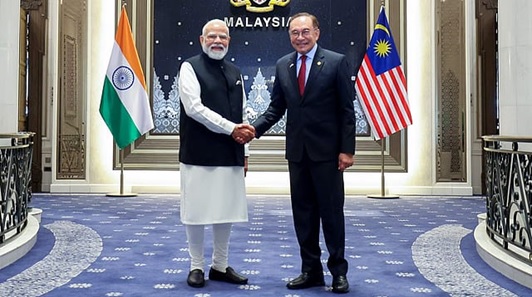
India and Malaysia signed multiple agreements during Prime Minister Narendra Modi’s visit to Kuala Lumpur in February 2026, marking a significant deepening of their Comprehensive Strategic Partnership and expanding cooperation across defence, technology, energy, and economic domains.
india-malaysia-relations

Background and Context: Evolution of India–Malaysia Relations

  • India and Malaysia have historically shared close ties rooted in centuries of maritime trade, cultural diffusion, and people-to-people contact across the Indian Ocean. Ancient Indian traders and scholars influenced Southeast Asia’s political, religious, and linguistic landscape, evident in Malaysia’s early Hindu-Buddhist heritage and later Islamic cultural synthesis.
  • After India’s independence, Malaysia emerged as one of its key partners in Southeast Asia. Bilateral relations gained renewed momentum following India’s “Look East Policy” in the 1990s, later upgraded to the “Act East Policy,” which positioned Malaysia as a strategic partner in India’s engagement with ASEAN and the Indo-Pacific.
  • In 2024, the two countries elevated their relationship to a Comprehensive Strategic Partnership, reflecting growing political trust, economic interdependence, and security convergence. The February 2026 visit marks a continuation of this upward trajectory, aligning bilateral ties with shifting regional geopolitics, supply chain reconfiguration, and the global push for resilient economic and security architectures.

India–Malaysia Bilateral Relationship

Historical and Civilisational Links

  • India and Malaysia share deep civilisational connections dating back over two millennia, shaped by trade, religion, language, and cultural exchanges across the Indian Ocean.
  • Elements of Indian culture, including Sanskrit influences, Hindu-Buddhist traditions, and later Islamic connections, are visible in Malaysia’s historical evolution.
  • Modern diplomatic relations were established soon after India’s independence, with consistent political engagement since then.

Political and Diplomatic Engagement

  • India and Malaysia elevated their relationship to a Comprehensive Strategic Partnership in 2024, reflecting growing political trust.
  • High-level visits, regular foreign office consultations, and cooperation at multilateral forums such as the United Nations and ASEAN-led platforms form the backbone of diplomatic engagement.
  • Malaysia has supported India’s demand for permanent membership of a reformed UN Security Council, reinforcing political convergence and shared commitment to global governance reforms.

Trade and Economic Cooperation

  • Malaysia is India’s 3rd largest trading partner within ASEAN. Between April 2000 and March 2025, Malaysia invested about US$ 1.27 billion in India.
  • Bilateral trade between the two countries stood at US$ 19.86 billion in 2024–25, comprising Indian exports worth US$ 7.32 billion and imports valued at US$ 12.54 billion.
  • Owing to its strategic location along the Strait of Malacca and the South China Sea, Malaysia is a key pillar of India’s Act East Policy and an important partner in India’s maritime connectivity strategy.
  • India’s major exports include petroleum products, engineering goods, meat and dairy products, and organic chemicals, while major imports from Malaysia consist of vegetable oils, machinery, electrical equipment, and minerals.

Defence and Security Cooperation

  • Defence ties have expanded steadily through joint exercises, maritime cooperation, and capacity-building initiatives.
  • As maritime neighbours in the Indian Ocean and Indo-Pacific region, both countries share concerns over freedom of navigation, maritime security, and non-traditional threats such as piracy, terrorism, and transnational crime.
  • Intelligence sharing and counter-terrorism cooperation have gained prominence, particularly in the context of evolving security challenges in the Indo-Pacific.

Diaspora and People-to-People Ties

  • The Indian diaspora in Malaysia, numbering over 2 million, plays a crucial role in strengthening bilateral ties.
  • Persons of Indian Origin are active in Malaysia’s politics, business, education, and culture, serving as a living bridge between the two countries.
  • Educational exchanges, tourism, cultural festivals, and academic cooperation further enhance people-to-people relations and societal linkages.

Shared Regional and Global Platforms

  • Both countries actively engage through ASEAN, the East Asia Summit, and the Indian Ocean Rim Association (IORA).
  • India recognises ASEAN centrality in the Indo-Pacific, while Malaysia supports India’s Act East Policy, creating strategic alignment at the regional level.
  • Their cooperation reflects a shared vision for a free, open, inclusive, and rules-based Indo-Pacific order.

Significance of Strengthening India–Malaysia Relations

1. Advancing India’s Act East and Indo-Pacific Strategy
Malaysia’s geostrategic location near vital sea lanes makes it central to India’s maritime security and regional connectivity objectives.

2. Enhancing Economic Resilience and Supply Chain Integration
Collaboration in semiconductors, electronics, digital technologies, and renewable energy supports India’s goal of becoming a global manufacturing hub and reduces dependence on concentrated supply chains.

3. Strengthening Counter-Terrorism and Maritime Security
Shared concerns over extremism, piracy, and non-traditional threats enhance security cooperation and intelligence coordination in a volatile regional environment.

4. Promoting ASEAN Centrality and Regional Stability
Closer ties with Malaysia reinforce India’s commitment to ASEAN-led regional architecture and multipolar stability in the Indo-Pacific.

5. Supporting Global Governance Reforms
Malaysia’s backing of India’s UNSC bid and cooperation in multilateral fora strengthen India’s voice in shaping global institutions.

Challenges and Way Forward

Challenges

  • Trade Imbalance: India’s imports from Malaysia significantly exceed exports, requiring diversification and value-added exports.
  • Geopolitical Pressures: Increasing strategic competition in the Indo-Pacific may complicate regional alignments.
  • Implementation Gaps: Translating MoUs into actionable outcomes requires institutional coordination and sustained political commitment.

Way Forward

  • Deepen Economic Integration: Expand cooperation in manufacturing, semiconductors, green technologies, and digital services.
  • Institutionalise Security Dialogue: Regularise defence consultations and maritime domain awareness mechanisms.
  • Strengthen Regional Architecture: Enhance cooperation through ASEAN-led forums and IORA to ensure inclusive regional stability.
  • Promote People-to-People Connectivity: Expand education, tourism, cultural exchanges, and diaspora engagement.
  • Link Bilateral Cooperation with Global Reforms: Use shared platforms to advocate reforms in international financial and governance institutions.

FAQs

1. What is the current status of India–Malaysia relations?

India and Malaysia share a Comprehensive Strategic Partnership, strengthened through political trust, economic cooperation, and security collaboration.

2. Why is Malaysia important for India’s Act East Policy?

Malaysia’s strategic location near key maritime routes and its role within ASEAN make it central to India’s engagement with Southeast Asia and the Indo-Pacific.

3. How does defence cooperation benefit both countries?

It enhances maritime security, counter-terrorism efforts, intelligence sharing, and regional stability in the Indo-Pacific.

4. What is the significance of local currency trade settlement?

It reduces transaction costs, mitigates exchange rate risks, and lowers dependence on third-country currencies, strengthening bilateral trade resilience.

5. How do people-to-people ties shape bilateral relations?

The large Indian diaspora in Malaysia, along with cultural, educational, and tourism exchanges, deepens societal linkages and mutual understanding.

« »
  • SUN
  • MON
  • TUE
  • WED
  • THU
  • FRI
  • SAT
Have any Query?

Our support team will be happy to assist you!

OR
X