New
Hindi Medium: (Delhi) - GS Foundation (P+M) : 8th June 2026, 6:30 PM Hindi Medium: (Prayagraj) - GS Foundation (P+M) : 1st June 2026, 5:30 PM English Medium: (Prayagraj) - GS Foundation (P+M) : 7th June 2026, 8:00 AM Hindi Medium: (Delhi) - GS Foundation (P+M) : 8th June 2026, 6:30 PM Hindi Medium: (Prayagraj) - GS Foundation (P+M) : 1st June 2026, 5:30 PM English Medium: (Prayagraj) - GS Foundation (P+M) : 7th June 2026, 8:00 AM

Current Affairs for 10 June 2026

Kirthai-II Hydroelectric Project: Profile, Strategic Importance and Key Facts about the Chenab River

Why in News

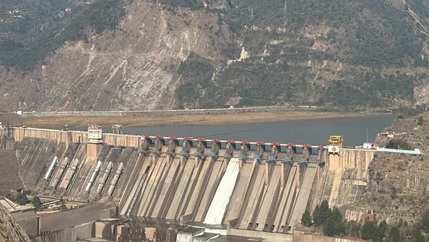
  • The Government recently revived the long-pending 930 MW Kirthai-II Hydroelectric Project on the Chenab River in Kishtwar district of Jammu & Kashmir after years of delay.
Project Profile

  • The project is being developed by Chenab Valley Power Projects Private Limited (CVPPPL).
  • NHPC and J&K State Power Development Corporation (JKSPDC) hold 51% and 49% stakes respectively.
  • It is a run-of-river hydropower project, which requires limited water storage compared to conventional reservoir projects.
  • The project is expected to strengthen hydropower generation in the Chenab basin.

Engineering Features

  • The project includes a 121-metre-high concrete gravity dam across the Chenab River.
  • It will have a 4.29-km-long headrace tunnel for diverting water to the powerhouse.
  • The design includes an 840 MW underground powerhouse and a 90 MW dam-toe powerhouse.
  • The planned reservoir capacity is 51.26 million cubic metres.

Strategic Significance

  • The project enhances India's utilization of waters allocated under the Indus Waters Treaty, 1960.
  • It contributes to energy security and regional infrastructure development.
  • The project is important for maximizing hydropower potential in the western river system.

Chenab River: Key Facts

  • The Chenab River is one of the major tributaries of the Indus River System.
  • It originates from the confluence of the Chandra and Bhaga rivers in Himachal Pradesh.
  • The river is known as Chandrabhaga in its upper reaches.
  • It flows through Himachal Pradesh and Jammu & Kashmir before entering Pakistan.
  • Important tributaries include Tawi, Niru, Neeru, Ans, Kalnai and Marusudar.

Autoimmune Blistering Diseases (AIBDs): Overview, Symptoms, Health Impacts and Treatment

Why in News

  • Researchers from Punjabi University, Patiala and PGIMER Chandigarh have developed AI-based diagnostic tools for identifying Autoimmune Blistering Diseases (AIBDs).

Disease Overview

  • AIBDs are a group of rare autoimmune bullous disorders affecting the skin and mucous membranes.
  • The immune system mistakenly attacks healthy skin tissues and structural proteins.
  • This abnormal immune response leads to blister formation and tissue damage.

Clinical Features

  • Blisters may appear on the skin, mouth, nose, eyes and genital regions.
  • The blisters are often painful and may be associated with severe itching.
  • Ruptured blisters frequently leave ulcers and exposed skin surfaces.
  • The location of lesions varies depending on the specific disease subtype.

Health Consequences

  • Severe cases may lead to extensive skin loss resembling burn injuries.
  • Patients face a higher risk of secondary bacterial infections.
  • Long-term disease can result in nutritional deficiencies and eye complications.
  • Untreated cases may become life-threatening.

Treatment Approaches

  • Corticosteroids remain the primary treatment option for controlling inflammation.
  • Immunosuppressive drugs help reduce abnormal immune activity.
  • Biological agents such as Rituximab are increasingly being used.
  • Proper wound care and infection prevention are critical components of treatment.

Digital India Bhashini Division (DIBD)

Why in the News?

  • Recently, the Digital India Bhashini Division (DIBD) of the Ministry of Electronics and Information Technology, Government of India, signed an MoU (Memorandum of Understanding) with the Center for Digital Public Infrastructure and Artificial Intelligence (DPI-AI) at Kathmandu University, Nepal, to establish a collaborative framework to advance language AI, multilingual digital public infrastructure, and inclusive digital ecosystems in India and Nepal.
Key Points of the MoU

  • This partnership reflects India and Nepal's shared vision for the use of technology for inclusive development, social empowerment, and regional cooperation.
  • This MoU is not limited to technical cooperation alone; it is envisioned as an initiative to strengthen people-to-people contacts, promote the preservation of linguistic heritage, and ensure equal access to opportunities across the region by bridging language, literacy, and digital barriers.

Scope of the MoU:

  • Under the MoU, both institutions will collaborate to develop high-quality Nepali language datasets, speech corpora, and multilingual AI resources, including speech-to-text, text-to-speech, machine translation, and multilingual conversational AI capabilities.
  • The partnership will also support the preservation and digitization of the linguistic and literary heritage of under-resourced and under-represented languages ​​in the India-Nepal region, enabling communities at risk of digital extinction to access AI-enabled tools and services in their mother tongue.
  • Through Bhashini's open and interoperable language technology ecosystem, the collaboration will help the Government of Nepal expand digital public services to citizens in their preferred languages, reducing language, literacy, and digital access barriers at the last mile.
  • The MoU also envisages joint research, capacity building, training programs, and pilot projects in the areas of natural language processing (NLP), multilingual AI, and digital public infrastructure, bringing together universities, researchers, language experts, and technology specialists from both countries.
  • This partnership is also expected to create new economic and social opportunities for Nepali citizens, students, entrepreneurs, and professionals by enabling multilingual access to education, skills development, digital commerce, and public services within Nepal and in regional and global markets.

About Digital India Bhashini Division (DIBD)

  • Digital India Bhashini Division (DIBD), under the Digital India Corporation (DIC), Ministry of Electronics and Information Technology, is India's national initiative for AI-powered multilingual digital inclusion and language technology.
  • Through the National Hub for Language Technology (NHLT), Bhashini provides scalable speech- and text-based AI services in Indian languages ​​for governance, public forums, and institutions.
  • The platform supports over 800 government websites, processes over 15 million inferences daily, and supports 36 Indian text languages, 23 Indian speech languages, and 35 international languages.
  • DIBD also promotes open-source innovation, multilingual AI research, dataset creation, startup promotion, and academic collaboration, thereby strengthening India's digital public infrastructure ecosystem.

Supreme Court Decision on Online Gaming

Context

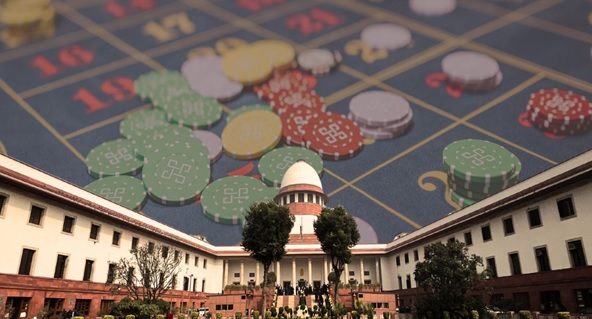
  • The online real-money gaming industry in India has long faced legal uncertainties, tax disputes, and regulatory challenges. Two significant judgments delivered by the Supreme Court on May 27, 2026, have significantly clarified the legal status of this sector.
  • On the one hand, the Court upheld the 28 percent GST imposed on online gaming companies, while on the other, it also provided constitutional support to the restrictions imposed by states on online betting and gambling. However, the impact of these judgments is not limited to the gaming industry, but also affects broader questions related to the federal structure, taxation, and regulation of the digital economy.

Background to the Dispute

Two separate but interrelated issues were before the Supreme Court.

  • The first question was whether state governments could enact laws banning online betting and gambling. Some states attempted to regulate and impose penalties on games played on online platforms. When High Courts struck down these laws, the state governments appealed to the Supreme Court.
  • The second question concerned the liability of Goods and Services Tax (GST) on online gaming platforms. The dispute centered on whether the tax should be levied only on the platform's income or on the entire amount wagered by players.

GST Dispute and the Court's View

  • The online gaming industry argued that it acts only as an intermediary platform and its actual income is a small portion of the money wagered by players. Therefore, taxation should be limited to that portion.
  • However, the Court did not accept this view. The Court held that when money is wagered on an uncertain outcome, the activity's nature deviates from traditional skill-based competitions.
  • According to the Court, such platforms not only organize competitions but also provide a mechanism in which participants take risks with the potential for economic gain. Therefore, these activities can be classified as special for taxation purposes.
  • An important aspect was that the Court rejected the traditional distinction between skill and chance as decisive in the context of GST. The Court believed that when real money is at stake, the economic nature of the activity becomes more important for taxation.
  • The Court also clarified that the 2023 amendments did not introduce any new taxes, but rather clarified and harmonized the existing legal position. On this basis, tax demands for the prior period were also considered valid.

Upholding the Regulatory Power of States

  • In another decision, the Supreme Court acknowledged the power of states to regulate or prohibit activities such as online betting and gambling.
  • The Court held that betting and gambling do not fall within the category of ordinary business activities. Therefore, they do not automatically receive the same protections afforded to trade and business under the Constitution.
  • The Court also underlined that the mere presence of an element of skill in a game does not change its nature if money is at stake. In such cases, the activity may fall within the scope of betting, and states have the right to regulate it.
  • Noting the expansion of digital technology, the Court also indicated that smartphones and online payment systems have made betting more accessible than ever before. Therefore, states can intervene on grounds of public interest, social security, and public order.

Laws and Industry Challenges of 2025

  • The significance of these decisions is heightened as they come at a time when the real money online gaming industry is already under intense regulatory pressure.
  • Central laws enacted in recent years have imposed extensive restrictions on real money based gaming activities. However, e-sports, educational games and some digital games played only for entertainment purposes have been kept in a separate category.
  • Many industry representatives argue that these restrictions and heavy tax liabilities have seriously affected the economic viability of the business. Many companies have been forced to change their operating models, enter other digital sectors or turn to foreign markets.

Economic and legal implications

  • The most direct impact of these decisions will be on tax collection and the financial condition of the industry. If tax demands from prior periods are sustained, many companies may face severe financial pressure. Also, the possibility may increase that some companies may resort to processes like restructuring, merger or bankruptcy.
  • From a legal perspective, these decisions give rise to another important debate – what should be the role of the states and the Center in regulation of online gaming. While the Supreme Court has considered betting and gambling as a subject falling under the State List, the question that may become more important in future is on what basis the Central Government gets the constitutional power to make comprehensive regulatory laws in such an area.

The way forward

  • The recent decisions of the Supreme Court could prove to be a turning point for India's online gaming industry. These decisions, on the one hand, have legitimized the government's approach to taxation, while on the other hand, they have also strengthened the regulatory powers of the states.
  • While this may increase challenges for the industry, the Court's message is clear that when a digital activity involves real money, betting and questions of public interest, both the State and the Center can have wide powers to regulate.
  • However, it will be important to see in the coming years how the industry reorganizes itself to suit the changing legal framework and how governments strike a balance between regulation and innovation.
« »
  • SUN
  • MON
  • TUE
  • WED
  • THU
  • FRI
  • SAT
Have any Query?

Our support team will be happy to assist you!

OR