
Kirthai-II Hydroelectric Project: Profile, Strategic Importance and Key Facts about the Chenab River
Why in News
The Government recently revived the long-pending 930 MW Kirthai-II Hydroelectric Project on the Chenab River in Kishtwar district of Jammu & Kashmir after years of delay.
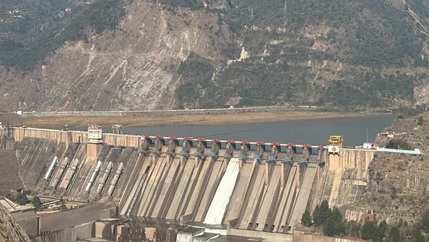
Project Profile
The project is being developed by Chenab Valley Power Projects Private Limited (CVPPPL).
NHPC and J&K State Power Development Corporation (JKSPDC) hold 51% and 49% stakes respectively.
It is a run-of-river hydropower project, which requires limited water storage compared to conventional reservoir projects.
The project is expected to strengthen hydropower generation in the Chenab basin.
Engineering Features
The project includes a 121-metre-high concrete gravity dam across the Chenab River.
It will have a 4.29-km-long headrace tunnel for diverting water to the powerhouse.
The design includes an 840 MW underground powerhouse and a 90 MW dam-toe powerhouse.
The planned reservoir capacity is 51.26 million cubic metres.
Strategic Significance
The project enhances India's utilization of waters allocated under the Indus Waters Treaty, 1960.
It contributes to energy security and regional infrastructure development.
The project is important for maximizing hydropower potential in the western river system.
Chenab River: Key Facts
The Chenab River is one of the major tributaries of the Indus River System.
It originates from the confluence of the Chandra and Bhaga rivers in Himachal Pradesh.
The river is known as Chandrabhaga in its upper reaches.
It flows through Himachal Pradesh and Jammu & Kashmir before entering Pakistan.
Important tributaries include Tawi, Niru, Neeru, Ans, Kalnai and Marusudar.



