| Prelims : (Science & Technology + CA) Mains : (GS-3 – Science & Technology, Infrastructure, Digital Economy) |
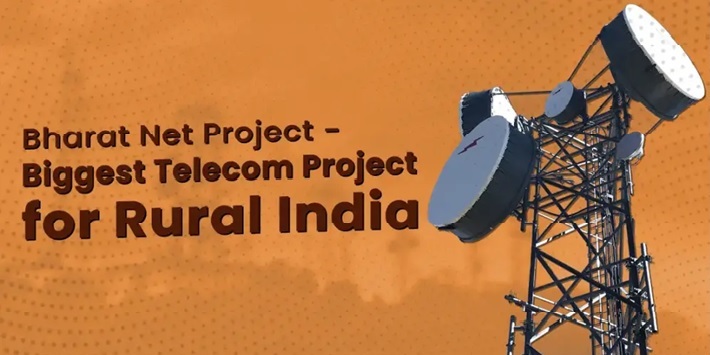
The Government of India recently stated that under the BharatNet Project, the country has expanded its optical fibre network, 5G services, and digital public infrastructure to more than 2.15 lakh Gram Panchayats.
The initiative represents one of the world’s largest rural broadband connectivity programmes and aims to bridge the digital divide between urban and rural regions. The project is implemented by Bharat Broadband Network Limited under the supervision of the Ministry of Communications.
Access to high-speed internet has become a crucial component of socio-economic development. Digital connectivity enables citizens to access services related to governance, education, healthcare, financial inclusion, and commerce.
However, rural areas in India historically suffered from limited internet access due to :
To address this gap, the Government launched the Digital India Programme in 2015, aiming to transform India into a digitally empowered society and knowledge economy.
The BharatNet Project forms a critical component of this broader digital transformation strategy.
The BharatNet Project is a flagship initiative of the Government of India designed to provide broadband connectivity to all Gram Panchayats across the country through a high-speed optical fibre network.
It is considered the largest rural broadband connectivity programme in the world, connecting villages with high-speed internet infrastructure.
The project seeks to create a robust digital backbone for rural India, enabling citizens to access government services and digital platforms.
The primary objectives of the project include :
The network functions as a wholesale infrastructure platform, allowing various service providers to deliver internet and digital services to rural populations.
The BharatNet infrastructure allows multiple stakeholders to use the broadband network.
These include :
Through this network, various services can be delivered to rural areas such as :
Thus, the project creates a digital ecosystem that supports rural development and economic inclusion.
The BharatNet programme has been implemented in multiple phases to gradually expand digital infrastructure across the country.
The first phase focused on connecting 1 lakh Gram Panchayats by laying optical fibre cables using existing telecom infrastructure.
Key highlights :
This phase established the initial backbone for rural broadband connectivity.
The second phase expanded the network to an additional 1.5 lakh Gram Panchayats.
Key features include :
This phase significantly expanded rural broadband access across the country.
The third phase focuses on modernising and strengthening the network infrastructure.
Key goals include :
This phase aims to transform BharatNet into a high-capacity digital infrastructure capable of supporting next-generation digital services.
The BharatNet Project is funded primarily through the Digital Bharat Nidhi, which replaced the earlier Universal Service Obligation Fund.
The fund supports the expansion of telecom infrastructure in areas where commercial telecom investments are not viable.
It is financed through a levy collected from telecom operators and is used to promote connectivity in underserved regions.
The project is executed by Bharat Broadband Network Limited, a Special Purpose Vehicle established by the Government of India.
The organisation is responsible for :
BharatNet aims to provide rural communities with access to high-speed internet, thereby reducing disparities between urban and rural regions.
The project supports the delivery of digital government services such as :
This enhances transparency and efficiency in public administration.
Improved connectivity enables rural entrepreneurs, farmers, and small businesses to access digital marketplaces, financial services, and information networks.
The BharatNet network supports India’s expanding digital ecosystem, including platforms related to digital payments, digital identity, and online public services.
With the integration of 5G technology, BharatNet will support advanced digital services such as smart agriculture, remote healthcare, and digital education.
Despite its progress, the project faces several challenges :
Addressing these challenges is crucial for achieving universal digital connectivity.
FAQs1. What is the BharatNet Project ? The BharatNet Project is a Government of India initiative aimed at providing high-speed broadband connectivity to all Gram Panchayats in the country. 2. Which organisation implements BharatNet ? The project is implemented by Bharat Broadband Network Limited, a Special Purpose Vehicle established by the government. 3. How is the BharatNet Project funded ? It is funded primarily through the Digital Bharat Nidhi, which replaced the earlier Universal Service Obligation Fund. 4. How many Gram Panchayats have been connected under BharatNet ? According to recent government updates, the project has expanded digital infrastructure to more than 2.15 lakh Gram Panchayats. 5. Why is BharatNet important for rural India ? BharatNet enables rural communities to access digital services such as e-governance, telemedicine, online education, and digital financial services, thereby promoting inclusive development and bridging the digital divide. |
| Prelims : (Economy + CA) Mains : (GS-3 – Indian Economy, Agriculture, Fiscal Policy, Banking Sector) |
The Government of Maharashtra recently announced a ₹35,000 crore farm loan waiver scheme, reviving concerns over its impact on credit discipline and state finances.
The scheme includes :
While the state government maintains that its fiscal position is strong enough to bear the cost, economists and institutions such as the Reserve Bank of India have warned that frequent farm loan waivers can weaken credit culture and strain public finances.
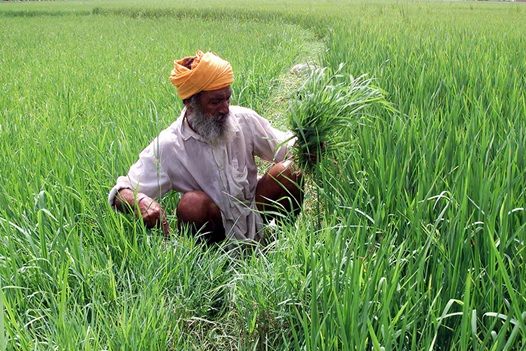
Farm loan waivers are government programmes that cancel or reduce the outstanding agricultural loans owed by farmers to financial institutions.
These measures are typically introduced during periods of :
The primary goal is to reduce farmers’ debt burden, enabling them to restart agricultural activities and restore financial stability.
However, over time, farm loan waivers have become controversial because of their fiscal costs and long-term impact on credit discipline.
Farm loan waivers have expanded significantly in recent decades, particularly since 2014–15, with several states introducing their own schemes.
According to estimates cited by the Reserve Bank of India, both the Central and State governments together have spent around ₹3 lakh crore on farm loan waivers over the past 35 years.
These programmes aim to provide temporary relief to farmers facing financial distress, but economists argue that they do not address the structural causes of agrarian crises.
Farm loan waivers are often associated with electoral politics.
An Internal Working Group (2019) of the Reserve Bank of India observed that many waivers were announced close to elections.
Examples include :
This trend has led to concerns that loan waivers may be used as short-term political tools rather than long-term agricultural reforms.
The first nationwide farm loan waiver programme was introduced in 1990.
Key features :
The scheme cost about ₹10,000 crore, equivalent to roughly ₹50,600 crore at 2016–17 prices.
The second nationwide farm loan waiver programme was launched in 2008.
The programme cost about ₹52,500 crore, equivalent to approximately ₹81,200 crore at 2016–17 prices.
Since 2014–15, several states have introduced major farm loan waiver schemes.
According to the Reserve Bank of India, about 10 states have collectively announced waivers worth ₹2.4 lakh crore, equivalent to around 1.4% of India’s GDP (2016–17 prices).
Some notable examples include :
These schemes have created significant fiscal obligations for state governments.
Farm loan waivers impose substantial financial burdens on state budgets.
Typically, the cost of waivers is spread over three to five years through :
The fiscal burden varies between states, ranging from 0.1% to 1.8% of Gross State Domestic Product (GSDP).
Such expenditures can limit fiscal space available for developmental programmes.
Research by the Reserve Bank of India indicates that farm loan waivers may temporarily slow the growth of agricultural credit.
However, repeated waivers may reduce incentives for farmers to repay loans regularly.
The Reserve Bank of India has consistently expressed concerns about loan waivers.
High levels of Non-Performing Assets (NPAs) in the agricultural sector reflect these issues.
Agricultural NPAs were estimated at around 8.44% as of March 2019.
Prominent economists and former RBI Governors have criticised the practice of frequent loan waivers.
He argued that loan waivers often benefit only those farmers who already have access to formal banking credit, leaving the most vulnerable farmers—who depend on informal lenders—outside the system.
He warned that repeated waivers undermine credit discipline and discourage borrowers from maintaining good repayment records.
One of the major criticisms of loan waivers is their opportunity cost.
Large public funds spent on waivers could instead be invested in :
Such investments may provide more sustainable long-term benefits for the agricultural sector.
According to a research report by State Bank of India, the impact of loan waivers has often been limited.
Key findings include :
Experts suggest that income support programmes may be more effective than loan waivers.
With an expenditure similar to waiver schemes (around ₹50,000 crore), income support programmes could benefit a larger number of farmers and provide stable financial assistance.
Policies should therefore focus on :
These measures could address the structural causes of agricultural distress more effectively.
Frequent loan waivers can strain government finances and increase fiscal deficits.
Repeated waivers may weaken repayment culture among borrowers and discourage banks from lending to the agricultural sector.
Loan waivers highlight the intersection of economic policy and electoral politics in India.
The debate underscores the need for long-term reforms to improve farmers’ incomes and resilience.
High agricultural NPAs and reduced credit flow can affect the health of the banking system.
FAQs1. What is a farm loan waiver ? A farm loan waiver is a government policy that cancels or reduces the outstanding agricultural loans owed by farmers to banks or financial institutions. 2. Which were the two nationwide farm loan waivers in India ? The two major national schemes were the Agriculture and Rural Debt Relief Scheme (1990) and the Agricultural Debt Waiver and Debt Relief Scheme (2008). 3. Why does the RBI oppose frequent loan waivers ? The Reserve Bank of India argues that waivers weaken credit discipline and encourage borrowers to delay repayments in expectation of future relief. 4. What is the fiscal impact of farm loan waivers ? Loan waivers impose large financial burdens on government budgets and may limit funds available for infrastructure and agricultural development. 5. What alternatives to farm loan waivers are suggested by experts ? Experts recommend income support schemes, agricultural infrastructure investments, improved irrigation, crop insurance, and better market access as more sustainable solutions to farmers’ distress. |
| Prelims: (Social Issues + CA) Mains: (GS-1 – Population and Associated Issues; GS-2 – Social Policy and Governance) |
The Government of Andhra Pradesh has introduced a draft Population Management Policy aimed at encouraging families to have two or three children in response to a sharp decline in fertility rates in the state.
The policy comes after Andhra Pradesh’s Total Fertility Rate (TFR) fell to 1.5, significantly below the replacement level of 2.1 required to maintain a stable population.
The government has expressed concern that a declining birth rate could lead to:
The policy therefore marks a shift from population control policies to population support measures.
For decades, India’s population policies focused on controlling population growth, especially during the 1970s and 1980s when high fertility rates were considered a developmental challenge.
India introduced its National Population Policy (2000) with objectives such as:
Over time, however, many states—particularly in southern India—have witnessed rapid declines in fertility rates due to improvements in education, healthcare, and economic development.
Today, several states face the opposite challenge: declining fertility and population ageing.
Andhra Pradesh has experienced a steady decline in fertility over the past two decades.
Similarly, Telangana has recorded a fertility rate of 1.5.
At the national level, India’s fertility rate has also declined:
This decline reflects improvements in:
There are significant regional differences in fertility rates across the country.
Southern states generally have fertility rates below the national average due to stronger social development indicators.
Examples include:
Some states still record higher fertility rates.
Examples include:
States such as Madhya Pradesh, Chhattisgarh, Rajasthan, Jharkhand, and Assam also record fertility rates above the national average.
Declining fertility in southern states could have important political implications, particularly regarding parliamentary representation.
Seats in the Parliament of India are allocated based on population size.
States with slower population growth may eventually see their relative representation decline compared to more populous states.
This issue is closely connected with the delimitation process, which redraws parliamentary constituencies after each census.
However, the delimitation exercise has been suspended for nearly 50 years to avoid penalising states that successfully controlled population growth.
Once the suspension ends, states with higher population growth may gain more representation in Parliament.
This possibility has generated debate among southern states concerned about losing political influence.
The Government of Andhra Pradesh has introduced the policy to address demographic changes and maintain a balanced population structure.
The policy aims to:
The government believes these steps can help maintain economic growth and demographic stability.
The proposed policy is structured around five core pillars.
1. Matrutva
Focuses on maternal health and well-being, including better healthcare facilities and nutritional support for mothers.
2. Shakti
Aims to increase women’s participation in the workforce through employment opportunities and supportive social policies.
3. Kshema
Focuses on strengthening elderly welfare systems, as the proportion of senior citizens is expected to increase significantly.
4. Naipunyam
Seeks to improve workforce skills, particularly in healthcare sectors dealing with children and the elderly.
5. Sanjeevani
Focuses on expanding the digital public health system to improve healthcare accessibility and efficiency.
To encourage families to have more children, the state government has proposed several incentives.
Key measures include:
The policy also includes measures aimed at improving healthcare and workforce preparedness.
These include:
The government aims to achieve several health-related goals through the policy.
These include:
Andhra Pradesh is experiencing a faster ageing trend compared to the national average.
Key demographic indicators
Another challenge is relatively low female workforce participation.
Addressing these demographic trends is a major objective of the policy.
1. Addressing Declining Fertility
The policy recognises that very low fertility can create long-term demographic challenges similar to those faced by countries such as Japan and South Korea.
2. Preventing Demographic Burden
By encouraging sustainable population growth, the state aims to avoid a situation where a shrinking workforce must support a rapidly ageing population.
3. Supporting Women and Families
The policy emphasises maternal health, childcare support, and women’s employment opportunities.
4. Strengthening Elderly Welfare
With the elderly population expected to grow significantly, the policy focuses on improving social and healthcare systems for senior citizens.
5. Preparing for Future Economic Growth
Maintaining a balanced demographic structure can help preserve the demographic dividend, which is essential for long-term economic growth.
FAQs1. What is the Total Fertility Rate (TFR) ? The Total Fertility Rate is the average number of children a woman is expected to have during her lifetime. 2. What is the replacement level of fertility ? Replacement-level fertility is about 2.1 children per woman, which keeps the population size stable over time. 3. Why is Andhra Pradesh encouraging families to have more children ? The state’s fertility rate has declined to 1.5, which could lead to a shrinking workforce and an ageing population in the future. 4. What are the main incentives offered under the policy ? The policy proposes cash incentives, monthly financial support, free education for children, and subsidised IVF treatments to encourage childbirth. 5. Why are declining fertility rates a concern for governments ? Very low fertility rates can lead to population ageing, labour shortages, slower economic growth, and increased pressure on welfare systems. |
|
Prelims : (Polity & Governance + CA) |
The Minister of State for Youth Affairs and Sports recently launched a nationwide athletics league at around 250 locations across India under the ASMITA (Achieving Sports Milestone by Inspiring Women Through Action) initiative.
The programme aims to expand women’s participation in competitive sports and identify promising athletes at the grassroots level. It is implemented under the broader framework of the Khelo India Programme, which promotes sports development and talent identification across the country.
Historically, women’s participation in sports in India has remained lower than that of men due to several structural barriers such as :
However, the success of athletes such as P. V. Sindhu, Mary Kom, and Mirabai Chanu has significantly boosted interest in women’s sports and encouraged policy initiatives aimed at increasing female participation.
Recognising the importance of gender equality in sports, the Government of India has integrated women-focused programmes into national initiatives like the Khelo India Programme.
The ASMITA (Achieving Sports Milestone by Inspiring Women Through Action) Initiative was launched in 2021 to promote women’s participation in sports through organised leagues and competitions.
It forms part of the broader objectives of the Khelo India Programme, which aims to strengthen India’s sports ecosystem by identifying talent at the grassroots level.
The programme acts as an affirmative action initiative in sports, encouraging girls and women to participate in competitive sporting events across the country.
The initiative aims to achieve the following goals :
The ASMITA programme operates through structured sports leagues organised across multiple regions.
Major features include :
The recently launched athletics league will take place at around 250 locations across India, significantly expanding the reach of the initiative.
The initiative is implemented by the Ministry of Youth Affairs and Sports.
The Sports Authority of India plays a key role in supporting National Sports Federations in organising women’s leagues under the programme.
The Khelo India Programme is a flagship Central Sector Scheme launched by the Government of India to develop a strong sporting culture.
In 2020, the Khelo India Games were declared an “Event of National Importance” under the Sports Broadcasting Signals (Mandatory Sharing with Prasar Bharati) Act, 2007, ensuring wider broadcast coverage and national visibility.
The ASMITA initiative functions as a women-focused component within this broader sports development framework.
Sports can act as a powerful tool for social transformation. By encouraging women to participate in competitive sports, initiatives like ASMITA contribute to :
Thus, the initiative aligns with broader national goals of gender equality and inclusive development.
The programme addresses gender disparities by encouraging greater participation of women in competitive sporting events.
By organising leagues across multiple regions, the initiative helps discover promising athletes from remote and underrepresented areas.
Early talent identification and systematic training can contribute to improving India’s performance in international sporting events such as the Olympic Games.
Sports development fosters discipline, teamwork, and national pride among young athletes.
The initiative represents an important step toward creating a more inclusive and equitable sports ecosystem in India.
FAQs1. What is the ASMITA initiative ? The ASMITA initiative is a government programme launched in 2021 to promote women’s participation in sports through organised leagues and competitions across India. 2. Which ministry implements the ASMITA programme ? The programme is implemented by the Ministry of Youth Affairs and Sports, with support from the Sports Authority of India and National Sports Federations. 3. How is ASMITA connected to the Khelo India programme ? ASMITA functions as a women-focused initiative under the Khelo India Programme, which aims to promote sports participation and excellence in India. 4. What is the main objective of the ASMITA leagues ? The primary objective is to increase women’s participation in sports while identifying and nurturing talent from grassroots levels. 5. Why is women’s participation in sports important ? Greater participation of women in sports promotes gender equality, improves health and well-being, creates professional opportunities, and strengthens India’s overall sports ecosystem. |
| Prelims : (Polity + Elections + Current Affairs) Mains : (GS-2 – Governance, Constitutional Bodies, Electoral Reforms) |
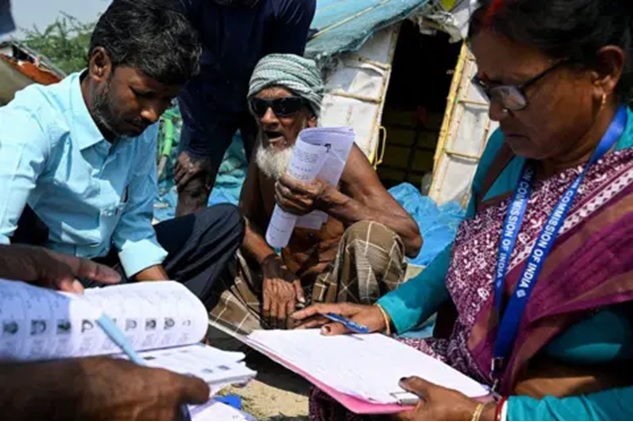
The Supreme Court of India recently intervened in the Special Intensive Revision (SIR) of electoral rolls in West Bengal by directing the deployment of judicial officers to examine nearly 60 lakh disputed voter verification cases.
The intervention came amid a dispute between the Election Commission of India and the Government of West Bengal regarding the availability of appropriate officials for scrutinising electoral roll entries and verifying voter eligibility. The Court invoked its extraordinary powers under Article 142 of the Constitution of India to ensure the timely completion of the revision exercise ahead of upcoming elections.
Electoral rolls are the official lists of individuals eligible to vote in elections. In India, only citizens whose names appear on the voter list are permitted to participate in the electoral process.
The preparation and maintenance of electoral rolls is conducted under the supervision of the Election Commission of India, which derives its authority from Article 324 of the Constitution of India.
Accurate electoral rolls are essential because they :
Errors or inconsistencies in voter lists may lead to exclusion of legitimate voters or inclusion of ineligible individuals, both of which can undermine electoral credibility.
The Special Intensive Revision (SIR) is a comprehensive exercise undertaken periodically to verify and update electoral rolls.
Its objective is to ensure that voter lists remain accurate, inclusive, and free from irregularities.
The process generally involves the following steps :
Officials such as Electoral Registration Officers (EROs) and Assistant Electoral Registration Officers (AEROs) play a central role in scrutinising applications, examining documents, and making decisions on disputed cases.
During the revision exercise, certain voter entries are flagged for further scrutiny due to irregularities or inconsistencies.
Two major categories identified in the West Bengal revision process include :
These arise when voter information appears inconsistent or contradictory. Examples include :
Such cases require individuals to submit additional documentation to confirm their eligibility.
These involve voter entries that cannot be clearly linked with previously verified electoral rolls or supporting records.
Such entries require verification to ensure that :
In West Bengal’s ongoing revision exercise, nearly 60 lakh such cases have been flagged, making the verification process unusually large and administratively complex.
The Supreme Court of India stepped in after disputes emerged between the Election Commission of India and the Government of West Bengal regarding the conduct of the SIR exercise.
To ensure that the revision process is completed without delay, the Court invoked Article 142 of the Constitution of India, which allows it to pass orders necessary for doing complete justice in any matter.
This measure was adopted because the second phase of the SIR process was nearing completion and the high volume of disputes required urgent resolution.
The controversy largely centred on the availability and suitability of officials responsible for verifying voter records.
The Election Commission of India argued that :
The Government of West Bengal disputed the Commission’s claims and raised several concerns :
The disagreement created administrative delays and led to litigation before the Supreme Court of India.
The Court emphasised the importance of completing the revision process in a timely manner, particularly with elections approaching.
Key observations included :
By appointing judicial officers to adjudicate disputed cases, the Court sought to create an independent and credible mechanism for resolving conflicts.
The controversy has revived an important institutional debate regarding the administrative structure of the Election Commission of India.
Under Article 324 of the Constitution of India, the Commission has the authority to supervise elections. However, it does not maintain a permanent administrative cadre of its own.
Instead, it relies on officers temporarily deputed from :
This arrangement sometimes creates structural issues :
The West Bengal episode highlights the need to examine whether the Commission requires greater institutional autonomy or a permanent electoral administration framework.
Maintaining reliable voter lists is fundamental for the credibility of democratic elections.
Accurate electoral rolls help to :
Conversely, errors in electoral rolls can result in :
Therefore, periodic revision exercises such as the Special Intensive Revision (SIR) play a critical role in safeguarding electoral integrity.
FAQs1. What is the Special Intensive Revision (SIR) of electoral rolls ? The Special Intensive Revision is a comprehensive verification exercise conducted by the Election Commission of India to update voter lists by correcting errors, adding new voters, and removing ineligible entries. 2. Why did the Supreme Court intervene in the West Bengal SIR process ? The Supreme Court of India intervened after disputes between the Election Commission and the State government delayed verification of nearly 60 lakh disputed voter entries, and directed the deployment of judicial officers to ensure timely completion. 3. What are “logical discrepancy” cases in electoral roll verification ? Logical discrepancy cases arise when voter details such as age, address, or identity information appear inconsistent or contradictory with official records and require additional documentation. 4. Why are electoral rolls important for democratic elections ? Electoral rolls determine who is eligible to vote. Accurate voter lists prevent fraud, ensure inclusion of eligible citizens, and maintain the credibility of the electoral process. 5. What structural issue in India’s electoral administration does this controversy highlight ? The episode highlights that the Election Commission of India lacks its own permanent administrative staff and depends on government officials on deputation, which may sometimes lead to coordination challenges during election-related processes. |

Our support team will be happy to assist you!


 Contact Us
  New Batch : 9555124124/ 7428085757
  Tech Support : 9555124124/ 7428085757