New
Hindi Medium: (Delhi) - GS Foundation (P+M) : 8th June 2026, 6:30 PM Hindi Medium: (Prayagraj) - GS Foundation (P+M) : 1st June 2026, 5:30 PM English Medium: (Prayagraj) - GS Foundation (P+M) : 7th June 2026, 8:00 AM Hindi Medium: (Delhi) - GS Foundation (P+M) : 8th June 2026, 6:30 PM Hindi Medium: (Prayagraj) - GS Foundation (P+M) : 1st June 2026, 5:30 PM English Medium: (Prayagraj) - GS Foundation (P+M) : 7th June 2026, 8:00 AM

Current Affairs for 11 June 2026

RISA (Timeless Tribal): A New Initiative to Promote Tribal Heritage and Crafts

Why in News ?

The Ministry of Tribal Affairs, through the TRIFED, launched “RISA – Timeless Tribal”, a premium brand dedicated to tribal textiles, embroidery, and handicrafts. Along with the launch, the first exclusive RISA Store was inaugurated at the Rajiv Gandhi Handicrafts Bhawan on 10 June 2026.

What is RISA – Timeless Tribal ?

  • RISA (Timeless Tribal) is a premium brand created to promote tribal textiles, embroidery, and handicrafts. 
  • The initiative aims to provide a distinct identity to tribal products, preserve India's rich tribal heritage, and expand their presence in domestic and international markets.
  • It seeks to combine cultural preservation with economic empowerment for tribal communities.

Objectives of the RISA Initiative

  • The RISA initiative has been conceptualized to create a unique brand identity for tribal products, strengthen market linkages for tribal artisans, facilitate design development and product diversification, and promote tribal heritage in premium national and global markets.
  •  It also aims to generate better livelihood opportunities for tribal artisans, particularly women, while preserving traditional crafts and indigenous knowledge systems.
    • Nodal Ministry : Ministry of Tribal Affairs (MoTA).
    • Implementing Agency : Tribal Cooperative Marketing Development Federation of India (TRIFED).

Tribal Textiles and Embroidery Traditions Covered in the First Phase

  • In the first phase, seven tribal textile and embroidery traditions have been selected based on their cultural significance and market potential. 
  • These include Eri Silk and Muga Silk of Assam, Santal Cotton of Jharkhand, Changpa Pashmina of Ladakh, Kotpad Cotton and Dongria Embroidery of Odisha, and Toda Embroidery of Tamil Nadu.

Selected Tribal Handicrafts

  • The first phase also focuses on promoting selected tribal handicrafts, including Longpi Pottery from Manipur, Turtuk Brass Cutlery from Ladakh, and Dokhra Art from Chhattisgarh. The objective is to expand market access and enhance income opportunities for artisan communities.

Design and Product Development

  • To modernize products while preserving their authenticity, renowned fashion designers such as Anju Modi, Manish Tripathi, Gaurav Jai Gupta, Abu Jani, Sandeep Khosla, and Sameera Dalvi have been associated with the initiative. 
  • Their role is to develop contemporary product lines while maintaining the traditional character of tribal crafts.

Implementation and Institutional Support

  • The initiative is being implemented through the National Design Centre. The project includes design development, garment prototyping, capacity building of tribal weavers and artisans, establishment of stitching facilities, strengthening of weaving and handicraft clusters, and improvement in product presentation and packaging.
  • The National Institute of Design has been entrusted with developing premium and environmentally sustainable packaging solutions for RISA-branded products.

Significance

  • RISA is expected to contribute significantly to the economic empowerment of tribal communities by creating sustainable livelihood opportunities and increasing market access. 
  • At the same time, it will help preserve traditional crafts, indigenous knowledge, and cultural heritage while enhancing the visibility of tribal products in national and international markets. 
  • The initiative aligns with the vision of Viksit Bharat by promoting inclusive growth, cultural preservation, and sustainable development.

The country's first solar-cum-storage project

Context

  • Recently, the Union Defence Minister approved the establishment of a 250 megawatt (MW) solar power project on approximately 850 acres of defence land in Sitapur (East Cantonment Area), Uttar Pradesh.

About the Solar-cum-Storage Project

  • This project marks a historic step by the Central Government towards strengthening the country's energy security, promoting renewable energy, and ensuring the optimal utilization of vacant land owned by the Ministry of Defence.
  • This project is the first of its kind initiative by the Ministry of Defence, integrating solar power generation with a battery energy storage system (BESS).

Key Features:

  • Huge Capacity : With a capacity of 250 MW, it will be one of the largest renewable energy projects in the country to be established on defence land.
  • Battery Storage (BESS) Support : Along with power generation, it will also have a modern battery storage system to ensure uninterrupted power supply when needed.
  • Land Use : Approximately 850 acres of vacant defense land in the former cantonment area of ​​Sitapur will be utilized for this purpose.
  • Cost Reduction : This project will significantly reduce the cost of purchasing conventional grid power for defense establishments, resulting in significant savings for the government treasury.

Breaking Down Conventional Dependence and Sustainable Development:

  • This initiative is an excellent example of the government's commitment to clean energy, sustainable development, and reducing dependence on conventional energy sources (such as coal-based power).
  • In addition to strengthening long-term energy security for the defense forces, this project will also play a vital role in environmental protection.
  • This initiative by the current government represents a perfect convergence of national security, technological innovation, and environmental sustainability.

Implementation by NTPC:

  • The project has been entrusted to NTPC Ltd., the country's leading energy company. NTPC is implementing the project through a competitive bidding process to ensure the most favorable energy pricing and maximum savings for defense establishments.

Project Coordination:

  • Multiple departments are working together to ensure the project's timely completion. A strong coordination mechanism has been established between the following departments for its successful implementation:
    • Integrated Headquarters of the Ministry of Defence (Army)
    • Directorate General of Defence Estates (DGDE)
    • NTPC

A Benchmark for the Future

  • This solar power project in Sitapur will emerge as one of the country's most significant renewable energy projects located on defense land.
  • It will not only meet the energy needs of the Indian Army but will also serve as a benchmark for future Solar-cum-Storage projects in the defence sector.

Pseudocapritermes novus

Why in the News?

  • Recently, researchers in the dense forests of West Bengal identified a new species of soil-dwelling termite, named Pseudocapritermes novus.

About Pseudocapritermes novus

  • This is a new species of termite that lives in the soil.
  • It was discovered during a scientific survey conducted in the Chapramari Wildlife Sanctuary in West Bengal.
  • It is different from commonly found destructive termites.
  • This termite feeds on soil and humus, playing a vital role in increasing soil fertility in the ecosystem.
  • It is considered an important indicator of soil health and quality in any ecosystem.
  • With this discovery, the number of Pseudocapritermes species recorded in India has increased to five.

Key features of Pseudocapritermes novus

  • This species is distinguished from its closely related termites primarily by the unique structure of its mouthparts and body structure.
  • Like other termites in its group, it possesses asymmetrical, snapping jaws, which it uses for defense and to produce sound to warn.
  • Compared to its closest relative, P. bhutanensis, its left jaw is more curved and its tip is slightly inwardly inclined.
  • The lower part of its mouth (postmentum) is more rounded, prominent, and has a relatively long and wide structure.
  • Its front legs have strong and distinct spurs.
  • Its head is broader than that of another closely related species, P. tikadari.

Singapore-centric capital flows: why is the rest of the world missing out?

Why in the News ?

A notable but worrying trend was observed in Southeast Asia's startup landscape in the first half of 2025. Singapore alone accounted for approximately 92% of total startup funding raised in this region of approximately 700 million people. The fintech sector accounted for 88% of this share, while by January 2026, Singapore was attracting over 96% of the regional monthly venture funding.

Why has Singapore become investors' first choice ?

  • Singapore's greatest strength is its reliable institutional framework. A strong legal system, transparent accounting system, and clear regulatory framework provide a sense of security to global investors.
  • When investors from New York, London, or Abu Dhabi seek opportunities in Southeast Asia, they often choose to invest through Singapore because the risks here are considered relatively low and the governance system is more reliable.
  • Thus, Singapore has become an important gateway for regional capital.

But is this success actually a warning ?

  • The importance of any financial center is determined by how much capital flows through it to surrounding markets.
  • If capital is limited to Singapore and not to markets like Indonesia, Vietnam, Thailand, or the Philippines, it could hamper the growth of the entire region.
  • Indonesia attracted 42% of Southeast Asia's total startup funding in 2021. However, its share declined to just 8% in the first half of 2025. Vietnam's share remained around 6% during the same period.
  • This indicates that regional investment activity is becoming increasingly Singapore-centric.

The Risk of 'Empty Houses'

  • Singapore's success has been based on its link to the growth of Southeast Asia as a whole. Jakarta's large consumer market, Vietnam's manufacturing capabilities, and the digital economies of other countries in the region make Singapore an effective financial hub.
  • But if capital cannot access these markets, it will be difficult for startups to grow. Many enterprises will either remain small, sell prematurely, or cease to exist.
  • In such a situation, Singapore could become an expensive financial hub with a weakened economic ecosystem surrounding it.

Why is investor confidence declining?

  • The general perception is that global investors are turning to Singapore to avoid risk. However, the real problem is not just risk, but uncertainty about the commercial capability of businesses.
  • Southeast Asia has no shortage of talented engineers, innovation, and huge markets. The challenge is that very few companies can prove they can convert their products into sustainable revenue and profitable businesses.
  • Investors invest only if they are confident that a company can convert its opportunities into real earnings.

The Crisis of Confidence and Its Impact

  • In recent years, some of the region's most high-profile startup scams and false financial claims have damaged investor confidence.
  • When the reliability of financial data is questioned, capital naturally moves to markets with greater transparency.
  • The growing investment in Singapore is a result of this trust-based trend.

Are more funds or incentive schemes the solution ?

  • At the policy level, it is often suggested that more investment funds, incentive schemes, and special programs be launched in other countries. However, simply providing capital will not solve the problem.
  • If companies do not have developed business capabilities and sustainable revenue models, additional capital will only exacerbate losses.
  • The real solution is to create companies that investors can confidently finance, regardless of their location.

What capabilities does Southeast Asia need to develop ?

  • Regional startups need to improve in the following areas:
    • Develop clear and sustainable revenue models.
    • Create products that customers truly need.
    • Adopt strong corporate governance.
    • Ensure transparent financial reporting.
    • Present reliable and verifiable data to investors.
  • When companies in cities like Jakarta, Surabaya, Ho Chi Minh City, or Danang demonstrate this capability, capital will automatically flow to them.

The Biggest Challenge for Singapore

  • This isn't just a problem for Indonesia, Vietnam, or Thailand. Singapore's long-term prosperity also depends on how quickly other countries in the region develop.
  • Every successful Indonesian, Vietnamese, or Thai startup adds more value to Singapore's financial network.
  • Therefore, it is in Singapore's interest not only to attract capital but also to foster business capacity building across the region.

Conclusion: Will Singapore remain just a 'door' ?

  • If over 90% of Southeast Asia's startup funding remains concentrated in Singapore in the coming years, it will not be a sign of success but rather a sign of declining regional investment potential.
  • Singapore has established itself as a gateway to the region over the past several decades. The next challenge now is to ensure that markets and companies exist beyond that door, offering real opportunities for investors.
  • Otherwise, Singapore could become the world's richest room, but in a house that is slowly becoming empty.

Dark Patterns: Meaning, Types, Concerns and Regulatory Framework

Why in News?

A recent report estimates that Indian consumers lose nearly ₹25,000–28,000 crore annually due to the use of dark patterns on digital platforms. The growing prevalence of these deceptive practices has raised concerns about consumer rights, transparency, and ethical business conduct in the digital economy.

Concept and Origin

Dark patterns are deceptive user interface (UI) and user experience (UX) design practices that manipulate, mislead or coerce users into making decisions that they might not have made voluntarily. These practices exploit human psychology and cognitive biases to influence consumer behavior.

The term “Dark Patterns” was coined in 2010 by web usability expert Harry Brignull. Since then, the concept has gained global attention as online platforms increasingly employ design techniques to maximize profits, collect personal data, or increase user engagement.

Regulatory Framework in India

To safeguard consumer interests, the Central Consumer Protection Authority (CCPA) issued the Guidelines for Prevention and Regulation of Dark Patterns, 2023. These guidelines identify and prohibit 13 specific dark patterns that are considered unfair trade practices.

The regulations are backed by the provisions of the Consumer Protection Act, 2019, which aims to ensure transparency, informed consent, and fair treatment of consumers in digital marketplaces.

Major Types of Dark Patterns

  1. False Urgency Creating artificial scarcity or countdown timers to pressure users into making quick purchases. 
  2. Basket SneakingAdding products, services, or donations to a shopping cart without the user's explicit consent. 
  3. Subscription Trap Making it easy to subscribe but difficult to cancel a service or membership. 
  4. Drip Pricing Revealing additional charges such as taxes, convenience fees, or service charges only at the final stage of payment. 
  5. Bait and Switch Advertising one product or offer but replacing it with a different, often less favorable, alternative after user engagement. 
  6. Confirm Shaming Using guilt-inducing language to discourage users from declining an offer. 
  7. Forced Action Requiring users to perform unrelated actions, such as sharing personal data, to access a service. 

Governance and Consumer Protection Concerns

  • Dark patterns undermine the principle of informed consumer consent
  • They reduce transparency and trust in digital commerce. 
  • Such practices can lead to financial losses, privacy violations, and poor consumer experiences. 
  • Vulnerable groups, including children and elderly users, are particularly susceptible to manipulation. 
  • The widespread use of dark patterns raises concerns about ethical technology design and corporate accountability. 

Way Forward

  • Strengthen monitoring and enforcement mechanisms by regulatory authorities. 
  • Increase consumer awareness regarding deceptive online practices. 
  • Encourage platforms to adopt ethical and transparent design standards. 
  • Promote digital literacy to help users identify and avoid manipulative interfaces. 
  • Impose stricter penalties on companies that repeatedly engage in prohibited dark patterns. 

Conclusion

Dark patterns represent a significant challenge in the digital economy by compromising consumer autonomy and informed decision-making. Effective regulation, stronger enforcement, and greater public awareness are essential to ensure a fair, transparent and consumer-friendly digital marketplace.
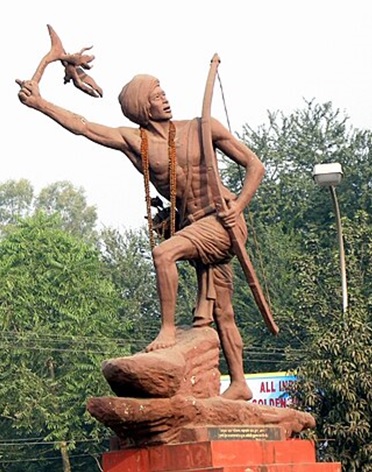
Birsa Munda and the Debate on Tribal Identity: Legacy, Self-Governance and Cultural Identity

Why is it in Discussion ?

  • On 9 June 2026, on the death anniversary of Birsa Munda, various tribal organizations in Jharkhand took a pledge to protect his legacy. 
  • This development comes at a time when the demand for the delisting of Christian and Muslim converts from the Scheduled Tribe (ST) category has once again gained momentum. 
  • The debate has brought issues related to tribal identity, religion, land rights, and self-governance to the center of national discourse. 
  • It has also raised questions about Birsa Munda’s actual ideology and the kind of tribal identity he represented. 

Who was Birsa Munda ?

  • Birsa Munda was one of the most influential tribal leaders in Indian history. 
  • He is revered among tribal communities as “Dharti Aba” (Father of the Earth). 
  • In the late nineteenth century, he led the Ulgulan (Great Rebellion) against British colonial rule and the exploitation by outsiders, known as Dikus
  • Historians regard him not merely as a rebel leader but also as a religious reformer, social awakener, and political thinker who provided a new direction to tribal society. 

Early Life and Social Background

  • Birsa Munda was born on 15 November 1875 in Ulihatu village, located in present-day Khunti district of Jharkhand. 
  • His father, Sugana Munda, had converted to Christianity and was associated with the Sardari Movement
  • This movement sought to protect traditional tribal land rights and resist the growing influence of external landlords. 
  • Birsa grew up during a period when tribal communities were facing land dispossession, economic exploitation, and social insecurity. 

Colonial Land Policies and the Tribal Crisis

  • Land policies introduced during British rule weakened the traditional rights of tribal communities. 

  • The Khuntkatti system of communal land ownership, under which founding families of villages enjoyed collective rights, gradually eroded. 
  • With official support being extended to outside landlords and revenue intermediaries, tribal lands were increasingly alienated. 
  • Rising indebtedness, forced labor, and land dispossession created widespread resentment across the Chotanagpur region and fueled resistance movements. 

Missionary Education and Ideological Transformation

  • Birsa Munda received education in missionary schools at Chaibasa, where he was also known by the names Daud (David)
  • However, due to differences with church authorities, his association with missionary institutions eventually ended. 
  • He later came under the influence of Vaishnav traditions for a brief period. 
  • Ultimately, he developed an independent spiritual worldview rooted in tribal culture, nature, and community values. 

Ulgulan: The Great Tribal Resistance Movement

  • Ulgulan, meaning “Great Tumult” or “Great Rebellion,” was a mass movement led by Birsa Munda. 
  • It aimed to challenge British rule, exploitative landlords, and the oppression faced by tribal communities. 
  • The movement was not limited to land rights; it also sought to defend tribal dignity, cultural identity, and self-governance. 

The Struggle of Dombari Buru

  • In January 1899, thousands of tribal people gathered at Dombari Buru Hill and openly challenged British authority. 
  • British forces attempted to suppress the gathering and opened fire on the crowd. 
  • In tribal collective memory, the incident is remembered as a major massacre. 
  • Even today, Dombari Buru remains a symbol of tribal resistance and sacrifice. 

Arrest and Death

  • After months of challenging colonial authority, Birsa Munda was arrested on 3 February 1900 in the forests of Porahat. 
  • He died in Ranchi Jail on 9 June 1900
  • Colonial records attributed his death to cholera and dysentery. 
  • However, many tribal communities continue to believe that he was poisoned while in custody. 

Impact of Ulgulan and the Chotanagpur Tenancy Act, 1908

  • Although the British administration eventually suppressed the Ulgulan movement, it was compelled to introduce land reforms. 
  • This led to the enactment of the Chotanagpur Tenancy (CNT) Act, 1908, which legally recognized traditional land systems such as Khuntkatti and Bhuinhari. 
  • The Act sought to prevent the transfer of tribal land to non-tribal populations. 
  • Even today, it remains one of the strongest legal safeguards for tribal land rights in Jharkhand. 

Birsait Religion and Religious Thought

  • Moving beyond both Christianity and Vaishnav influences, Birsa Munda developed an independent religious philosophy later known as the Birsait faith
  • It emphasized nature, community life, moral conduct, and social reform. 
  • His followers worship him as Bhagwan Birsa and Dharti Aba
  • The Birsait faith was neither purely Sarna, nor Hindu, nor Christian; rather, it represented a distinct religious movement rooted in indigenous tribal spiritual traditions. 

Tribal Identity and the Contemporary Debate

  • The current demand to remove Christian and Muslim converts from the ST list has reignited debates over the meaning of tribal identity. 
  • Many tribal organizations and descendants of Birsa Munda argue that tribal identity is determined not by religion but by ancestry, community, culture, and land. 
  • According to this view, despite differences in modes of worship, tribal communities share a common historical, cultural, and territorial heritage. 

Influence of Birsa’s Legacy on the Jharkhand Movement

  • Historians argue that the ideas of tribal self-rule and self-determination expressed during Ulgulan later provided the ideological foundation for the separate Jharkhand movement. 
  • Under the leadership of Jaipal Singh Munda, the movement acquired organized political form. 
  • Its long struggle culminated in the creation of the state of Jharkhand in 2000. 

Conclusion

Birsa Munda was not merely the leader of a tribal rebellion; he became a symbol of tribal identity, land rights, cultural autonomy, and self-governance.

His life and struggle demonstrate that tribal identity is shaped not by a religious label but by community, culture, ancestral heritage, nature, and land.

At a time when fresh debates over tribal identity continue to emerge, Birsa Munda’s legacy offers an opportunity to revisit his core ideals of dignity, self-rule, cultural self-reliance, and collective empowerment.

« »
  • SUN
  • MON
  • TUE
  • WED
  • THU
  • FRI
  • SAT
Have any Query?

Our support team will be happy to assist you!

OR