Under the Act, certain goods are declared as “essential commodities.” Examples include:
The central government can modify this list depending on economic or emergency situations.
Section 3 grants extensive regulatory powers to the central government. It allows the government to:
The aim is to ensure that essential commodities remain available to consumers at fair and reasonable prices.
If any person or trader violates orders issued under the Act, strict penalties may apply, including:
Under this amendment:
Stock limits can be imposed only when prices increase abnormally:
Due to instability in global energy markets caused by conflicts in West Asia, the Government of India has taken several steps under this Act:
1. Increasing LPG Production
2. Priority for Domestic Consumers
3. Restrictions on Petrochemical Use
4. Alternative Oil Supply
1. Protecting Domestic Energy Supply
India is the third-largest oil importer in the world, making it highly vulnerable to global supply disruptions.
2. Stabilizing Prices
The use of the Essential Commodities Act helps the government control price volatility and reduce inflationary pressure.
3. Preventing Hoarding and Black Marketing
During crises, traders may hoard goods to raise prices. The Act enables authorities to prevent such practices.
4. Ensuring Social and Economic Stability
Stable supply of cooking gas, petroleum products, and fertilizers supports both households and the agricultural sector, maintaining economic balance.
A recent scientific study has revealed that NASA’s DART Mission (Double Asteroid Redirection Test) not only changed the motion of a small asteroid within its system but also slightly altered the orbit of the entire asteroid pair around the Sun. This achievement is considered a major milestone in the field of planetary defense and humanity’s ability to protect Earth from potential asteroid threats.

The mission targeted a binary asteroid system, which consists of two celestial bodies:
Scientists selected this system because any change in the orbit of the smaller asteroid could be easily measured from Earth.
The idea was that since the two bodies are gravitationally bound, disturbing the orbit of Dimorphos would affect the entire system.
On 26 September 2022, the DART spacecraft successfully collided with Dimorphos at a speed of approximately 22,500 km/h.
After the impact, scientists observed that:
This marked the first time in history that humans successfully altered the motion of a celestial object in space.
| Prelims: (Defence + CA) Mains: (GS-3 – Defence Technology, Internal Security, Science & Technology) |
India is developing Sheshnaag-150 swarm drone, a long-range swarm attack drone capable of flying over 1,000 km, carrying heavy payloads, and conducting coordinated strikes using artificial intelligence-driven swarm technology.
The drone is being developed by NewSpace Research and Technologies, a Bengaluru-based aerospace startup specialising in AI-enabled unmanned systems and swarm robotics.
The system is expected to significantly enhance India’s long-range precision strike and autonomous warfare capabilities.

Unmanned Aerial Vehicles (UAVs) have rapidly transformed modern warfare by enabling precision strikes, intelligence gathering, and reduced risk to human soldiers.
Recent conflicts across the world have demonstrated the increasing importance of drone swarms, where multiple autonomous drones coordinate their actions to overwhelm enemy air-defence systems.
Countries such as the United States, China, and Israel are heavily investing in AI-enabled autonomous drone technologies.
India has also accelerated indigenous drone development under initiatives such as Make in India and Aatmanirbhar Bharat to strengthen domestic defence manufacturing.
Sheshnaag-150 swarm drone is a long-range collaborative swarm attack drone designed for deep strike missions and coordinated aerial assaults.
The system uses autonomous artificial intelligence algorithms that allow multiple drones to operate together as a coordinated swarm capable of executing saturation attacks against enemy targets.
Such technology enables drones to identify targets, coordinate flight paths, evade defences, and strike simultaneously.
The drone is being developed by NewSpace Research and Technologies, an Indian aerospace startup based in Bengaluru.
The company focuses on:
Its work aligns with India’s broader push to develop indigenous defence technology ecosystems.
The drone has an operational range of over 1,000 km, enabling deep-strike capabilities against distant targets.
Such long-range capability allows the drone to operate far beyond frontlines.
The drone can carry a payload of 25–40 kg, which is sufficient to damage:
This allows the drone to perform precision strike missions.
One of the most distinctive features of the system is its AI-driven swarm capability.
Multiple drones can operate together autonomously to:
This saturation attack capability can overwhelm conventional air defence systems.
The drone can remain airborne for over five hours, allowing it to loiter over target areas before carrying out a strike.
This improves flexibility during military operations.
The system is equipped with advanced capabilities such as:
These features allow the drone to function as both reconnaissance and attack platform.
The drone can operate even in GPS-jammed environments, which are common in modern electronic warfare.
It uses visual navigation systems and onboard sensors to navigate and reach targets even if satellite navigation signals are disrupted.
1. Strengthening Indigenous Defence Technology
The development of Sheshnaag-150 supports India’s efforts to reduce dependence on imported defence systems.
2. Enhancing Long-Range Strike Capability
With a range exceeding 1,000 km, the drone can conduct deep strikes against strategic targets.
3. Advancing AI-Enabled Warfare
The use of autonomous swarm intelligence represents a significant technological leap in modern warfare.
4. Improving Battlefield Surveillance
Integrated surveillance capabilities allow the drone to collect intelligence while preparing for attacks.
5. Countering Advanced Air Defence Systems
Swarm technology enables multiple drones to attack simultaneously, potentially overwhelming advanced defence systems.
Despite its advantages, swarm drone technology raises several challenges.
Ethical and Legal Issues
Autonomous weapons systems raise concerns regarding accountability and compliance with international humanitarian law.
Counter-Drone Technologies
Adversaries may develop advanced anti-drone systems, including electronic warfare and directed-energy weapons.
Cybersecurity Risks
AI-driven systems could be vulnerable to cyberattacks or electronic interference.
To maximise the benefits of swarm drone technology, India should:
These steps can help India build a robust and technologically advanced defence ecosystem.
FAQs1. What is Sheshnaag-150 ? Sheshnaag-150 is a long-range AI-powered swarm attack drone capable of coordinated strikes and deep-range operations. 2. Which organisation is developing the drone ? It is being developed by NewSpace Research and Technologies, a Bengaluru-based aerospace startup. 3. What is the range of Sheshnaag-150 ? The drone has an operational range of more than 1,000 kilometres. 4. What makes swarm drones different from conventional drones ? Swarm drones use artificial intelligence to coordinate multiple drones simultaneously, allowing them to conduct saturation attacks and evade defences. 5. Can the drone operate without GPS ? Yes. The drone can operate in GPS-denied environments using visual navigation and onboard sensors, ensuring it can reach targets even when satellite signals are jammed. |
| Prelims: (Polity & Governance + CA) Mains: (GS-3 – Environment Conservation, Infrastructure Development, Science & Technology) |
The National Highways Authority of India has released the first National Highways Green Cover Index (NH-GCI), a technology-driven tool designed to assess the extent of vegetation and green cover along India’s national highways network.
The index has been developed in collaboration with the National Remote Sensing Centre under the Indian Space Research Organisation, using satellite-based remote sensing technologies to provide a scientific measurement of green cover along highway corridors.
The initiative marks an important step toward sustainable infrastructure development and environmental monitoring in India.
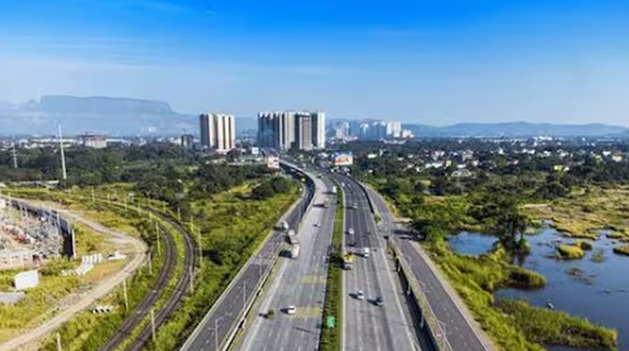
India has rapidly expanded its road infrastructure in recent years to support economic growth, connectivity, and logistics efficiency.
The National Highways Authority of India manages a vast network of highways that form the backbone of the country’s transportation system.
However, large-scale highway construction can lead to:
To address these concerns, the government has emphasised green highways and large-scale roadside plantation programmes.
Monitoring the effectiveness of such plantation initiatives requires scientific and objective tools, which led to the development of the NH Green Cover Index.
The National Highways Green Cover Index is a satellite-based index that quantitatively measures vegetation cover along national highway corridors.
It provides a scientific assessment of green cover within the Right of Way (RoW) of highways.
The index measures the percentage of land covered with vegetation along highways, including plantations along the left and right sides of roads and the central median wherever feasible.
By providing measurable data, the index allows policymakers to monitor environmental sustainability in highway development.
The index has been developed with technical support from the National Remote Sensing Centre, a key research centre under the Indian Space Research Organisation.
Using high-resolution satellite sensors, scientists are able to detect vegetation through chlorophyll content present in plant leaves.
Satellite data allows authorities to monitor green cover across vast highway networks efficiently and accurately without extensive field surveys.
The NH Green Cover Index uses advanced geospatial technologies to assess vegetation levels.
Vegetation is identified using chlorophyll signals captured by high-resolution satellite imagery.
These signals help determine whether land areas contain vegetation or barren surfaces.
The analysis relies on the Normalized Difference Vegetation Index (NDVI).
NDVI is a widely used remote sensing indicator that measures vegetation health by analysing how plants reflect light in different wavelengths.
Higher NDVI values generally indicate dense and healthy vegetation, while lower values indicate sparse or absent vegetation.
The assessment is conducted for every one-kilometre segment of the national highways network.
This granular analysis enables authorities to identify:
The index measures vegetation within the Right of Way (RoW) of highways.
The Right of Way refers to the designated land corridor allocated for road infrastructure, including the carriageway, shoulders, medians, and roadside areas.
1. Scientific Monitoring of Green Highways
The index provides a quantitative and objective method to measure green cover, replacing subjective field assessments.
2. Promoting Sustainable Infrastructure
It integrates environmental sustainability with infrastructure development, ensuring that highway expansion is balanced with ecological protection.
3. Improved Plantation Management
Authorities can identify areas with low vegetation cover and implement targeted plantation drives.
This will improve the effectiveness of green corridor initiatives.
4. Comparative Assessment and Ranking
The index enables comparison and ranking of highway stretches based on vegetation levels, encouraging better environmental performance.
5. Cost-Effective and Efficient Monitoring
Satellite-based monitoring provides a time-efficient and cost-effective method for assessing vegetation across thousands of kilometres of highways.
Enhancing green cover along highways offers several ecological benefits:
These benefits contribute to climate resilience and environmental sustainability.
1. Maintenance of Plantation
Plantation efforts often suffer from poor maintenance and survival rates.
Regular monitoring and irrigation systems must be ensured.
2. Integration with Climate Goals
The index should be integrated with India’s climate mitigation and afforestation targets.
3. Expanding Green Infrastructure
Future highway projects should include mandatory green planning, biodiversity corridors, and eco-sensitive designs.
4. Use of Advanced Geospatial Technologies
Continuous use of remote sensing, GIS mapping, and satellite monitoring will improve environmental governance in infrastructure development.
The NH Green Cover Index represents a major step toward data-driven environmental governance in infrastructure development.
By combining space technology with environmental monitoring, India is moving toward sustainable highway expansion that balances economic growth with ecological protection.
This initiative also highlights the growing role of satellite technology in environmental planning and policy implementation.
FAQs1. What is the National Highways Green Cover Index ? It is a satellite-based index developed to measure the extent of vegetation along India’s national highways network.2. Which organisations developed the index? The index was developed by the National Highways Authority of India in collaboration with the National Remote Sensing Centre of ISRO. 2. What technology is used to measure vegetation ? The index uses satellite imagery and the Normalized Difference Vegetation Index (NDVI) to detect vegetation cover. 3. What areas are included in the green cover assessment ? The index measures vegetation within the Right of Way of highways, including roadside plantations and medians. 4. Why is the NH Green Cover Index important ? It provides a scientific, cost-effective, and reliable tool for monitoring green cover and improving environmental sustainability along highways. |
| Prelims: (Economy + CA) Mains: (GS-3 – Indian Economy, Investment Policy, Globalisation) |
The Union Cabinet of India has approved a partial relaxation of Foreign Direct Investment (FDI) restrictions imposed under Press Note 3 (2020) for countries sharing land borders with India.
The move allows limited investments in select manufacturing sectors, including:

However, restrictions remain in strategic sectors such as semiconductors, reflecting a cautious approach balancing economic growth and national security concerns.
Press Note 3 (2020) amended India’s FDI policy framework to regulate investments from countries sharing land borders with India.
Under this policy:
The rule applies to investors from:
The objective was to prevent opportunistic takeovers of Indian companies and protect national economic security.
The Government of India introduced Press Note 3 in April 2020 during the economic disruptions caused by the COVID-19 pandemic.
1. Preventing opportunistic acquisitions
During the pandemic-induced economic slowdown, there were concerns that foreign investors could acquire distressed Indian firms at undervalued prices.
2. National security considerations
Tensions escalated after the Galwan Valley clash between Indian and Chinese troops in 2020, heightening scrutiny of foreign investments.
3. Rising Chinese investments
Chinese companies had become significant investors in Indian startups and technology firms, prompting regulatory oversight.
Although the policy applied to all neighbouring countries, it was primarily aimed at Chinese investments.
The decision to partially relax PN3 is driven by several economic and strategic considerations.
1. Need for Investment and Technology
India requires capital inflows, advanced technologies, and integration into global supply chains, particularly in manufacturing sectors such as electronics and renewable energy.
2. Recommendations from Policy Bodies
A high-level committee chaired by Rajiv Gauba, associated with the NITI Aayog, recommended easing the restrictions to boost investments.
3. Economic Survey Recommendations
The Economic Survey 2023-24 suggested that Chinese investments could enhance India’s export competitiveness, particularly in manufacturing sectors.
4. Impact on Global Investors
Press Note 3 also affected global private equity and venture capital funds with minor Chinese ownership stakes, creating investment bottlenecks.
5. Global Supply Chain Pressures
Geopolitical tensions and disruptions in global trade routes—including risks around the Strait of Hormuz—have increased the need to strengthen domestic manufacturing capabilities.
FDI from neighbouring countries will now be allowed in selected manufacturing sectors, including:
However, strategic sectors like semiconductors remain restricted.
Investments with up to 10% beneficial ownership from land-border countries will be allowed through the automatic route.
To maintain domestic control:
Majority ownership must remain with Indian residents or Indian entities.
The government has introduced a 60-day deadline for processing investment proposals, improving regulatory efficiency.
A Committee of Secretaries (CoS) headed by the Cabinet Secretary will review and update the list of sectors eligible for relaxation.
Investment proposals will be assessed based on beneficial ownership criteria aligned with anti-money laundering regulations.
1. Boost to Manufacturing
The relaxation could attract investments in electronics and renewable energy manufacturing, strengthening domestic production.
2. Technology Transfer
Foreign investors may bring advanced manufacturing technologies, enhancing India’s industrial competitiveness.
3. Integration with Global Supply Chains
Greater investment may help Indian firms integrate into global value chains, particularly in electronics manufacturing.
4. Increased FDI Inflows
The policy change could boost Foreign Direct Investment inflows, supporting economic growth and industrial development.
5. Strategic Safeguards
By maintaining restrictions in sensitive sectors such as semiconductors, the government aims to balance economic openness with national security.
The relaxation signals a calibrated approach toward economic engagement with China.
Recent developments indicating gradual normalisation include:
These steps reflect a pragmatic approach to balancing economic cooperation with strategic caution.
1. Strengthening Domestic Manufacturing
The relaxation supports India’s efforts to build a stronger manufacturing base, particularly in electronics and renewable energy sectors.
2. Enhancing Export Competitiveness
Improved supply chain integration can help Indian industries expand exports and participate in global markets.
3. Attracting Global Capital
The move may encourage greater investment flows from international funds and multinational companies.
4. Strategic Economic Diplomacy
The policy reflects a balanced approach toward economic engagement with neighbouring countries, especially China.
5. Building Supply Chain Resilience
By promoting domestic manufacturing of critical components, India can reduce dependence on imports and strengthen economic resilience.
FAQs1. What is Press Note 3 (2020) ? Press Note 3 amended India’s FDI policy to require government approval for investments from countries sharing land borders with India. 2. Why was Press Note 3 introduced ? It was introduced in 2020 to prevent opportunistic takeovers of Indian companies during the COVID-19 economic slowdown and to safeguard national security. 3. Which countries are covered under Press Note 3 ? The policy applies to investors from China, Pakistan, Bangladesh, Nepal, Myanmar, Bhutan, and Afghanistan. 4. What sectors are opened under the new relaxation ? Selected manufacturing sectors such as capital goods, electronic components, and solar manufacturing inputs have been opened for limited FDI. 5. Why are strategic sectors like semiconductors still restricted ? Semiconductors are considered critical technologies with national security implications, so investment restrictions remain in place to protect strategic interests. |
| Prelims: (Economy + CA) Mains: (GS-2 – Centre–State Relations; GS-3 – Indian Economy and Public Finance) |
The Government of India has accepted the Sixteenth Finance Commission of India recommendation to retain 41% tax devolution to States from the divisible pool of central taxes.
While this decision maintains the existing share recommended by the Fifteenth Finance Commission of India, it has triggered debates over the evolving nature of fiscal federalism in India, particularly regarding:

Fiscal federalism refers to the distribution of financial powers, taxation authority, and expenditure responsibilities between different levels of government in a federal system.
In India, it governs how tax revenues are shared between the Union government and State governments to ensure balanced development and efficient governance.
The Constitution provides a clear framework for fiscal relations through several provisions:
Since the Union government collects a significant portion of taxes, a redistribution mechanism is required to ensure equitable allocation across States. This role is performed by the Finance Commission.
Over time, the share of central taxes devolved to States has increased.
Although the percentage has remained stable, debates have emerged about whether the actual transfers to States have effectively declined.
The divisible pool refers to the portion of central tax revenues shared between the Union government and the States.
However, not all tax revenues are included in this pool.
Certain revenues such as cesses and surcharges are not shared with States and are retained entirely by the Centre.
These levies are often imposed for specific purposes, such as:
According to Finance Commission data, the divisible pool’s share of gross tax revenues has gradually declined:
This means that even though States receive 41% of the divisible pool, the base itself has become smaller, leading to concerns among States about declining fiscal transfers.
The Sixteenth Finance Commission of India evaluated the fiscal position of both the Union and the States and made several recommendations.
The Union government accepted several major proposals:
However, some important structural reforms were deferred for future consideration, including:
The government indicated that these issues would be examined separately in the future.
The Finance Commission’s report highlights growing fiscal stress in several States.
In many cases, borrowing is used to finance revenue expenditure such as salaries, subsidies, and interest payments rather than productive capital investments.
Some States engage in off-budget borrowing, where government-controlled entities borrow funds and repayments are made using public resources.
This practice:
The Finance Commission recommended tighter regulation of such borrowing practices.
The Finance Commission also revised the formula used to distribute funds among States.
Earlier, the formula included tax and fiscal effort, rewarding States that improved tax collection efficiency relative to their economic capacity.
The new formula introduces a “contribution to GDP” indicator, assigned 10% weight in the allocation formula.
States with strong economic output such as:
may benefit from this criterion.
However, poorer States such as:
may benefit less because they rely more heavily on central transfers.
Critics argue that this change could weaken the principle of fiscal equalisation, which aims to support less-developed States.
Finance Commission transfers also include grants to local governments.
The Sixteenth Finance Commission recommended ₹7,91,493 crore in grants for rural and urban local bodies.
1. Basic Grants
These support essential functions of local governments such as sanitation, water supply, and administration.
2. Performance Grants
These are released only if certain conditions are met, including:
During the previous Finance Commission period, only about 62.6% of recommended urban local body grants were actually released, highlighting administrative and compliance challenges.
Recent developments reflect important trends shaping fiscal federal relations.
1. Growing Centre–State Asymmetry
Increasing reliance on cesses and surcharges allows the Union government to retain a larger share of revenues.
2. Shift in Allocation Principles
Greater weight given to GDP contribution may favour economically stronger States.
3. Delayed Structural Reforms
Key reforms related to fiscal discipline, subsidies, and power sector finances remain unresolved.
4. Fiscal Stress in States
Rising debt levels and off-budget borrowing indicate growing fiscal challenges for State governments.
5. Evolution of Cooperative Federalism
The debate over tax devolution reflects broader discussions about balancing fiscal autonomy with national economic coordination.
The debate surrounding the 41% tax devolution highlights the evolving dynamics of India’s federal system.
Ensuring a fair distribution of financial resources is essential for:
The Finance Commission remains a crucial institution in maintaining cooperative fiscal federalism in India.
FAQs1. What is fiscal federalism ? Fiscal federalism refers to the division of financial powers and responsibilities between different levels of government in a federal system. 2. What is the divisible pool of taxes ? The divisible pool is the portion of central tax revenues shared between the Union government and the States based on Finance Commission recommendations. 3. What share of taxes do States receive currently ? States currently receive 41% of the divisible pool of central taxes as recommended by the Finance Commission. 4. Why is the divisible pool shrinking ? The growing use of cesses and surcharges, which are not shared with States, has reduced the effective size of the divisible pool. 5. Why is the horizontal distribution formula controversial ? The introduction of GDP contribution as a criterion may benefit economically stronger States, potentially weakening the principle of fiscal equalisation for poorer States. |
|
Prelims: (Polity + CA) |
The Opposition is preparing to move a motion seeking the removal of Gyanesh Kumar, the Chief Election Commissioner (CEC) of the Election Commission of India, alleging biased conduct.
Under the Constitution, the CEC can be removed only through a process similar to the removal of a judge of the Supreme Court of India, ensuring a high level of institutional independence.
The move has reignited discussions about the constitutional safeguards and legal procedures governing the removal of the Chief Election Commissioner.
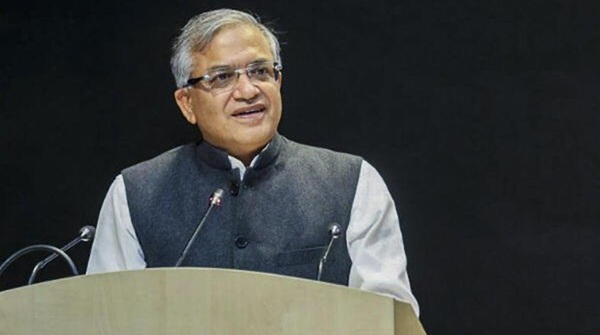
The Election Commission of India is a constitutional body responsible for conducting free and fair elections to:
It derives its authority from Article 324 of the Constitution of India, which vests the superintendence, direction and control of elections in the Commission.
The Commission typically consists of:
To ensure independence, the Constitution provides strong protections regarding tenure and removal of the CEC.
Opposition parties have initiated steps to move an impeachment motion against Gyanesh Kumar.
Key Allegations
Opposition parties are currently gathering signatures from Members of Parliament to initiate the formal removal motion.
The removal of the Chief Election Commissioner is governed by Article 324(5) of the Constitution of India.
Key Provisions
This constitutional safeguard prevents arbitrary removal by the government.
Parliament has enacted legislation to regulate the appointment and service conditions of Election Commissioners.
The relevant law is the Chief Election Commissioner and Other Election Commissioners (Appointment, Conditions of Service and Term of Office) Act, 2023.
Section 11 of the Act
Section 11 reiterates that:
Grounds for Removal
The grounds for removal are identical to those applicable to judges under Article 124(4) of the Constitution of India.
A Chief Election Commissioner can be removed only on the grounds of:
These grounds must be established through a formal inquiry process before Parliament.
The procedure for removal follows the mechanism laid down in the Judges (Inquiry) Act, 1968.
The process consists of multiple stages.
A motion for removal must be supported by a minimum number of Members of Parliament.
The motion is then submitted to the Speaker of the Lok Sabha or the Chairman of the Rajya Sabha.
The presiding officer of the House has the authority to:
If admitted, the removal process formally begins.
Once admitted, a three-member investigation committee is constituted to examine the charges.
The committee includes:
The committee investigates the allegations and submits its findings to the presiding officer of the House.
If the committee finds the charges proved, the motion is taken up for voting in Parliament.
To pass, the motion must secure:
Additionally, both Houses of Parliament must pass the motion in the same session.
After both Houses pass the motion, an address is sent to the President of India.
The President then issues an order removing the Chief Election Commissioner from office.
1. Ensuring Independence of the Election Commission
The stringent removal process protects the Election Commission from political interference, enabling it to function impartially.
2. Strengthening Democratic Institutions
By requiring a special majority in Parliament, the Constitution ensures that removal occurs only in exceptional cases.
3. Promoting Electoral Integrity
The security of tenure for the CEC enhances public confidence in the credibility of elections.
4. Checks and Balances
The procedure balances accountability and independence, allowing removal in cases of proven misconduct while preventing arbitrary dismissal.
5. Upholding Constitutional Governance
The removal framework reflects the broader principle of institutional autonomy for constitutional authorities in India’s democratic system.
FAQs1. Which constitutional provision governs the removal of the Chief Election Commissioner ? The removal of the CEC is governed by Article 324(5) of the Constitution of India. 2. On what grounds can the Chief Election Commissioner be removed ? The CEC can be removed only for proved misbehaviour or incapacity, similar to the grounds for removing a Supreme Court judge. 3. How many MPs are required to initiate a removal motion ? A removal motion must be supported by 100 members of the Lok Sabha or 50 members of the Rajya Sabha. 4. Which law governs the inquiry process for removal ? The inquiry process follows the procedure laid down in the Judges (Inquiry) Act, 1968. 5. Who issues the final order removing the Chief Election Commissioner ? After Parliament passes the motion, the President of India issues the final order removing the CEC from office. |

Our support team will be happy to assist you!


 Contact Us
  New Batch : 9555124124/ 7428085757
  Tech Support : 9555124124/ 7428085757