New
Hindi Medium: (Delhi) - GS Foundation (P+M) : 8th June 2026, 6:30 PM Hindi Medium: (Prayagraj) - GS Foundation (P+M) : 1st June 2026, 5:30 PM English Medium: (Prayagraj) - GS Foundation (P+M) : 7th June 2026, 8:00 AM Hindi Medium: (Delhi) - GS Foundation (P+M) : 8th June 2026, 6:30 PM Hindi Medium: (Prayagraj) - GS Foundation (P+M) : 1st June 2026, 5:30 PM English Medium: (Prayagraj) - GS Foundation (P+M) : 7th June 2026, 8:00 AM

Current Affairs for 13 June 2026

Uttar Pradesh Launched Project GANGA: Key Features, Implementation and Significance

Why in News

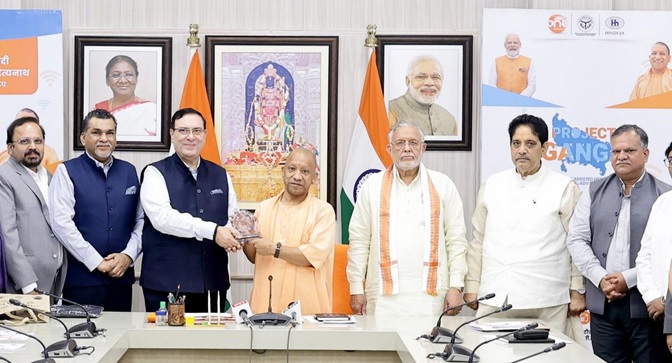
  • The Uttar Pradesh Government launched Project GANGA to expand rural broadband connectivity and promote digital inclusion.
Key Features

  • The project was launched by Chief Minister Yogi Adityanath in Lucknow.
  • It aims to provide high-speed broadband connectivity to nearly 20 lakh rural and semi-urban households.
  • The initiative seeks to bridge the digital divide and improve access to digital services.

Entrepreneurship and Inclusion

  • The state targets creation of 8,000 Digital Entrepreneurs under the project.
  • Around 50% of beneficiaries are expected to be women.
  • Beneficiaries can avail interest-free loans up to ₹5 lakh under the CM Yuva Scheme.

Developmental Significance

  • The project will improve access to digital education, telemedicine, e-Governance, skill development, and digital employment opportunities.
  • It supports rural empowerment through technology-driven service delivery.

Implementation

  • The project is being supported by the Hinduja Group on a "No Profit, No Loss" basis.
  • The first phase covers 21 districts of Uttar Pradesh.
  • OneOTT Intertainment Limited is the Knowledge Partner and Implementation Enabler.

Paraquat: A deadly herbicide and banned in Telangana

Why in the news?

The Telangana government recently announced a ban on paraquat. This makes Telangana the third state in India to ban the use of this highly toxic herbicide. Kerala and Odisha have also taken similar steps.
What is Paraquat ?

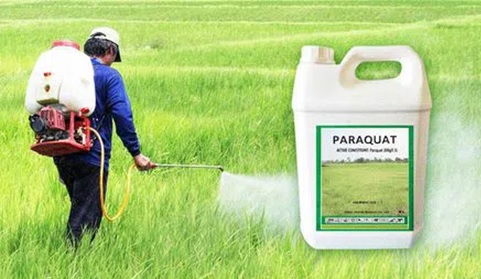
  • Paraquat is a highly toxic chemical herbicide used to kill weeds and unwanted grass in fields.
  • It is a synthetic chemical. It was discovered in the 1880s as a chemical dye. Its herbicidal properties were discovered in the 1950s. In the 1960s, it began to be sold commercially under the name Gramoxone.
  • It is a non-selective contact herbicide, meaning it can kill any plant. It is also used as a desiccant and a plant growth regulator before harvest.
  • It has no long-term residual effect in soil.

Why is paraquat so dangerous ?

  • Paraquat is considered one of the world's deadliest herbicides.
  • Its key characteristics
    • Even very small amounts can be fatal.
    • There is no effective antidote available.
    • Once in the body, it rapidly damages organs.
  • Effects on the body
    • Burns the lining of the mouth, throat, and intestines.
    • Spreads throughout the body through the bloodstream.
    • Damages the kidneys.
    • Affects the liver.
    • Causes fibrosis in the lungs.
    • Can cause multiple organ failure.
  • According to experts, more than 70% of paraquat poisoning cases result in death.

The dire state of hospitals

  • The severity of paraquat poisoning can be gauged from a study conducted at Gandhi Hospital in Hyderabad.
  • According to the study, 217 cases of paraquat poisoning were reported during 2024-25. Of these, 54 percent were farmers, while 16 percent were students.
  • Of the 100 cases studied, 94 percent were suicides, while 5 percent were accidental poisonings.
  • According to doctors, there is no specific treatment available for paraquat, and patients can only be given supportive therapy.

Doctors' Campaign: "Doctors Against Paraquat"

  • Hyderabad-based physician Dr. Marri Mahesh Reddy launched a campaign called "Doctors Against Paraquat" demanding a ban on paraquat.

  • 202 doctors from Telangana joined this initiative and conducted awareness campaigns among farmers, met with political leaders, mobilized public opinion through social media, and raised their concerns with the Chief Minister's Office and the Prime Minister's Office.
  • Dr. Reddy said, "There is a cure for snake venom, but there is no cure for paraquat."

Why do farmers still use it ?

  • Despite its highly toxic nature, paraquat has been used by farmers for a long time.
  • There are several practical reasons behind this. Due to labor shortages and rising labor costs in the agricultural sector, farmers rely on chemicals that can destroy weeds in a short time
  • Paraquat shows rapid action and is relatively inexpensive, at around ₹280 per liter.
  • Currently, it is used on approximately 8 million acres of agricultural land in India.

Increasing Use in India

  • Data presented in the Lok Sabha clearly shows that paraquat use in India has increased rapidly.
  • While its imports were 8,598 tons in 2019-20, they increased to 20,786 tons in 2022-23.
  • That is, its imports more than doubled in just a few years.

Regulatory Status in India

  • Pesticides in India are primarily regulated under the Insecticides Act, 1968. However, a complete ban on paraquat has not yet been implemented nationwide.
  • Kerala became the first state to ban it in 2011. Odisha, Telangana, and Andhra Pradesh subsequently banned its use.

Global Perspective

  • Paraquat is considered a highly hazardous chemical globally.
  • This is why more than 74 countries have banned its use.
  • Despite this, its use continues in many countries. It is noteworthy that in 2013, India opposed the proposal to include paraquat in the list of "Severely Hazardous Pesticides" under the Rotterdam Convention.

The Challenge of Online Sales

  • Experts believe that a state-level ban alone will not completely solve the problem.
  • Following the ban, major e-commerce platforms like Amazon and Flipkart stopped selling it in Telangana, but it remains available on several smaller agricultural e-commerce portals.
  • This makes it challenging to fully implement the ban.

Industry View

  • The agrochemical industry argues that paraquat is a low-cost and effective alternative for farmers.
  • According to the industry, it is particularly useful for small farmers, and a sudden ban could increase production costs and create weed control problems.

Initial impact of the ban in Telangana

  • According to doctors and health experts, there has been a significant reduction in paraquat-related deaths in Telangana since the ban was implemented.
  • While previously around 30 to 50 deaths were reported per month, this number has now dropped to 3 to 5 per month.
  • However, long-term data and detailed studies are needed to confirm this claim.

 Conclusion

Paraquat is one of the world's most lethal herbicides. Its low cost, easy availability, and extreme toxicity make it a serious threat to public health. The ban imposed by Telangana is being considered an important step toward protecting farmers and the public. However, experts believe that a permanent solution to this problem will not be possible unless a nationwide ban is implemented, online sales are controlled, and safe alternatives are made available to farmers.

New butterfly species discovered in Arunachal Pradesh

Why in the news ?

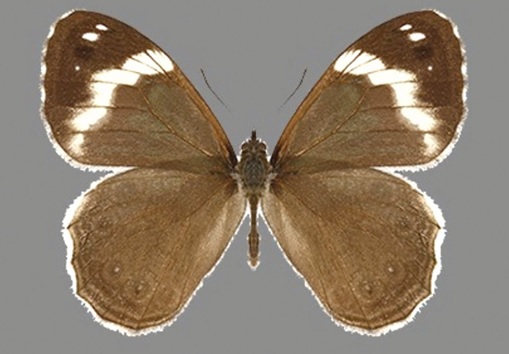
The biodiversity of Northeast India is once again in the headlines. Scientists have discovered a new species of butterfly, Chonala albistricta, in the high altitude region of Arunachal Pradesh. This discovery is being considered a significant achievement for lepidopterology globally.
Where was this new species found ?

  • This new butterfly species was discovered in the Mayodia Pass in Arunachal Pradesh, known for its high altitude and harsh geographical conditions. This area
  • is part of the Lower Dibang Valley district and is considered an important hub of rich biodiversity in the Eastern Himalayas.

Scientific Discovery and Research Team

  • The formal description of this new species was published in the international journal Zootaxa on June 10, 2026, by a team led by Dr. Krishnamegh Kunte, Fahim Khan, and Ujjwala Pawar, affiliated with the National Centre for Biological Sciences.

What is Chonala albistricta ?

  • This butterfly is a new species in the Chonala genus.
  • Its common name is "Narrow-banded Wall."
  • The name is based on the narrow and irregular white band on its wings.
  • According to scientists, this genus has only 10 known species in the world, and this is the second species in India.

Identification and Characteristics

  • Researchers reported that this butterfly resembles Chonala masoni (Chumbi Wall), but detailed study revealed several differences, such as:
    • A clear variation in wing pattern
    • Differences in morphology
    • Differences in the structure of the male reproductive organs
  • On these grounds, it was recognized as an independent species.

Biodiversity Significance

  • Scientists believe that the Eastern Himalayan region remains underexplored, and may harbor many more unknown species.
  • Isolated mountain regions act as natural "evolutionary laboratories," where organisms evolve into different forms over long periods of time.
  • This discovery highlights that India's northeastern region is a vitally important hub of global biodiversity.

Conclusion

The discovery of Chonala albistricta is not only significant for butterfly science, but also highlights the rich and still-mysterious biodiversity of the Eastern Himalayas. This discovery could open new avenues for future conservation and biodiversity studies.

Global Peace Index (GPI) 2026: Top 10 Safest and Most Peaceful Countries in the World, India Ranked 127th

Recently, the Global Peace Index (GPI) 2026 released by the Institute for Economics and Peace once again declared Iceland as the safest and most peaceful country in the world. This marks the 19th consecutive year that Iceland has secured the top position in this prestigious index.

The 2026 edition of the Global Peace Index is particularly significant as it represents the 20th edition of the index and evaluates 163 countries, covering approximately 99.7% of the world's population.

According to the report, despite rising geopolitical tensions, wars, and internal conflicts, several countries have maintained high standards of peace, security, and social stability.

What is the Global Peace Index (GPI) ?

The Global Peace Index is an annual report that measures the peacefulness of countries around the world. The index ranks nations based on 23 indicators.

These indicators are grouped into three major categories:

1. Societal Safety and Security

  • Crime rate
  • Homicide rate
  • Impact of terrorism
  • Public perception of safety

2. Ongoing Domestic and International Conflict

  • Internal conflicts
  • External conflicts
  • Conflict-related deaths

3. Militarization

  • Military expenditure
  • Size of armed forces
  • Arms imports and exports

A lower GPI score indicates a higher level of peace and security.

Key Highlights of Global Peace Index 2026

  • Global peace has deteriorated for the 12th consecutive year.
  • The peace situation worsened in 99 countries compared to the previous year.
  • There are currently 61 active state-based conflicts worldwide, the highest level since World War II.
  • Iceland remains the most peaceful country for the 19th consecutive year.
  • Russia is ranked as the least peaceful country in the world.
  • Among all regions, South Asia recorded the largest decline in peace.

Analysis of the Top 5 Safest Countries

1. Iceland

  • Iceland has remained the world's most peaceful country since 2008. The country has no standing army, an extremely low crime rate, and strong democratic institutions.

Key Features

  • No standing army
  • Extremely low crime rate
  • High social trust
  • Political stability
  • Strong democratic governance

2. New Zealand

  • New Zealand secured the second position in 2026. It is known for transparent governance, low corruption, and low levels of violent crime.

Key Strengths

  • Strong democracy
  • Low corruption
  • Peaceful foreign policy
  • Social harmony

3. Switzerland

  • Switzerland is consistently ranked among the safest countries due to its long-standing policy of neutrality.

Key Features

  • Political neutrality
  • Strong judicial system
  • High standard of living
  • Low crime rate

4. Slovenia

  • Slovenia continues to be one of the most peaceful countries in Europe. Political stability and robust social welfare policies contribute significantly to its ranking.

Key Features

  • Low crime rate
  • Effective governance
  • Strong social security system
  • Economic stability

5. Ireland

  • Ireland has maintained its position among the top five due to effective governance, low militarization, and economic stability.

Key Features

  • Low military expenditure
  • Political stability
  • Strong economy
  • Safe social environment

How Does the GPI Measure Safety ?

  • The Global Peace Index evaluates a country's safety and peacefulness through multiple indicators.

Major Indicators

  • Homicide rate
  • Violent crime
  • Political instability
  • Impact of terrorism
  • Military expenditure
  • Access to weapons
  • Prison population
  • Conflict-related deaths

India's Position in the Global Peace Index 2026

India ranked 127th out of 163 countries in the Global Peace Index 2026, with an overall score of 2.409.

India's ranking declined by three places compared to the previous year.

Key Factors Affecting India's Ranking

  • Internal security challenges
  • Regional tensions in South Asia
  • Communal and ethnic conflicts
  • Border security concerns
  • Growing geopolitical instability in neighboring regions

However, India remains one of the world's fastest-growing major economies, and efforts are ongoing to strengthen internal security and social stability.

Note : Bhutan remains the most peaceful country in South Asia.

South Asia Rankings in GPI 2026

Country

Rank

Bhutan

16

Sri Lanka

67

Nepal

111

Bangladesh

117

India

127

Pakistan

152

Afghanistan

157

Top 10 Safest and Most Peaceful Countries in 2026

Rank

Country

GPI Score

1

Iceland

1.161

2

New Zealand

1.343

3

Switzerland

1.363

4

Slovenia

1.369

5

Ireland

1.371

6

Austria

1.421

7

Portugal

1.427

8

Singapore

1.435

9

Finland

1.478

10

Japan

1.489

One Station One Product (OSOP) initiative: Indian Railways connecting local products to the national market

  • The 'One Station One Product' (OSOP) initiative launched by Indian Railways with the aim of providing new markets to India's rich heritage of handicrafts, handlooms and traditional products is giving a new impetus to local entrepreneurship across the country. Recently, the Ministry of Micro, Small and Medium Enterprises (MSME) has decided to promote the promotion and marketing of products manufactured by differently-abled artisans through this initiative.
  • This initiative is not only providing a national platform to local products but is also strengthening campaigns like "Vocal for Local", "Make in India" and "Atmanirbhar Bharat".

What is the One Station One Product (OSOP) initiative ?

  • One Station One Product (OSOP) is an innovative initiative of Indian Railways, launched in 2022. Under this initiative, special stalls are set up at railway stations across the country to sell and showcase local and unique regional products.
  • These stalls offer products unique to the region, such as handicrafts, handloom textiles, traditional foods, tribal products, agriculture-based products, and other local artifacts.

Key Objectives of the Initiative

1. Providing Markets to Local Artisans

  • Providing direct consumer access to rural and local artisans, weavers, craftsmen, self-help groups (SHGs), and micro-entrepreneurs.

2. Increasing Employment and Income

  • Increased sales of products boosts the income of local communities and creates new employment opportunities.

3. National Recognition for Regional Products

  • The daily footfall of millions of passengers at railway stations provides a wider market for local products.

4. Preservation of Traditional Arts and Crafts

  • This initiative is helping to revive traditional handicrafts and folk products that were losing their importance over time.

How does this scheme work?

  • Indian Railways operates this scheme in collaboration with various state governments, district administrations, self-help groups, artisan organizations, and MSME units. Stalls are allocated through a transparent process and are made available for a fixed period at a nominal fee to ensure widespread participation.
  • Stall holders are rotated periodically to provide opportunities to as many people as possible.

New Opportunity for Disabled Artisans

  • Recently, the Ministry of MSME has launched an initiative to provide a market for products manufactured by artisans with disabilities through OSOP. This will not only empower disabled entrepreneurs economically but also pave the way for their products to gain national recognition.

Importance of the OSOP Initiative

Economically

  • Boosting the local economy
  • Developing rural entrepreneurship
  • Increasing employment generation

Socially

  • Empowering the artisan community
  • Opportunities for women and disabled entrepreneurs
  • Preserving traditional knowledge and skills

Culturally

  • Promotion of India's diverse cultural heritage
  • National platform for regional identities
  • Linkage to national campaigns
  • Self-reliant India
  • Vocal for local
  • Make in India
  • Skill India Mission

Conclusion

The One Station One Product (OSOP) initiative by Indian Railways is a visionary initiative to connect local products with the national market. It not only helps increase the income of artisans and small entrepreneurs, but also plays a vital role in preserving India's traditional art, culture, and handicraft heritage. Railway stations are no longer just hubs for passenger traffic, but are also becoming powerful platforms for local economic development and cultural identity.
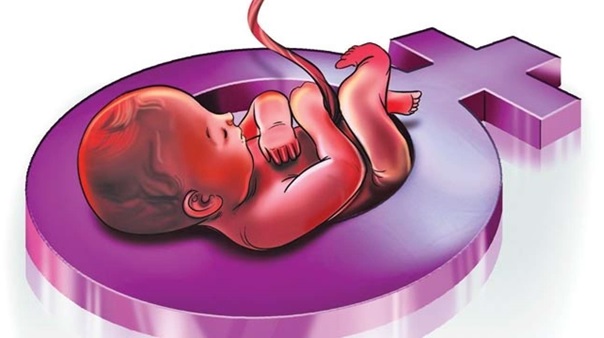
Pre-Conception and Pre-Natal Diagnostic Techniques (Prohibition of Sex Selection) Act, 1994 (PCPNDT Act): Features, Causes, Consequences and Major Initiatives

  • Expressing concern over the declining child sex ratio and the practice of female foeticide in India, the Supreme Court recently emphasized the need for strict implementation of the Pre-Conception and Pre-Natal Diagnostic Techniques (Prohibition of Sex Selection) Act, 1994 (PCPNDT Act)
  • The Court observed that deep-rooted son preference and patriarchal mindsets continue to encourage sex-selection practices, adversely affecting the country’s gender balance. 
  • A Bench comprising Justice Sanjay Karol and Justice Prashant Kumar Mishra made these observations while dismissing an appeal filed by a medical practitioner challenging an order taking cognizance of alleged offences under Section 23 of the PCPNDT Act

Challenge of Sex Ratio and the Supreme Court’s Concern

  • The Supreme Court noted that despite several government schemes and awareness campaigns aimed at eliminating female foeticide and gender discrimination, the sex ratio at birth in many states remains below the national average. 
  • Referring to Census data, the Court highlighted the continuous decline in India’s Child Sex Ratio (0–6 years age group)

Year

Girls per 1000 Boys

1991

945

2001

927

2011

919

  • These figures indicate that female foeticide and sex-selective practices have created a serious demographic imbalance in society. Therefore, strict enforcement of the PCPNDT Act is essential. 

What is the PCPNDT Act, 1994?

The Pre-Conception and Pre-Natal Diagnostic Techniques (Prohibition of Sex Selection) Act, 1994 was enacted to prevent the misuse of diagnostic techniques for sex determination and to address the declining sex ratio in India.

Key Features

  • The Act was passed in 1994 and came into force in 1996
  • Determining or disclosing the sex of a foetus is illegal. 
  • It prohibits sex selection and female foeticide. 
  • Mandatory registration of ultrasound clinics, genetic counselling centres, genetic laboratories, and imaging centres. 
  • Medical practitioners violating the provisions may face suspension or cancellation of their licences. 
  • The Act provides for imprisonment and monetary penalties for offenders. 

Major Causes of Sex Ratio Imbalance in India

1. Patriarchal Society and Son Preference

  • In many parts of India, sons are considered heirs, economic support providers, and carriers of the family lineage. Daughters are often perceived as an economic burden.

2. Dowry System and Marriage-related Practices

  • Social evils such as dowry promote negative attitudes towards girls. Patrilocal traditions, where daughters move to their husband’s household after marriage, further reinforce son preference.

3. Gender Inequality

  • Limited participation of women in education, employment, property ownership, and decision-making processes perpetuates gender discrimination.

4. Misuse of Modern Technology

  • Ultrasound and other prenatal diagnostic technologies have often been misused for determining the sex of the foetus, leading to sex-selective abortions.

5. Weak Enforcement of Laws

  • Although the PCPNDT Act and relevant provisions under the Bharatiya Nyaya Sanhita (BNS) contain stringent penalties, inadequate monitoring and enforcement in some regions have reduced their effectiveness.

6. Global Gender Inequality Indicators

  • India’s ranking in the Global Gender Gap Report 2025 fell to 131st out of 148 countries, highlighting persistent challenges in achieving gender equality.

Consequences of Sex Ratio Imbalance

  • Decline in the female population. 
  • Increase in human trafficking and child marriages. 
  • Shortage of marriageable women. 
  • Rise in social instability and crime. 
  • Increased violence and exploitation against women. 
  • Adverse impact on demographic balance and sustainable development. 

Major Government Initiatives

1. Beti Bachao Beti Padhao (BBBP)

  • Launched to prevent female foeticide, promote girls’ education, and create a positive social attitude towards daughters. The scheme is now integrated under Mission Shakti.

2. Sukanya Samriddhi Yojana (SSY)

  • A small savings scheme designed to secure the financial future of girl children by supporting their education and marriage-related expenses.

3. Pradhan Mantri Matru Vandana Yojana (PMMVY)

  • Provides financial assistance to pregnant and lactating women. Benefits have also been extended in cases where the second child is a girl.

4. Ladli Laxmi Yojana

  • A significant state-level initiative aimed at encouraging the birth, education, and empowerment of girl children.

5. Janani Suraksha Yojana (JSY)

  • Promotes institutional deliveries and improves maternal and child health outcomes.

Way Forward

The issue of declining sex ratio is not merely a legal challenge but also a social and psychological one. While strict implementation of the PCPNDT Act is crucial, it is equally important to foster a positive attitude towards daughters in society. Achieving gender equality requires sustained efforts in education, women’s economic empowerment, safety, equal opportunities, and social awareness. Only through a combination of legal enforcement and societal transformation can India address the challenge of gender imbalance effectively.

« »
  • SUN
  • MON
  • TUE
  • WED
  • THU
  • FRI
  • SAT
Have any Query?

Our support team will be happy to assist you!

OR