
- UPSC Exam
- State PCS
- One Day Exam
- Current Affairs
- PT Quiz
- Downlaods
- About Coaching
- Blog
- Videos

| Prelims : Polity + CA Mains : GS Paper 2 – Governance, Representation of People Act, Electoral Reforms |
The ongoing controversy surrounding the Special Intensive Revision (SIR) of electoral rolls conducted by the Election Commission of India has triggered a nationwide debate on the distinction between the right to vote and the right to contest elections, bringing into focus critical issues related to electoral integrity and democratic participation.
The controversy has intensified due to :
This situation has raised fundamental questions about how administrative processes intersect with democratic rights in India.
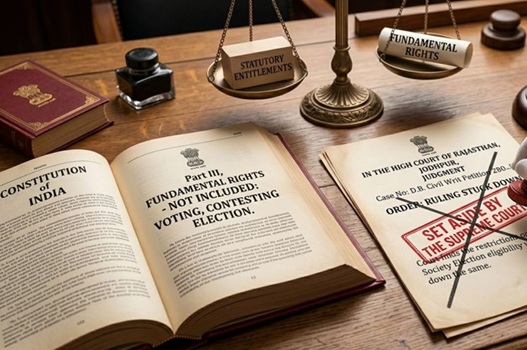
The Special Intensive Revision is a comprehensive and large-scale exercise undertaken to verify and update electoral rolls to ensure their accuracy and credibility.
It involves the following key features :
However, due to its scale and reliance on verification processes, SIR often becomes contentious, especially when it leads to exclusion of voters.
The SIR controversy highlights a crucial distinction in Indian constitutional and electoral law.
Any disruption to this right directly affects democratic legitimacy.
Unlike voting, contesting elections is more restrictive and regulated.
This creates a balance between administrative powers and citizens’ rights.
SIR derives its legal validity from these statutory provisions.
The SIR controversy highlights a fundamental tension :
Balancing these two objectives is the central challenge.
Prelims
Q. Which of the following is/are statutory rights in India ?
(a) 1 only
(b) 2 only
(c) Both 1 and 2
(d) Neither
Mains
“Electoral roll revision exercises like SIR highlight the tension between electoral integrity and democratic inclusion.” Discuss.
FAQsQ1. What is SIR ? It is a comprehensive electoral roll verification exercise. Q2. What is the main issue ? Deletion of genuine voters and its impact on voting rights. Q3. Is voting a fundamental right ? No, it is a statutory right. Q4. Who conducts SIR ? The Election Commission of India. Q5. What is the key challenge ? Balancing accuracy of rolls with inclusiveness. |
|
Prelims : Defence + CA |
The INS Dhruv has recently been deployed in the Arabian Sea amid heightened regional strategic activity, particularly in the context of missile testing by neighbouring countries.
This deployment highlights India’s growing focus on real-time intelligence gathering, missile tracking, and maritime surveillance, making INS Dhruv a crucial strategic asset.

INS Dhruv is a highly specialised missile tracking and ocean surveillance ship, representing a significant advancement in India’s defence and surveillance capabilities.
Key details include:
INS Dhruv performs multiple critical functions that enhance India’s defence preparedness and strategic deterrence.
Thus, it contributes directly to India’s ability to detect and neutralise incoming missile threats.
This function makes it a key asset in modern electronic warfare.
This provides India with critical insights into adversaries’ capabilities.
INS Dhruv is equipped with advanced technological systems that make it a unique and powerful platform.
Prelims
Q. INS Dhruv is associated with which of the following functions ?
(a) 1 only
(b) 1 and 2 only
(c) 2 and 3 only
(d) 1, 2 and 3
Mains
“INS Dhruv reflects the growing importance of intelligence and surveillance in modern warfare.” Discuss.
FAQsQ1. What is INS Dhruv ? It is India’s missile tracking and ocean surveillance ship. Q2. What is its main role ? Tracking missiles and gathering intelligence. Q3. Who operates it ? Indian Navy, NTRO, and DRDO. Q4. Why is it important ? It strengthens India’s missile defence and surveillance. Q5. What makes it unique ? Advanced radar systems and strategic intelligence capabilities. |
| Prelims : Economy + CA Mains : GS Paper 3 – Indian Economy, Employment; GS Paper 2 – Governance |
Recent large-scale protests by industrial workers in regions such as Noida, Gurugram, and other industrial hubs have brought attention to a deepening minimum wage crisis in India, where workers have mobilised collectively to demand higher wages, better working conditions, and effective enforcement of labour laws.
These protests have intensified due to rising inflation, wage stagnation, and growing disparities across states, making it a significant socio-economic issue.
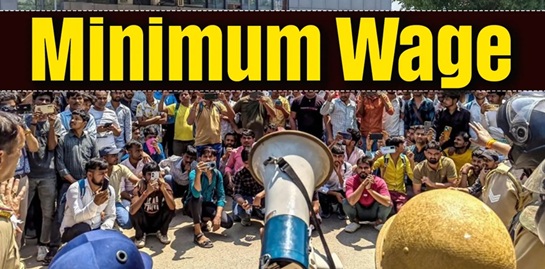
Minimum wage refers to the legally mandated lowest wage that employers must pay workers, ensuring that employees can meet basic living standards.
It consists of two key components :
However, the effectiveness of minimum wages depends on timely revisions and strict implementation.
However, these measures are often short-term solutions.
The crisis highlights a structural imbalance :
Introduce a uniform benchmark to reduce disparities across states.
Prelims
Q. Which of the following components are part of minimum wage in India ?
(a) 1 and 2 only
(b) 2 and 3 only
(c) 1 and 3 only
(d) 1, 2 and 3
Mains
“Minimum wage stagnation in the face of rising inflation has led to widespread labour unrest in India.” Examine the causes and suggest reforms.
FAQsQ1. Why are workers protesting in India ? Due to low wages, rising costs, and poor working conditions. Q2. What is the main issue ? Mismatch between wages and cost of living. Q3. What is VDA ? An inflation-linked component of wages. Q4. What is a national floor wage ? A minimum wage benchmark across states. Q5. What is the key challenge ? Balancing fair wages with economic growth. |
| Prelims : Governance + CA Mains : GS Paper 2 – Government Policies & Interventions; GS Paper 3 – Cyber Security |
The e-SafeHER Initiative has been recently launched as a nationwide cybersecurity awareness programme aimed at empowering rural women to safely participate in India’s rapidly expanding digital ecosystem.
The initiative comes at a time when digital penetration in rural India is increasing rapidly, but awareness regarding cyber risks and safe digital practices remains limited, especially among women.
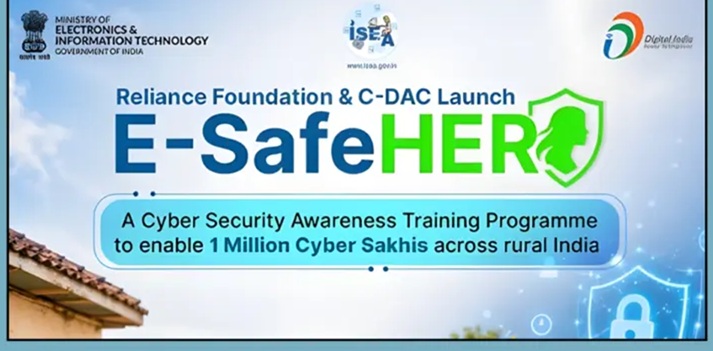
The e-SafeHER initiative is a large-scale cybersecurity awareness and training programme designed to promote safe digital inclusion among women in rural India.
It focuses on :
The initiative is implemented through a collaborative, multi-stakeholder approach involving government, technical institutions, and private organisations.
This integrated framework ensures both technical robustness and effective last-mile delivery.
The programme aims to achieve multiple interconnected objectives :
Prelims
Q. The e-SafeHER initiative is associated with :
(a) Financial inclusion of women
(b) Cybersecurity awareness among rural women
(c) Digital payments infrastructure
(d) Skill development in manufacturing
Mains
“Digital inclusion without digital safety can expose vulnerable populations to new risks.” Examine in the context of the e-SafeHER initiative.
FAQsQ1. What is e-SafeHER ? A cybersecurity awareness programme for rural women. Q2. What is its main objective ? To enable safe participation in the digital ecosystem. Q3. What are Cyber Sakhis ? Trained women who spread cybersecurity awareness in communities. Q4. Which ministry is involved? Ministry of Electronics and Information Technology. Q5. Why is it important ? It ensures safe and inclusive digital growth. |
| Prelims : Polity + Economy + CA Mains : GS Paper 2 – Governance; GS Paper 3 – Economy, Cyber Security |
Recent incidents of film leaks and piracy—especially involving newly released movies—have once again highlighted the growing menace of digital piracy in India. Authorities have made arrests, blocked numerous links, and initiated legal action, yet piracy continues to thrive due to persistent technological and enforcement challenges.

Film piracy refers to the unauthorised copying, distribution, streaming, or downloading of films without the consent of the copyright owner, which directly violates intellectual property rights.
It manifests in multiple forms, including :
Such activities significantly undermine the economic and creative foundations of the film industry.
India has developed a multi-layered legal framework combining copyright laws, cyber laws, and film-specific regulations to address piracy.
The Copyright Act serves as the primary legislation governing intellectual property rights in India.
This law forms the backbone of anti-piracy enforcement in the country.
This amendment has significantly strengthened anti-piracy provisions, particularly addressing theatrical piracy.
This legislation targets the initial stage of piracy, where films are illegally recorded during screenings.
The IT Act plays a crucial role in tackling online piracy.
This law addresses the digital spread of pirated material.
Together, these provisions create a comprehensive legal ecosystem to combat piracy.
The government has taken several steps to reduce piracy :
These actions aim to reduce the availability of illegal content and deter offenders.
Despite strong laws, piracy continues due to several structural and technological challenges.
Advances in technology have made piracy easier and more difficult to track.
This significantly reduces the effectiveness of traditional law enforcement methods.
Pirated content spreads quickly across multiple platforms :
Even if authorities remove one link, several new links appear almost instantly, making enforcement reactive rather than preventive.
Many piracy websites are hosted outside India, limiting the jurisdiction of Indian authorities.
This allows piracy networks to operate with relative impunity.
A major challenge is the widespread acceptance of piracy among users.
This demand sustains the piracy ecosystem and reduces the effectiveness of legal measures.
Enforcement agencies face multiple constraints :
These factors reduce the deterrent effect of existing laws.
Piracy has evolved into a profitable and organised activity.
This makes piracy not just a legal issue but also an economic and security concern.
Legal processes often take time, whereas pirated content spreads rapidly within hours of release.
Piracy results in substantial revenue losses for producers, distributors, and theatre owners, affecting the overall profitability of the film industry.
The film industry supports a large workforce, and reduced revenues can lead to job losses and reduced investment in new projects.
Piracy discourages creativity and innovation by reducing incentives for content creation.
Pirated platforms often expose users to malware, data theft, and financial fraud, making piracy a cybersecurity concern as well.
Improved coordination between law enforcement agencies, cybercrime units, and international organisations is essential.
Technological solutions such as digital watermarking, artificial intelligence, and blockchain can help track and prevent piracy.
Educating citizens about the legal and ethical implications of piracy can reduce demand.
Expedited judicial mechanisms can ensure timely action against offenders.
Providing accessible and reasonably priced legal streaming platforms can reduce reliance on pirated content.
Prelims
Q. Which of the following laws deal with film piracy in India?
(a) 1 and 2 only
(b) 2 and 3 only
(c) 1, 2 and 3
(d) 1 only
Mains
“Despite a robust legal framework, film piracy continues to persist in India.” Examine the reasons and suggest solutions.
FAQsQ1. What is film piracy ? Unauthorised copying or distribution of films. Q2. Which law governs piracy ? The Copyright Act, 1957. Q3. What is the latest reform ? Cinematograph (Amendment) Act, 2023. Q4. Why is piracy difficult to control ? Due to technology, anonymity, and global networks. Q5. What is the major impact? Economic loss and threat to creative industries. |

Our support team will be happy to assist you!


 Contact Us
  New Batch : 9555124124/ 7428085757
  Tech Support : 9555124124/ 7428085757

