New
GS Foundation (P+M) - Delhi : 19th Jan. 2026, 11:30 AM GS Foundation (P+M) - Prayagraj : 09th Jan. 2026, 11:00 AM GS Foundation (P+M) - Delhi : 19th Jan. 2026, 11:30 AM GS Foundation (P+M) - Prayagraj : 09th Jan. 2026, 11:00 AM

Current Affairs for 15 January 2026

China's Growing Role in the Arctic and Global Implications

(Prelims: Current Events of International Importance)
(Mains, General Studies Paper 2: Bilateral, Regional, and Global Groups and Agreements Related to and/or Affecting India's Interests, Impact of Policies and Politics of Developed and Developing Countries on India's Interests)

Context

In recent years, the Arctic region has become an emerging center of global geopolitics. While melting ice due to climate change is providing new trade routes and resources, it has also intensified competition between superpowers. In this context, US President Donald Trump's intervention in Greenland and claims of Sino-Russian influence over Greenland reflect international concern about China's role in the Arctic. While analysts believe that China's presence is currently limited, its long-term strategy and ambitions have significant global implications.
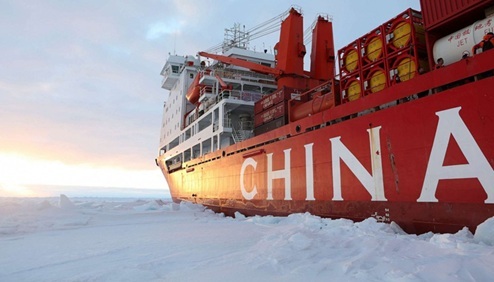
China's Presence with Russia's Support

  • Experts believe that any increase in China's influence in the Arctic region will be possible primarily with Russia's support. Military and strategic cooperation between the two countries has increased following the Russian invasion of Ukraine in 2022.
  • In recent years, China and Russia have intensified joint military exercises and surveillance operations. A bomber patrol with Russian assistance near Alaska in 2024 is a prime example.
  • China possesses several modern icebreaker vessels equipped with deep-sea submarines. These can map the seafloor, which could be militarily useful in the future.
  • China has also deployed satellites to monitor the Arctic. However, China claims that all these activities are for scientific research purposes.


History of China's Interest in the Arctic

  • China signed the Spitsbergen Treaty on July 1, 1925, and began participating in Arctic affairs and expanding the scope of its activities.
  • In 1999, China sent an expedition to conduct research in scientific fields including the ocean, biological species, the atmosphere, geological conditions, and sea ice.
  • On July 28, 2004, China's first Arctic scientific base, the Yellow River Station, was established on the Norwegian island of Svalbard.
  • China has invested more than US$90 billion in infrastructure, assets, and projects in the Arctic Circle. These investments are primarily in the energy and mineral sectors.
  • In 2016, Russian liquefied natural gas (LNG) producer Novatek signed an agreement with China for a US$12 billion loan to finance the Yamal LNG project.
  • In January 2023, a Chinese communications construction company signed a deal with Russian Titanium Resources (Rustiton) to help develop the Pizemskoye mining project in the Komi Republic near the Arctic Circle.

China's White Paper on the Arctic

  • On January 26, 2018, the State Council Information Office of the People's Republic of China published a white paper titled "China's Arctic Policy."
  • This white paper explains the status and recent changes in the Arctic, China's policy goals, and basic principles on the Arctic:
  • Deepening exploration and understanding of the Arctic
  • Protecting the Arctic environment and addressing climate change
  • Utilizing Arctic resources in a lawful and rational manner
  • Actively participating in Arctic governance and international cooperation
  • Promoting peace and stability in the Arctic

Reasons for China's Ambition

  • China's interest in the Arctic region is not limited to security. According to the US Geological Survey, Greenland holds the world's eighth-largest reserves of rare earth elements. These elements are crucial for electric vehicles, advanced technology, and military equipment.
  • In 2018, China launched the "Polar Silk Road" project, an Arctic version of its Belt and Road Initiative. China aims to establish itself as a "polar superpower" by 2030.
  • Toward this end, China has established research centers in Iceland and Norway and participated in infrastructure investments, such as liquefied natural gas projects in Russia and a railway line in Sweden.

Opposition to Chinese Expansion

  • Suspicions persist about Chinese investment in Europe and North America. Chinese proposals to purchase a former naval base in Greenland and an airport in Finland were rejected.
  • In 2019, Greenland refused to select Huawei for its 5G network.
  • A large rare earth mining project in Greenland's Kvanefjeld region has been halted by Chinese companies in 2021 due to environmental concerns. Another mining project in southern Greenland was awarded to a New York-based company in 2024 following US lobbying.
  • However, Russia is the only country where China has enjoyed relatively free rein, investing heavily in ports and resource projects.

Seeking Opportunities Through New Trade Routes

  • Melting ice in the Arctic is opening up new sea routes, which China is seeking to exploit. The Polar Silk Road aims to connect China with Europe through these routes.
  • In October, China and Russia agreed to develop the Northern Sea Route (NSR). Last year, a Chinese ship traveled to Britain via this route in just 20 days, almost half the time compared to the Suez Canal route.
  • As an alternative route, the Northwest Passage passes through the Canadian archipelago and could reduce dependence on the Russia-China dominated routes.

Impacts of Growing Chinese Activities in the Arctic

China's growing activities in the Arctic region are having a profound impact on the global order, not only geopolitically but also economically and environmentally.

1. Strategic & Geopolitical Impacts

  • Growing Partnership with Russia: Following Western sanctions, Russia has become dependent on Chinese investment and technology for development in the Arctic. This 'China-Russia Axis' is challenging the influence of Western countries (especially NATO) in the region.
  • Fear of Military Presence: Western countries view China's scientific activities (such as the research vessel 'Xuelong') as dual-use. There are fears that scientific data could be used for submarine operations and military surveillance.
  • Ambition to Become a Polar Great Power: China aims to become a 'Polar Great Power' by 2030, which will enhance its role in global governance.

2. Economic Impact and the Polar Silk Road

New Trade Routes: China is developing the Northern Sea Route through the Polar Silk Road. This route could reduce the distance between Asia and Europe by approximately 30-40% compared to the traditional Strait of Malacca and Suez Canal.

  • Energy Security: The Arctic is estimated to contain approximately 13% of the world's oil and 30% of its natural gas reserves. China wants to strengthen its energy security by gaining access to these resources.
  • Mineral Wealth: China is also eyeing the region's rare earth metals, lithium, and cobalt, which are essential for future technology.

3. Impact on India

  • Impact on Monsoon: The melting of Arctic ice is directly linked to India's monsoon cycle. If China's uncontrolled industrial activities increase global warming, it will have a negative impact on Indian agriculture and the economy.
  • Strategic Balance: If China becomes Russia's sole major partner in the Arctic, it may be challenging for India to maintain its traditional strategic balance with Russia.

4. Environmental and Governance Challenges

  • Ecological Risks: China's large-scale infrastructure projects (such as ports and railway lines) threaten to harm the Arctic's sensitive environment.
  • Territorial Sovereignty: China's assertion that the Arctic is the heritage of all humanity is a concern for countries (such as Canada, Norway, and the United States) that hold territorial sovereignty there.

Conclusion

  • China's Arctic strategy focuses primarily on commercial opportunities, energy security, and long-term strategic capability building. While its military presence is currently limited, it is laying the groundwork for the future through scientific, economic, and diplomatic activities.
  • It is clear that the Arctic will become a platform for both cooperation and competition in the coming decades. China's role is leading this region to become a pivotal arena not only for regional but also for global geopolitics.

The Central Government's Proactive Stance Against Digital Arrests

(Preliminary Examination: Current Events of National and International Importance)
(Mains Examination, General Studies Paper 3: Challenges to Internal Security through Communication Networks, Role of Media and Social Networking Sites in Internal Security Challenges, Cybersecurity Fundamentals, Money Laundering and Its Prevention)

Context

The Central Government has begun taking concrete steps against digital arrest cases. These scams were depriving ordinary citizens, especially the elderly and vulnerable, of their earnings. To curb this, an Inter-Departmental Committee (IDC) was formed under the chairmanship of the Special Secretary (Internal Security) of the Ministry of Home Affairs, which has held several meetings so far. Representatives from online platforms such as Google, WhatsApp, Telegram, and Microsoft attended the recent meeting.
Inter-Departmental Committee (IDC)

  • This high-level inter-departmental committee was constituted on December 26, 2025, comprising officials from multiple agencies to “comprehensively examine all aspects of the problem of digital arrests.”
  • The IDC is chaired by the Special Secretary (Internal Security). It comprises officers of the Joint Secretary level or above from the following departments and agencies:
    • Ministry of Electronics and Information Technology (MeitY)
    • Department of Telecommunications (DoT)
    • Ministry of External Affairs
    • Department of Financial Services
    • Ministry of Law and Justice
    •  Ministry of Consumer Affairs
    • Reserve Bank of India (RBI)
    • Central Bureau of Investigation (CBI)
    • National Investigation Agency (NIA)
    • Delhi Police
    • Indian Cyber ​​Crime Coordination Centre (I4C)

Objectives of the IDC

  • Provide guidance to enforcement agencies on real-time issues
  • Identify gaps in relevant laws, rules, circulars, and implementation
  • Suggest corrective measures
  • Provide input to the Supreme Court for further directions as needed

CBI's Role

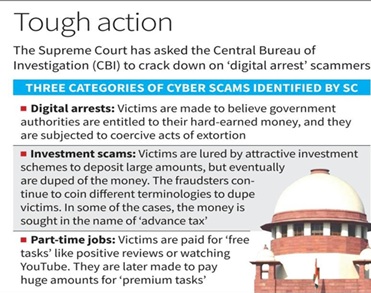
  • On December 1, the Supreme Court directed the CBI to take action against 'digital arrest' scammers and their associates. The CBI was given 'full authority' to investigate the role of bankers and investigate mule accounts linked to cyber crimes.
  • From 2022 to 2024, criminals in digital arrest cases posed as police officers and judges to defraud people of their money by threatening them with 'online arrest.' According to data presented by the government to the Supreme Court, ₹3,000 crore has been defrauded in digital arrest cases alone.

What is the Digital Arrest Scam ?

  • The Digital Arrest Scam is a type of online fraud in which criminals siphon off people's hard-earned money.
  • Criminals intimidate victims and falsely accuse them of illegal activities.
  • They then demand money from the victim and pressure them to pay.
  • This scam particularly targets the elderly and vulnerable, as they are more vulnerable to intimidation techniques.

Mechanism of Digital Arrest Scam

  • In Digital Arrest scams, criminals often pretend to be law enforcement officials, such as CBI agents, Income Tax officers, or Customs officers, and contact the victim via phone.
  • They then force the victim to speak via WhatsApp, Skype, or other video call platforms. Scammers threaten to issue a "digital arrest warrant," citing various allegations such as financial misconduct, tax evasion, or other legal violations.
  • In some cases, scammers try to make the call appear legitimate by creating a police station-like atmosphere. Then, under pretexts such as "removing names," "assisting in an investigation," or "refundable security deposits/escrow accounts," people are coerced into transferring large sums of money to a designated bank account or UPI ID.

Methods to Prevent Digital Arrest Scams

The most important way to avoid frauds like Digital Arrest is vigilance. Here are some important tips to prevent this:

  • Beware of calls from fake officials: Don't immediately take any phone call or message claiming you're in legal trouble seriously. Genuine law enforcement agencies never ask for payment or banking details.
  • Avoid pressure and intimidation: Cybercriminals use tactics like "act immediately." Don't fall for these pressure tactics and don't make hasty decisions.
  • Verify directly if you have doubts: If you suspect any call or message, contact the relevant government agency directly to verify their identity.
  • Don't share personal information: Never share personal and financial information with unknown numbers over phone or video calls.
  • Pay attention to government agency platforms: Government agencies don't officially use platforms like WhatsApp or Skype.
  • Report the incident: If you believe you're a victim of fraud, immediately inform the local police or cybercrime department.

What to do after falling victim to a Digital Arrest scam

  • Immediately inform your bank: Call your bank immediately and ask them to freeze or block your account to prevent further losses.
  • Filing a complaint on the cybercrime portal: Register a case on the National Cybercrime Reporting Portal. This is a government platform that helps investigate cybercrime.
  • Preserve evidence: Preserve all evidence you have, such as call records, transaction details, messages, emails, etc. This will be useful in further investigations and police action.
  • Seek legal help: If necessary, seek the help of a lawyer or legal expert to protect your rights and ensure appropriate action.

PRAGATI@50: Digital Oversight Reshaping India’s Governance Architecture

Prelims: (Polity & Governance + CA)
Mains: (GS 2 – Governance, Transparency, Public Administration, Centre–State Relations)

Why in News?

The Prime Minister’s flagship governance platform PRAGATI (Pro-Active Governance and Timely Implementation) recently achieved a significant milestone with the successful conduct of its 50th meeting, underlining its growing role in monitoring projects, resolving grievances, and ensuring administrative accountability.
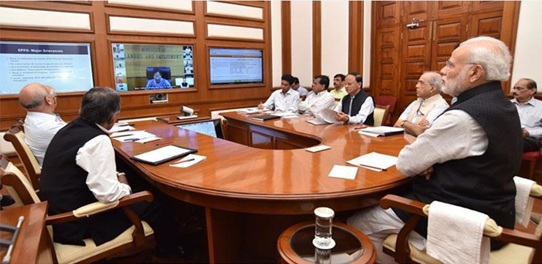
Pragati_Plateform

What is the PRAGATI Platform?

PRAGATI (Pro-Active Governance and Timely Implementation) is a distinctive, integrated, and interactive governance platform of the Government of India.

  • It is designed to monitor and review key government programmes and infrastructure projects, along with issues highlighted by State Governments.
  • It also serves as a mechanism to address public grievances, enabling faster resolution through direct administrative intervention.
  • The platform was designed in-house by the Prime Minister’s Office (PMO) with technical support from the National Informatics Centre (NIC).
  • Through PRAGATI, the Prime Minister directly engages with Central and State officials using real-time data and on-ground visual evidence.

Technological Architecture of PRAGATI

PRAGATI uniquely integrates three modern digital technologies:

  • Digital Data Management: Ensures updated and consolidated information on projects, schemes, and grievances.
  • Video Conferencing: Enables direct interaction between the Prime Minister and senior officials across the country.
  • Geospatial Technology: Provides location-based visual evidence, satellite imagery, and real-time progress updates from project sites.

This combination enhances e-transparency, e-accountability, and evidence-based decision-making.

Key Features and Institutional Design

  • Three-Tier System:
    • Prime Minister’s Office (PMO)
    • Union Government Secretaries
    • Chief Secretaries of States
  • At the apex level, the Prime Minister chairs PRAGATI review meetings with Chief Secretaries and Secretaries of Central Ministries/Departments.
  • During reviews, the PM has access to live dashboards, including the issue under discussion, latest progress reports, and site visuals.
  • A multi-tier follow-up mechanism ensures that decisions taken during meetings are implemented within specified timelines.
  • Project Monitoring: Handled by the Cabinet Secretariat.
  • Schemes and Grievances: Reviewed at the Ministry level under continuous oversight of the PMO.

Role in Project Monitoring and Grievance Redressal

  • Issues flagged before the Prime Minister are drawn from a comprehensive database covering public grievances, ongoing programmes, and stalled projects.
  • PRAGATI integrates and strengthens existing platforms such as:
    • CPGRAMS (Centralised Public Grievance Redress and Monitoring System)
    • Project Monitoring Group (PMG)
    • Ministry of Statistics and Programme Implementation (MoSPI) databases
  • It also considers correspondence received by the PMO from citizens, State dignitaries, and project developers.
  • This integration allows for coordinated resolution, reducing bureaucratic delays and inter-departmental bottlenecks.

Expanding Scope and Governance Significance

  • Initially focused on large infrastructure projects, PRAGATI has gradually expanded to include social sector schemes and public grievances.
  • It has emerged as a people-centric governance instrument, improving Centre–State coordination and administrative responsiveness.
  • By combining top-level political leadership with digital governance tools, PRAGATI strengthens cooperative federalism, outcome-oriented governance, and public trust.

FAQs

1. What does PRAGATI stand for?

Pro-Active Governance and Timely Implementation.

2. Who designed the PRAGATI platform?

It was designed in-house by the Prime Minister’s Office with support from NIC.

3. Which technologies are integrated into PRAGATI?

Digital data management, video conferencing, and geospatial technology.

4. How does PRAGATI improve governance?

By enabling real-time monitoring, direct decision-making, and time-bound follow-up of projects and grievances.

5. Which platforms are integrated into PRAGATI?

CPGRAMS, Project Monitoring Group (PMG), and MoSPI databases.

Restoring the Green Buffer: Bannerghatta and the Debate on Ecologically Sensitive Zones

Prelims: (Environment + CA)
Mains: (GS 3 – Environment Conservation, Urbanisation, Wildlife Protection)

Why in News ?

Recently, the Central Empowered Committee (CEC) recommended that the Ecologically Sensitive Zone (ESZ) around Bannerghatta National Park (BNP) in Bengaluru should be restored to its original 2016 extent, citing concerns over ecological degradation and increasing urban pressure.

Bannerghatta National Park: Location and Ecological Profile

  • Bannerghatta National Park is located in the Anekal range of hills, on the southern fringes of Bengaluru, Karnataka.
  • It was declared a National Park in 1974, serving as a critical green lung for the rapidly expanding Bengaluru metropolitan region.
  • In 2006, India’s first butterfly enclosure was inaugurated within the park.
  • The Suvarnamukhi stream, the main water source for wildlife, flows through the centre of the park.

Biodiversity Significance of Bannerghatta

Vegetation

The park supports diverse forest types, including:

  • Dry Deciduous Scrub Forests
  • Southern Tropical Dry Deciduous Forests
  • Southern Tropical Moist Mixed Forests

Flora

Notable plant species include:

  • Narcissus latifolia
  • Schleichera oleosa
  • Sandalwood
  • Neem
  • Tamarind
  • Bamboo
  • Eucalyptus

Fauna

Bannerghatta is a prime habitat for several wildlife species, including:

  • Endangered Asian Elephant
  • Indian gaur
  • Tiger
  • Leopard
  • Sambar deer and Spotted deer
  • Wild dog, Wild pig, Sloth bear
  • Pangolin, Slender loris, Common mongoose
  • Black-naped hare

Urban Pressure and ESZ Controversy

  • The proximity of BNP to Bengaluru has subjected it to intense urbanisation pressures, including real estate development, infrastructure expansion, and tourism.
  • Over the years, reductions in the notified ESZ have raised concerns about habitat fragmentation, human–wildlife conflict, and ecological stress.
  • The CEC’s recommendation to restore the ESZ to its 2016 boundaries aims to re-establish ecological buffers and limit unregulated development around the park.

What is an Ecologically Sensitive Zone (ESZ) ?

  • Eco-Sensitive Zones are areas notified around protected areas to act as “shock absorbers” for fragile ecosystems.
  • They regulate human activities to minimise negative environmental impacts.
  • ESZs are notified by the Ministry of Environment, Forests and Climate Change (MoEFCC) under the Environment (Protection) Act, 1986.
  • Activities within ESZs are categorised as prohibited, regulated, or permissible, depending on ecological sensitivity.

Significance of Restoring the ESZ

  • Helps curb unplanned urban expansion around BNP.
  • Reduces human–wildlife conflict by maintaining ecological corridors.
  • Protects water sources such as the Suvarnamukhi stream.
  • Ensures long-term conservation of biodiversity near a major urban centre.
  • Aligns with India’s commitments to sustainable urban development and biodiversity protection.

FAQs

1. Where is Bannerghatta National Park located ?

In the Anekal range of hills near Bengaluru, Karnataka.

2. Why is Bannerghatta National Park ecologically important ?

It supports diverse flora and fauna, including endangered species like the Asian elephant, and serves as a crucial green buffer for Bengaluru.

3. What did the Central Empowered Committee recommend recently ?

Restoration of the Ecologically Sensitive Zone around BNP to its original 2016 extent.

4. What is the purpose of an Ecologically Sensitive Zone ?

To act as a buffer around protected areas and reduce ecological damage from human activities.

5. Under which law are ESZs notified ?

The Environment (Protection) Act, 1986.

Indian Customs Electronic Gateway

Prelims: (Economy + CA)
Mains: (GS 3 – Infrastructure, Trade Facilitation, Digital Governance)

Why in News ?

Recently, the Special Secretary, Central Board of Indirect Taxes and Customs (CBIC) inaugurated the Indian Customs Electronic Gateway–Land Port Management System (ICEGATE–LPMS) at the Integrated Check Post (ICP), Agartala, Tripura, marking a major step towards digitising customs operations at land borders.
Indian Customs Electronic Gateway (ICEGATE): Overview

  • ICEGATE (Indian Customs Electronic Gateway) was established in 2007.
  • It is the national portal of Indian Customs under the Central Board of Indirect Taxes and Customs (CBIC).
  • ICEGATE provides electronic filing services to traders, cargo carriers, and other trading partners.
  • It functions as a centralised hub for all electronic interactions between Indian Customs and the trading community.
  • The platform serves as the core digital infrastructure linking trade users with India’s customs administration.

Role of ICEGATE in Trade Facilitation

  • ICEGATE enables seamless exchange of information between customs and external trading partners involved in international trade.
  • It is internally integrated with several partner agencies, including:
    • Reserve Bank of India (RBI)
    • Banks
    • Directorate General of Foreign Trade (DGFT)
    • Directorate General of Commercial Intelligence and Statistics (DGCIS)
    • Ministry of Steel
    • Directorate of Valuation and other Partner Government Agencies (PGAs)
  • Through these linkages, ICEGATE streamlines customs procedures and promotes efficiency, transparency, and ease of doing business in cross-border trade.

Integration of ICEGATE with Land Port Management System (LPMS)

  • The ICEGATE–LPMS integration focuses on critical customs data elements such as:
    • Bill of Entry
    • Shipping Bill
    • Out of Charge (OOC)
    • Let Export Order (LEO)
  • It enables real-time, bidirectional data exchange between ICEGATE and LPMS.
  • This creates a seamless digital ecosystem for customs clearance at land ports and Integrated Check Posts.

Significance of ICEGATE–LPMS Integration

  • Facilitates early risk assessment and identification of anomalies in cargo movement.
  • Enables selective application of controls, reducing unnecessary checks.
  • Improves compliance outcomes while minimising disruption to legitimate and compliant trade.
  • Enhances operational efficiency at land borders, particularly in regions with high cross-border trade potential.
  • Supports India’s objective of paperless, technology-driven customs administration.

FAQs

1. What is ICEGATE ?

ICEGATE is the Indian Customs Electronic Gateway, the national e-filing and information exchange portal of CBIC.

2. When was ICEGATE established ?

ICEGATE was established in 2007.

3. What is the purpose of integrating ICEGATE with LPMS ?

To enable real-time data exchange and create a seamless digital customs ecosystem at land ports.

4. Which key documents are covered under ICEGATE–LPMS integration ?

Bill of Entry, Shipping Bill, Out of Charge (OOC), and Let Export Order (LEO).

5. How does ICEGATE improve trade facilitation ?

By streamlining customs procedures, enhancing transparency, enabling risk-based controls, and reducing clearance time.

Shaksgam Valley and the Renewed India–China Strategic Contest in Kashmir

Prelims: (International Relations + CA)
Mains: (GS 2 – India–China Relations, GS 3 – Internal Security, Border Management)

Why in News ?

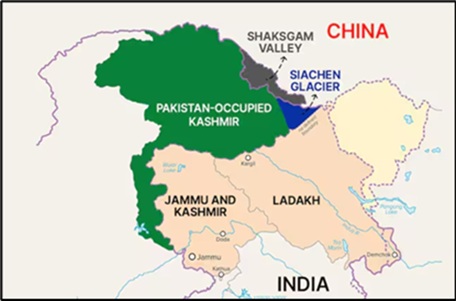
A renewed diplomatic and strategic tussle has emerged between India and China over the Shaksgam Valley in Jammu and Kashmir, reviving concerns despite recent disengagement following the eastern Ladakh standoff. The region’s proximity to the Siachen Glacier, China’s Xinjiang, and Pakistan-occupied Kashmir (PoK) makes it a highly sensitive zone for India’s national security.
Shaksgam Valley: Location and Strategic Context

  • Shaksgam Valley, also known as the Trans Karakoram Tract, lies in the Hunza–Gilgit region under Pakistan’s occupation, north of the Siachen Glacier.
  • The valley spans over 5,000 sq km and is characterised by extreme terrain and sparse habitation.
  • Although legally claimed by India, Pakistan exercised control over the area until 1963, when it entered into a boundary agreement with China.
  • China had earlier asserted its strategic presence in the broader region by constructing infrastructure in Aksai Chin, linking Tibet and Xinjiang.

Why Shaksgam Valley Is Strategically Important for India ?

  • The valley lies close to the Siachen Glacier, the world’s highest battlefield, making it crucial for military surveillance.
  • From Indian positions in Siachen, movements in Pakistan-controlled areas to the south and Chinese activity near the Karakoram Pass to the north can be monitored.
  • Control or influence over Shaksgam Valley affects India’s security along both:
    • the Line of Control (LoC) with Pakistan, and
    • the Line of Actual Control (LAC) with China.
  • Any change in the status quo directly alters the strategic balance in the western sector of the India–China boundary.

China’s Expanding Infrastructure Footprint

  • Strategic analysts warn that China’s “salami slicing” strategy—incremental actions that cumulatively alter ground realities—is approaching a critical point in Shaksgam.
  • By mid-2024, China reportedly completed a road across the 4,805-metre Aghil Pass into Lower Shaksgam Valley.
  • This development has brought Chinese construction teams, and potentially military patrols, within 50 km of Indian positions at Indira Col in Siachen.
  • Historically, India’s defence posture in Siachen was focused mainly on Pakistan from the south.
  • China’s northern access raises the spectre of a two-front contingency on the world’s highest battlefield.

Pakistan’s Cession of Shaksgam Valley to China

  • Colonial Background: In 1936, under British influence, the Mir of Hunza ceded rights over the Taghdumbash Pamir and Raskam Valley, but retained control over Shaksgam Valley and the Aghil range.
  • Post-Independence Legal Status: Following Jammu and Kashmir’s accession to India in October 1947, Shaksgam Valley legally became Indian territory. India, however, could not assert control due to Pakistan’s occupation of adjoining areas.
  • China–Pakistan Agreement (1963): Pakistan, under President Ayub Khan, formally ceded the Shaksgam Valley to China through a boundary agreement, despite lacking legal authority to transfer Indian territory.
  • Present-Day Implications: Since the Doklam standoff, China has intensified military and infrastructure development in the valley, transforming a legally Indian territory into a pressing security concern.

India’s Response and Broader Geopolitical Concerns

  • India maintains that Pakistan illegally ceded approximately 5,180 sq km of Indian territory to China under the 1963 agreement, which New Delhi has never recognised.
  • The Ministry of External Affairs (MEA) has reiterated that Shaksgam Valley is an integral part of India and that India reserves the right to take “necessary measures” to protect its interests.
  • China has dismissed India’s objections, claiming its activities are legitimate.
  • This stance exposes a contradiction: while China describes Kashmir as a bilateral issue between India and Pakistan, it continues strategic development in areas under Pakistan’s illegal occupation.
  • The episode highlights enduring geopolitical tensions and the expanding strategic footprint of China in disputed regions.

FAQs

1. Where is Shaksgam Valley located ?

It lies north of the Siachen Glacier in the Hunza–Gilgit region under Pakistan’s occupation.

2. Why is Shaksgam Valley important for India ?

Its proximity to Siachen and the Karakoram Pass makes it crucial for monitoring both Pakistani and Chinese military activity.

3. When did Pakistan cede Shaksgam Valley to China ?

In 1963, through a boundary agreement that India does not recognise.

4. What is China’s “salami slicing” strategy ?

A tactic of making small, incremental moves that cumulatively change control in disputed areas.

5. What is India’s official position on Shaksgam Valley ?

India considers it its sovereign territory and rejects the legality of the 1963 China–Pakistan agreement.

Source Code, Sovereignty and Security: India’s Debate on Smartphone Software Access

Prelims: (Economics + CA)
Mains: (GS 3 – Cyber Security, Data Protection, Emerging Technologies)

Why in News ?                                           

A recent Reuters report claimed that the Indian government was considering requiring smartphone manufacturers to share their source code with third-party testing agencies and to inform authorities before major software updates.
However, the Union government has denied any proposal mandating source code disclosure, stating that discussions, if any, are exploratory and no final decision has been taken.
What is Source Code ?

  • Source code is the foundational set of instructions and digital assets that govern how a software system operates.
  • In smartphones, it controls critical functions such as memory management, processors, sensors, connectivity, and hardware integration.
  • While platforms like Android are partially open-source, device manufacturers apply extensive proprietary modifications that are closely guarded.
  • Source code is protected not only for commercial reasons but also for cybersecurity, as exposure can allow malicious actors to identify vulnerabilities and launch targeted attacks.

Why Source Code Disclosure Is Highly Unusual ?

  • Sharing source code outside a company is extremely rare, even in highly regulated sectors such as defence, and then only under strict conditions.
  • Global technology firms have consistently resisted such demands. For example, Apple has not shared its source code with China, despite complying with country-specific data localisation and access laws.
  • This underscores the exceptional and sensitive nature of any requirement to disclose source code.

Security and Commercial Risks

  • Unlike preinstalling an application, source code disclosure would expose a company’s entire proprietary software architecture.
  • Cyber attackers generally exploit externally visible weaknesses; internal visibility would significantly magnify security risks, especially if documentation reveals system design.
  • Even Android devices do not expose all implementation details, precisely to protect intellectual property and user security.

Government Position on Source Code Disclosure

  • The Indian government has clarified that it has not proposed public disclosure of smartphone source code.
  • The debate traces back to a 2023 document issued by the National Centre for Communication Security (NCCS) under the Department of Telecommunications (DoT).
  • This document outlined Indian Telecom Security Assurance Requirements (ITSAR) for consumer equipment, sparking speculation about deeper access to device software.

Regulatory Background and Shifting Oversight

  • ITSARs are part of the Mandatory Testing and Certification of Telecommunication Equipment (MTCTE) framework, rooted in the Indian Telegraph (Amendment) Rules, 2017.
  • After the enactment of the Telecommunications Act, 2023, the government decided to drop MTCTE requirements for smartphones, citing existing certification by the Bureau of Indian Standards (BIS).
  • Oversight of smartphone software security has since shifted to the Ministry of Electronics and Information Technology (MeitY), which has stated it is keeping an “open mind” on future policy options.

Industry and Civil Society Responses

  • The India Cellular and Electronics Association (ICEA) has downplayed the seriousness of the discussions, suggesting no immediate regulatory change is imminent.
  • Government representatives have reiterated that no final regulations have been framed.
  • However, the Internet Freedom Foundation (IFF) has questioned these assurances, noting that ITSAR documents remain publicly available and that stakeholder consultations lack transparency.
  • IFF has demanded disclosure of meeting minutes and called for open public consultation, arguing that decisions affecting digital rights, cybersecurity, and consumer trust must not be made behind closed doors.

FAQs

1. What is smartphone source code ?

It is the core set of software instructions that control a device’s hardware and operating system functions.

2. Why is source code considered sensitive ?

Because exposure can compromise intellectual property and create serious cybersecurity vulnerabilities.

3. Has India mandated source code disclosure by smartphone makers ?

No. The government has denied any such proposal.

4. What is ITSAR ?

Indian Telecom Security Assurance Requirements issued under the DoT to ensure telecom equipment security.

5. Which ministry now oversees smartphone software security ?

The Ministry of Electronics and Information Technology (MeitY).

Politics of Power and the Erosion of Rules-Based Order

Why in Discussion ?

  • Recently, particularly in the context of Venezuela, unilateral military actions by the United States have reignited global debates about violations of international law and the weakening of the UN-led multilateral order.
  • These events have raised the question of whether the current global system remains effective in upholding a rules-based international order.

In Today’s Article:

  • Background of international law.
  • United Nations Charter and restrictions on the use of force.
  • Unilateral military actions and legal challenges.
  • Erosion of the balance-of-power principle.
  • Pre-emptive military doctrine.
  • Impact on the global order.
  • Implications for India’s foreign policy.

International Law and the Use of Force

The foundation of international law is based on two key principles:

  1. Sovereign equality of states, and
  2. Prohibition of the use of force in interstate relations.

After World War II, these principles were codified through the United Nations Charter to prevent unilateral military aggression and ensure lasting global peace.

Provisions of the United Nations Charter

  • Article 2(4): Complete prohibition on the use of force or the threat of force against the territorial integrity or political independence of any state.
  • Only two valid exceptions:
    1. Use of force authorized by the UN Security Council,
    2. Right of self-defense under Article 51, and that too only in the case of an armed attack.

Despite these provisions, justifications by powerful states for military interventions beyond these limits indicate the erosion of the international legal framework.

Violation of the United Nations Charter Framework: The Venezuela Case

Recent U.S. Military Action against Venezuela:

  • Carried out without the approval of the United Nations Security Council,
  • Does not meet the legal criteria for self-defense (Article 51),
  • Thus constitutes a direct violation of Article 2(4).

Implications of this step:

  • Weakens the principle of non-intervention in internal affairs,
  • Questions the legitimacy of multilateral institutions, and
  • Exposes global security to unilateral decision-making.

Erosion of the Principle of Balance of Power

Cold War Era (Bipolar World):

  • A bipolar structure between the U.S. and the Soviet Union,
  • A system that balanced each other,
  • Served as a check on the unchecked use of power by any single state.

Historical Examples:

  • 1971 Bangladesh Liberation War: Soviet counter-deployment neutralized the influence of the U.S. Seventh Fleet.
  • 1973 Yom Kippur War: Soviet warnings and U.S. DEFCON-3 status prevented escalation of the conflict.

Post-Cold War Era (Unipolar Moment):

  • After the collapse of the Soviet Union in 1991,
  • The U.S. emerged as the sole superpower,
  • Leading to increased military interventions in the absence of external constraints (Iraq, Libya, Syria, etc.).

Pre-emptive Military Doctrine

In Contemporary U.S. Foreign Policy:

    • Terrorism,
    • Proliferation of weapons,
    • International crime,
  • are used as broad and vague justifications for pre-emptive action.

Venezuela Context:

  • The “narco-terrorism” argument is legally weak; the main source of the fentanyl crisis is not Venezuela. Instead, Venezuela’s vast oil reserves are the primary strategic attraction.
  • This raises serious questions about the proportionality and necessity of military action.

Impact on the Global Order

Consequences of persistent disregard for international law:

  • Decline in the credibility of the United Nations,
  • Normalization of unilateralism,
  • Creates dangerous precedents for other powers.

Emerging Scenario:

  • China is seen as a potential counterbalance,
  • Russia-China cooperation is limited but significant,
  • Still, a stable multipolar order in the near future remains uncertain.

Implications for India’s Foreign Policy

This scenario provides several important signals for India:

  • Risks to sovereignty in a weakened rules-based system,
  • Limitations of traditional reliance on international law and multilateralism,
  • Need to strengthen strategic autonomy.

Way Forward:

  • Investment in the defense-industrial base,
  • Diverse strategic partnerships,
  • Building credible military and economic capabilities.

In a rapidly unilateral global order, protecting national interests requires not just moral appeal but practical power.

« »
  • SUN
  • MON
  • TUE
  • WED
  • THU
  • FRI
  • SAT
Have any Query?

Our support team will be happy to assist you!

OR