- UPSC Exam
- State PCS
- One Day Exam
- Current Affairs
- PT Quiz
- Downlaods
- About Coaching
- Blog
- Videos

KeywordsBio economy, Biotechnology, BRCP, Department of Biotechnology (DBT), Wellcome Trust, Biomedical Research,Translational Research,Healthcare Innovation, Precision Medicine, R&D, Viksit Bharat 2047. Focus AreaPrelims : Science & Technology, Government Schemes, Biotechnology. Mains (GS Paper III): Science & Technology, Biotechnology, Bio economy, Innovation, Healthcare, Public-Private Partnerships, Viksit Bharat 2047. |
The Government of India has launched Phase-III of the Biomedical Research Career Programme (BRCP) with an investment of ₹1,500 crore. During the launch, the government also highlighted India's rapidly growing bioeconomy, which has expanded from USD 10 billion in 2014 to over USD 195 billion in 2025 and is expected to reach USD 300 billion by 2030.

The Government of India has launched Phase-III of the Biomedical Research Career Programme (BRCP) with an investment of ₹1,500 crore. During the launch, the government also highlighted India's rapidly growing bioeconomy, which has expanded from USD 10 billion in 2014 to over USD 195 billion in 2025 and is expected to reach USD 300 billion by 2030.
A bioeconomy refers to an economy that uses biological resources, biotechnology, and life sciences to produce sustainable products, healthcare solutions, industrial materials, food, energy, and environmental technologies.
It combines sectors such as :
The objective is to promote sustainable economic growth while reducing dependence on fossil resources.
|
Year |
Estimated Size |
|---|---|
|
2014 |
USD 10 Billion |
|
2025 |
Over USD 195 Billion |
|
2030 (Projected) |
USD 300 Billion |
India hosts around 12,000 biotechnology startups, making it one of the fastest-growing biotechnology ecosystems globally.
The Biomedical Research Career Programme (BRCP) is a flagship initiative launched in 2008 by the Department of Biotechnology (DBT) in collaboration with the Wellcome Trust, UK.
Its objective is to support talented biomedical researchers throughout different stages of their scientific careers.
The programme provides :
₹1,500 crore
Phase-III will provide long-term support for biomedical research and fellowships.
The programme aims to :
Over the past 18 years, BRCP has :
According to Dr. Jitendra Singh, biotechnology will drive the next industrial revolution because it contributes to :
|
Healthcare New vaccines Gene therapy Diagnostics Precision medicine |
Agriculture Disease-resistant crops Higher productivity Climate-resilient farming |
Industry Bio-based chemicals Green manufacturing Industrial enzymes |
Environment Waste management Biofuels Pollution control |
India has become one of the world's leading biotechnology destinations due to :
The Wellcome Trust is one of the world's largest charitable foundations dedicated to :
It has been collaborating with India's Department of Biotechnology since 2008.
The initiative will help India :
India's biotechnology sector is entering a transformative phase. With the launch of BRCP Phase-III and sustained government investment, the country aims to build a world-class biomedical research ecosystem while expanding its bioeconomy to USD 300 billion by 2030. The initiative is expected to enhance scientific innovation, strengthen healthcare research, promote biotechnology startups, and position India as a leading global biotechnology hub.
Prelims MCQQ. Consider the following statements regarding the Biomedical Research Career Programme (BRCP):
Which of the statements given above is/are correct? A. 1 and 2 only Mains Practice Question"Biotechnology is emerging as a key driver of India's economic growth and strategic competitiveness." Discuss the significance of India's growing bioeconomy and evaluate the role of the Biomedical Research Career Programme (BRCP) in strengthening the country's biomedical research ecosystem. |
FAQsQ1. What is India's projected bioeconomy by 2030 ?India's bioeconomy is projected to reach USD 300 billion by 2030. Q2. What is BRCP ?The Biomedical Research Career Programme (BRCP) is a flagship initiative of the Department of Biotechnology, implemented with the Wellcome Trust to support biomedical researchers through fellowships and research grants. Q3. How much funding has been allocated for BRCP Phase-III ?A total of ₹1,500 crore has been allocated, comprising ₹1,000 crore from DBT and ₹500 crore from the Wellcome Trust. Q4. How many biotechnology startups are there in India ?India currently has around 12,000 biotechnology startups, making it one of the world's fastest-growing biotech ecosystems. Q5. Why is biotechnology important for India's future ?Biotechnology supports innovation in healthcare, agriculture, industry, environmental sustainability, and bio-manufacturing, making it a key pillar of India's knowledge-based economy and the vision of Viksit Bharat 2047. |
The Cabinet Committee on Economic Affairs (CCEA), chaired by Prime Minister Narendra Modi, has approved the National Investment Policy for Urea-2026 for Atmanirbhar Bharat (NIPU-2026). The policy aims to encourage fresh investments in India's urea sector by promoting the establishment of new gas-based urea manufacturing plants. It seeks to increase domestic production, reduce import dependence, strengthen India's fertilizer security, and support the vision of Atmanirbhar Bharat.

Urea is the most widely used nitrogenous fertilizer in the world and plays a crucial role in increasing agricultural productivity. It supplies Nitrogen (N), which is an essential nutrient required for plant growth, chlorophyll formation, and protein synthesis. Since nitrogen is the primary nutrient responsible for the growth of leaves and stems, urea is considered one of the most important fertilizers for crops such as rice, wheat, maize, sugarcane, cotton, and vegetables.
Chemically, urea is an organic compound with the molecular formula CO (NH₂)₂. It contains 46% nitrogen, the highest nitrogen content among all solid nitrogenous fertilizers, making it highly efficient and cost-effective for farmers.
Industrial urea is produced using natural gas as the primary feedstock.
The manufacturing process involves two major steps :
This is why the Government of India is encouraging the establishment of gas-based urea plants under NIPU-2026, as they are more energy-efficient and environmentally cleaner than older production technologies.
Urea is considered indispensable for Indian agriculture because it:
Nearly every major food crop cultivated in India depends on nitrogen supplied through urea.
India is one of the largest consumers of urea globally due to :
Although India has significantly increased domestic production, the country's annual demand still exceeds production capacity. Therefore, India imports a substantial quantity of urea every year to meet farmers' requirements.
At present :
This production gap is the primary reason behind introducing National Investment Policy for Urea-2026 (NIPU-2026).
India is one of the world's largest consumers of urea because agriculture remains heavily dependent on nitrogen-based fertilizers. Although domestic production has increased in recent years, it is still insufficient to meet the country's annual demand.
As a result, India imports millions of tonnes of urea every year, making it vulnerable to :
To bridge this gap, the government has introduced NIPU-2026 to encourage fresh investments and expand domestic manufacturing capacity.
To increase domestic fertilizer production, the Government of India introduced the New Investment Policy (NIP-2012).
The policy encouraged investments through :
Under NIP-2012 :
The policy remained effective until October 2019.
|
Feature |
NIP-2012 |
NIPU-2026 |
|---|---|---|
|
Investment Period |
Till October 2019 |
New policy from 2026 |
|
Cost Structure |
Combined |
Fixed and Variable Costs separated |
|
Return on Equity |
No defined band |
12%–16% RoE |
|
Forex Risk |
Higher |
Reduced through INR conversion |
|
Transparency |
Moderate |
Higher |
|
Estimated Government Savings |
Lower |
Over ₹250 crore per plant |
The policy encourages investors to establish new gas-based urea manufacturing units across the country. Gas-based plants are considered more energy-efficient and environmentally cleaner than older production technologies.
Unlike the previous policy, NIPU-2026 separates :
This change improves transparency in subsidy calculations and project evaluation while making the pricing mechanism more predictable.
For the first time, the policy introduces a clearly defined Return on Equity (RoE) :
This provides investors with a reasonable return while protecting public finances.
Under the policy, the fixed cost component will be converted into Indian Rupees after four years based on prevailing exchange rates.
This mechanism reduces the impact of exchange rate fluctuations on project viability and minimizes financial uncertainty for investors.
According to the government, every new plant established under NIPU-2026 is expected to generate savings of more than ₹250 crore compared to projects established under the previous NIP-2012 policy.
The implementation of the policy will focus on encouraging investments in new gas-based urea manufacturing units.
The Department of Fertilizers has already received multiple proposals from companies interested in establishing new urea plants. These proposals will now be considered under the framework of NIPU-2026.
While the policy is promising, successful implementation will require addressing several challenges :
The approval of NIPU-2026 marks a significant policy reform aimed at strengthening India's fertilizer sector. By creating a transparent and investor-friendly framework, the government seeks to attract fresh investments in gas-based urea manufacturing, reduce import dependence, and enhance fertilizer security. If implemented effectively, the policy will support India's long-term goals of food security, agricultural sustainability, and Atmanirbhar Bharat, while also improving the efficiency of public expenditure in the fertilizer sector.
UPSC Prelims MCQQ. With reference to the National Investment Policy for Urea-2026 (NIPU-2026), consider the following statements:
Select the correct answer using the code below: A. 1 and 2 only UPSC GS-3 Mains Practice Question"The National Investment Policy for Urea-2026 (NIPU-2026) is a major step towards achieving fertilizer self-sufficiency in India. Discuss its key features, expected benefits, and implementation challenges in the context of agricultural sustainability and Atmanirbhar Bharat." |
Frequently Asked Questions (FAs)1. What is NIPU-2026 ?NIPU-2026 is the National Investment Policy for Urea introduced by the Government of India to encourage investment in new gas-based urea manufacturing plants and increase domestic fertilizer production. 2. Why has the government introduced NIPU-2026?The policy has been introduced to reduce India's dependence on imported urea, strengthen fertilizer security, promote self-reliance, and ensure a stable supply of fertilizers for agriculture. 3. What are the major reforms under NIPU-2026 ?Key reforms include separation of fixed and variable costs, a defined Return on Equity (12%–16%), reduction of foreign exchange risk, and greater transparency in project financing. 4. How is NIPU-2026 different from NIP-2012?Unlike NIP-2012, the new policy introduces a transparent cost structure, a defined RoE band, mechanisms to reduce forex risk, and is expected to save more than ₹250 crore per plant. 5. Why is NIPU-2026 important for UPSC preparation ?The policy is relevant for topics such as agricultural reforms, fertilizer subsidies, food security, public policy, manufacturing, economic reforms, and Atmanirbhar Bharat under GS Paper III. |
PrelimsIndian Economy, Government Schemes, Science & Technology (Electronics Manufacturing & Semiconductors), and Current Affairs. MainsGS Paper III : Indian Economy (Industrial Policy, Growth & Employment), Science & Technology (Indigenisation of Technology), Infrastructure, Investment Models, and Effects of Liberalisation on Industrial Growth. |
The Union Cabinet has approved the Mobile Phone Manufacturing Scheme (MPMS) with a budgetary outlay of ₹62,500 crore. The five-year scheme aims to strengthen India's electronics manufacturing ecosystem, boost smartphone exports, create employment, and promote globally competitive Indian mobile phone brands.
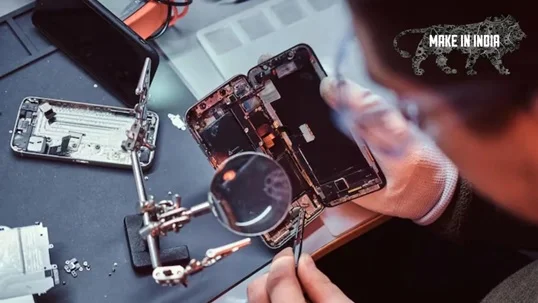
Implementation Period: FY 2026–27 to FY 2030–31 (Five Years)
₹62,500 crore
Prelims QuestionQ. With reference to the Mobile Phone Manufacturing Scheme (MPMS), recently approved by the Union Cabinet, consider the following statements:
Which of the statements given above are correct?
Mains Practice QuestionQ. The Mobile Phone Manufacturing Scheme (MPMS) is expected to accelerate India's transition into a global electronics manufacturing hub. Discuss the key features of the scheme and evaluate its likely impact on exports, employment, and the 'Make in India' initiative. |
FAQs: Mobile Phone Manufacturing Scheme (MPMS)Q1. What is the Mobile Phone Manufacturing Scheme (MPMS) ?Answer : The Mobile Phone Manufacturing Scheme (MPMS) is a ₹62,500-crore Central Sector Scheme approved by the Union Cabinet to promote domestic mobile phone manufacturing, strengthen the electronics supply chain, boost exports, generate employment, and support Indian mobile phone brands. Q2. Why is the scheme important for India ?Answer : The scheme aims to move India from an assembly-led manufacturing model to a design- and innovation-driven electronics ecosystem, strengthen domestic manufacturing, reduce import dependence, and improve India's position in Global Value Chains (GVCs). Q3. Which ministry is responsible for implementing the scheme ?Answer : The Ministry of Electronics and Information Technology (MeitY) is the nodal ministry responsible for implementing the Mobile Phone Manufacturing Scheme. Q4. How is MPMS different from the earlier PLI Scheme ?Answer : While the PLI Scheme primarily focused on increasing production and attracting investments, MPMS places greater emphasis on domestic component manufacturing, higher value addition, R&D, product design, and the development of globally competitive Indian brands. |
PrelimsBanking MainsGS Paper II : Governance, Regulatory Bodies GS Paper III : Indian Economy, Banking, Science & Technology |

|
Aspect |
Key Fact |
|---|---|
|
Issuing authority |
Reserve Bank of India (RBI) |
|
Date of draft release |
15 July 2026 |
|
Applicable entities |
Commercial banks and NBFCs (Regulated Entities) |
|
Related upcoming reform |
Expected Credit Loss (ECL) framework, effective 1 April 2027 |
|
Key legal alignment |
Digital Personal Data Protection (DPDP) Act, 2023 and DPDP Rules, 2025 |
|
Minimum rank for data function head |
Chief General Manager (CGM) or equivalent |
|
Board-level body mandated |
Data Governance Committee (or existing board committee assigned the role) |
|
Review frequency of the DGF |
At least annually, or more frequently if required |
|
Core data-quality principles cited |
Accuracy, consistency, confidentiality, integrity, traceability |
PRELIMS MCQQ. With reference to the RBI's Data Governance Guidance Framework for Banks, consider the following statements:
Which of the statements given above is/are correct? A. 1 and 3 only B. 2 only C. 1, 2 and 3 D. 3 only MAINS PRACTICE QUESTIONQ. "In the era of digital banking, data governance has become as important as financial governance." Discuss in the context of the RBI's Data Governance Guidance Framework for Banks. |
FAQs1. What is the RBI's Data Governance Guidance Framework ?It is an RBI framework to improve data quality, security, accountability, and governance in banks. 2. Why has RBI introduced this framework ?To strengthen data management, improve regulatory reporting, and enhance financial system resilience. 3. Who oversees data governance in banks ?The Board of Directors has the overall responsibility for overseeing data governance. 4. What are the main objectives of the framework ?To improve data quality, security, accountability, and decision-making while ensuring regulatory compliance. 5. How does the framework benefit customers ?It improves data accuracy, strengthens privacy, and enhances trust in digital banking services. |
KeywordsKudankulam Nuclear Power Plant data breach, NPCIL cyber attack, Kudankulam nuclear leak, World Leaks ransomware, NPCIL statement, Reliance Infrastructure Kudankulam, Yotta server breach, India's nuclear security, CERT-In, Kudankulam Nuclear Power Plant, UPSC 2026 Focus AreaMains (GS-III) : Critical Infrastructure Security, Cyber Security, Internal Security, Energy Security, and Nuclear Energy in India |
The Nuclear Power Corporation of India Limited (NPCIL) has denied reports of a "sensitive data breach" at the Kudankulam Nuclear Power Plant (KKNPP) after media reports claimed that over 19,000 engineering and project-related files had been accessed by the ransomware group World Leaks.
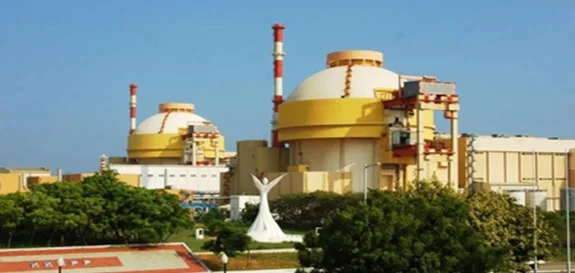
|
1988 : India and the Soviet Union signed the initial agreement for Kudankulam.
1998 : The project was revived after Russia reaffirmed its commitment.
2013 : Unit-1 began commercial operation.
2016 : Unit-2 became operational.
2026
|
NPCIL has categorically stated that :
NPCIL further clarified that the contractor had prepared detailed engineering drawings based on publicly shared tender specifications, which are unrelated to reactor control or nuclear security.
Balance of Plant refers to all supporting systems required to operate a power plant apart from the reactor itself.
These include :
These systems support plant operations but do not control nuclear reactions.
Even if reactor systems remain secure, leaked engineering documents can provide valuable intelligence.
Potential concerns include :
Such information could assist hostile actors in planning cyber or physical attacks against critical infrastructure.
One of the major lessons from this incident is the cyber security risk arising from vendors and contractors.
Modern infrastructure depends heavily on :
A weak contractor network can become an entry point for attackers even when the core operational network remains secure.
The Indian Computer Emergency Response Team (CERT-In) is India's national cyber incident response agency.
Its responsibilities include :
CERT-In is currently investigating the reported breach.
This is not the first cyber security controversy involving Kudankulam.
In 2019, malware linked to a North Korean hacking group reportedly infected an administrative network.
NPCIL had clarified that :
The present incident has revived concerns regarding vendor cybersecurity and supply-chain risks.
Nuclear facilities are among the most sensitive components of a country's Critical Information Infrastructure (CII). A successful cyber-attack on a nuclear installation can have far-reaching consequences for national security, public safety, and economic stability. Even if reactor systems remain physically protected, cyber threats targeting supporting networks, vendors, or administrative systems can expose vulnerabilities and disrupt operations.
Prelims MCQQ. With reference to the Kudankulam Nuclear Power Plant (KKNPP), consider the following statements:
Which of the statements given above is/are correct? A. 1 and 2 only Mains Practice Question"Cybersecurity of critical infrastructure has become as important as physical security." Discuss this statement in the context of the reported cyber incident involving the Kudankulam Nuclear Power Plant. Suggest measures to strengthen India's cyber resilience in strategic sectors. |
Frequently Asked Questions (FAQs)Q1. What is the Kudankulam Nuclear Power Plant ?It is India's largest nuclear power project located in Tamil Nadu and operated by NPCIL using Russian VVER reactor technology. Q2. What data was reportedly leaked ?Media reports claimed that engineering drawings, Balance of Plant documents, vendor information, meeting records, inspection reports and related project files were accessed from a contractor's server. NPCIL states these are not related to nuclear safety systems. Q3. Did NPCIL confirm a nuclear security breach ?No. NPCIL denied any breach of sensitive nuclear or reactor control systems and stated that only conventional Balance of Plant documentation was involved. Q4. What is the Balance of Plant (BoP) ?BoP refers to supporting infrastructure—such as cooling, ventilation, electrical distribution and water treatment systems—required to operate a power plant, excluding the reactor and its core nuclear safety systems. Q5. Why is this incident important despite NPCIL's clarification ?The incident highlights the cybersecurity risks posed by third-party vendors and supply chains. Even if reactor systems remain secure, exposure of engineering and infrastructure data can have implications for national security and the protection of critical infrastructure. |

Our support team will be happy to assist you!

 Contact Us
  New Batch : 9555124124/ 7428085757
  Tech Support : 9555124124/ 7428085757