New
Hindi Medium: (Delhi) - GS Foundation (P+M) : 6th July 2026, 6:00 PM Hindi Medium: (Prayagraj) - GS Foundation (P+M) : 5th July 2026, 8:00 AM English Medium: (Delhi) - GS Foundation (P+M) : 26th July 2026 English Medium: (Prayagraj) - GS Foundation (P+M) : 15th July 2026, 8:00 AM Hindi Medium: (Delhi) - GS Foundation (P+M) : 6th July 2026, 6:00 PM Hindi Medium: (Prayagraj) - GS Foundation (P+M) : 5th July 2026, 8:00 AM English Medium: (Delhi) - GS Foundation (P+M) : 26th July 2026 English Medium: (Prayagraj) - GS Foundation (P+M) : 15th July 2026, 8:00 AM

Current Affairs for 17 July 2026

Serum Institute Joins Global Race for First New TB Vaccine in a Century (M72/AS01E): Key Features, Clinical Trials, Significance

Why in News ?

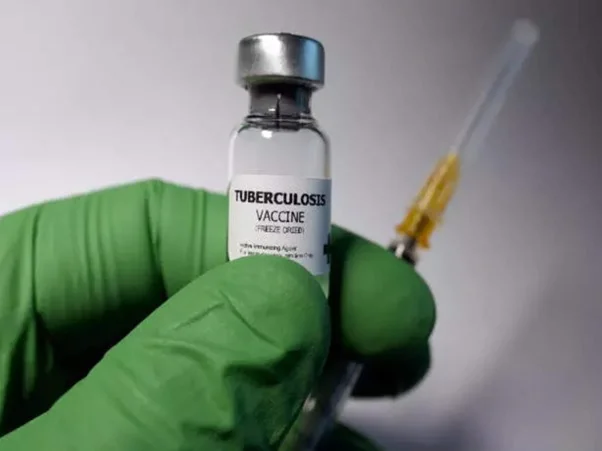
The Serum Institute of India (SII) has entered into a strategic partnership with the Gates Medical Research Institute (Gates MRI) to manufacture M72/AS01E, a promising tuberculosis (TB) vaccine candidate currently undergoing Phase III clinical trials. If approved, it could become the first new TB vaccine in more than 100 years, after the Bacille Calmette-Guérin (BCG) vaccine.
Key Highlights

Partnership Between Serum Institute and Gates MRI

  • Serum Institute of India has signed an agreement with Gates Medical Research Institute to manufacture the M72/AS01E TB vaccine candidate. 
  • SII will invest over US$100 million to expand manufacturing infrastructure and prepare for large-scale production. 
  • Gates MRI will transfer the vaccine antigen manufacturing technology to SII. 
  • British pharmaceutical company GSK will continue supplying the AS01E adjuvant, which enhances the body's immune response. 
  • Manufacturing preparations are being undertaken before regulatory approval to enable rapid global distribution if the vaccine is approved.

About M72/AS01E Vaccine

  • M72/AS01E is a protein subunit vaccine candidate designed to prevent progression from latent TB infection to active pulmonary tuberculosis. 
  • It is intended primarily for TB-infected, HIV-negative adults
  • Originally developed by GlaxoSmithKline (GSK)
  • Development rights were later transferred to the Gates Medical Research Institute
  • Supported by the Bill & Melinda Gates Foundation and Wellcome Trust.

Clinical Trial Status

Phase IIb Trial

  • Conducted on 3,575 participants
  • Demonstrated approximately 50% efficacy in preventing progression to active pulmonary TB. 
  • Protection observed over a three-year follow-up period
  • Participants were HIV-negative adults aged 18–50 years

Phase III Trial

  • Began in March 2024
  • Around 20,000 participants enrolled. 
  • Conducted across 54 trial sites
  • Countries involved : 
    • South Africa 
    • Kenya 
    • Malawi 
    • Zambia 
    • Indonesia 
  • Participant enrolment was completed in April 2025
  • The trial aims to establish the vaccine's safety, efficacy, and effectiveness.

Projected Global Impact

According to estimates by Serum Institute and Gates MRI, a vaccine with similar efficacy could :

  • Prevent approximately 76 million new TB cases over 25 years. 
  • Save nearly 8.5 million lives
  • Generate around US$41.5 billion in economic savings for TB-affected households. 
  • Significantly reduce healthcare costs in low- and middle-income countries.

Why is a New TB Vaccine Important ?

Tuberculosis remains one of the world's deadliest infectious diseases.

Global Burden (WHO, 2024)

  • Nearly 11 million people developed TB. 
  • Approximately 1.23 million deaths occurred due to TB. 
  • TB remains the leading cause of death from a single infectious disease worldwide. 
  • It continues to be among the Top 10 causes of death globally

High-Burden Countries

Major countries with the highest TB burden include :

  • India 
  • Indonesia 
  • Philippines 
  • China 
  • Pakistan 
  • Nigeria

Why Has TB Vaccine Development Been Difficult ?

Unlike COVID-19 vaccines, TB vaccine development has taken decades because :

  • Mycobacterium tuberculosis has a highly complex biology. 
  • TB bacteria can remain dormant for years as latent infection. 
  • The immune response required for long-lasting protection is not fully understood. 
  • Lack of reliable immune correlates of protection. 
  • Conducting long-duration efficacy trials is expensive and time-consuming.

India's Role in Global Vaccine Manufacturing

  • Serum Institute of India is among the world's largest vaccine manufacturers. 
  • It has supplied affordable vaccines to more than 170 countries
  • Played a major role during the COVID-19 pandemic by producing large quantities of vaccines. 
  • Plans to collaborate with manufacturers in Indonesia and South Africa to strengthen long-term global vaccine supply chains.

Other TB Vaccine Candidates Under Development

Immuvac (MIP)

  • Developed by : Indian Council of Medical Research (ICMR)  ,Cadila Pharmaceuticals 

MTBVAC

  • Developed by : University of Zaragoza (Spain) ,Biofabri 
  • In partnership with Bharat Biotech (India).

WHO's TB Vaccine Accelerator Council

  • Established in 2023 by WHO Director-General Dr. Tedros Adhanom Ghebreyesus
  • Objective : 
    • Accelerate TB vaccine research. 
    • Facilitate regulatory approvals. 
    • Improve manufacturing capacity. 
    • Ensure equitable global access to future TB vaccines. 

About Bacille Calmette-Guérin (BCG) Vaccine

  • Introduced in 1921
  • Currently the only licensed TB vaccine
  • Developed by French scientists Albert Calmette and Camille Guérin
  • It is a live attenuated vaccine derived from Mycobacterium bovis
  • Provides strong protection against severe childhood TB, including : 
    • TB meningitis 
    • Miliary tuberculosis 
  • Offers limited and variable protection against pulmonary TB in adults. 
  • Included under India's Universal Immunisation Programme (UIP)

Tuberculosis (TB): Overview

Causative Organism :- Mycobacterium tuberculosis 

Mode of Transmission :- Airborne infection through droplets released when an infected person coughs, sneezes, speaks, or sings. 

Commonly Affected Organ :- Lungs (Pulmonary TB) 

Other Forms

  • Extrapulmonary TB affecting : 
    • Brain 
    • Bones 
    • Kidneys 
    • Lymph nodes 
    • Spine 

Symptoms

  • Persistent cough (more than two weeks) 
  • Fever 
  • Night sweats 
  • Weight loss 
  • Fatigue 
  • Coughing blood 

Diagnosis

  • Sputum microscopy 
  • CBNAAT/GeneXpert 
  • Truenat 
  • Chest X-ray 
  • Culture tests 

Treatment

  • Multi-drug antibiotic regimen under National TB Elimination Programme (NTEP). 
  • Drug-resistant TB requires longer and more complex treatment. 

India's TB Elimination Initiatives

  • National TB Elimination Programme (NTEP) (formerly RNTCP) 
  • Nikshay Portal 
  • Nikshay Poshan Yojana 
  • TB Mukt Bharat Abhiyan 
  • Universal Drug Susceptibility Testing (UDST) 
  • Active Case Finding (ACF) 
  • Free diagnosis and treatment through public health facilities. 
  • Target to eliminate TB by 2025, five years ahead of the WHO End TB Strategy target of 2030

Significance

  • Could become the first major breakthrough in TB vaccination in over a century. 
  • Strengthens India's position as the global vaccine manufacturing hub
  • Supports SDG 3 (Good Health and Well-being)
  • Promotes equitable access to affordable vaccines in developing countries. 
  • May significantly reduce TB-related mortality, poverty, and healthcare expenditure. 

Challenges

  • Successful completion of Phase III clinical trials. 
  • Regulatory approvals across countries. 
  • Large-scale manufacturing and financing. 
  • Cold-chain logistics and equitable distribution. 
  • Monitoring long-term effectiveness and safety. 
  • Addressing drug-resistant TB alongside vaccination. 

Conclusion

The collaboration between the Serum Institute of India and the Gates Medical Research Institute marks a significant milestone in the global fight against tuberculosis. If the M72/AS01E vaccine successfully completes Phase III trials and secures regulatory approval, it could become the first new TB vaccine in over a century, substantially reducing the global TB burden while reinforcing India's leadership in vaccine innovation, manufacturing, and global public health.

Frequently Asked Questions (FAQs): Serum Institute's M72/AS01E TB Vaccine

Q1. Why is the M72/AS01E vaccine in the news ?

Answer : The Serum Institute of India (SII) has partnered with the Gates Medical Research Institute (Gates MRI) to manufacture M72/AS01E, a promising tuberculosis (TB) vaccine candidate currently in Phase III clinical trials. If approved, it could become the first new TB vaccine in over 100 years. 

Q2. What is M72/AS01E ?

Answer : M72/AS01E is an experimental protein subunit vaccine designed to prevent the progression of latent TB infection into active pulmonary tuberculosis, especially in adults. 

Q3. Who developed the M72/AS01E vaccine?

Answer : The vaccine was originally developed by GlaxoSmithKline (GSK). Later, its development was transferred to the Gates Medical Research Institute (Gates MRI), which is currently conducting Phase III clinical trials.

Q :-Tuberculosis is caused by :

A. Plasmodium falciparum
B. Mycobacterium tuberculosis
C. Mycobacterium leprae
D. Salmonella typhi

The Falklands Banner Controversy Explained: Argentina, the Falkland Islands Dispute, and FIFA's Political Neutrality Rules

Prelims

Current Affairs + International Relations + World Geography + International Organizations.

Mains

GS Paper-I : World History (Colonialism, Decolonization, and the 1982 Falklands War).

GS Paper-II : International Relations (Territorial Disputes, Sovereignty, International Law, and United Nations)  

GS Paper-IV : Ethics (Political Neutrality in Sports, Freedom of Expression, and Ethical Dilemmas).

Why in News ?

  • After defeating England 2-1 in the semi-final of the 2026 FIFA World Cup, Argentine players displayed a banner reading "Las Malvinas son Argentinas" ("The Falkland Islands/Malvinas are Argentine").
  • The banner was reportedly first seen among the supporters before reaching the players, despite restrictions on bringing Falklands-related flags and banners into the stadium.
  • The incident has sparked political controversy and may lead to disciplinary action by FIFA for violating its rules on political messages.

What is the Falklands (Malvinas) Dispute ?

  • The Falkland Islands (called Islas Malvinas in Argentina) are a group of islands in the South Atlantic Ocean claimed by both Argentina and the United Kingdom.

Background

  • Britain re-established control over the islands in 1833
  • Argentina argues that it inherited sovereignty over the islands from Spain after gaining independence in 1816 and considers British control illegal. 
  • Britain maintains that its claim is historically and legally valid.

The 1982 Falklands War

  • In 1982, Argentina's military government invaded the Falkland Islands. 
  • Britain responded by sending its armed forces, leading to a 74-day war
  • More than 900 people were killed, including : 
    • Around 649 Argentine soldiers 
    • 255 British military personnel 
    • A small number of Falkland Islanders

Current Status

  • The Falkland Islands remain under British administration
  • The United Kingdom continues to maintain a military presence on the islands. 
  • In a 2013 referendum, the vast majority of island residents voted to remain a British Overseas Territory. 
  • Argentina continues to pursue its sovereignty claim through diplomatic channels, including the United Nations
  • The Malvinas issue remains a powerful symbol of national identity in Argentina. 

FIFA's Rules on Political Messages

  • FIFA and the International Football Association Board (IFAB) prohibit political messages in football.

Key Rules

  • Players' equipment must not display political, religious, or personal slogans or images. 
  • Political, offensive, or discriminatory banners and flags are prohibited inside stadiums. 
  • Political messages are not allowed before, during, or after matches. 
  • Violations can result in fines or disciplinary action against players, teams, or national football associations. 
  • FIFA is currently reviewing the incident, but no official punishment has been announced.

Has This Happened Before ?

  • Yes. Argentina has previously raised the Malvinas issue during football matches.

2014 Friendly Match

  • Argentine players displayed the same banner before a friendly match against Slovenia. 
  • FIFA fined the Argentine Football Association (AFA) for the political display. 

Other FIFA Examples

  • 2018 FIFA World Cup : Swiss players Xherdan Shaqiri and Granit Xhaka were fined for making the Albanian eagle gesture during a match against Serbia. 
  • 2022 FIFA World Cup : Serbia was fined for displaying a "No Surrender" banner depicting Kosovo as part of Serbia. 
  • Germany's players covered their mouths in protest over FIFA's restrictions on the OneLove armband, but no disciplinary action was taken. 

Conclusion

The Falklands banner controversy highlights how historical and territorial disputes can resurface in international sports. While the Malvinas issue remains deeply connected to Argentina's national identity, FIFA's commitment to political neutrality means such actions may attract disciplinary measures. The final decision by FIFA will determine whether Argentina faces any sanctions.

Prelims Practice Questions

Q. Consider the following statements regarding the Falklands War (1982):

  1. It was fought between Argentina and the United Kingdom.
  2. The war lasted for about 74 days.
  3. The conflict ended with Argentina retaining control over the islands.

Which of the statements given above is/are correct?

  1. 1 and 2 only
  2. 2 and 3 only
  3. 1 and 3 only
  4. 1, 2 and 3

Mains Practice Questions

Q. The Falkland (Malvinas) dispute continues to influence diplomatic relations between Argentina and the United Kingdom. Examine the historical background of the dispute and discuss its contemporary geopolitical significance. 


FAQs: The Falklands Banner Controversy

Q1. Why is the Falklands Banner Controversy in the news ?

Answer : After Argentina defeated England in the 2026 FIFA World Cup semi-final, Argentine players displayed a banner reading "Las Malvinas son Argentinas" ("The Falkland Islands are Argentine"), leading to a political controversy and possible FIFA disciplinary action.

Q2. What are the Falkland Islands (Islas Malvinas)?

Answer : The Falkland Islands are an archipelago in the South Atlantic Ocean. They are administered by the United Kingdom, but Argentina claims sovereignty over them and refers to them as Islas Malvinas.

Q3. Why do Argentina and the United Kingdom dispute the Falkland Islands?

Answer : Argentina claims it inherited the islands from Spain after independence in 1816, while the United Kingdom has administered the islands since reasserting control in 1833 and considers its sovereignty legitimate.

Q4. What was the Falklands War of 1982?

Answer : The Falklands War was a 74-day conflict between Argentina and the United Kingdom after Argentina invaded the islands. Britain regained control, and more than 900 people lost their lives during the war.

The Falklands Banner Controversy Explained: Argentina, the Falkland Islands Dispute, and FIFA's Political Neutrality Rules

Prelims

Current Affairs + International Relations + World Geography + International Organizations.

Mains

GS Paper-I : World History (Colonialism, Decolonization, and the 1982 Falklands War).

GS Paper-II : International Relations (Territorial Disputes, Sovereignty, International Law, and United Nations)  

GS Paper-IV : Ethics (Political Neutrality in Sports, Freedom of Expression, and Ethical Dilemmas).

Why in News ?

  • After defeating England 2-1 in the semi-final of the 2026 FIFA World Cup, Argentine players displayed a banner reading "Las Malvinas son Argentinas" ("The Falkland Islands/Malvinas are Argentine").
  • The banner was reportedly first seen among the supporters before reaching the players, despite restrictions on bringing Falklands-related flags and banners into the stadium.
  • The incident has sparked political controversy and may lead to disciplinary action by FIFA for violating its rules on political messages.

What is the Falklands (Malvinas) Dispute ?

  • The Falkland Islands (called Islas Malvinas in Argentina) are a group of islands in the South Atlantic Ocean claimed by both Argentina and the United Kingdom.

Background

  • Britain re-established control over the islands in 1833
  • Argentina argues that it inherited sovereignty over the islands from Spain after gaining independence in 1816 and considers British control illegal. 
  • Britain maintains that its claim is historically and legally valid.

The 1982 Falklands War

  • In 1982, Argentina's military government invaded the Falkland Islands. 
  • Britain responded by sending its armed forces, leading to a 74-day war
  • More than 900 people were killed, including : 
    • Around 649 Argentine soldiers 
    • 255 British military personnel 
    • A small number of Falkland Islanders

Current Status

  • The Falkland Islands remain under British administration
  • The United Kingdom continues to maintain a military presence on the islands. 
  • In a 2013 referendum, the vast majority of island residents voted to remain a British Overseas Territory. 
  • Argentina continues to pursue its sovereignty claim through diplomatic channels, including the United Nations
  • The Malvinas issue remains a powerful symbol of national identity in Argentina. 

FIFA's Rules on Political Messages

  • FIFA and the International Football Association Board (IFAB) prohibit political messages in football.

Key Rules

  • Players' equipment must not display political, religious, or personal slogans or images. 
  • Political, offensive, or discriminatory banners and flags are prohibited inside stadiums. 
  • Political messages are not allowed before, during, or after matches. 
  • Violations can result in fines or disciplinary action against players, teams, or national football associations. 
  • FIFA is currently reviewing the incident, but no official punishment has been announced.

Has This Happened Before ?

  • Yes. Argentina has previously raised the Malvinas issue during football matches.

2014 Friendly Match

  • Argentine players displayed the same banner before a friendly match against Slovenia. 
  • FIFA fined the Argentine Football Association (AFA) for the political display. 

Other FIFA Examples

  • 2018 FIFA World Cup : Swiss players Xherdan Shaqiri and Granit Xhaka were fined for making the Albanian eagle gesture during a match against Serbia. 
  • 2022 FIFA World Cup : Serbia was fined for displaying a "No Surrender" banner depicting Kosovo as part of Serbia. 
  • Germany's players covered their mouths in protest over FIFA's restrictions on the OneLove armband, but no disciplinary action was taken. 

Conclusion

The Falklands banner controversy highlights how historical and territorial disputes can resurface in international sports. While the Malvinas issue remains deeply connected to Argentina's national identity, FIFA's commitment to political neutrality means such actions may attract disciplinary measures. The final decision by FIFA will determine whether Argentina faces any sanctions.

Prelims Practice Questions

Q. Consider the following statements regarding the Falklands War (1982):

  1. It was fought between Argentina and the United Kingdom.
  2. The war lasted for about 74 days.
  3. The conflict ended with Argentina retaining control over the islands.

Which of the statements given above is/are correct?

  1. 1 and 2 only
  2. 2 and 3 only
  3. 1 and 3 only
  4. 1, 2 and 3

Mains Practice Questions

Q. The Falkland (Malvinas) dispute continues to influence diplomatic relations between Argentina and the United Kingdom. Examine the historical background of the dispute and discuss its contemporary geopolitical significance. 


FAQs: The Falklands Banner Controversy

Q1. Why is the Falklands Banner Controversy in the news ?

Answer : After Argentina defeated England in the 2026 FIFA World Cup semi-final, Argentine players displayed a banner reading "Las Malvinas son Argentinas" ("The Falkland Islands are Argentine"), leading to a political controversy and possible FIFA disciplinary action.

Q2. What are the Falkland Islands (Islas Malvinas)?

Answer : The Falkland Islands are an archipelago in the South Atlantic Ocean. They are administered by the United Kingdom, but Argentina claims sovereignty over them and refers to them as Islas Malvinas.

Q3. Why do Argentina and the United Kingdom dispute the Falkland Islands?

Answer : Argentina claims it inherited the islands from Spain after independence in 1816, while the United Kingdom has administered the islands since reasserting control in 1833 and considers its sovereignty legitimate.

Q4. What was the Falklands War of 1982?

Answer : The Falklands War was a 74-day conflict between Argentina and the United Kingdom after Argentina invaded the islands. Britain regained control, and more than 900 people lost their lives during the war.

RBI's New Prudential Framework for Specified Non-Financial Assets (SNFAs): Key Features, Objectives & Significance

Why in the News ?

  • The Reserve Bank of India (RBI) has introduced a comprehensive prudential framework for Specified Non-Financial Assets (SNFAs) through the Commercial Banks – Resolution of Stressed Assets Directions, 2025 (Third Amendment Directions, 2026).
  • The new framework establishes uniform rules for the acquisition, valuation, management, accounting, disclosure, and disposal of immovable properties acquired by commercial banks from defaulting borrowers. 
  • The objective is to improve transparency, governance, and recovery of stressed assets while ensuring that banks remain focused on their core banking activities instead of managing real estate portfolios.

What are Specified Non-Financial Assets (SNFAs) ?

  • Specified Non-Financial Assets (SNFAs) are a new asset category introduced by the RBI to cover immovable properties acquired by banks in full or partial settlement of loans that have become Non-Performing Assets (NPAs).
  • These assets are not part of banks' normal business operations. Instead, they are acquired only as a recovery mechanism when borrowers default on loan repayments and transfer ownership of immovable property to the bank in settlement of the outstanding debt.
  • The RBI has clarified that a property becomes an SNFA only after the legal title is transferred to the bank.

Examples of SNFAs

SNFAs may include :

  • Residential buildings 
  • Commercial buildings 
  • Industrial land 
  • Warehouses 
  • Office spaces 
  • Factory premises 
  • Other immovable properties transferred to banks in settlement of loans

Why Was a New Framework Needed ?

Before the introduction of the SNFA framework, banks occasionally acquired immovable properties while recovering bad loans. However, there was no comprehensive regulatory framework governing how such assets should be valued, managed, accounted for, or disposed of.

This resulted in several issues :

  • Inconsistent valuation practices across banks 
  • Overvaluation of acquired properties 
  • Prolonged holding of non-core real estate assets 
  • Lack of transparency in disposal 
  • Different accounting treatments by different banks 
  • Weak governance standards 
  • Reduced comparability of financial statements 

The RBI observed that banks should function primarily as financial intermediaries rather than as owners of large real estate portfolios. Therefore, a uniform prudential framework became necessary.

Objectives of the SNFA Framework

The new framework aims to :

  • Standardise the treatment of immovable assets acquired from defaulting borrowers. 
  • Improve transparency in valuation and disposal. 
  • Ensure prudent accounting practices. 
  • Strengthen governance and regulatory oversight. 
  • Encourage faster recovery of stressed assets. 
  • Prevent misuse of repossessed properties. 
  • Keep banks focused on lending and financial intermediation rather than property management.

Key Features of the RBI's SNFA Framework

1. Eligibility for Acquisition

A bank may acquire an SNFA only when all of the following conditions are satisfied :

  • The borrower's account has already been classified as a Non-Performing Asset (NPA)
  • The property is transferred in full or partial extinguishment of the outstanding loan. 
  • The bank acquires the legal ownership of the property. 
  • The asset becomes an SNFA only after the legal title is transferred to the bank. 

Where only part of the outstanding loan is settled through transfer of property :

  • The remaining loan continues to exist. 
  • The remaining exposure is treated as a restructured loan
  • It continues to attract all applicable prudential norms, including provisioning requirements.

2. Conservative Valuation Norms

To prevent inflated asset values and improve transparency, the RBI has prescribed conservative valuation standards.

Every SNFA must be recorded at the lower of the following two values :

  • The Net Book Value (NBV) of the extinguished loan; or 
  • The Distress Sale Value (DSV) determined independently by at least two external valuers

This conservative approach ensures :

  • Realistic valuation 
  • Reduced possibility of overstated balance sheets 
  • Better financial reporting 
  • Stronger investor confidence 

3. Board-Approved SNFA Policy

Every commercial bank must formulate a Board-approved policy governing the acquisition and disposal of SNFAs.

The policy should cover :

  • Eligibility criteria 
  • Delegation of approval powers 
  • Recovery efforts before acquisition 
  • Maximum permissible exposure to SNFAs 
  • Valuation procedures 
  • Disposal strategy 
  • Disposal timelines 
  • Internal monitoring mechanisms 

The RBI has emphasized that acquisition of immovable property should remain an exceptional recovery measure rather than a regular business activity.

4. Maximum Holding Period

Banks are expected to dispose of SNFAs as quickly as possible.

The RBI has prescribed that :

  • Banks must make all reasonable efforts to sell the property at the earliest. 
  • The maximum holding period is seven years from the date of acquisition. 

The objective is to prevent banks from accumulating large portfolios of real estate assets.

5. Disposal Through Public Auction

The RBI has mandated that disposal should primarily take place through public auctions.

Banks must follow the auction principles prescribed under the SARFAESI Act, 2002.

Public auctions are intended to ensure :

  • Transparency 
  • Fair price discovery 
  • Competitive bidding 
  • Equal opportunity for buyers 
  • Reduced possibility of favouritism or manipulation

6. Restriction on Sale to Borrowers

One of the most significant safeguards introduced by the RBI is the prohibition on resale of SNFAs to :

  • The original borrower 
  • Related parties as defined under the Insolvency and Bankruptcy Code (IBC), 2016 

This restriction applies even if the property subsequently ceases to be classified as an SNFA.

The objective is to :

  • Prevent misuse of the recovery mechanism. 
  • Avoid indirect reacquisition of repossessed properties by defaulters. 
  • Protect the integrity of the asset recovery process.

7. Accounting Treatment

The RBI has clarified that SNFAs will not be treated as :

  • Gross NPAs 
  • Net NPAs 
  • Stressed assets 

Similarly, SNFAs will not affect the :

  • Provisioning Coverage Ratio (PCR) 

Instead, banks must disclose them separately in their balance sheets under :

"Non-banking assets acquired in satisfaction of claims."

This ensures better transparency in financial reporting.

8. Disclosure Requirements

Banks must submit annual information on SNFAs through the RBI's Centralised Information Management System (CIMS).

The disclosure should include :

  • Number of SNFAs acquired 
  • Number of SNFAs disposed of 
  • Age-wise classification 
  • Assets retained for the bank's own use 
  • Other prescribed information 

These disclosures will strengthen regulatory oversight and improve market transparency.

Implementation Timeline

The revised framework will:Come into force on 1 October 2026

For legacy SNFAs already held by banks:Assets existing as on 30 September 2026 must be brought into compliance by 30 September 2027

Thus, banks have been provided a one-year transition period.

Significance of the New Framework

The RBI's SNFA framework is expected to significantly strengthen India's banking sector by :

  • Standardising treatment of immovable assets acquired from defaulters. 
  • Improving transparency in valuation and disposal. 
  • Enhancing governance standards. 
  • Preventing inflated valuation of acquired assets. 
  • Improving quality of financial reporting. 
  • Preventing defaulting borrowers from regaining repossessed properties. 
  • Promoting quicker recovery of stressed assets. 
  • Reducing accumulation of non-core real estate assets. 
  • Enabling banks to focus on lending rather than property management. 
  • Complementing India's broader stressed asset resolution ecosystem under the SARFAESI Act, 2002, the Insolvency and Bankruptcy Code (IBC), 2016, and RBI's prudential regulations.

Conclusion

  • The introduction of the SNFA framework marks an important step in strengthening prudential regulation within India's banking system. 
  • By creating uniform rules for the acquisition, valuation, accounting, and disposal of immovable assets obtained from defaulting borrowers, the RBI seeks to improve transparency, governance, and financial discipline.
  • The framework discourages banks from holding non-core real estate assets for prolonged periods while promoting faster recovery of stressed loans. 
  • Overall, the reforms are expected to enhance the efficiency of asset resolution, improve the quality of bank balance sheets, and reinforce confidence in India's banking sector.

FAQs: RBI's New Prudential Framework for Specified Non-Financial Assets (SNFAs)

Q1. What is the RBI's new SNFA framework ?

Answer : The RBI's new Prudential Framework for Specified Non-Financial Assets (SNFAs) provides uniform rules for the acquisition, valuation, management, accounting, disclosure, and disposal of immovable properties acquired by banks from defaulting borrowers. 

Q2. What are Specified Non-Financial Assets (SNFAs) ?

Answer : SNFAs are immovable properties such as residential buildings, commercial properties, industrial land, warehouses, and other real estate acquired by banks in full or partial settlement of loans that have become Non-Performing Assets (NPAs). 

Q3. Why did the RBI introduce the SNFA framework ?

Answer: The framework was introduced to standardise the treatment of immovable assets acquired from defaulting borrowers, improve transparency, strengthen governance, ensure prudent accounting practices, and encourage faster recovery of stressed assets. 

Q4. When does an asset qualify as an SNFA?

Answer : An asset qualifies as an SNFA only after the borrower's loan has been classified as an NPA and the legal title of the immovable property has been transferred to the bank in full or partial settlement of the outstanding loan. 

Q5. How are SNFAs valued under the new framework ?

Answer : Every SNFA must be recorded at the lower of:

  • The Net Book Value (NBV) of the extinguished loan; or 
  • The Distress Sale Value (DSV) determined independently by at least two external valuers. 

Q6. What is the maximum period for banks to hold SNFAs ?

Answer : Banks must make all reasonable efforts to dispose of SNFAs at the earliest and are required to sell them within seven years from the date of acquisition.

Mcq

Q1. With reference to the Reserve Bank of India's new Prudential Framework for Specified Non-Financial Assets (SNFAs), consider the following statements:

SNFAs refer to movable assets acquired by banks from defaulting borrowers.

SNFAs are acquired only after a borrower's account is classified as a Non-Performing Asset (NPA).

A property becomes an SNFA only after its legal title is transferred to the bank. 

Which of the statements given above is/are correct?

 A. 1 only

B. 2 and 3 only

C. 1 and 2 only

D. 1, 2 and 3

Delhi Targets 1.49 Lakh HPV Vaccinations in 100 Days to Boost Cervical Cancer Prevention

Keywords

HPV Vaccine, Human Papillomavirus, Cervical Cancer, Delhi Health Department, HPV Vaccination Drive, National HPV Programme, Cervical Cancer Prevention, GLOBOCAN 2022, IARC, School Health Programme, Vaccine Hesitancy

Focus Area

Prelims Human Papillomavirus (HPV), Cervical Cancer, GLOBOCAN, IARC

Mains GS II (Health & Governance), Public health policy, Universal immunisation, Women's health

GS III (Science & Technology) Vaccination technology, Biotechnology in public health, Disease prevention, Health awareness and misinformation

Why in News ?

Delhi has launched a renewed 100-day HPV vaccination campaign with a target of vaccinating 1.49 lakh girls (14 years) after reviewing the slow progress of the first phase. The campaign will focus on government schools, awareness drives, parent counselling, and combating vaccine hesitancy to protect girls against cervical cancer.
Delhi Sets New Target of 1.49 Lakh HPV Vaccinations in 100 Days

  • The Delhi Health Department has launched a renewed campaign to vaccinate 1.49 lakh girls aged 14 years within the next 100 days under India's National Human Papillomavirus (HPV) Vaccination Programme.
  • The decision follows a review of the programme's first 90 days, during which only about 13,500 girls received the vaccine in Delhi.
  • Officials believe that stronger coordination with schools, awareness campaigns, and counselling of parents will significantly improve vaccination coverage.
  • The nationwide HPV vaccination programme was launched on 28 February 2026 with the objective of protecting adolescent girls against cervical cancer, one of the leading causes of cancer deaths among Indian women.

Why Was a Fresh Target Needed ?

Although the vaccination programme has been running for over four months, Delhi's progress has remained slower than expected.

Major Reasons :

  • School examinations delayed awareness activities.
  • Summer vacations interrupted vaccination drives.
  • Limited access to students during school closure.
  • Vaccine hesitancy among parents.
  • Spread of misinformation through social media.

After schools reopened, the Health Department decided to relaunch the campaign with greater involvement of the Education Department.

What is Government's New Strategy ?

The Delhi government is adopting a multi-pronged approach to improve vaccination coverage.

School-Based Campaign

  • Awareness sessions inside government schools.
  • Doctors visiting schools to educate students.
  • Parent counselling meetings.
  • Distribution of fresh consent forms.

Coordination with Education Department

  • Meetings with Deputy Directors of Education (DDEs).
  • Coordination with school principals.
  • Joint implementation by teachers and healthcare workers.

Fighting Vaccine Hesitancy

The government is focusing on countering misinformation through :

  • Videos by senior doctors explaining vaccine safety.
  • Myth-busting campaigns on social media.
  • Testimonials from women vaccinated in 2009 who later had healthy pregnancies.
  • Community awareness through ASHA workers.

Officials believe that urban populations like Delhi require stronger communication strategies because health misinformation spreads rapidly through social media.

About Human Papillomavirus (HPV)

Human Papillomavirus (HPV) is one of the most common viral infections affecting humans.

Important Facts

  • More than 200 types of HPV exist.
  • Around 40 types spread through sexual contact.
  • Persistent infection with high-risk HPV types can cause cancer.
  • HPV is responsible for almost 99% of cervical cancer cases.
  • Some HPV types also cause cancers of the anus, vulva, vagina, penis, and throat.

Most HPV infections disappear naturally, but persistent infection with high-risk strains can develop into cancer over several years.

What is the HPV Vaccine ?

The HPV vaccine protects against the high-risk HPV types responsible for cervical cancer.

Benefits

  • Prevents cervical cancer.
  • Reduces HPV infection.
  • Prevents precancerous cervical lesions.
  • Provides long-term protection.
  • Safe and highly effective.

The vaccine works best before exposure to HPV, which is why it is administered to adolescent girls.

India's National HPV Vaccination Programme

India launched the nationwide programme on 28 February 2026.

Target Group

  • Girls aged 14 years

Annual Target

  • Nearly 1.15 crore girls across India

Objective

  • Reduce cervical cancer burden.
  • Increase immunisation coverage.
  • Improve women's health outcomes.
  • Achieve long-term cancer prevention.

Burden of Cervical Cancer in India

According to GLOBOCAN 2022 estimates published by the International Agency for Research on Cancer (IARC) :

  • Over 1.2 lakh new cervical cancer cases every year.
  • Nearly 80,000 deaths annually.
  • Cervical cancer is the second most common cancer among Indian women.
  • It remains one of the leading causes of cancer-related deaths among women.

These figures highlight the importance of both HPV vaccination and regular cervical cancer screening.

Challenges in HPV Vaccination

Despite the availability of an effective vaccine, several challenges remain :

  • Vaccine hesitancy.
  • Myths regarding infertility.
  • Misinformation on social media.
  • Lack of awareness among parents.
  • School scheduling issues.
  • Need for parental consent.

Public awareness remains one of the most important components of successful vaccination programmes.

Importance of School-Based Vaccination

Schools provide the most effective platform for adolescent immunisation because they enable :

  • Easy identification of eligible beneficiaries.
  • Direct communication with parents.
  • Health education sessions.
  • Higher vaccination coverage.
  • Better monitoring and follow-up.

Delhi's renewed strategy therefore places government schools at the centre of the campaign.

Way Forward

  • The success of Delhi's renewed HPV campaign will depend on close coordination between the Health and Education Departments, active participation of schools, and sustained public awareness efforts.
  • Along with vaccination, regular cervical cancer screening and timely treatment remain essential pillars of India's strategy to reduce cervical cancer mortality.
  • If the campaign achieves its target of vaccinating 1.49 lakh girls within 100 days, it could become a model for improving HPV vaccination coverage in other states.

Key Data at a Glance

Parameter

Data

Programme Launch

28 February 2026

Target Group

Girls aged 14 years

Delhi Vaccinations So Far

~13,500 doses

New Delhi Target

1.49 lakh vaccinations in 100 days

National Annual Target

1.15 crore girls

Cause of Vaccination

Prevention of Cervical Cancer

Cervical Cancer Cases in India (GLOBOCAN 2022)

1.2 lakh+ annually

Cervical Cancer Deaths (India)

~80,000 annually

Main Challenge

Vaccine hesitancy & misinformation

Key Implementation Agency

Delhi Health Department with Education Department

Practice MCQ

Q. With reference to Human Papillomavirus (HPV), consider the following statements:

  1. Persistent infection with high-risk HPV types is the primary cause of cervical cancer.
  2. India's National HPV Vaccination Programme primarily targets 14-year-old girls.
  3. The International Agency for Research on Cancer (IARC) publishes GLOBOCAN estimates.

Which of the statements given above is/are correct?

A. 1 and 2 only
B. 2 and 3 only
C. 1 and 3 only
D. 1, 2 and 3

Mains Practice Question

How can HPV vaccination contribute to reducing India's cervical cancer burden? Discuss the key challenges in achieving universal vaccine coverage and suggest measures to overcome them.

Frequently Asked Questions (FAQs)

1. What is HPV ?

Human Papillomavirus (HPV) is a common viral infection. Persistent infection with high-risk HPV types causes nearly all cases of cervical cancer.

2. Who is eligible under India's HPV vaccination programme ?

The programme currently targets 14-year-old girls across the country.

3. Why is the HPV vaccine important ?

It protects against high-risk HPV infections and significantly reduces the risk of developing cervical cancer later in life.

4. Why is Delhi relaunching the campaign ?

Vaccination progress was slower than expected due to school examinations, summer vacations, and vaccine hesitancy. The renewed campaign aims to accelerate coverage through schools.

5. Which international agency publishes global cervical cancer estimates ?

The International Agency for Research on Cancer (IARC) publishes GLOBOCAN, which provides global estimates on cancer incidence and mortality.

Sub-Mission on Agricultural Mechanization (SMAM): Enhancing Productivity through Farm Mechanization

Why in News ?

  • The Sub-Mission on Agricultural Mechanization (SMAM) has significantly expanded access to farm machinery across India, especially for small and marginal farmers, women, SC/ST farmers, Farmer Producer Organizations (FPOs), and North-Eastern States. 
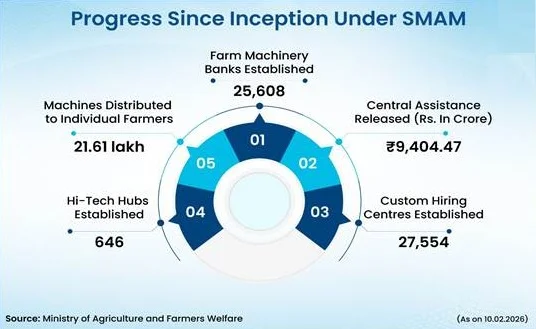
  • Since its launch, the scheme has supported the distribution of over 21.61 lakh agricultural machines, establishment of thousands of Custom Hiring Centres and Farm Machinery Banks, and large-scale adoption of drone technology for precision agriculture.

Sub-Mission on Agricultural Mechanization (SMAM)

  • The Sub-Mission on Agricultural Mechanization (SMAM) is a Centrally Sponsored Scheme (CSS) launched in 2014-15 under the Rashtriya Krishi Vikas Yojana (RKVY) by the Ministry of Agriculture and Farmers Welfare.
  • The scheme seeks to improve farm productivity by promoting mechanization across all stages of agriculture, including land preparation, sowing, irrigation, plant protection, harvesting, threshing, and post-harvest operations.
  • The guiding principle of SMAM is "Reach the Unreached", ensuring that modern agricultural machinery becomes accessible to farmers who traditionally lack the financial capacity to purchase expensive equipment.

Need for Farm Mechanization in India

Agriculture in India continues to face several structural challenges, including :

  • Small and fragmented landholdings 
  • Rising labour shortages due to migration 
  • Increasing cost of cultivation 
  • Delayed agricultural operations 
  • Low labour productivity 
  • Low mechanization levels in several eastern and North-Eastern states 
  • High capital cost of modern agricultural machinery 

Farm mechanization addresses these issues by enabling timely farm operations, reducing dependence on manual labour and animal power, improving input-use efficiency, lowering production costs, minimizing post-harvest losses, and increasing overall agricultural productivity.

Mechanization also supports climate-resilient agriculture through precision farming technologies such as drones, GPS-enabled equipment, and efficient crop residue management.
Objectives of SMAM

The major objectives of the scheme are :
  • Increase farm mechanization across the country. 
  • Improve access to agricultural machinery for small and marginal farmers. 
  • Promote inclusive mechanization by supporting women, SC/ST farmers, FPOs, SHGs, and rural entrepreneurs. 
  • Reduce the cost of cultivation through shared access to machinery. 
  • Improve agricultural productivity and farm efficiency. 
  • Promote precision agriculture through modern technologies such as drones. 
  • Strengthen post-harvest mechanization and crop residue management. 
  • Encourage establishment of institutional infrastructure for machinery hiring. 
  • Promote mechanization in low farm-power and underserved regions, particularly North-Eastern States.

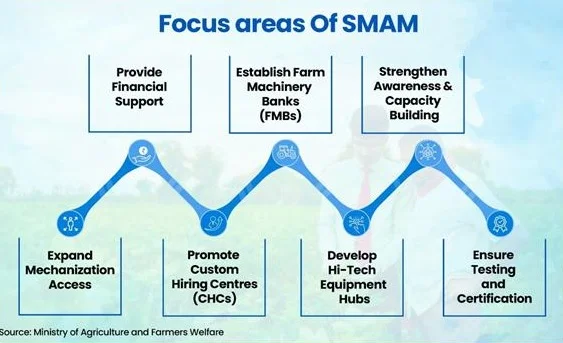
Major Components of SMAM

1. Promotion of Agricultural Mechanization

SMAM supports mechanization throughout the crop production cycle by promoting :

  • Land preparation 
  • Sowing and planting 
  • Irrigation 
  • Plant protection 
  • Harvesting 
  • Threshing 
  • Post-harvest processing 
  • Crop residue management 

The scheme also organizes demonstrations, farmer training, capacity building, and awareness programmes to encourage adoption of modern agricultural technologies.

2. Financial Assistance for Agricultural Machinery

SMAM provides subsidies for purchasing agricultural machinery through the Direct Benefit Transfer (DBT) system.

Subsidy Pattern

  • 40% subsidy for General Category farmers. 
  • 50% subsidy for : 
    • SC/ST farmers 
    • Small and marginal farmers 
    • Farmers of North-Eastern States. 

Additionally, small and marginal farmers receive ₹2,000 per hectare for accessing mechanized services through Custom Hiring Centres, SHGs, and FPOs, including drone services.

3. Custom Hiring Centres (CHCs)

One of the flagship interventions under SMAM is the establishment of Custom Hiring Centres (CHCs).

These centres provide agricultural machinery on rent, allowing farmers to use expensive equipment without purchasing it.

Benefits

  • Reduces capital investment. 
  • Enables timely agricultural operations. 
  • Makes advanced machinery affordable. 
  • Particularly benefits small and marginal farmers. 

Financial assistance is available up to 40% of project cost for projects costing up to ₹250 lakh.

4. Farm Machinery Banks (FMBs)

Farm Machinery Banks are established mainly by :

  • Farmer Producer Organizations (FPOs) 
  • Self Help Groups (SHGs) 
  • Panchayats 
  • Cooperatives 
  • Local institutions 

These institutions collectively own machinery and rent it to farmers.

Financial support under SMAM includes :

  • 80% subsidy 
  • Projects up to ₹30 lakh 
  • 90% subsidy in selected cases 

5. Hi-Tech Agricultural Equipment Hubs

SMAM promotes the establishment of Hi-Tech Hubs equipped with advanced machinery such as :

  • Laser land levellers 
  • Precision seeders 
  • Happy Seeders 
  • Zero Till Seed Drills 
  • Combine harvesters 
  • High-capacity planters 

These hubs improve operational efficiency and promote adoption of precision agriculture.

6. Promotion of Mechanization in North-Eastern Region

Recognizing low mechanization levels in North-Eastern India, SMAM provides special incentives.

These include :

  • Region-specific interventions 
  • Up to 100% subsidy for small agricultural machinery 
  • 95% financial assistance for Farm Machinery Banks 
  • Greater central financial support 

This reduces regional disparities in access to farm machinery.

Financial Pattern of the Scheme

SMAM follows a shared funding model.

Region

Funding Pattern

General States

60:40 (Centre : State)

North-Eastern & Himalayan States

90:10

Union Territories

100% Central Assistance

This differentiated funding structure enables wider adoption across geographically diverse regions.

Achievements of SMAM (2014–15 to 2025–26)

Since its launch, SMAM has achieved significant progress.

Financial Assistance

  • Central Assistance : ₹9,404.47 crore 

Agricultural Machinery Distributed

  • 21.61 lakh machines distributed to individual farmers. 

Institutional Infrastructure Created

  • 27,554 Custom Hiring Centres 
  • 25,608 Farm Machinery Banks 
  • 646 Hi-Tech Hubs 

Increase in Beneficiaries The number of beneficiaries receiving individual farm machinery increased from:

  • 2.07 lakh (2020–21)  to 2.32 lakh (2024–25)  indicating expanding coverage of the scheme.

Drone-Based Farming under SMAM

SMAM actively promotes the use of drones in agriculture to encourage precision farming.

The initiative is implemented in collaboration with :

  • Indian Council of Agricultural Research (ICAR) 
  • State Agricultural Universities (SAUs) 
  • Krishi Vigyan Kendras (KVKs) 

Drone Demonstrations

Between 2023–24 and 2025–26 :

  • 40,928 Kisan Drone demonstrations were conducted. 
  • Demonstrations covered 40,918 hectares

The demonstrations focused on :

  • Nutrient application 
  • Fertilizer spraying 
  • Pesticide application 
  • Agrochemical spraying 
  • Precision crop management 

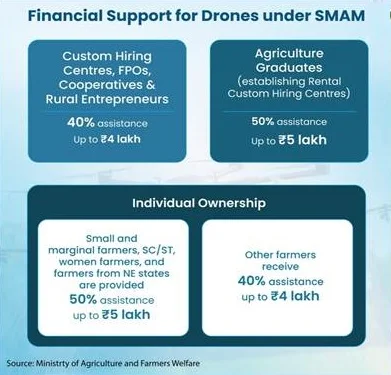
Financial Support for Drones

SMAM provides financial assistance for drone procurement.

Eligible Institutions

  • ICAR Institutes 
  • State Agricultural Universities 
  • Krishi Vigyan Kendras 

These institutions receive :

  • 100% financial assistance 
  • Up to ₹10 lakh per drone 

Farmer Producer Organizations (FPOs)

FPOs receive :

  • 75% grant assistance for purchasing drones. 

Service Providers

Drone service agencies receive :

  • ₹6,000 per hectare as contingency support for providing drone-based agricultural services.

Women-Centric Provisions

SMAM emphasizes gender inclusion.

  • 30% of the total scheme allocation is earmarked for women farmers. 

The objective is to improve women's access to modern agricultural machinery, reduce drudgery, and enhance their participation in mechanized agriculture.

Rashtriya Krishi Vikas Yojana (RKVY)

SMAM operates under the umbrella of the Rashtriya Krishi Vikas Yojana (RKVY).

About RKVY

  • Launched in 2007 
  • Centrally Sponsored Scheme 
  • Encourages states to increase public investment in agriculture 
  • Provides flexibility to states for designing location-specific agricultural projects 

In 2017-18, RKVY was restructured as :

RKVY-RAFTAAR (Remunerative Approaches for Agriculture and Allied Sector Rejuvenation)

The restructured programme emphasizes :

  • Pre-harvest infrastructure 
  • Post-harvest management 
  • Agri-entrepreneurship 
  • Value addition 
  • Agri-startups 
  • Agricultural innovation

Significance of SMAM

SMAM contributes significantly to India's agricultural transformation.

Economic Benefits

  • Reduces cost of cultivation. 
  • Improves labour productivity. 
  • Enables timely farm operations. 
  • Increases crop yields. 
  • Enhances farmers' income. 

Social Benefits

  • Supports small and marginal farmers. 
  • Promotes women empowerment. 
  • Benefits SC/ST communities. 
  • Strengthens Farmer Producer Organizations. 

Environmental Benefits

  • Promotes precision agriculture. 
  • Encourages efficient use of fertilizers and pesticides. 
  • Supports crop residue management. 
  • Reduces stubble burning through mechanized residue management. 

Technological Benefits

  • Promotes drones. 
  • Encourages digital agriculture. 
  • Facilitates precision farming. 
  • Increases adoption of modern farm technologies.

Challenges

Despite notable progress, several challenges remain.

  • Low awareness among farmers regarding advanced machinery. 
  • High maintenance costs. 
  • Limited availability of repair services in rural areas. 
  • Small and fragmented landholdings. 
  • Inadequate rural infrastructure. 
  • Limited access to institutional credit. 
  • Low mechanization levels in rainfed and tribal regions. 
  • Need for skilled operators to handle advanced machinery and drones.

Way Forward

To maximize the impact of SMAM, the following measures are essential :

  • Expand the network of Custom Hiring Centres in remote and tribal areas. 
  • Promote AI, IoT, GPS, drones, and precision agriculture technologies. 
  • Strengthen training programmes for farmers and rural youth. 
  • Encourage indigenous manufacturing under Make in India
  • Enhance credit support for mechanization. 
  • Promote climate-smart and energy-efficient farm machinery. 
  • Integrate mechanization with Digital Agriculture Mission and AgriStack. 
  • Increase awareness through Krishi Vigyan Kendras and extension services. 
  • Strengthen research and innovation in affordable farm machinery suitable for small landholdings. 

Conclusion

The Sub-Mission on Agricultural Mechanization (SMAM) has emerged as one of India's most important initiatives for modernizing agriculture through inclusive access to farm machinery. By combining financial assistance, Custom Hiring Centres, Farm Machinery Banks, Hi-Tech Hubs, and drone-based precision farming, the scheme has substantially improved mechanization among small and marginal farmers while reducing labour drudgery and enhancing productivity. Going forward, greater emphasis on digital technologies, climate-smart mechanization, indigenous innovation, and last-mile accessibility will be essential to achieving sustainable, efficient, and globally competitive agriculture in line with the vision of Viksit Bharat 2047.

Frequently Asked Questions (FAQs): Sub-Mission on Agricultural Mechanization (SMAM)

Q1. What is the Sub-Mission on Agricultural Mechanization (SMAM)?

Answer : SMAM is a Centrally Sponsored Scheme launched in 2014–15 under the Rashtriya Krishi Vikas Yojana (RKVY) to promote farm mechanization by improving farmers' access to modern agricultural machinery and equipment. 

Q2. Which ministry implements the SMAM?

Answer : The scheme is implemented by the Ministry of Agriculture and Farmers Welfare, Government of India.

upsc english
« »
  • SUN
  • MON
  • TUE
  • WED
  • THU
  • FRI
  • SAT
Have any Query?

Our support team will be happy to assist you!

OR