
- UPSC Exam
- State PCS
- One Day Exam
- Current Affairs
- PT Quiz
- Downlaods
- About Coaching
- Blog
- Videos

KeywordsHPV Vaccine, Human Papillomavirus, Cervical Cancer, Delhi Health Department, HPV Vaccination Drive, National HPV Programme, Cervical Cancer Prevention, GLOBOCAN 2022, IARC, School Health Programme, Vaccine Hesitancy Focus AreaPrelims Human Papillomavirus (HPV), Cervical Cancer, GLOBOCAN, IARC Mains GS II (Health & Governance), Public health policy, Universal immunisation, Women's health GS III (Science & Technology) Vaccination technology, Biotechnology in public health, Disease prevention, Health awareness and misinformation |
Delhi has launched a renewed 100-day HPV vaccination campaign with a target of vaccinating 1.49 lakh girls (14 years) after reviewing the slow progress of the first phase. The campaign will focus on government schools, awareness drives, parent counselling, and combating vaccine hesitancy to protect girls against cervical cancer.
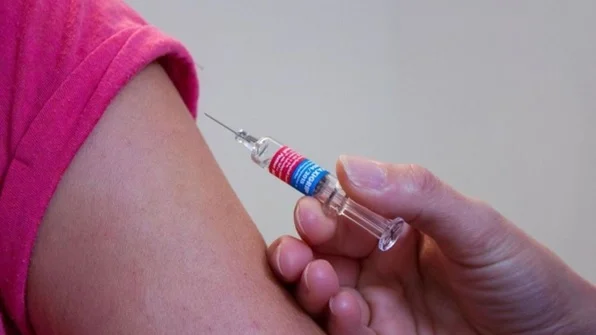
Although the vaccination programme has been running for over four months, Delhi's progress has remained slower than expected.
Major Reasons :
After schools reopened, the Health Department decided to relaunch the campaign with greater involvement of the Education Department.
The Delhi government is adopting a multi-pronged approach to improve vaccination coverage.
The government is focusing on countering misinformation through :
Officials believe that urban populations like Delhi require stronger communication strategies because health misinformation spreads rapidly through social media.
Human Papillomavirus (HPV) is one of the most common viral infections affecting humans.
Most HPV infections disappear naturally, but persistent infection with high-risk strains can develop into cancer over several years.
The HPV vaccine protects against the high-risk HPV types responsible for cervical cancer.
The vaccine works best before exposure to HPV, which is why it is administered to adolescent girls.
India launched the nationwide programme on 28 February 2026.
Girls aged 14 years
Nearly 1.15 crore girls across India
According to GLOBOCAN 2022 estimates published by the International Agency for Research on Cancer (IARC) :
These figures highlight the importance of both HPV vaccination and regular cervical cancer screening.
Despite the availability of an effective vaccine, several challenges remain :
Public awareness remains one of the most important components of successful vaccination programmes.
Schools provide the most effective platform for adolescent immunisation because they enable :
Delhi's renewed strategy therefore places government schools at the centre of the campaign.
|
Parameter |
Data |
|---|---|
|
Programme Launch |
28 February 2026 |
|
Target Group |
Girls aged 14 years |
|
Delhi Vaccinations So Far |
~13,500 doses |
|
New Delhi Target |
1.49 lakh vaccinations in 100 days |
|
National Annual Target |
1.15 crore girls |
|
Cause of Vaccination |
Prevention of Cervical Cancer |
|
Cervical Cancer Cases in India (GLOBOCAN 2022) |
1.2 lakh+ annually |
|
Cervical Cancer Deaths (India) |
~80,000 annually |
|
Main Challenge |
Vaccine hesitancy & misinformation |
|
Key Implementation Agency |
Delhi Health Department with Education Department |
Practice MCQQ. With reference to Human Papillomavirus (HPV), consider the following statements:
Which of the statements given above is/are correct? A. 1 and 2 only Mains Practice QuestionHow can HPV vaccination contribute to reducing India's cervical cancer burden? Discuss the key challenges in achieving universal vaccine coverage and suggest measures to overcome them. |
Frequently Asked Questions (FAQs)1. What is HPV ?Human Papillomavirus (HPV) is a common viral infection. Persistent infection with high-risk HPV types causes nearly all cases of cervical cancer. 2. Who is eligible under India's HPV vaccination programme ?The programme currently targets 14-year-old girls across the country. 3. Why is the HPV vaccine important ?It protects against high-risk HPV infections and significantly reduces the risk of developing cervical cancer later in life. 4. Why is Delhi relaunching the campaign ?Vaccination progress was slower than expected due to school examinations, summer vacations, and vaccine hesitancy. The renewed campaign aims to accelerate coverage through schools. 5. Which international agency publishes global cervical cancer estimates ?The International Agency for Research on Cancer (IARC) publishes GLOBOCAN, which provides global estimates on cancer incidence and mortality. |



Our support team will be happy to assist you!

 Contact Us
  New Batch : 9555124124/ 7428085757
  Tech Support : 9555124124/ 7428085757