
- UPSC Exam
- State PCS
- One Day Exam
- Current Affairs
- PT Quiz
- Downlaods
- About Coaching
- Blog
- Videos

| Prelims: TRAI, Unsolicited Commercial Communications (UCC), Application-to-Person (A2P) Calls, Artificial Intelligence, DND. Mains: GS Paper II—Regulatory bodies and consumer protection; GS Paper III—Technology, telecommunications and digital security. |
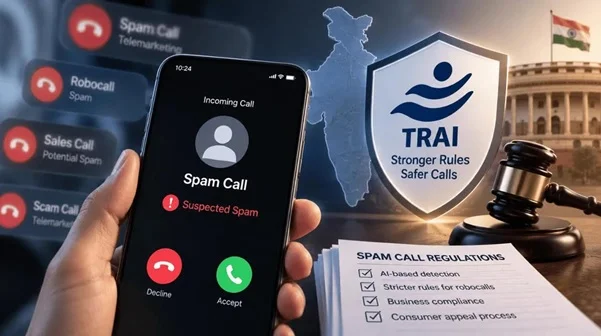
Unsolicited Commercial Communications (UCC) broadly refer to unwanted commercial calls or messages received contrary to the applicable consent and customer-preference requirements.
Application-to-Person calls are calls initiated by an application, software system or automated platform without direct human dialling.
The supplied report includes the following within this category:
|
Calling method |
Meaning |
|---|---|
|
Autodialling |
Software automatically dials telephone numbers. |
|
Robocalls |
Automated systems place calls and deliver messages. |
|
Pre-recorded voice calls |
Recipients hear a previously recorded message. |
|
Artificial voice calls |
Calls use a machine-generated voice. |
Automated calls can serve legitimate purposes, including reminders and service notifications. Their regulatory treatment depends on compliance with the applicable requirements.
The supplied report provides the following figures:
|
Indicator |
Reported figure |
|---|---|
|
Incoming calls during Q1 FY2026–27 |
About 721.79 billion |
|
Calls flagged as suspected spam by AI systems |
22.99 billion |
|
UCC complaints during 2025 |
3.1 million, or 31 lakh |
|
Complaints through the TRAI DND app during 2025 |
1.7 million, or 17 lakh |
|
Notices issued to unregistered telemarketers during 2025 |
More than 7.31 lakh |
These figures measure different things. Flagged calls, complaints and enforcement notices are not interchangeable, and suspected-spam flags do not establish that every call violated the rules.
Prelims MCQsQ. Application-to-Person (A2P) calls are best described as: (a) Calls made exclusively between government departments Mains Practice Question“AI-based spam detection can strengthen consumer protection, but its effectiveness depends on accountability and procedural safeguards.” Discuss in the context of telecom regulation in India. |
1. What is the purpose of anti-spam regulation?It seeks to protect consumers from unwanted commercial communication while allowing legitimate communication under the applicable rules. 2. Are all automated calls spam?No. Automated calls may serve legitimate purposes. Their compliance depends on applicable consent, disclosure and other regulatory requirements. 3. Why should telecom operators share information about suspicious numbers?Information sharing can help detect activity spread across networks and support coordinated enforcement. 4. Why is an appeal mechanism necessary?It allows incorrect spam classifications to be reviewed and helps protect legitimate communication from unjustified restrictions. |
|
Prelims: Meenakshi Sundareswarar Temple, Kumbabhishekam, Theertham, Kalasams, Gopurams, Vimanams, Yagasala Puja, Veera Vasantharayar Mandapam, Temple Consecration. |
Thousands of devotees gathered at the Sri Meenakshi Sundareswarar Temple in Madurai on Thursday to witness the Kumbabhishekam (consecration) ceremony, held after a gap of 17 years. The previous Kumbabhishekam was conducted in April 2009.
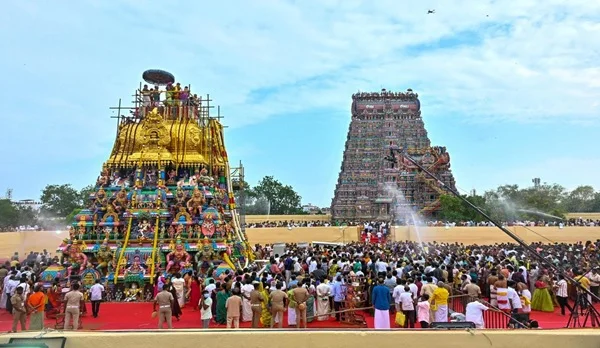
The arrangements were made to ensure the safety of devotees and the smooth conduct of the ceremony.
Prelims Practice QuestionQ.1. Madurai Meenakshi Temple, where Kumbabhishekam was recently held after 17 years, is located in which state? A. Kerala Mains Practice QuestionQ. Discuss the religious, cultural and heritage significance of the Meenakshi Sundareswarar Temple in Madurai. Also explain the importance of Kumbabhishekam in temple traditions. |
1. What is Kumbabhishekam?Kumbabhishekam is a Hindu temple consecration ceremony in which sacred water is poured over the kalasams located on temple towers and other important structures. 2. Where is the Meenakshi Sundareswarar Temple located?The temple is located in Madurai, Tamil Nadu. 3. After how many years was the Kumbabhishekam held?The Kumbabhishekam was held after a gap of 17 years. The previous ceremony took place in April 2009. 4. What is Theertham?Theertham refers to sacred or holy water used in Hindu religious rituals. During the Kumbabhishekam, theertham is ceremonially poured over the temple kalasams. 5. What is the significance of the Meenakshi Temple?The Meenakshi Sundareswarar Temple is an important centre of Tamil religious tradition, architecture, art and culture and is one of the prominent heritage landmarks of Madurai. |
| Prelims: Polity & Governance / Public Health, Drugs Rules, 1945; Schedule H, H1 and X Drugs; DTAB; DCC; Drug Regulation in India Mains: GS Paper II Issues relating to development and management of the health sector; Government policies and interventions; Regulatory governance Keywords: Drugs Rules, 1945, G.S.R. 791(E), Schedule H, Schedule H1, Schedule X, CCTV Surveillance, Medical Stores, Registered Medical Practitioner, DTAB, DCC, CDSCO, Prescription Drugs, Antimicrobial Resistance, Drug Regulation |

Schedule H: Schedule H broadly covers prescription-only medicines that cannot be sold at retail without a prescription from a Registered Medical Practitioner. Their labels carry the Rx symbol and prescribed statutory warnings.
Schedule H1: Schedule H1 was introduced to impose stricter controls on certain medicines, including several antibiotics, anti-tuberculosis medicines and some habit-forming drugs.
Schedule X: Schedule X medicines are subject to comparatively stringent controls. Under the Drugs Rules, Schedule X medicines sold at retail require a prescription, and the prescription is required in duplicate, with one copy retained by the licensee for two years. Schedule X medicines kept at retail premises are also subject to special storage requirements, including storage under lock and key or in a restricted area.
Significance of the Proposed Amendment
India has one of the world's largest pharmaceutical markets and a very large network of retail pharmacies. Easy access to medicines is important for healthcare delivery, but unrestricted availability of prescription drugs can contribute to:
Therefore, the proposed CCTV mechanism represents an attempt to balance access to medicines with stronger regulatory compliance and patient safety.
Prelims MCQsQ. With reference to the proposed amendment to the Drugs Rules, 1945 in 2026, consider the following statements:
Which of the statements given above are correct? A. 1 and 2 only Mains Question“Technology-based surveillance can strengthen drug regulation, but it must be supported by effective enforcement and privacy safeguards.” Discuss in the context of the proposed amendment to the Drugs Rules, 1945 regarding CCTV surveillance at medical stores. |
What has the Union Health Ministry proposed?The Ministry has proposed amending the Drugs Rules, 1945 to require CCTV surveillance at licensed premises supplying prescription medicines. Which medicines are primarily affected?The regulatory concern particularly relates to medicines covered under Schedules H, H1 and X, which are subject to prescription and other controls. How long will CCTV recordings have to be preserved?The draft proposes a minimum retention period of three months. Has the rule already become mandatory?No. G.S.R. 791(E) is a draft notification. The final requirement will take effect only after final rules are notified by the government. Why is the government introducing CCTV surveillance?The objective is to strengthen monitoring, prevent unauthorised sale of prescription medicines and improve transparency and accountability in the pharmaceutical supply chain. What is the role of DTAB?The Drugs Technical Advisory Board is a statutory technical advisory body dealing with matters relating to drug regulation. In this case, the proposal was placed before DTAB, which recommended approval. |
|
Prelims: Economic and Social Development; Government Schemes and Initiatives. |
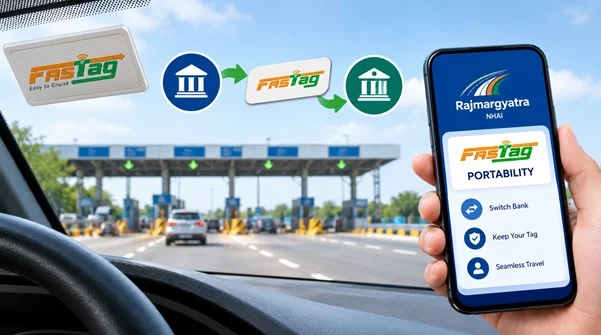
The OneTag facility adds to the existing services available through the Rajmargyatra platform.
These include:
The OneTag facility is expected to make FASTag management easier for vehicle owners.
Its key benefits include:
NHAI's OneTag is a new FASTag portability facility that allows users to change their issuer bank without replacing the FASTag attached to their vehicle. By simplifying the issuer-switching process, the initiative aims to improve customer convenience and reduce unnecessary FASTag replacement.
Prelims Practice QuestionQ1. With reference to NHAI’s OneTag service, consider the following statements:
Which of the statements given above is/are correct? A. 1 and 2 only Mains Practice QuestionQ. How can FASTag portability services such as OneTag improve digital governance and transport infrastructure in India? Discuss. |
1. What is OneTag?OneTag is a FASTag portability service launched by NHAI on the Rajmargyatra app. It allows eligible users to change their FASTag issuer bank without replacing the physical FASTag. 2. How can users check their eligibility for OneTag?Users can enter their vehicle registration number on the Rajmargyatra app to check eligibility. 3. Does the physical FASTag need to be replaced?No. Users can continue using the existing physical FASTag after successful portability. 4. Does the FASTag identification number change?No. The FASTag identification number linked to the vehicle registration remains unchanged. 5. What happens to the old FASTag wallet?The previous issuer closes the existing wallet and refunds the available balance after applicable adjustments. |
| Prelims: World Economic Forum, Global Gender Gap Index, its four dimensions, India's rank and leading countries. Mains: GS Paper II: Women-related issues, welfare schemes, social justice, representation of women and vulnerable sections. GS Paper III: Inclusive growth, employment, human capital and economic participation. |
India has retained the 131st position out of 145 economies in the Global Gender Gap Index 2026, released by the World Economic Forum (WEF) on September 16, 2026.

|
Report |
Global Gender Gap Report 2026 |
|
Released by |
World Economic Forum (WEF) |
|
Index launched |
2006 |
|
2026 edition |
20th edition |
|
Economies covered |
145 |
|
India's rank |
131st |
|
India's overall parity |
64.5% |
|
Global parity |
69.2% |
|
Rank |
Iceland followed by Finland, Norway |
|
Iceland's score |
93% |
|
Lowest ranked |
Chad |
|
Estimated time to global parity |
120 years |
|
Four dimensions |
Economic Participation and Opportunity, Educational Attainment, Health and Survival, and Political Empowerment |
Prelims MCQQ. With reference to the Global Gender Gap Index 2026, consider the following statements:
Which of the statements given above are correct? A. 1 and 2 only B. 1, 2 and 3 only C. 2, 3 and 4 only D. 1, 2, 3 and 4 Mains Practice QuestionQ. Despite achieving near gender parity in education, India continues to face significant gaps in women's economic and political participation. Discuss. |
Who releases the Global Gender Gap Index?The World Economic Forum (WEF). What is India's rank in the Global Gender Gap Index 2026?India ranks 131st out of 145 economies. Which country topped the 2026 Index?Iceland, with about 93% gender parity. What is India's overall gender parity score?India has closed approximately 64.5% of its gender gap. When was the Global Gender Gap Index introduced?It was introduced in 2006. |
|
Prelims: GIFT City, International Financial Services Centre (IFSC), Global Financial Centres Index, FinTech. |
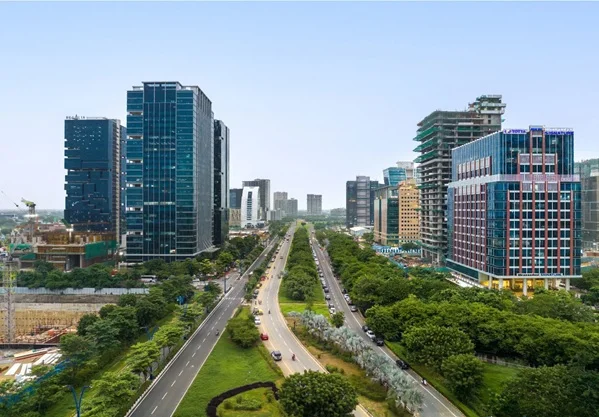
The Global Financial Centres Index (GFCI) is a global ranking that assesses the competitiveness of financial centres.
The index considers several factors, including:
The latest edition is based on 144 instrumental factors, 39,531 assessments and responses from 6,147 participants.
GIFT City plans to focus on:
The GFCI report highlighted several areas that are expected to become increasingly important for financial centres over the next five years.
These include:
The improvement in GIFT City's global ranking shows the growing role of India's financial services sector.
A stronger GIFT City can help India:
The improvement in GIFT City's GFCI ranking highlights the growing role of India's International Financial Services Centre in the global financial ecosystem. Its future development will depend on stronger digital infrastructure, financial innovation, international connectivity and a robust regulatory framework.
Prelims Practice QuestionQ1. Consider the following statements regarding GIFT City:
Which of the statements given above is/are correct? A. 1 and 2 only Mains Practice QuestionQ. Discuss the significance of GIFT City's growing position in the global financial services sector. What measures can help India develop it as a globally competitive financial hub? |
Q1. What is GIFT City?GIFT City stands for Gujarat International Finance Tec-City. It is located in Gandhinagar, Gujarat, and is being developed as an international financial and technology hub. Q2. What is the latest global ranking of GIFT City?GIFT City has moved up nine places to 37th globally in the Global Financial Centres Index (GFCI 40). Q3. What is GFCI?The Global Financial Centres Index ranks financial centres around the world based on factors such as financial services, technology, skilled professionals, regulations and digital infrastructure. Q4. What is GIFT City's FinTech ranking?GIFT City has improved to 26th globally in FinTech, from 29th in the previous edition. Q5. Why is GIFT City important for India?It can help India attract international financial companies and investment, promote FinTech and support cross-border financial activities from an Indian financial hub. |

Our support team will be happy to assist you!

 Contact Us
  New Batch : 9555124124/ 7428085757
  Tech Support : 9555124124/ 7428085757

