- UPSC Exam
- State PCS
- One Day Exam
- Current Affairs
- PT Quiz
- Downlaods
- About Coaching
- Blog
- Videos



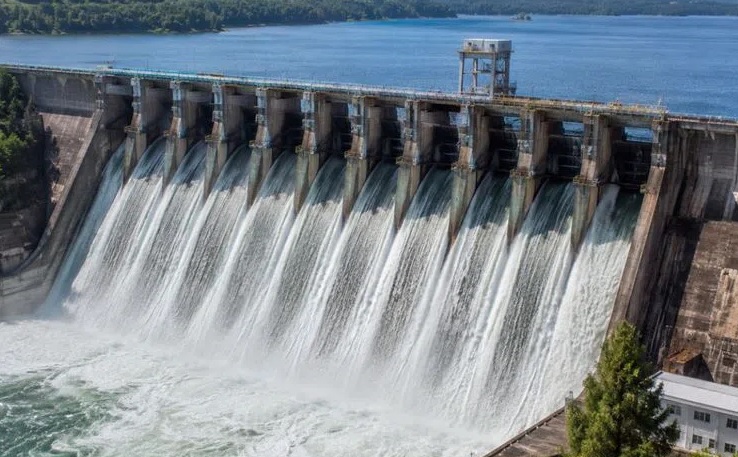
However, a significant proportion of India’s dam infrastructure is ageing rapidly.
India’s oldest operational dam is Kallanai (Grand Anicut) located in Tamil Nadu, which has remained functional for nearly 2,000 years and continues to support irrigation activities.
Many dams in India were constructed decades ago and are now approaching or exceeding their intended design life.
Ageing infrastructure increases :
The deterioration of civil structures, gates, spillways and foundations makes rehabilitation increasingly necessary.
Sedimentation has emerged as one of the most significant threats affecting reservoir performance and storage efficiency.
A study conducted by the Central Water Commission (CWC) covering 439 reservoirs found that :
Reduction in storage capacity adversely affects :
Several dams in India are situated in earthquake-prone regions, making seismic safety an important concern.
For example, during the 2001 Bhuj Earthquake in Gujarat, liquefaction occurred in the foundation area of Chang Dam, highlighting the vulnerability of dam infrastructure to seismic events.
Earthquakes may result in :
Climate change has significantly altered hydrological conditions.
Challenges include :
These developments require dams to be managed under more dynamic and risk-based operational systems.
The first phase of DRIP was implemented between 2012 and 2021.
It covered 223 dams located across seven states, namely :
Major interventions included :
The phase also introduced the Dam Health and Rehabilitation Monitoring Application (DHARMA).
The second and third phases began operations in October 2021 and substantially expanded programme coverage.
Together, they include:736 dams ,19 states ,Three central agencies
The participating central agencies are :
The total financial allocation for DRIP stands at ₹10,211 crore.
Funding pattern includes :
Major dams undergoing rehabilitation include :
As of March 2025 :
A major milestone in dam governance was achieved with the implementation of the Dam Safety Act, 2021, which came into force in December 2021.
The Act provides a nationwide legal framework governing :
The objective is to prevent dam failures and improve safety standards.
A specified dam under the Act refers to :
The Act established a comprehensive institutional framework consisting of :
All 31 dam-owning states have established State Dam Safety Organisations responsible for inspections, compliance and monitoring.
The Act mandates :
The law transformed dam safety from an advisory framework into a legally enforceable governance mechanism.
Technology has become the foundation of India’s evolving dam safety ecosystem.
DHARMA functions as a digital monitoring platform and now contains information related to all 6,628 specified dams.
The platform facilitates :
Authorities conduct approximately 13,000 dam inspections every year, and inspection findings are digitally documented through DHARMA.
Rapid Risk Screening exercises have already been completed for 5,553 dams using web-based analytical tools.
Objectives include :
The government is also promoting installation of :
These technologies improve disaster preparedness and real-time operational monitoring.
India is strengthening scientific research related to dam safety.
A National Centre for Earthquake Safety of Dams is being established at Malaviya National Institute of Technology Jaipur.
Additionally, Centres of Excellence are being developed at :
Research areas include :
The new regulatory framework imposes responsibilities on dam owners, including :
Dam owners must now :
From April 2024, dams are classified into three categories :
Category I : Dams having critical deficiencies requiring immediate intervention.
Category II : Dams having major deficiencies requiring corrective measures.
Category III : Dams having minor deficiencies or satisfactory conditions.
According to post-monsoon inspections conducted in 2025 :
The Act also provides penalties including imprisonment and fines where negligence creates threats to life or public safety.
India’s dam policy is increasingly shifting away from constructing new infrastructure towards :
The combined implementation of :
is helping India establish a modern, technology-driven and data-based dam safety ecosystem.
These reforms are expected to reduce disaster risks while strengthening water security, agricultural sustainability, energy generation capacity and long-term resilience of critical infrastructure across the country.

A study published in PLoS Biology on 7 May 2026 has developed an advanced DNA-based genetic mapping system (“DNA maps”) that can identify the geographic origin and trafficking routes of illegally traded pangolins, while also revealing international trafficking corridors including networks linked to northeastern India around Arunachal Pradesh and Assam feeding routes towards Yunnan in China.
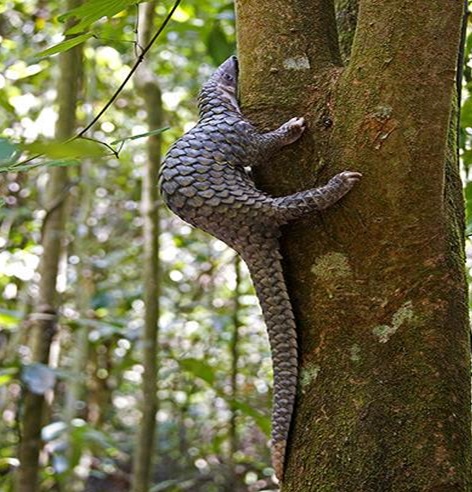
The study challenged the traditional assumption that domestic pangolin trade and international trafficking operate independently, revealing instead that the same source areas frequently supply both local markets and international smuggling networks.
Researchers found that pangolins involved in domestic trade are transported an average distance of around 454 km from their original habitat, indicating the existence of organised local supply chains before the animals enter international trafficking routes.
The study further identified three major international trafficking hotspots:
|
Species |
Major Trafficking Hub |
|
White-bellied Pangolin |
Southwestern Cameroon |
|
Sunda Pangolin |
Southwestern Borneo |
|
Chinese Pangolin |
Myanmar region |
Researchers also observed that traffickers often collect scales from multiple nearby pangolin populations and consolidate them before exporting them internationally, mainly towards consumer markets in China and Vietnam.
The pangolin is one of the world's most unique and mysterious creatures. It is the only mammal with hard scales made of keratin—the same keratin that makes up our nails and hair.

Our support team will be happy to assist you!

 Contact Us
  New Batch : 9555124124/ 7428085757
  Tech Support : 9555124124/ 7428085757