New
Civil Services Day Offer - Valid Till : 23rd April GS Foundation (P+M) - Delhi : 4th May 2026, 6:30 AM GS Foundation (P+M) - Prayagraj : 1st May 2026, 8:30PM Civil Services Day Offer - Valid Till : 23rd April GS Foundation (P+M) - Delhi : 4th May 2026, 6:30 AM GS Foundation (P+M) - Prayagraj : 1st May 2026, 8:30PM

Current Affairs for 20 April 2026

What is Female Labour Force Participation in India and What are the Key Challenges, Trends and Policy Implications?

Prelims : Economy + CA
Mains : GS Paper 1 – Role of Women; GS Paper 3 – Inclusive Growth; Employment

Why in News ?

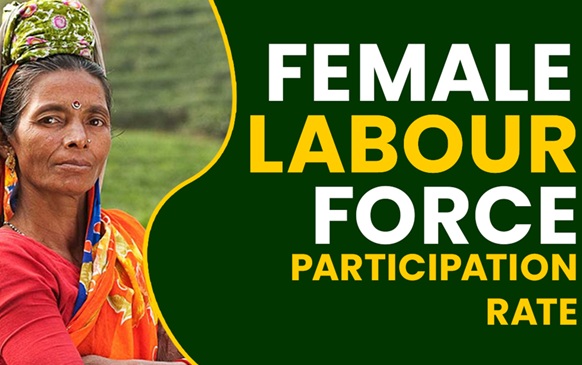
Female Labour Force Participation (FLFP) in India has shown a noticeable increase in recent years, especially after 2017–18, according to periodic labour force surveys. However, this rise has generated significant debate among economists and policymakers because the increase does not necessarily reflect a proportional improvement in the quality of employment or women’s economic empowerment.
A closer examination reveals that :

  • A large proportion of women entering the labour force are engaged in low-productivity, informal, or unpaid family work, particularly in rural areas
  • The rise in participation is often associated with economic distress, where households require additional income sources, compelling women to take up any available work
  • Structural issues such as gender norms, safety concerns, lack of suitable jobs, and unpaid care responsibilities continue to constrain women’s participation

Thus, while the data suggests improvement, it also highlights the need to differentiate between quantitative increase and qualitative transformation in women’s employment.

What is Female Labour Force Participation (FLFP) ?

Female Labour Force Participation refers to the proportion of women in the working-age population who are either employed or actively seeking employment.

  • It includes women engaged in :
    • Regular salaried employment
    • Self-employment
    • Casual labour
    • Unpaid family work contributing to economic activity
  • It is a critical indicator of :
    • Gender equality and women’s empowerment
    • Inclusiveness of economic growth
    • Efficiency in utilisation of a country’s human capital

A high FLFP is generally associated with greater autonomy, improved household welfare, and higher economic productivity, making it a key development parameter.

Trends in Female Labour Force Participation in India

1. Long-Term Decline Followed by a Recent Rise

  • India witnessed a steady decline in FLFP from around 31% in 2011–12 to approximately 23% in 2017–18, despite strong economic growth during this period.
  • This decline puzzled economists because growth typically leads to increased employment opportunities.

In recent years :

  • FLFP has risen significantly, especially in rural India
  • However, the nature of this increase is crucial:
    • Many women have shifted from unpaid domestic work to subsistence-level economic activities
    • There is a rise in self-employment and unpaid family work, rather than formal salaried jobs

This suggests that the increase is not entirely a result of expanding job opportunities, but rather compelled participation due to economic necessity.

2. Pronounced Rural-Urban Divide

  • Rural areas exhibit higher female labour force participation compared to urban areas.

This is because :

  • Rural women are often involved in agriculture, livestock rearing, and family-based enterprises
  • Economic necessity in rural households compels women to contribute to income generation

In contrast, urban areas show :

  • Lower participation due to higher educational attainment and aspirations
  • Limited availability of suitable, flexible, and safe employment opportunities
  • Greater influence of social norms restricting women’s participation

Thus, rural participation is higher but largely informal and low-paying, while urban participation is lower but relatively more formal.

3. Sectoral Concentration and Structural Imbalance

  • A large proportion of women are concentrated in :
    • Agriculture (often as unpaid or marginal workers)
    • Informal sector activities
    • Household-based enterprises
  • Participation in :
    • Manufacturing
    • Formal services
    • High-skill sectors

remains disproportionately low.

This reflects a structural mismatch where economic growth in sectors such as services and manufacturing has not translated into adequate employment opportunities for women.

4. Nature and Quality of Employment

  • A significant share of working women are :
    • Self-employed in low-productivity activities
    • Engaged as unpaid helpers in family enterprises
    • Working in casual labour without job security
  • Only a small proportion of women are employed in :
    • Regular salaried jobs
    • Formal sector roles with social security

This indicates that job quality remains a major concern, limiting the transformative impact of increased participation.

Key Factors Affecting Female Labour Force Participation

1. Deep-Rooted Socio-Cultural Norms

  • Traditional gender roles assign women primary responsibility for :
    • Household work
    • Childcare and eldercare
  • Social expectations often discourage women from :
    • Working outside the home
    • Pursuing long-term careers

These norms create invisible barriers that restrict women’s entry and continuity in the workforce.

2. Education and the “U-Shaped Relationship”

  • Female labour participation often follows a U-shaped curve with education :
    • Low participation among moderately educated women
    • Higher participation among highly educated women
  • Many educated women withdraw from the workforce due to :
    • Lack of suitable jobs matching their qualifications
    • Social expectations regarding marriage and family roles

This leads to a paradox where education does not always translate into employment for women.

3. Safety and Mobility Constraints

  • Concerns about safety in public spaces and workplaces significantly limit women’s mobility
  • Inadequate public transport and infrastructure further restrict access to jobs

This is particularly evident in urban areas, where safety concerns often discourage women from participating in the workforce.

4. Lack of Suitable Employment Opportunities

  • India’s economic growth has been relatively capital-intensive rather than labour-intensive
  • Limited availability of :
    • Flexible working arrangements
    • Part-time jobs
    • Work-from-home opportunities

This reduces the ability of women to balance professional and domestic responsibilities.

5. High Informality and Wage Inequality

  • Women are disproportionately represented in informal employment with :
    • Low wages
    • No job security
    • Absence of social protection
  • Persistent gender wage gaps discourage long-term workforce participation

6. Marriage, Fertility, and Care Burden

  • Marriage and childbirth often lead to a sharp decline in women’s workforce participation
  • Lack of institutional support such as childcare services increases the burden of unpaid work

Government Initiatives to Improve FLFP

1. Skill Development Programmes

  • Focus on enhancing employability through vocational training and skill-building initiatives

2. Promotion of Women’s Entrepreneurship

  • Support through Self-Help Groups and microfinance initiatives
  • Encourages financial inclusion and self-employment

3. Labour Law Reforms and Workplace Policies

  • Provisions for maternity benefits and workplace safety
  • Encouragement of gender-inclusive workplaces

4. Infrastructure and Mobility Support

  • Initiatives aimed at improving safety and accessibility of transport
  • Enhancing women’s mobility

Significance of Increasing FLFP

1. Accelerating Economic Growth

  • Greater participation of women can significantly increase GDP
  • Leads to better utilisation of human capital

2. Advancing Gender Equality

  • Economic independence enhances decision-making power
  • Reduces gender disparities

3. Poverty Reduction and Social Welfare

  • Dual-income households improve living standards
  • Enhances resilience to economic shocks

4. Harnessing Demographic Dividend

  • Ensures effective utilisation of India’s large working-age population

Challenges

1. Poor Quality of Employment

  • Increase in participation is not matched by secure and well-paying jobs

2. Persistent Gender Inequality

  • Wage gaps and occupational segregation continue

3. Structural and Institutional Barriers

  • Social norms, lack of childcare, and inadequate infrastructure

4. Measurement Issues

  • Difficulty in capturing unpaid and informal work accurately

Way Forward

1. Creating High-Quality Jobs

  • Promote labour-intensive sectors
  • Encourage formalisation of employment

2. Improving Safety and Infrastructure

  • Strengthen public transport and workplace safety measures

3. Expanding Care Economy

  • Establish affordable childcare and eldercare facilities
  • Recognise and reduce unpaid care work

4. Promoting Social Change

  • Encourage shared household responsibilities
  • Address gender stereotypes through education

5. Targeted Skill Development

  • Focus on emerging sectors such as digital economy and services

Practice Questions

Prelims

Q. Female Labour Force Participation Rate refers to :
(a) Percentage of women in population
(b) Percentage of women working in government jobs
(c) Percentage of women employed or seeking employment
(d) Percentage of women in agriculture

Mains

“An increase in female labour force participation does not necessarily indicate empowerment unless accompanied by quality employment.” Critically examine.

FAQs

Q1. What does FLFP indicate ?

It measures women’s participation in the workforce.

Q2. Has FLFP improved in India ?

Yes, but largely due to informal and low-quality employment.

Q3. What is the main issue ?

Lack of quality jobs and structural barriers.

Q4. Why is FLFP important ?

It drives economic growth and gender equality.

Q5. What is needed for improvement ?

Better jobs, safety, childcare support, and social change.

What is Israel’s ‘Yellow Line’ and How is it Transforming Conflict Strategy in West Asia?

Prelims : International Relations + Geography + CA
Mains : GS Paper 2 – India and its Neighbourhood; GS Paper 3 – Security; Internal Security & Defence

Why in News ?

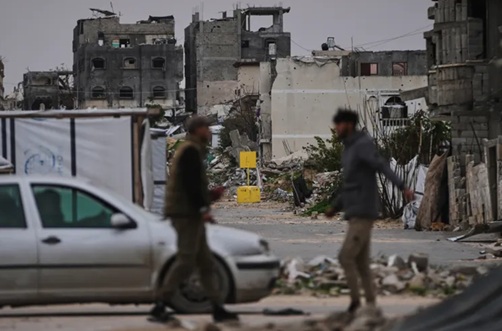
Israel’s evolving concept of the “Yellow Line” has emerged as a significant development in contemporary conflict strategy, particularly in the context of its operations in Gaza and its extension into southern Lebanon in 2026.

  • Israel has reportedly established a militarised buffer zone extending several kilometres inside southern Lebanon, marking a shift from border defence to forward territorial control
  • The move has been criticised by Lebanon and non-state actors like Hezbollah, who view it as a violation of sovereignty and ceasefire arrangements
  • The development reflects a broader transformation in Israel’s military doctrine, emphasising pre-emptive defence, spatial control, and long-term security dominance beyond its recognised borders

This concept is increasingly important as it represents a new model of warfare where physical control of territory is used as a preventive security mechanism.
What is the ‘Yellow Line’ ?

The “Yellow Line” is a military-imposed demarcation or buffer zone created by Israeli forces inside conflict territories to establish a controlled security perimeter.

  • It is not a legally recognised international boundary but rather a tactical and operational line defined by military presence and control
  • It demarcates :
    • Areas under direct Israeli military control and surveillance
    • Areas beyond which perceived threats are expected to originate

Unlike conventional borders, the Yellow Line is :

  • Flexible and expandable, depending on the intensity of conflict
  • Enforced through military means rather than diplomatic agreements
  • Often treated as a high-risk exclusion zone, where civilian movement is heavily restricted or prohibited

In essence, it represents a shift from territorial defence to territorial domination as a means of ensuring security.

Origin and Evolution of the Yellow Line

1. Emergence During the Gaza Conflict (2025)

  • The concept first gained prominence during Israel’s military operations in Gaza in 2025
  • Israeli forces established a visible demarcation line, often marked by barriers and painted structures, dividing the region into zones of control

This division effectively :

  • Segregated Israeli-controlled areas from those outside its immediate authority
  • Enabled systematic surveillance and monitoring of movement
  • Restricted civilian access to large parts of the territory

This marked a transition toward physically enforced spatial control within densely populated conflict zones.

2. Expansion into Southern Lebanon (2026)

  • In 2026, Israel extended the Yellow Line concept into southern Lebanon, creating a buffer zone inside foreign territory
  • The zone is designed to act as a protective barrier between Israeli borders and hostile groups operating in the region

This expansion is significant because :

  • It represents the externalisation of Israel’s defence perimeter beyond its borders
  • It introduces a similar control model in multiple theatres of conflict

Key Features of the Yellow Line Strategy

1. Shift to Forward Defence Doctrine

  • Traditional defence strategies rely on protecting national borders from within
  • The Yellow Line reflects a shift toward forward defence, where threats are neutralised before reaching the border

This approach:

  • Pushes the conflict zone away from civilian areas within Israel
  • Allows early detection and interception of threats
  • Reduces response time in case of hostile activity

2. Creation of a Militarised Buffer Zone

  • The area along the Yellow Line is heavily militarised, featuring :
    • Continuous troop deployment
    • Advanced surveillance systems such as drones and sensors
    • Fortified positions and checkpoints
  • Civilians are often :
    • Displaced from these zones
    • Restricted from returning due to security concerns

This transforms the buffer zone into a controlled security corridor with minimal civilian presence.

3. Establishment of High-Control or “Free-Fire” Zones

  • Areas near the Yellow Line are frequently treated as high-threat zones
  • Any unauthorised movement may be considered hostile, leading to strict enforcement measures

This creates :

  • A deterrence effect against militant infiltration
  • Significant risks for civilians due to the blurred distinction between combatants and non-combatants

4. Permanent or Semi-Permanent Infrastructure

  • Unlike temporary military deployments, the Yellow Line involves :
    • Construction of defensive infrastructure
    • Establishment of observation posts and logistical bases

This indicates an intention for long-term presence rather than short-term tactical deployment.

5. Spatial Segmentation of Conflict Zones

  • The Yellow Line divides territories into :
    • Controlled zones under Israeli influence
    • Uncontrolled or contested zones beyond

This segmentation allows :

  • Better monitoring and regulation of movement
  • Strategic dominance over key geographical areas

Strategic Objectives Behind the Yellow Line

1. Preventing Militant Regrouping and Infiltration

  • By maintaining control over buffer zones, Israel aims to :
    • Prevent militant groups such as Hamas and Hezbollah from reorganising near its borders
    • Disrupt supply lines and communication networks

2. Creating Strategic Depth

  • Strategic depth refers to the distance between the frontline and critical population centres

The Yellow Line :

  • Expands this distance
  • Provides additional reaction time during attacks
  • Enhances defensive resilience

3. Establishing De Facto Territorial Control

  • Although not officially annexed, areas within the Yellow Line come under effective Israeli control
  • Over time, such zones may evolve into informal boundaries influencing political negotiations

4. Enhancing Deterrence Capability

  • Demonstrates Israel’s willingness to :
    • Maintain aggressive forward positions
    • Impose costs on adversaries

This psychological dimension strengthens deterrence.

Implications for West Asian Geopolitics

1. Sovereignty Concerns

  • The presence of Israeli forces inside Lebanese territory is viewed as a violation of national sovereignty
  • It raises questions about the legitimacy of unilateral security measures

2. Strain on Ceasefire Agreements

  • The creation of buffer zones may :
    • Undermine existing ceasefire arrangements
    • Trigger retaliatory actions by non-state actors

3. Humanitarian Impact

  • Displacement of civilian populations
  • Loss of access to homes, agricultural land, and livelihoods
  • Increased vulnerability due to proximity to militarised zones

4. Risk of Escalation

  • High militarisation increases the likelihood of :
    • Accidental clashes
    • Rapid escalation into larger conflicts

5. Evolution of Modern Warfare

  • The Yellow Line reflects a broader trend where :
    • Territorial control is used as a preventive strategy
    • Conflicts are managed through controlled spatial dominance rather than clear frontlines

Comparison with Other Demarcation Lines

  • Unlike traditional ceasefire lines or borders, such as the Green Line, which are politically negotiated,
  • The Yellow Line is :
    • Unilateral
    • Militarily enforced
    • Flexible and subject to change

This highlights a shift from legal boundaries to operational control zones.

Criticism and Concerns

1. Questions of Legality

  • Critics argue that such actions may violate :
    • International law
    • Principles of territorial sovereignty

2. Civilian Displacement and Hardship

  • Large populations may be displaced
  • Restricted access to basic resources affects livelihoods

3. Ambiguity and Uncertainty

  • Lack of clearly defined boundaries creates confusion
  • Civilians may unknowingly enter high-risk zones

4. Sustainability Challenges

  • Maintaining buffer zones requires :
    • Continuous military deployment
    • Significant financial and logistical resources

Way Forward

1. Diplomatic Engagement

  • Encourage dialogue between Israel and neighbouring countries
  • Strengthen mechanisms for conflict resolution

2. International Monitoring

  • Increase role of global institutions in monitoring compliance with international law

3. Protection of Civilians

  • Ensure humanitarian safeguards in conflict zones
  • Facilitate safe return and rehabilitation of displaced populations

4. De-escalation Strategies

  • Promote confidence-building measures
  • Reduce dependence on militarised buffer zones

Practice Questions

Prelims

Q. The “Yellow Line” refers to :
(a) An internationally recognised boundary
(b) A military buffer zone established by Israel
(c) A maritime trade route
(d) A UN peacekeeping corridor

Mains

“Emerging military doctrines such as Israel’s ‘Yellow Line’ indicate a shift towards spatial control and pre-emptive defence in modern warfare.” Critically analyse.

FAQs

Q1. What is the Yellow Line ?

It is a military demarcation line marking areas under Israeli control.

Q2. Why was it created ?

To establish a buffer zone and prevent militant threats.

Q3. Where is it used ?

Initially in Gaza and later extended to southern Lebanon.

Q4. Why is it controversial ?

It raises issues of sovereignty, legality, and humanitarian impact.

Q5. Why is it important for UPSC ?

It reflects evolving conflict strategies and geopolitical dynamics in West Asia.

What is Pradhan Mantri Gram Sadak Yojana (PMGSY) and How Has It Transformed Rural Connectivity in India?

Prelims : Governance + CA
Mains : GS Paper 2 – Governance; GS Paper 3 – Infrastructure; Inclusive Growth

Why in News ?

The Pradhan Mantri Gram Sadak Yojana (PMGSY) continues to remain in focus due to :

  • Ongoing implementation of PMGSY Phase III and IV, aimed at strengthening rural infrastructure
  • Expansion of road connectivity to remote and strategically important areas, including Left Wing Extremism (LWE)-affected regions and hilly terrains
  • Renewed emphasis on quality, sustainability, and economic integration of rural areas through better road networks

The scheme is increasingly being viewed not just as an infrastructure programme but as a critical driver of rural transformation and inclusive development.
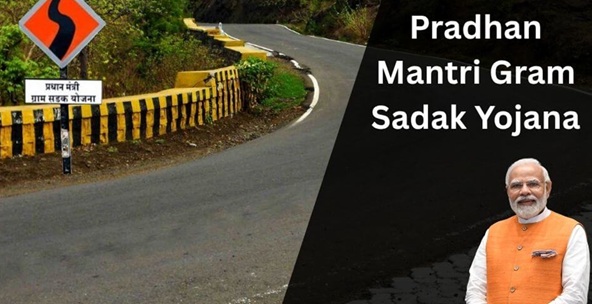
What is Pradhan Mantri Gram Sadak Yojana (PMGSY) ?

PMGSY is a flagship rural infrastructure scheme launched in 2000 with the primary objective of providing all-weather road connectivity to unconnected rural habitations.

  • It is a Centrally Sponsored Scheme implemented by the Ministry of Rural Development in coordination with state governments
  • The scheme focuses on ensuring that even the most remote villages are connected to the broader economic and social network of the country
  • The concept of “habitation” (not village or panchayat) is central to the scheme, referring to a cluster of population that remains stable over time

At its core, PMGSY aims to bridge the rural-urban divide by improving physical connectivity, thereby enabling access to essential services and economic opportunities.

Objectives of PMGSY

1. Providing All-Weather Road Connectivity

  • The primary objective is to ensure that rural habitations are connected through all-weather roads, which remain functional throughout the year
  • This reduces isolation caused by seasonal disruptions such as monsoons

2. Enhancing Access to Essential Services

  • Improved connectivity enables rural populations to access :
    • Healthcare facilities
    • Educational institutions
    • Administrative services

This contributes to human development and social inclusion.

3. Promoting Economic Integration

  • Roads facilitate access to :
    • Markets
    • Employment opportunities
    • Financial services

This helps integrate rural economies with regional and national markets, boosting income generation.

4. Reducing Poverty and Regional Disparities

  • By connecting remote areas, PMGSY aims to :
    • Reduce geographical inequalities
    • Promote balanced regional development

Key Features of the Scheme

1. Population-Based Eligibility Criteria

  • Initially targeted :
    • Habitations with population of 500+ in plains
    • 250+ in hilly, tribal, and desert areas
  • Relaxation for LWE-affected areas to include smaller habitations

2. Core Network Approach

  • Development is based on a Core Network, which identifies the most essential roads required to connect habitations
  • Ensures optimal utilisation of resources and avoids duplication

3. Quality Control Mechanism

  • Multi-tier quality monitoring system :
    • State-level checks
    • National-level independent quality monitors

This ensures durability and standardisation of roads.

4. Use of Technology

  • Implementation supported by digital systems for :
    • Monitoring progress
    • Financial tracking
    • Transparency

This enhances accountability and efficiency.

5. Focus on Sustainability

  • Increasing emphasis on :
    • Green technologies
    • Use of recycled materials
    • Climate-resilient infrastructure

Phases of PMGSY

1. PMGSY Phase I (2000)

  • Focused on providing connectivity to unconnected habitations
  • Fully funded by the central government
  • Targeted large-scale expansion of rural road networks

2. PMGSY Phase II (2013)

  • Shifted focus from new connectivity to upgradation of existing rural roads
  • Aimed at improving quality and efficiency of rural connectivity

3. PMGSY Phase III (2019)

  • Focus on consolidation of rural road networks
  • Connecting :
    • Agricultural markets
    • Schools
    • Healthcare centres

This phase emphasises economic integration rather than mere connectivity.

4. PMGSY Phase IV (Ongoing)

  • Focus on :
    • Connectivity in remote and difficult terrains
    • Strategic and border areas
  • Emphasis on long-term sustainability and resilience

Significance of PMGSY

1. Transforming Rural Economy

  • Roads reduce transportation costs and time
  • Enable farmers to access markets, leading to better price realisation
  • Promote diversification of rural livelihoods

2. Improving Social Indicators

  • Better access to :
    • Schools improves literacy rates
    • Healthcare facilities reduces mortality rates

This contributes to overall human development.

3. Enhancing Employment Opportunities

  • Facilitates :
    • Non-farm employment
    • Migration to nearby towns for jobs

4. Strengthening Disaster Response

  • Road connectivity ensures :
    • Faster evacuation
    • Efficient delivery of relief during disasters

5. Promoting National Integration

  • Connects remote and border areas with the mainstream
  • Enhances administrative reach and governance

Impact of PMGSY

  • Significant increase in rural road density
  • Improved mobility and accessibility
  • Enhanced agricultural productivity and market access

However, studies indicate that while roads improve mobility, their impact on income and employment depends on complementary factors such as education, skills, and local economic opportunities.

Challenges

1. Maintenance of Roads

  • Poor maintenance reduces durability and effectiveness
  • Lack of adequate funding for upkeep

2. Quality Concerns

  • Variations in construction quality across regions
  • Need for stricter monitoring

3. Geographical Constraints

  • Difficult terrains such as:
    • Mountains
    • Forest areas

increase construction costs and complexity

4. Environmental Concerns

  • Road construction may lead to :
    • Deforestation
    • Land degradation

5. Implementation Gaps

  • Delays in project completion
  • Coordination issues between Centre and States

Way Forward

1. Strengthening Maintenance Mechanisms

  • Ensure long-term funding and accountability for road upkeep

2. Integrating with Other Schemes

  • Link PMGSY with :
    • Agricultural schemes
    • Rural livelihood programmes

3. Promoting Green Infrastructure

  • Use eco-friendly construction techniques
  • Minimise environmental impact

4. Leveraging Technology

  • Use GIS and digital monitoring for better implementation

5. Enhancing Local Participation

  • Involve local communities in planning and monitoring

Practice Questions

Prelims

Q. With reference to Pradhan Mantri Gram Sadak Yojana, consider the following statements :

  1. It aims to provide all-weather road connectivity to rural habitations
  2. It is implemented by the Ministry of Rural Development
  3. It focuses only on new road construction and not on upgradation

Which of the above statements is/are correct ?
(a) 1 and 2 only
(b) 2 and 3 only
(c) 1 and 3 only
(d) 1, 2 and 3

Mains

“Rural connectivity is a critical enabler of inclusive growth in India.” Discuss with reference to the Pradhan Mantri Gram Sadak Yojana.

FAQs

Q1. When was PMGSY launched ?

It was launched in 2000.

Q2. What is its main objective ?

To provide all-weather road connectivity to rural habitations.

Q3. Which ministry implements it ?

Ministry of Rural Development.

Q4. What is the key benefit ?

Improved access to markets, healthcare, and education.

Q5. What is the major challenge ?

Maintenance and quality of rural roads.

What is the National Mineral Exploration Trust (NMET) and How Does It Support India’s Mineral Security?

Prelims : Economy + Mining Sector + Government Schemes
Mains : GS Paper 3 – Infrastructure; Natural Resources; Inclusive Growth

Why in News ?

The National Mineral Exploration Trust (NMET) has gained importance in recent years due to :

  • Increasing focus on critical and strategic minerals required for sectors such as renewable energy, defence, electronics, and electric vehicles
  • Government initiatives aimed at reducing import dependence and enhancing domestic mineral exploration
  • Expansion of exploration projects and funding support for identifying deep-seated and previously unexplored mineral resources

This highlights NMET’s growing role as a key institutional mechanism for strengthening India’s resource security and supporting long-term industrial growth.
What is the National Mineral Exploration Trust (NMET) ?

NMET is a non-profit statutory body established by the Government of India to promote and fund systematic mineral exploration across the country.

  • It was set up under the provisions of the Mines and Minerals (Development and Regulation) Amendment Act, 2015, which amended the earlier mining framework to improve transparency and efficiency
  • The primary objective of NMET is to accelerate the exploration of mineral resources, especially those that are difficult to locate or require advanced technologies

Unlike traditional mining institutions, NMET focuses not on extraction but on pre-mining activities, particularly identifying and evaluating mineral deposits.

Objectives of NMET

1. Accelerating Mineral Exploration in India

  • One of the key challenges in India’s mining sector has been inadequate exploration of mineral resources, leading to underutilisation of potential reserves
  • NMET addresses this gap by funding regional and detailed exploration projects, thereby expanding the knowledge base of mineral availability

2. Enhancing Resource Security

  • India is heavily dependent on imports for several critical minerals such as lithium, cobalt, and rare earth elements
  • NMET aims to reduce this dependence by :
    • Identifying domestic reserves
    • Supporting exploration of strategic minerals

This is crucial for achieving self-reliance in key industrial sectors.

3. Promoting Scientific and Technological Advancement

  • Encourages the use of :
    • Advanced geophysical and geochemical techniques
    • Remote sensing and aerial surveys

This ensures that mineral exploration is modern, efficient, and globally competitive.

4. Supporting Sustainable Mining Practices

  • Focus on environmentally responsible exploration
  • Promotes efficient utilisation of mineral resources

Institutional Structure of NMET

NMET has a multi-tiered governance structure to ensure effective functioning:

1. Governing Body

  • Apex decision-making authority
  • Chaired by the Union Minister of Mines
  • Responsible for overall policy direction and strategic oversight

2. Executive Committee

  • Headed by the Secretary, Ministry of Mines
  • Responsible for day-to-day administration and implementation

3. Technical Committees

  • Evaluate exploration proposals based on :
    • Technical feasibility
    • Cost efficiency

This ensures that only viable and impactful projects receive funding.

Funding Mechanism

  • NMET is funded through contributions from :
    • Holders of mining leases
    • Prospecting licence-cum-mining lease holders
  • They contribute a fixed percentage of royalty paid to the government

This creates a dedicated and sustainable funding pool for exploration activities without relying entirely on budgetary allocations.

Key Functions of NMET

1. Funding Exploration Projects

  • Supports :
    • Regional exploration (broad identification of mineral zones)
    • Detailed exploration (precise assessment of deposits)

This helps convert geological potential into economically viable mining opportunities.

2. Identification of Deep-Seated and Concealed Minerals

  • Focuses on minerals that are :
    • Not visible on the surface
    • Located at significant depths

This expands India’s mineral base beyond traditionally exploited resources.

3. Promotion of Strategic and Critical Minerals

  • Prioritises exploration of minerals essential for :
    • Energy transition (e.g., battery minerals)
    • Defence and aerospace
    • High-tech industries

4. Capacity Building

  • Supports training and development of :
    • Geologists
    • Mining professionals

This strengthens India’s institutional capacity in mineral exploration.

5. Data Generation and Research Support

  • Facilitates creation of :
    • Geological databases
    • National core repositories

These resources are crucial for :

  • Policy formulation
  • Investment decisions

Significance of NMET

1. Strengthening Mineral Security

  • Reduces dependence on imports by identifying domestic resources
  • Ensures availability of raw materials for critical industries

2. Boosting Economic Growth

  • Mineral resources are essential for :
    • Infrastructure development
    • Manufacturing
    • Energy production

By enhancing exploration, NMET supports long-term economic expansion.

3. Attracting Investment in Mining Sector

  • Reliable exploration data reduces uncertainty for investors
  • Encourages private sector participation

4. Supporting Energy Transition

  • Exploration of minerals like lithium and rare earths is crucial for :
    • Electric vehicles
    • Renewable energy technologies

5. Regional Development

  • Mining activities generate employment and infrastructure in remote areas
  • Contributes to balanced regional development

Challenges Associated with NMET

1. Limited Exploration Coverage

  • Despite efforts, large parts of India remain under-explored
  • Geological complexity adds to the challenge

2. Technological Constraints

  • Advanced exploration technologies are still evolving in India
  • Need for greater adoption of global best practices

3. Environmental Concerns

  • Exploration and mining activities may lead to :
    • Ecological degradation
    • Displacement of local communities

4. Coordination Issues

  • Requires collaboration between :
    • Central government
    • State governments
    • Private sector

Delays in coordination can affect project implementation.

5. Long Gestation Period

  • Mineral exploration is time-consuming and capital-intensive
  • Returns are uncertain and realised only in the long term

Way Forward

1. Expanding Exploration Activities

  • Increase coverage of unexplored and under-explored regions
  • Focus on frontier areas and deep-seated minerals

2. Adopting Advanced Technologies

  • Use of AI, remote sensing, and modern geophysical tools
  • Collaborate with global institutions

3. Strengthening Public-Private Partnerships

  • Encourage private sector participation in exploration
  • Provide incentives and policy support

4. Ensuring Sustainable Practices

  • Balance mineral development with environmental protection
  • Promote responsible mining

5. Integrating with National Mineral Strategy

  • Align NMET with broader initiatives such as critical mineral missions
  • Develop a comprehensive mineral policy framework

Practice Questions

Prelims

Q. With reference to the National Mineral Exploration Trust (NMET), consider the following statements:

  1. It is a non-profit body established for mineral exploration
  2. It is funded through contributions from mining lease holders
  3. It is directly involved in mineral extraction

Which of the above statements is/are correct ?
(a) 1 and 2 only
(b) 2 and 3 only
(c) 1 and 3 only
(d) 1, 2 and 3

Mains

“Efficient mineral exploration is crucial for ensuring resource security and supporting economic growth.” Discuss with reference to the role of NMET in India.

FAQs

Q1. What is NMET ?

It is a non-profit trust that funds mineral exploration in India.

Q2. When was it established ?

In 2015 under amendments to the mining law.

Q3. What is its main objective ?

To accelerate mineral exploration and identify new resources.

Q4. How is it funded ?

Through contributions from mining lease holders.

Q5. Why is it important ?
It supports resource security, industrial growth, and energy transition.

What is the OCI Card Issue in Sri Lanka and Why is it Significant for India-Sri Lanka Relations?

Prelims : Polity + International Relations + CA
Mains : GS Paper 2 – India and its Neighbourhood; Diaspora; Citizenship Issues

Why in News ?

The Overseas Citizen of India (OCI) card scheme has recently gained prominence in the context of India’s engagement with the Indian-origin community in Sri Lanka. The Government of India has decided to extend OCI card eligibility to persons of Indian origin in Sri Lanka up to the sixth generation, thereby expanding the scope of beneficiaries significantly.

This move is particularly important because a large section of Indian-origin Tamils in Sri Lanka were historically excluded due to documentation constraints and generational limitations. By relaxing these criteria, India aims to strengthen its connection with the diaspora, address long-standing identity concerns, and deepen bilateral ties with Sri Lanka through enhanced people-to-people engagement.
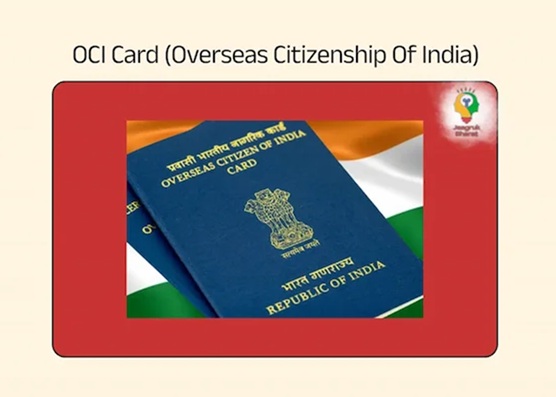
What is an OCI Card?

The OCI card is a special form of long-term residency status granted by India to foreign citizens of Indian origin. It was introduced in 2005 through amendments to the Citizenship Act, primarily to maintain close ties with the global Indian diaspora while respecting India’s policy of not allowing dual citizenship.

  • The OCI card provides a lifelong, multiple-entry visa, enabling holders to travel to India freely without the need for repeated visa applications.
  • It allows individuals to reside, work, and pursue education in India without restrictions on the duration of stay.
  • OCI cardholders are granted parity with Non-Resident Indians in several economic, financial, and educational fields, allowing them to participate in India’s growth and development.

However, it is important to note that OCI status does not confer full citizenship. Holders are treated as foreign nationals under Indian law and do not enjoy political rights such as voting or contesting elections. They are also restricted from holding constitutional posts and from purchasing certain categories of property such as agricultural land.

Background: Indian-Origin Community in Sri Lanka

1. Historical Migration and Settlement

  • During the British colonial period, a large number of Indian labourers, primarily from Tamil Nadu, were taken to Sri Lanka to work on tea, rubber, and coffee plantations.
  • These communities, often referred to as plantation Tamils or Indian-origin Tamils, formed a distinct socio-economic group within Sri Lanka.

2. Post-Independence Citizenship Issues

  • After Sri Lanka gained independence in 1948, many of these Indian-origin Tamils faced severe challenges regarding citizenship.
  • Laws such as the Ceylon Citizenship Act (1948) rendered a large section of them stateless, depriving them of basic rights and recognition.
  • Subsequent agreements between India and Sri Lanka attempted to resolve the issue, but the process was gradual and left many people in uncertain conditions for decades.

3. Continued Marginalisation

  • Even after gaining citizenship in Sri Lanka, many members of this community remained economically and socially disadvantaged.
  • Limited access to education, employment opportunities, and political representation contributed to their marginalisation.

Earlier Limitations in OCI Eligibility

  • The OCI scheme originally imposed restrictions on eligibility based on the number of generations from India.
  • Many individuals in Sri Lanka could not establish documentary proof of ancestry due to historical displacement, lack of records, and socio-economic challenges.
  • As a result, a large section of the Indian-origin community remained excluded from OCI benefits despite their clear ancestral links to India.

Recent Development: Extension of OCI Eligibility

The Government of India has now extended OCI eligibility to include :

  • Individuals of Indian origin in Sri Lanka up to the sixth generation
  • Acceptance of documents issued by Sri Lankan authorities as valid proof of ancestry

This marks a significant policy shift aimed at inclusivity and practical recognition of historical realities.

Significance of the Move

1. Strengthening India-Sri Lanka Bilateral Relations

  • The decision reflects India’s commitment to addressing concerns of Indian-origin communities in neighbouring countries.
  • It enhances diplomatic goodwill and trust between India and Sri Lanka by demonstrating sensitivity to shared historical and cultural ties.

2. Reinforcing Diaspora Engagement

  • By expanding eligibility, India enables a larger section of the diaspora to reconnect with their ancestral homeland.
  • This fosters emotional, cultural, and economic bonds, strengthening the global Indian identity.

3. Promoting People-to-People Connectivity

  • OCI cards facilitate easier travel and long-term stays, encouraging greater interaction between people of both countries.
  • Increased mobility supports cultural exchange, tourism, education, and business collaboration.

4. Strategic and Geopolitical Importance

  • Sri Lanka holds strategic importance in the Indian Ocean region.
  • Strengthening ties with Indian-origin communities enhances India’s soft power and influence in the region, particularly in the context of growing geopolitical competition.

5. Addressing Historical Injustices

  • The move acknowledges the historical challenges faced by Indian-origin Tamils in Sri Lanka.
  • It provides them with opportunities that were previously inaccessible, thereby contributing to their socio-economic upliftment.

Benefits of OCI Card for Sri Lankan Tamils

1. Ease of Mobility and Residence

  • The lifelong visa allows seamless travel to India without bureaucratic hurdles.
  • Individuals can reside in India for extended periods without legal complications.

2. Access to Educational and Economic Opportunities

  • OCI holders can pursue education in Indian institutions under NRI quotas.
  • They can engage in professional activities, business ventures, and investments in India.

3. Strengthening Economic Linkages

  • Facilitates cross-border investments and remittances
  • Encourages entrepreneurship and trade between India and Sri Lanka

4. Cultural Reconnection

  • Enables individuals to reconnect with their heritage, traditions, and ancestral roots
  • Promotes preservation of shared cultural identity

Limitations of OCI Card

Despite its advantages, the OCI card has certain inherent limitations :

  • It does not grant political rights such as voting or contesting elections
  • OCI holders cannot hold government or constitutional positions
  • Restrictions exist on the purchase of agricultural and plantation land
  • They remain foreign citizens under Indian law, with certain legal constraints

Challenges

1. Documentation and Verification Issues

  • Many eligible individuals may still face difficulties in proving ancestry due to lack of records.
  • Verification across multiple generations can be administratively complex.

2. Awareness and Accessibility

  • Lack of awareness among the target population may limit the scheme’s reach.
  • Procedural complexities may discourage applications.

3. Administrative Coordination

  • Effective implementation requires coordination between Indian and Sri Lankan authorities.
  • Ensuring transparency and efficiency in processing applications is crucial.

Way Forward

1. Simplification of Application Procedures

  • Reduce bureaucratic hurdles and streamline documentation requirements
  • Introduce digital platforms for easier access and processing

2. Awareness and Outreach

  • Conduct awareness campaigns through embassies and community organisations
  • Ensure that eligible individuals are informed about benefits and procedures

3. Strengthening Diaspora Policy

  • Expand engagement programmes for diaspora communities
  • Promote cultural, educational, and economic collaboration

4. Enhancing Bilateral Cooperation

  • Use diaspora engagement as a tool to strengthen India-Sri Lanka relations
  • Encourage joint initiatives in education, trade, and cultural exchange

Practice Questions

Prelims

Q. With reference to the OCI card, consider the following statements:

  1. It provides full Indian citizenship
  2. It allows lifelong visa-free travel to India
  3. OCI holders have voting rights

Which of the above statements is/are correct ?
(a) 1 only
(b) 2 only
(c) 1 and 3
(d) 2 and 3

Mains

“OCI card policy plays a crucial role in strengthening India’s engagement with its diaspora and enhancing bilateral relations.” Discuss with reference to recent developments in Sri Lanka.

FAQs

Q1. What is an OCI card ?

It is a long-term visa status granted to foreign citizens of Indian origin.

Q2. Does it provide full citizenship ?

No, it does not grant political or constitutional rights.

Q3. What is the recent change regarding Sri Lanka ?

Eligibility has been extended up to the sixth generation.

Q4. Why is this move important ?

It strengthens diaspora ties and improves India-Sri Lanka relations.

Q5. What are its main benefits ?

Ease of travel, residence, and access to opportunities in India.

« »
  • SUN
  • MON
  • TUE
  • WED
  • THU
  • FRI
  • SAT
Have any Query?

Our support team will be happy to assist you!

OR