Prelims : Governance + CA
Mains : GS Paper 2 – Governance; GS Paper 3 – Infrastructure; Inclusive Growth |
Why in News ?
The Pradhan Mantri Gram Sadak Yojana (PMGSY) continues to remain in focus due to :
- Ongoing implementation of PMGSY Phase III and IV, aimed at strengthening rural infrastructure
- Expansion of road connectivity to remote and strategically important areas, including Left Wing Extremism (LWE)-affected regions and hilly terrains
- Renewed emphasis on quality, sustainability, and economic integration of rural areas through better road networks
The scheme is increasingly being viewed not just as an infrastructure programme but as a critical driver of rural transformation and inclusive development.
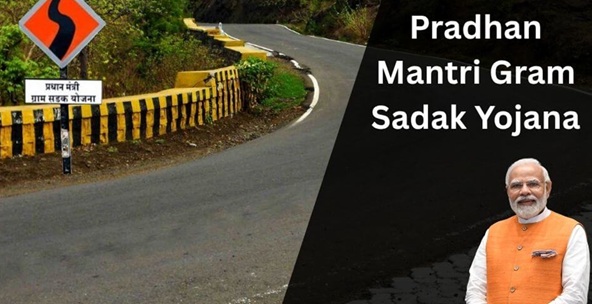
What is Pradhan Mantri Gram Sadak Yojana (PMGSY) ?
PMGSY is a flagship rural infrastructure scheme launched in 2000 with the primary objective of providing all-weather road connectivity to unconnected rural habitations.
- It is a Centrally Sponsored Scheme implemented by the Ministry of Rural Development in coordination with state governments
- The scheme focuses on ensuring that even the most remote villages are connected to the broader economic and social network of the country
- The concept of “habitation” (not village or panchayat) is central to the scheme, referring to a cluster of population that remains stable over time
At its core, PMGSY aims to bridge the rural-urban divide by improving physical connectivity, thereby enabling access to essential services and economic opportunities.
Objectives of PMGSY
1. Providing All-Weather Road Connectivity
- The primary objective is to ensure that rural habitations are connected through all-weather roads, which remain functional throughout the year
- This reduces isolation caused by seasonal disruptions such as monsoons
2. Enhancing Access to Essential Services
- Improved connectivity enables rural populations to access :
- Healthcare facilities
- Educational institutions
- Administrative services
This contributes to human development and social inclusion.
3. Promoting Economic Integration
- Roads facilitate access to :
- Markets
- Employment opportunities
- Financial services
This helps integrate rural economies with regional and national markets, boosting income generation.
4. Reducing Poverty and Regional Disparities
- By connecting remote areas, PMGSY aims to :
- Reduce geographical inequalities
- Promote balanced regional development
Key Features of the Scheme
1. Population-Based Eligibility Criteria
- Initially targeted :
- Habitations with population of 500+ in plains
- 250+ in hilly, tribal, and desert areas
- Relaxation for LWE-affected areas to include smaller habitations
2. Core Network Approach
- Development is based on a Core Network, which identifies the most essential roads required to connect habitations
- Ensures optimal utilisation of resources and avoids duplication
3. Quality Control Mechanism
- Multi-tier quality monitoring system :
- State-level checks
- National-level independent quality monitors
This ensures durability and standardisation of roads.
4. Use of Technology
- Implementation supported by digital systems for :
- Monitoring progress
- Financial tracking
- Transparency
This enhances accountability and efficiency.
5. Focus on Sustainability
- Increasing emphasis on :
- Green technologies
- Use of recycled materials
- Climate-resilient infrastructure
Phases of PMGSY
1. PMGSY Phase I (2000)
- Focused on providing connectivity to unconnected habitations
- Fully funded by the central government
- Targeted large-scale expansion of rural road networks
2. PMGSY Phase II (2013)
- Shifted focus from new connectivity to upgradation of existing rural roads
- Aimed at improving quality and efficiency of rural connectivity
3. PMGSY Phase III (2019)
- Focus on consolidation of rural road networks
- Connecting :
- Agricultural markets
- Schools
- Healthcare centres
This phase emphasises economic integration rather than mere connectivity.
4. PMGSY Phase IV (Ongoing)
- Focus on :
- Connectivity in remote and difficult terrains
- Strategic and border areas
- Emphasis on long-term sustainability and resilience
Significance of PMGSY
1. Transforming Rural Economy
- Roads reduce transportation costs and time
- Enable farmers to access markets, leading to better price realisation
- Promote diversification of rural livelihoods
2. Improving Social Indicators
- Better access to :
- Schools improves literacy rates
- Healthcare facilities reduces mortality rates
This contributes to overall human development.
3. Enhancing Employment Opportunities
- Facilitates :
- Non-farm employment
- Migration to nearby towns for jobs
4. Strengthening Disaster Response
- Road connectivity ensures :
- Faster evacuation
- Efficient delivery of relief during disasters
5. Promoting National Integration
- Connects remote and border areas with the mainstream
- Enhances administrative reach and governance
Impact of PMGSY
- Significant increase in rural road density
- Improved mobility and accessibility
- Enhanced agricultural productivity and market access
However, studies indicate that while roads improve mobility, their impact on income and employment depends on complementary factors such as education, skills, and local economic opportunities.
Challenges
1. Maintenance of Roads
- Poor maintenance reduces durability and effectiveness
- Lack of adequate funding for upkeep
2. Quality Concerns
- Variations in construction quality across regions
- Need for stricter monitoring
3. Geographical Constraints
- Difficult terrains such as:
increase construction costs and complexity
4. Environmental Concerns
- Road construction may lead to :
- Deforestation
- Land degradation
5. Implementation Gaps
- Delays in project completion
- Coordination issues between Centre and States
Way Forward
1. Strengthening Maintenance Mechanisms
- Ensure long-term funding and accountability for road upkeep
2. Integrating with Other Schemes
- Link PMGSY with :
- Agricultural schemes
- Rural livelihood programmes
3. Promoting Green Infrastructure
- Use eco-friendly construction techniques
- Minimise environmental impact
4. Leveraging Technology
- Use GIS and digital monitoring for better implementation
5. Enhancing Local Participation
- Involve local communities in planning and monitoring
Practice Questions
Prelims
Q. With reference to Pradhan Mantri Gram Sadak Yojana, consider the following statements :
- It aims to provide all-weather road connectivity to rural habitations
- It is implemented by the Ministry of Rural Development
- It focuses only on new road construction and not on upgradation
Which of the above statements is/are correct ?
(a) 1 and 2 only
(b) 2 and 3 only
(c) 1 and 3 only
(d) 1, 2 and 3
Mains
“Rural connectivity is a critical enabler of inclusive growth in India.” Discuss with reference to the Pradhan Mantri Gram Sadak Yojana.
FAQs
Q1. When was PMGSY launched ?
It was launched in 2000.
Q2. What is its main objective ?
To provide all-weather road connectivity to rural habitations.
Q3. Which ministry implements it ?
Ministry of Rural Development.
Q4. What is the key benefit ?
Improved access to markets, healthcare, and education.
Q5. What is the major challenge ?
Maintenance and quality of rural roads.
|






 Contact Us
  New Batch : 9555124124/ 7428085757
  Tech Support : 9555124124/ 7428085757