|
Prelims : Polity + International Relations + CA
Mains : GS Paper 2 – India and its Neighbourhood; Diaspora; Citizenship Issues
|
Why in News ?
The Overseas Citizen of India (OCI) card scheme has recently gained prominence in the context of India’s engagement with the Indian-origin community in Sri Lanka. The Government of India has decided to extend OCI card eligibility to persons of Indian origin in Sri Lanka up to the sixth generation, thereby expanding the scope of beneficiaries significantly.
This move is particularly important because a large section of Indian-origin Tamils in Sri Lanka were historically excluded due to documentation constraints and generational limitations. By relaxing these criteria, India aims to strengthen its connection with the diaspora, address long-standing identity concerns, and deepen bilateral ties with Sri Lanka through enhanced people-to-people engagement.
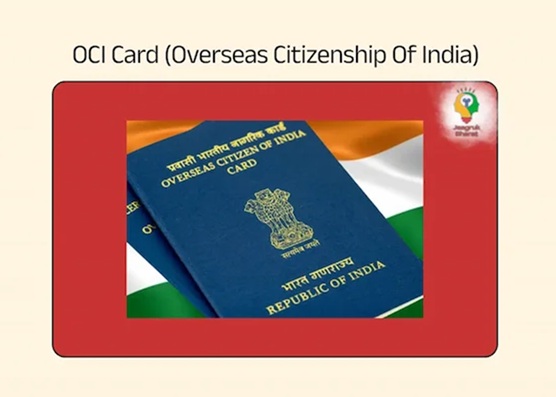
What is an OCI Card?
The OCI card is a special form of long-term residency status granted by India to foreign citizens of Indian origin. It was introduced in 2005 through amendments to the Citizenship Act, primarily to maintain close ties with the global Indian diaspora while respecting India’s policy of not allowing dual citizenship.
- The OCI card provides a lifelong, multiple-entry visa, enabling holders to travel to India freely without the need for repeated visa applications.
- It allows individuals to reside, work, and pursue education in India without restrictions on the duration of stay.
- OCI cardholders are granted parity with Non-Resident Indians in several economic, financial, and educational fields, allowing them to participate in India’s growth and development.
However, it is important to note that OCI status does not confer full citizenship. Holders are treated as foreign nationals under Indian law and do not enjoy political rights such as voting or contesting elections. They are also restricted from holding constitutional posts and from purchasing certain categories of property such as agricultural land.
Background: Indian-Origin Community in Sri Lanka
1. Historical Migration and Settlement
- During the British colonial period, a large number of Indian labourers, primarily from Tamil Nadu, were taken to Sri Lanka to work on tea, rubber, and coffee plantations.
- These communities, often referred to as plantation Tamils or Indian-origin Tamils, formed a distinct socio-economic group within Sri Lanka.
2. Post-Independence Citizenship Issues
- After Sri Lanka gained independence in 1948, many of these Indian-origin Tamils faced severe challenges regarding citizenship.
- Laws such as the Ceylon Citizenship Act (1948) rendered a large section of them stateless, depriving them of basic rights and recognition.
- Subsequent agreements between India and Sri Lanka attempted to resolve the issue, but the process was gradual and left many people in uncertain conditions for decades.
3. Continued Marginalisation
- Even after gaining citizenship in Sri Lanka, many members of this community remained economically and socially disadvantaged.
- Limited access to education, employment opportunities, and political representation contributed to their marginalisation.
Earlier Limitations in OCI Eligibility
- The OCI scheme originally imposed restrictions on eligibility based on the number of generations from India.
- Many individuals in Sri Lanka could not establish documentary proof of ancestry due to historical displacement, lack of records, and socio-economic challenges.
- As a result, a large section of the Indian-origin community remained excluded from OCI benefits despite their clear ancestral links to India.
Recent Development: Extension of OCI Eligibility
The Government of India has now extended OCI eligibility to include :
- Individuals of Indian origin in Sri Lanka up to the sixth generation
- Acceptance of documents issued by Sri Lankan authorities as valid proof of ancestry
This marks a significant policy shift aimed at inclusivity and practical recognition of historical realities.
Significance of the Move
1. Strengthening India-Sri Lanka Bilateral Relations
- The decision reflects India’s commitment to addressing concerns of Indian-origin communities in neighbouring countries.
- It enhances diplomatic goodwill and trust between India and Sri Lanka by demonstrating sensitivity to shared historical and cultural ties.
2. Reinforcing Diaspora Engagement
- By expanding eligibility, India enables a larger section of the diaspora to reconnect with their ancestral homeland.
- This fosters emotional, cultural, and economic bonds, strengthening the global Indian identity.
3. Promoting People-to-People Connectivity
- OCI cards facilitate easier travel and long-term stays, encouraging greater interaction between people of both countries.
- Increased mobility supports cultural exchange, tourism, education, and business collaboration.
4. Strategic and Geopolitical Importance
- Sri Lanka holds strategic importance in the Indian Ocean region.
- Strengthening ties with Indian-origin communities enhances India’s soft power and influence in the region, particularly in the context of growing geopolitical competition.
5. Addressing Historical Injustices
- The move acknowledges the historical challenges faced by Indian-origin Tamils in Sri Lanka.
- It provides them with opportunities that were previously inaccessible, thereby contributing to their socio-economic upliftment.
Benefits of OCI Card for Sri Lankan Tamils
1. Ease of Mobility and Residence
- The lifelong visa allows seamless travel to India without bureaucratic hurdles.
- Individuals can reside in India for extended periods without legal complications.
2. Access to Educational and Economic Opportunities
- OCI holders can pursue education in Indian institutions under NRI quotas.
- They can engage in professional activities, business ventures, and investments in India.
3. Strengthening Economic Linkages
- Facilitates cross-border investments and remittances
- Encourages entrepreneurship and trade between India and Sri Lanka
4. Cultural Reconnection
- Enables individuals to reconnect with their heritage, traditions, and ancestral roots
- Promotes preservation of shared cultural identity
Limitations of OCI Card
Despite its advantages, the OCI card has certain inherent limitations :
- It does not grant political rights such as voting or contesting elections
- OCI holders cannot hold government or constitutional positions
- Restrictions exist on the purchase of agricultural and plantation land
- They remain foreign citizens under Indian law, with certain legal constraints
Challenges
1. Documentation and Verification Issues
- Many eligible individuals may still face difficulties in proving ancestry due to lack of records.
- Verification across multiple generations can be administratively complex.
2. Awareness and Accessibility
- Lack of awareness among the target population may limit the scheme’s reach.
- Procedural complexities may discourage applications.
3. Administrative Coordination
- Effective implementation requires coordination between Indian and Sri Lankan authorities.
- Ensuring transparency and efficiency in processing applications is crucial.
Way Forward
1. Simplification of Application Procedures
- Reduce bureaucratic hurdles and streamline documentation requirements
- Introduce digital platforms for easier access and processing
2. Awareness and Outreach
- Conduct awareness campaigns through embassies and community organisations
- Ensure that eligible individuals are informed about benefits and procedures
3. Strengthening Diaspora Policy
- Expand engagement programmes for diaspora communities
- Promote cultural, educational, and economic collaboration
4. Enhancing Bilateral Cooperation
- Use diaspora engagement as a tool to strengthen India-Sri Lanka relations
- Encourage joint initiatives in education, trade, and cultural exchange
Practice Questions
Prelims
Q. With reference to the OCI card, consider the following statements:
- It provides full Indian citizenship
- It allows lifelong visa-free travel to India
- OCI holders have voting rights
Which of the above statements is/are correct ?
(a) 1 only
(b) 2 only
(c) 1 and 3
(d) 2 and 3
Mains
“OCI card policy plays a crucial role in strengthening India’s engagement with its diaspora and enhancing bilateral relations.” Discuss with reference to recent developments in Sri Lanka.
FAQs
Q1. What is an OCI card ?
It is a long-term visa status granted to foreign citizens of Indian origin.
Q2. Does it provide full citizenship ?
No, it does not grant political or constitutional rights.
Q3. What is the recent change regarding Sri Lanka ?
Eligibility has been extended up to the sixth generation.
Q4. Why is this move important ?
It strengthens diaspora ties and improves India-Sri Lanka relations.
Q5. What are its main benefits ?
Ease of travel, residence, and access to opportunities in India.
|






 Contact Us
  New Batch : 9555124124/ 7428085757
  Tech Support : 9555124124/ 7428085757