New
Hindi Medium: (Delhi) - GS Foundation (P+M) : 6th July 2026, 6:00 PM Hindi Medium: (Prayagraj) - GS Foundation (P+M) : 5th July 2026, 8:00 AM English Medium: (Delhi) - GS Foundation (P+M) : 20th July 2026 English Medium: (Prayagraj) - GS Foundation (P+M) : 15th July 2026, 8:00 AM Hindi Medium: (Delhi) - GS Foundation (P+M) : 6th July 2026, 6:00 PM Hindi Medium: (Prayagraj) - GS Foundation (P+M) : 5th July 2026, 8:00 AM English Medium: (Delhi) - GS Foundation (P+M) : 20th July 2026 English Medium: (Prayagraj) - GS Foundation (P+M) : 15th July 2026, 8:00 AM

Current Affairs for 20 June 2026

National Internet Exchange of India (NIXI) – Objectives, Key Functions and Achievements

Why in News ?

The National Internet Exchange of India (NIXI) is celebrating its 23rd Foundation Day on June 19.
About National Internet Exchange of India (NIXI)

  • The National Internet Exchange of India (NIXI) is a not-for-profit organization set up under the aegis of the Ministry of Electronics and Information Technology (MeitY), Government of India. It was established under the Companies Act, 2013 with the objective of strengthening India's internet infrastructure and promoting internet penetration across the country.
  • The primary aim of NIXI is to facilitate the exchange of domestic Internet traffic among Internet Service Providers (ISPs), content providers, and organizations possessing their own Autonomous System (AS) numbers. By enabling domestic traffic to remain within the country, NIXI helps improve internet speed, reduce latency, lower bandwidth costs, and enhance network efficiency.

Key Functions of NIXI

1. Internet Exchange Services

  • NIXI facilitates the exchange of domestic internet traffic between various network operators and service providers. This reduces dependence on international bandwidth and ensures faster and more efficient data routing within India.

2. Management of .IN and .भारत Domains

  • NIXI manages India's country-code top-level domains (ccTLDs), namely “.IN” and “.भारत”(bhart). It oversees domain registration and administration, thereby supporting India's digital identity on the internet.

3. IP Address Allocation through IRINN

  • Through the Indian Registry for Internet Names and Numbers (IRINN), NIXI allocates and manages IPv4 and IPv6 addresses for organizations and internet service providers across India.

4. Promotion of a Secure and Inclusive Internet Ecosystem

  • NIXI works towards building a secure, resilient, and inclusive internet ecosystem that supports India's digital transformation goals and expanding online economy.

Role in India's Digital Growth

  • NIXI plays a crucial role in strengthening India's internet infrastructure by facilitating efficient domestic internet traffic exchange, supporting domain name services, and enabling the adoption of modern internet protocols. 
  • Its initiatives contribute significantly to the objectives of Digital India, e-governance, digital commerce, and universal internet accessibility.

Major Achievements

  • Operates 79 Internet Exchange Points (IXPs) across India. 
  • Manages the “.IN” and “.भारत” domain namespaces. 
  • Facilitates allocation of IPv4 and IPv6 resources through IRINN. 
  • Supports domain names in 22 Indian languages
  • Promotes faster, cost-effective, and secure internet connectivity. 
  • Contributes to a resilient and inclusive digital ecosystem.

India-Russia Logistics Agreement (RELOS)

Why is it in the news ?

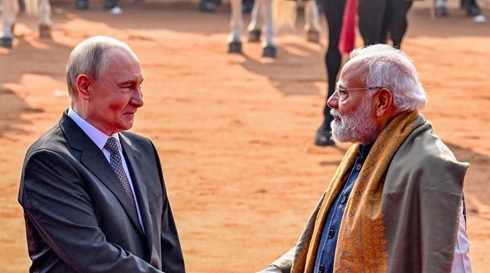
Recently, a claim was made on social media regarding the Reciprocal Exchange of Logistics Agreement (RELOS) that came into effect between India and Russia, claiming that it allows for the permanent deployment of 3,000 Russian troops in India. However, this claim is misleading. In reality, RELOS is a logistics cooperation agreement, not a military alliance or provision for the establishment of a military base.
What are Logistics Support Agreements (LSA) ?

  • Logistics Support Agreements are administrative and military cooperation agreements that allow the armies of two countries to use each other's military facilities.
  • Under these, facilities like fuel, food, medical aid, repair, maintenance, transportation, storage and port services are provided.
  • Their objective is to facilitate joint military exercises, training, humanitarian assistance and disaster relief (HADR) operations and naval visits. Such agreements do not indicate any military alliance.

India's Other Logistics Agreements

  • India already has similar logistics agreements with several countries, including the United States, the United Kingdom, France, Japan, Australia, Singapore, Vietnam, and Russia.
  • Similar facilities are also available with Oman under the Comprehensive Defense Cooperation Arrangement.
  • India's first major logistics agreement was LEMOA (Logistics Exchange Memorandum of Agreement), signed with the United States in 2016.
  • The Indian government has clarified that LEMOA does not permit the establishment of any type of foreign military base.

What is the Reciprocal Exchange of Logistics Agreement (RELOS) ?

  • The Reciprocal Exchange of Logistics Agreement (RELOS) is a bilateral logistics cooperation agreement between India and Russia.
  • The Reciprocal Logistics Support Agreement (RELOS) between India and Russia was signed on February 18, 2025, in Moscow.
  • Russia subsequently ratified it on December 15, 2025, and the agreement became effective from January 2026.
  • Its initial validity period is set at 5 years.

Key Provisions of RELOS

  • Under this agreement, the militaries of both countries will be able to mutually utilize the following facilities:
  • Port calls by military ships
  • Use of airports and airbases by military aircraft
  • Joint military exercises and training
  • Humanitarian assistance and disaster relief (HADR) operations
  • Repair and maintenance services
  • Medical assistance
  • Supply of food, fuel, and technical resources
  • Logistical support to military personnel and platforms

Why is the claim of a 3,000 troop deployment false ?

  • RELOS does mention an upper ceiling of 3,000 troops, but it does not imply a permanent troop deployment.
  • This limit is set for situations where joint military exercises, training programs, naval visits, or other agreed activities are conducted.
  • It takes into account the potential number of ships, aircraft, and troops.
  • Both India and Russia have clarified that the agreement does not provide for any permanent or long-term troop deployment.
  • The presence of troops and military assets will be limited to mutually agreed limited-duration engagements.

Strategic Importance of RELOS: The Arctic Dimension

  • The most important aspect of RELOS is to provide India access to Russia's military and logistics facilities in the Arctic region.

Its Significance

  • Climate change is opening up new shipping routes in the Arctic.
  • Russia is a major power in the Arctic region and maintains an extensive military and infrastructure network there.
  • This agreement will help advance the objectives of India's Arctic Policy.
  • It will provide new impetus to India-Russia cooperation in the areas of energy, trade, maritime security, and scientific research.

Practical Use

  • India has previously made effective use of such agreements:
  • The Indian Navy utilized foreign logistics facilities during anti-piracy operations in the Gulf of Aden.
  • During the 2020 Eastern Ladakh crisis, logistics agreements with the United States ensured the availability of high-altitude specialized military equipment and clothing.
  • British naval ships received repair and spare parts assistance at Indian shipyards.

Conclusion

The India-Russia RELOS agreement is not a means of establishing a military alliance or permanent deployment of foreign troops, but rather a standard logistics cooperation arrangement. India already has several such agreements with other countries. Therefore, claims regarding the deployment of 3,000 Russian troops are factually incorrect. The real significance of this agreement lies in India's expanding strategic reach, especially in cooperation in the Arctic region, and strengthening global military-logistics networks.

FAO Report 2026: India ranks second in the world in fish production

Why in the news ?

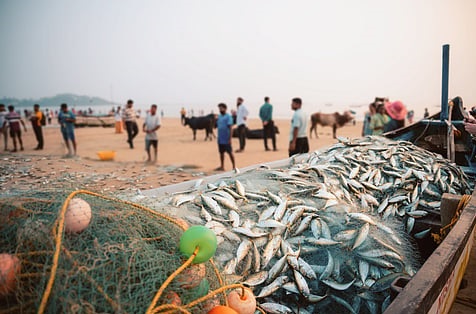
According to the "The State of World Fisheries and Aquaculture 2026 (SOFIA 2026)" report released by the Food and Agriculture Organization (FAO) of the United Nations, India is projected to become the world's second-largest producer of aquatic animals in 2024. India contributed 9 percent of global production, while China remained in first place.
Key Points

  • According to the report, India has ranked first in the world in inland fish production and second in aquaculture production.
  • This achievement reflects India's growing fisheries sector, food security, and strengthening rural economy.

What is FAO's SOFIA 2026 report ?

  • The State of World Fisheries and Aquaculture (SOFIA) is the Food and Agriculture Organization's (FAO) flagship global report assessing the state of fisheries, aquaculture, food security, nutrition, and marine resources worldwide.
  • The report provides guidance to governments and policymakers for sustainable fisheries management and the development of aquatic food systems.

India's Key Achievements

1. World's Second Largest Fish Producer

  • In 2024, India contributed approximately 9 percent to global aquaculture production, ranking second after China.
  • This achievement reflects the continued investment, technological advancements, and success of government schemes in India's fisheries sector.

2. World's First in Inland Fisheries Production

  • India produced 2.2 million tons (2.2 million tonnes) of fish from rivers, lakes, ponds, and other freshwater sources.
  • Thus, India surpassed Bangladesh (1.4 million tonnes) to rank first in the world in inland fisheries production.
  • Importance of Inland Fisheries Production
    • Major source of rural employment
    • Contributes to nutritional security
    • Increases farmers' incomes
    • Better utilization of water resources

3. Second in Aquaculture

  • India ranked second in global aquaculture production, contributing 12 percent to global aquaculture production.
  • India, China, Indonesia, Vietnam, and Bangladesh together contribute 82 percent of the world's farm-based aquaculture production.
  • This indicates that Asia has become the center of the global aquaculture sector.

Status of Global Fish Production

  • According to the report, global fish and aquaculture production is projected to reach a record 235 million tons in 2024.
  • This includes :
    • 195 million tons of aquatic animals
    • 40 million tons of algae
    • This represents an increase of approximately 5.2 percent compared to 2022.

Aquaculture Becomes a Key Driver for Growth

  • Global aquaculture production is projected to reach a record 142 million tons in 2024.
  • This is not the first time aquaculture has driven growth in the fisheries sector, but it is now clear that aquaculture will play an even more important role in meeting global food demand in the future.

Growing Crisis on Marine Resources

  • While production has increased, pressure on marine ecosystems is also increasing.
  • According to the report :
    • The share of biologically sustainable marine fish stocks was 64.5 percent in 2021.
    • This will decline to 62.4 percent in 2023.
    • This indicates that long-term sustainability is becoming a serious challenge due to overfishing and increasing pressure on marine resources.

 Who's eating the most fish ?

  • According to the report, more than 90 percent of the world's aquatic food products are used directly for human consumption.

Per Capita Availability (2024)

Region

Per Capita Availability 

Asia

26.3 kg

Global Average

21.3 kg

Europe

20-22 kg

North America

20-22 kg

Oceania

20-22 kg

Latin America & the Caribbean

10.1 kg

Africa

9.1 kg

  • The availability of fish and other aquatic foods is highest in Asia, while it is lowest in Africa.

Significance for India

  • India's achievements are not limited to increased production, but have wide-ranging economic and social impacts.

Economic Significance

  • Increase in fish exports
  • Foreign exchange earnings
  • Strengthening the Blue Economy
  • Development of rural and coastal economies

Social Significance

  • Improved nutritional security
  • Employment generation
  • Increased incomes of farmers and fishermen
  • Strengthening food security

Strategic Significance

  • Accelerating the Blue Economy Mission
  • Promoting sustainable marine resource management
  • Strengthening India's position in the global fisheries market

Challenges

  • Although India has achieved remarkable success, some challenges still remain -
    • Increasing pressure on marine fishery resources
    • Impact of climate change
    • Overfishing
    • Water pollution
    • Lack of cold chain and storage infrastructure
    • Income security of small fishermen

Conclusion

FAO's SOFIA 2026 report highlights remarkable progress in India's fisheries sector. It is a great achievement for India to be the world's second largest fish producer and first place in inland fish production. However, to maintain this success long-term, it will be necessary to further strengthen sustainable fisheries management, conservation of marine resources, expansion of modern aquaculture technologies and blue economy based development strategies.

Right to Walk on Safe Footpaths: Supreme Court Declares It a Fundamental Right

  • Recently, the Supreme Court of India, in a landmark judgment, held that the right to walk on safe and demarcated footpaths is a Fundamental Right under the Constitution
  • The Court urged the Union and State Governments to consider enacting a comprehensive law to legally recognize this right and ensure the construction, maintenance, and protection of pedestrian infrastructure. 

What Was the Case About?

  • The judgment arose from a motor accident compensation case involving the death of a five-year-old boy who was walking to school with his father. 
  • A tanker hit the child from behind, resulting in fatal injuries. The accident occurred on a road that had neither a footpath nor a pedestrian crossing
  • The Supreme Court not only enhanced the compensation awarded to the victim’s family to ₹11.44 lakh, but also made significant constitutional observations regarding pedestrian safety and rights. 

Key Observations of the Court

  • The right to move freely throughout the territory of India under Article 19(1)(d) includes the right to walk
  • Access to safe and demarcated footpaths is also linked to Article 21, which guarantees the Right to Life and Personal Liberty
  • The right to walk is not subordinate to motorized transport; rather, it is a primary and fundamental mode of movement
  • Urban development authorities, municipal corporations, municipalities, and panchayats have a duty to construct, demarcate, maintain, and protect footpaths
  • Citizens whose right to walk safely is violated are entitled to seek constitutional remedies, legal relief, and compensation

Observation on the Motor Vehicles Act, 1988

  • The Court observed that the Motor Vehicles Act, 1988 primarily focuses on the regulation of motor vehicles and does not adequately protect pedestrian rights. 
  • In several respects, the existing framework has failed to provide sufficient safeguards for walkers. 

Need for a Dedicated Law

The Supreme Court emphasized the need for a statutory framework that would :

  • Explicitly recognize the right to walk on safe footpaths. 
  • Identify and define the responsibilities of duty-bearing authorities. 
  • Provide quick remedies and compensation mechanisms for violations. 
  • Establish a dedicated regulatory body to plan, enforce, and implement pedestrian rights. 

Significance

  • The judgment is a major step toward strengthening pedestrian rights, road safety, inclusive urban development, and people-centric transportation planning in India
  • The Court underscored that roads are not meant exclusively for motor vehicles; they must also be safe, accessible, and equitable spaces for pedestrians

Plastic-Eating Bacteria Break Down PVC Microplastics

Why in News

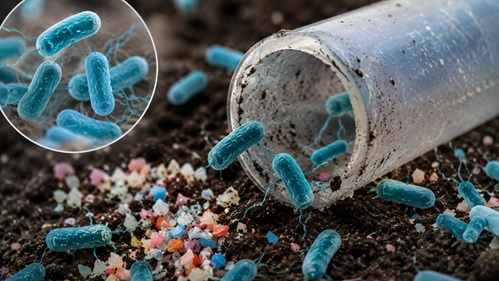
Researchers from Cairo University, Egypt have identified bacterial strains capable of degrading Polyvinyl Chloride (PVC) microplastics, one of the most difficult plastics to break down naturally. The findings, published in the journal Microbial Cell Factories (June 2026), offer a promising eco-friendly approach to tackling persistent plastic pollution.
Scientific Profile

  • Polyvinyl Chloride (PVC) is a chlorine-containing synthetic polymer widely used in water pipes, electrical cables, flooring, packaging materials, window frames, and medical devices due to its durability, low cost, and chemical resistance. 
  • Microplastics are plastic particles smaller than 5 mm that originate from the breakdown of larger plastic products or are manufactured directly for industrial and commercial applications. 
  • PVC is considered one of the most difficult plastics to biodegrade because of its complex chemical structure and chlorine content. 

Key Findings

  • The bacterial strain Stutzerimonas sp. NH2 reduced the weight of PVC microplastics by more than 23% during laboratory experiments. 
  • Another strain, Glutamicibacter nicotinae NH27, also demonstrated a significant ability to degrade PVC. 
  • When both strains were used together as a bacterial consortium, PVC degradation increased to nearly 27%, indicating a synergistic effect. 

Experimental Observations

  • The bacteria were isolated from plastic-contaminated soils, suggesting that microorganisms in polluted environments can naturally evolve the ability to utilize plastic as a carbon source. 
  • Microscopic examination revealed cracks, pits, grooves, and surface erosion on treated PVC samples. 
  • Chemical analyses confirmed changes in the polymer's molecular structure, providing strong evidence of actual biodegradation rather than mere surface damage
  • The bacterial consortium proved more efficient than individual strains, highlighting the importance of microbial cooperation in plastic degradation. 

Significance of the Study

  • This is the first reported evidence linking Stutzerimonas sp. NH2 and Glutamicibacter nicotinae NH27 to the degradation of PVC microplastics
  • The discovery could support the development of bioremediation technologies for cleaning plastic-contaminated soils and water bodies. 
  • It contributes to the growing field of Environmental Microbiology, which explores the use of microorganisms to solve environmental challenges such as pollution and waste management. 
  • The findings also advance research on sustainable plastic waste management and the development of biological alternatives to conventional plastic disposal methods. 

Key Facts

  • PVC is the third most widely produced synthetic plastic polymer in the world. 
  • Environmental Microbiology studies the interactions of microorganisms with their environment, including their role in degrading pollutants. 
  • A bacterial consortium is a group of two or more bacterial species that work together, often performing complementary metabolic functions that enhance the breakdown of complex substances like plastics. 
  • Although the results are promising, the research is currently laboratory-based, and further studies are needed before these bacteria can be applied effectively on an industrial or environmental scale.

Mishmi Takin: Species Profile, Habitat, Distribution and Conservation Status

Why in News

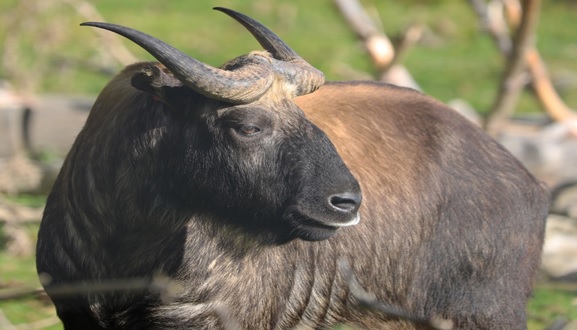
  • The first-ever video footage of a herd of Mishmi Takin has been recorded in Tingda Reserve Forest in North Sikkim. The sighting is considered significant as it provides rare visual evidence of the species' presence in the region and highlights the importance of conserving its fragile Himalayan habitat. 
Species Profile

  • Scientific Name: Budorcas taxicolor
  • The Mishmi Takin is a large goat-antelope belonging to the family Bovidae and order Artiodactyla (even-toed ungulates). 
  • It is one of the four recognised subspecies of the Takin and is regarded as the largest among them. 
  • Despite its appearance resembling both a goat and a musk ox, it is genetically more closely related to wild sheep and goats. 

Habitat and Distribution

  • The species is native to the Eastern Himalayas
  • It is found in Arunachal Pradesh (India), northern Myanmar, southeastern Tibet, and parts of southwestern China
  • It inhabits temperate broadleaf and conifer forests, bamboo thickets, sub-alpine meadows, and rocky alpine slopes at elevations ranging from about 1,500 to 4,500 metres
  • During summer, herds migrate to higher alpine pastures, while in winter they descend to lower forested valleys. 

Physical Characteristics

  • It has a massive, muscular body, short sturdy legs, a large head, and a distinctive arched Roman nose
  • Both males and females possess thick, curved horns, which are used for defence and dominance. 
  • Its dense coat varies from golden-yellow to dark brown, becoming thicker during winter to withstand harsh weather. 
  • The animal secretes an oily substance from its skin, making its fur water-resistant and protecting it from cold and damp mountain conditions. 
  • Adult individuals can weigh 250–400 kg, making them among the largest mountain ungulates in Asia. 

Behaviour and Ecology

  • Mishmi Takins are generally social animals, living in small to medium-sized herds, although older males are often solitary outside the breeding season. 
  • They are herbivores, feeding on grasses, bamboo shoots, shrubs, leaves, herbs, and lichens. 
  • They play an important ecological role by dispersing seeds and maintaining the health of Himalayan mountain ecosystems. 

Threats

  • Habitat loss and fragmentation due to road construction, infrastructure development, and deforestation. 
  • Poaching and illegal hunting for meat and body parts. 
  • Climate change, which is altering alpine habitats and affecting seasonal migration patterns. 
  • Human disturbance in high-altitude ecosystems. 

Conservation Status

  • IUCN Red List: Vulnerable (VU)
  • The species is protected in several national parks and wildlife sanctuaries across its range, including protected areas in Arunachal Pradesh and neighbouring Himalayan regions. 
  • Improved monitoring, habitat protection, anti-poaching measures, and transboundary conservation cooperation are essential for its long-term survival.
« »
  • SUN
  • MON
  • TUE
  • WED
  • THU
  • FRI
  • SAT
Have any Query?

Our support team will be happy to assist you!

OR