New
Hindi Medium: (Delhi) - GS Foundation (P+M) : 21st Sept. 2026, 11:30 AM Hindi Medium: (Prayagraj) - GS Foundation (P+M) : 22nd Sept. 2026, 8:00 AM English Medium: (Delhi) - GS Foundation (P+M) : 6th Aug 2026 English Medium: (Prayagraj) - GS Foundation (P+M) : 19th Aug 2026, 11:00 AM Hindi Medium: (Delhi) - GS Foundation (P+M) : 21st Sept. 2026, 11:30 AM Hindi Medium: (Prayagraj) - GS Foundation (P+M) : 22nd Sept. 2026, 8:00 AM English Medium: (Delhi) - GS Foundation (P+M) : 6th Aug 2026 English Medium: (Prayagraj) - GS Foundation (P+M) : 19th Aug 2026, 11:00 AM

Current Affairs for 25 August 2026

AssamSAT Project 2026: Role of ASSAC, IN-SPACe and Private Space Companies

Prelims: AssamSAT, Earth Observation Satellites, LEO, IN-SPACe, ISRO, ASSAC, Private Space Sector
Mains: GS Paper II: E-Governance and Government Policies
GS Paper III: Science & Technology, Space Technology, Disaster Management, Agriculture, Internal Security

Why in News?

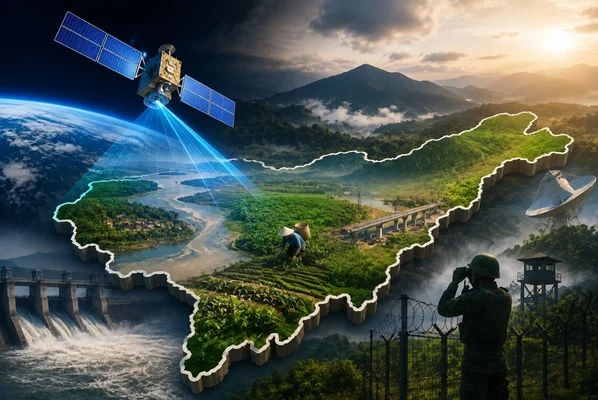
Assam is moving ahead with AssamSAT, its proposed dedicated Earth-observation satellite system, with the process of selecting a private-sector implementation partner reaching an advanced stage.
What is AssamSAT?

  • AssamSAT is Assam's proposed dedicated satellite programme aimed at ensuring a continuous and reliable flow of Earth-observation data for the state's governance and development needs. The project was originally announced in the Assam Budget 2025–26.
  • The Budget proposed AssamSAT in collaboration with IN-SPACe, under the Department of Space, Government of India, for applications including agriculture, disaster management, infrastructure development, border management and security and police operations. 
  • The government also proposed involving students from Assam's colleges in building experimental satellites with support from IN-SPACe/ISRO.

Who is Implementing AssamSAT?

  • The procurement process is being handled by the Assam State Space Application Centre (ASSAC) which functions under Assam's Department of Science, Technology and Climate Change.
  • The official Expression of Interest (EOI) for the establishment of AssamSAT was published on 16 March 2026. The final bid-submission deadline shown on the official procurement page was 28 May 2026.

Why Does Assam Need Its Own Satellite System?

  • Flood Management: Assam is highly vulnerable to recurring floods, particularly in the Brahmaputra and Barak river systems. Satellite observations can help authorities monitor:

Flood Extent River Changes Inundated Villages Damaged Infrastructure Agricultural Loss

  • Disaster Management: Apart from floods, Assam faces riverbank erosion, landslides, severe storms, earthquake risk and forest fires and other environmental hazards. Earth-observation data can support early assessment, emergency response and post-disaster damage mapping.
  • Agriculture: Agriculture remains crucial to Assam's economy and rural livelihoods. Satellite data can potentially support crop-area mapping, crop-health monitoring, flood damage assessment, soil-moisture analysis, irrigation planning and agricultural forecasting.
  • Infrastructure Development: Earth-observation imagery can assist governments in monitoring large infrastructure projects. Potential applications include:

Roads + Bridges + Urban Expansion + Rail Connectivity + Land-Use Changes + Public Infrastructure

Repeated satellite observations can also help authorities compare actual progress with approved project plans.

  • Border and Security Management: Assam has international borders with Bangladesh and Bhutan and is strategically important to India's Northeast. The Assam Budget specifically mentioned security, border management and police operations as proposed areas where AssamSAT data could be used.
  • Environmental Monitoring: Assam is ecologically sensitive and contains forests, wetlands, river systems and biodiversity-rich areas. Satellite imagery can assist with forest-cover monitoring, wetland mapping, river morphology, encroachment detection, land-use changes and environmental degradation. 

Why Not Simply Use Existing Satellite Data?

India already has extensive Earth-observation capabilities through ISRO satellites. However, Assam's stated objective is to ensure a continuous and reliable flow of data specifically for critical state-level socio-economic projects. 

What is the DBLOTT Model?

An important feature reported for AssamSAT is the DBLOTT model:

  • D: Design
  • B: Build
  • L: Launch
  • O: Operate
  • T: Train
  • T: Transfer

Under this model, the selected private-sector partner would undertake the major technical responsibilities required to establish the satellite system. It would also train Assam government personnel and eventually transfer operational capability to the state. 

Why is DBLOTT Important?

The model aims to create:

Satellite System + Human Resources + Technical Knowledge + Operational Capability

Therefore, AssamSAT can potentially contribute to technology transfer and institutional capacity building within the state.

Which Companies Are in the Race?

  • According to the available procurement reporting, 13 bidders participated in the AssamSAT process. The reported bidders include major established defence/space companies as well as Indian NewSpace startups.
  • Among the reported names are:
    • Agnikul Cosmos Private Limited
    • Ananth Technologies Pvt. Ltd.
    • Azista Industries Pvt. Ltd.
    • Bharat Electronics Limited (BEL)
    • Bharat Space Private Limited
    • Data Patterns (India) Limited
    • Dhruva Space Private Limited
    • GalaxEye Space Solutions Pvt. Ltd.
    • Garuda Aerospace Private Limited
    • SatLeo Labs Pvt. Ltd.
    • SpacePixxel Technologies Private Limited
    • Tata Advanced Systems Limited
    • XDLINX Space Labs Private Limited

What is IN-SPACe?

  • IN-SPACe stands for Indian National Space Promotion and Authorisation Centre. It is an autonomous agency under the Department of Space. It acts as an interface between the government and Non-Government Entities (NGEs) participating in India's space sector.
  • For AssamSAT, the original Assam Budget announcement specifically envisaged collaboration with IN-SPACe.

AssamSAT and India's Space-Sector Reforms

  • AssamSAT should be viewed within the larger transformation of India's space ecosystem. Earlier, India's space activities were overwhelmingly centred on government agencies, particularly ISRO.
  • Recent reforms have opened the sector to private companies in areas such as:

Satellite Manufacturing Launch Services Earth Observation Space Data Ground Systems Space Applications

  • AssamSAT illustrates another dimension of this transition: State Government + Central Space Institutions + Private Space Companies

Role of India's Private Space Sector

  • The diversity of companies participating in the AssamSAT procurement is significant. It indicates that India's space ecosystem is expanding beyond traditional large defence and aerospace companies to include specialised NewSpace startups.
  • The project could therefore provide an important test case for whether private-sector capabilities can deliver a complete satellite programme for a state government.

Student Participation and Capacity Building

  • The state proposed working with IN-SPACe/ISRO to involve college students in building experimental satellites. This could promote STEM education, satellite engineering skills, space entrepreneurship, research culture, innovation and skilled human resources in Northeast India. 

Significance of AssamSAT

  • Technology-Based Governance: Satellite observations can provide governments with objective and frequently updated information for policymaking.
  • Better Disaster Preparedness: Dedicated Earth-observation capabilities could improve flood, erosion and disaster assessment.
  • Precision Agriculture: Satellite data can support more targeted agricultural planning and crop monitoring.
  • Infrastructure Monitoring: Remote sensing can help track large infrastructure and development projects.
  • Strengthening Northeast India's Technology Ecosystem: AssamSAT could help build technical skills and space-sector capabilities within Northeast India.
  • Boost to Indian NewSpace: Participation by private companies creates new opportunities for India's growing commercial space industry.

Major Challenges

  • High Cost: Designing, launching and maintaining satellites requires substantial financial resources.
  • Technical Complexity: Satellite manufacturing, launch integration, ground systems and data processing require specialised expertise.
  • Data Management: Collecting satellite imagery is useful only when departments can rapidly process and convert it into actionable information.
  • Skilled Manpower: Assam will need trained personnel to operate and utilise the system effectively after capability transfer.
  • Space Debris: Any new satellite system must comply with orbital-sustainability and debris-mitigation requirements.
  • Cybersecurity: Satellite command systems and Earth-observation data can have strategic significance and require strong cybersecurity.
  • Coordination: Agriculture, disaster management, police, infrastructure and environmental agencies will need effective data-sharing mechanisms.

Prelims MCQ

Q. With reference to AssamSAT, consider the following statements:

  1. It is intended for Earth-observation applications.
  2. ASSAC is involved in its procurement process.
  3. IN-SPACe functions under the Department of Space.

Which of the statements given above are correct?

A. 1 and 2 only

B. 2 and 3 only

C. 1 and 3 only

D. 1, 2 and 3

Mains Practice Questions

Q. Discuss the significance of the DBLOTT model in developing indigenous institutional capabilities.

FAQs

What is AssamSAT?

AssamSAT is Assam’s proposed Earth-observation satellite system for state-level applications.

What is the main purpose of AssamSAT?

It will support agriculture, disaster management, infrastructure, border management and security.

Which agency is handling the AssamSAT project?

The Assam State Space Application Centre (ASSAC) is handling the procurement process.

What is the role of IN-SPACe in AssamSAT?

The project envisages collaboration with IN-SPACe for developing Assam’s space capabilities.

How can AssamSAT help in flood management?

Satellite data can help map flood extent, river changes and affected areas.

Mecca Defence Pact: Key Features, Motives, Significance & Implications

Prelims: International Relations, West Asia, Defence Cooperation, International Groupings
Mains: GS Paper II: India and its Neighbourhood, Bilateral and Regional Groupings, International Relations GS Paper III: Security Challenges and Defence
Keywords: Mecca Defence Pact, Collective Defence, Saudi Arabia , Turkey , Pakistan, Strategic Autonomy, Collective Deterrence, West Asia, Defence Diplomacy, Gulf Security, Defence Industrial Cooperation.

Why in News?

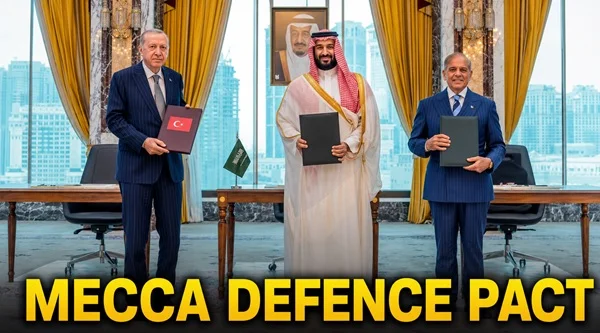
Saudi Arabia, Turkey and Pakistan signed the Mecca Joint Defence Agreement on 7 August 2026 in Mecca.
Important Point

  • The most significant reported provision of the agreement is the principle of collective defence, under which an armed attack against any one of the three countries would be regarded as an attack against all three.
  • Saudi Arabia–Pakistan: Pakistan has longstanding military and security ties with Saudi Arabia. The Mecca Pact also builds upon the Saudi–Pakistan Strategic Mutual Defence Agreement (SMDA) of September 2025.
  • Saudi Arabia–Turkey: Defence relations have expanded rapidly, particularly in defence technology, drones and military-industrial cooperation.
  • Pakistan–Turkey: Both countries maintain close defence ties involving military exercises, training, naval cooperation and defence equipment.

Why was the Mecca Defence Pact Signed?

  1. Rising Regional Tensions: Conflicts and tensions involving Iran, Israel, the United States and regional armed groups have created uncertainty in West Asia. The three countries therefore see greater security cooperation as a way to strengthen deterrence.
  2. Saudi Arabia’s Strategic Autonomy: Saudi Arabia has traditionally depended heavily on the United States for security. Riyadh is now seeking to diversify its strategic partnerships and reduce excessive dependence on a single external security provider.
  3. Pakistan’s Strategic Value: Pakistan provides: Military Manpower + Operational Experience + Defence Expertise + Strategic Capability. For Pakistan, closer ties with Saudi Arabia also provide greater diplomatic and strategic space.
  4. Turkey’s Regional Ambitions: Turkey seeks a larger geopolitical role in West Asia. Its rapidly growing indigenous defence industry, especially in drones, missiles, naval systems and electronic warfare, provides an important instrument of regional influence.
  5. Defence Industry Development: Saudi Arabia wants to expand indigenous defence production. Cooperation with Turkey and Pakistan could provide technology, military expertise and opportunities for joint production.
  6. Collective Deterrence: The basic logic is Three Countries Mutual Support Higher Cost of Aggression Stronger Deterrence

Significance

  • New Security Architecture in West Asia: The pact indicates that regional powers are increasingly trying to build their own security arrangements instead of depending entirely on external powers.
  • Saudi Strategic Diversification: It reflects Saudi Arabia's broader attempt to diversify relations beyond its traditional dependence on Washington.
  • Rise of Turkey as a Defence Power: Turkey’s defence industry is becoming an important component of its foreign policy and regional influence.
  • Pakistan’s West Asian Role: Pakistan could gain greater importance as a military and security partner in the Gulf.
  • Defence Industrial Integration: The combination of Saudi capital, Turkish technology and Pakistani military experience could create significant defence-industrial cooperation.

Is it a ‘NATO of the Muslim World’?

  • The collective-defence provision has led to comparisons with NATO's Article 5, but the Mecca Pact should not yet be considered a Muslim NATO.
  • NATO has: Integrated Command + Permanent Institutions + Joint Planning + Established Military Structures
  • The Mecca Pact currently lacks a comparable unified military command or permanently deployed joint force.

There are also major differences in strategic priorities:

  • Saudi Arabia Gulf Security 
  • Turkey Europe + Mediterranean + West Asia
  • Pakistan India-centric Security Concerns

Therefore, the real strength of the pact will depend on how the three countries respond during an actual military crisis.

India Relevance

1. Pakistan Gains Strategic Space

Pakistan could gain greater: Diplomatic Leverage + Defence Technology + Financial Support + Military Cooperation

This could indirectly affect India's security environment.

2. India–Saudi Relations:

India and Saudi Arabia have developed strong cooperation in: Energy + Trade + Investment + Connectivity + Security

If Saudi Arabia becomes more strategically dependent on Pakistan, India will have to carefully manage this relationship.

3. Türkiye–Pakistan Defence Cooperation:

India will need to closely monitor expanding Pakistan–Türkiye defence cooperation, particularly in advanced military technologies.

4. Gulf and Red Sea Security:

India depends heavily on the Gulf and Red Sea for: Energy Supplies + Maritime Trade + Connectivity

Any increase in regional rivalry or instability could directly affect India's economic and strategic interests.

5. Indian Diaspora:

Millions of Indians live and work in Gulf countries. Regional instability can therefore have direct implications for their safety and livelihoods.

6. Limited Immediate Military Impact:

The pact does not automatically mean that Saudi Arabia or Turkey would enter an India–Pakistan conflict.

India is not explicitly identified as an adversary, and the precise military obligations under the agreement remain unclear.

Challenges for India

  • Growing Pakistan–Türkiye defence cooperation
  • Possible increase in Pakistan's strategic leverage
  • Changing balance of power in West Asia
  • Protection of Indian energy interests
  • Security of maritime trade routes
  • Balancing relations with Saudi Arabia and other Gulf countries
  • Monitoring possible defence technology transfers to Pakistan

Way Forward

  • India should avoid viewing the Mecca Defence Pact automatically as an anti-India military alliance.
  • Instead, India should follow a policy of strategic balancing and calibrated diplomacy.
  • New Delhi should deepen its strategic partnership with Saudi Arabia in energy, investment, trade, technology and defence while simultaneously strengthening relations with other Gulf partners.
  • India should also closely monitor Pakistan–Türkiye defence cooperation, particularly the transfer of advanced defence technologies.

Prelims MCQ

Q. Consider the following statements regarding the Mecca Defence Pact:

  1. It involves Saudi Arabia, Türkiye and Pakistan.
  2. It contains a collective-defence principle under which an attack on one member is treated as an attack on all.
  3. It has established an integrated military command similar to NATO.
  4. India has been officially identified as an adversary under the pact.

Which of the statements given above are correct?

(a) 1 and 2 only
(b) 1, 2 and 3 only
(c) 2 and 4 only
(d) 1, 2, 3 and 4

Mains Practice Question

Q. “The Mecca Defence Pact represents an emerging attempt by regional powers to reshape the security architecture of West Asia.” Examine the strategic significance of the pact and discuss its implications for India.

FAQs

What is the Mecca Defence Pact?

It is a trilateral defence agreement involving Saudi Arabia, Türkiye and Pakistan, aimed at strengthening collective deterrence and defence cooperation.

When was the Mecca Defence Pact signed?

It was signed on 7 August 2026 in Mecca.

What is its most important feature?

Its most important reported feature is collective defence—an attack on one member would be regarded as an attack on all three.

Is the Mecca Defence Pact like NATO?

It contains a NATO-like collective-defence principle, but currently lacks NATO's integrated command, permanent institutions and established joint military structure.

Is the pact against India?

The pact does not explicitly identify India as an adversary. However, deeper Saudi–Pakistan–Türkiye defence cooperation could have indirect strategic implications for India.

UP’s New Maternity Leave Policy 2026: 180 Days Twice and No Mandatory Two-Year Gap

Prelims: Government Policies & Schemes, Women’s Welfare, Maternity Benefit Act, 1961, Code on Social Security, 2020, Uttar Pradesh Current Affairs
Mains: GS Paper I: Women-related Issues, Role of Women, Social Empowerment
GS Paper II: Government Policies and Interventions, Welfare Schemes for Vulnerable Sections, Judiciary
GS Paper III: Employment and Social Security

Why in the News?

The Uttar Pradesh Cabinet on 22 August 2026 approved an amendment allowing eligible women state government employees to avail 180 days of paid maternity leave twice during their service. A major change is the removal of the earlier requirement of a minimum two-year gap between two spells of maternity leave. The decision also extends maternity-leave benefits to eligible adoptive mothers.

Key Facts

Aspect

Details

State

Uttar Pradesh

Maternity Leave

180 days

Maximum Availability

Twice during service

Nature

Paid maternity leave

Major Change

Two-year mandatory gap removed

Rule Amended

Rule 153(1), UP Financial Handbook

Important Central Law

Maternity Benefit Act, 1961

Related Labour Code

Code on Social Security, 2020

Adoptive Mother 

Also covered 

What Has the Uttar Pradesh Government Changed?

  • The Cabinet approved an amendment to Rule 153(1) of the Uttar Pradesh Financial Handbook, Volume II, and Parts II to IV.
  • Under the revised arrangement:
  • Eligible women employees can receive 180 days of maternity leave.
  • The benefit can be availed twice during service.
  • The earlier requirement of maintaining a two-year interval between two maternity leaves has been removed.
  • The benefit has also been extended to adoptive mothers, subject to the applicable rules.

Why Was the Two-Year Gap Controversial?

  • The earlier rule could create difficulties when a woman became pregnant again before two years had elapsed after her previous maternity leave.
  • For example, in a case involving a staff nurse/nursing officer, the employee had received 180 days of maternity leave in 2024. When she sought another 180 days for her second pregnancy in 2026, the application was rejected solely because the prescribed two-year interval had not elapsed.
  • The Allahabad High Court held that the Code on Social Security, 2020 would prevail over conflicting executive instructions, including the restrictive provision of Rule 153(1).

Who Will get benefit?

  • The central beneficiaries of the decision are eligible women employees of the Uttar Pradesh state government. The Cabinet decision also provides coverage for adoptive mothers under the amended framework.

Judicial Background

  • The Allahabad High Court examined whether state-level service rules could restrict maternity benefits by prescribing a compulsory interval between pregnancies.
  • The Court observed that executive instructions cannot override benefits flowing from parliamentary legislation. This provided an important legal background to the subsequent amendment of the state rule.
  • Another significant Allahabad High Court judgment in Deeptee v. State of U.P. (2025) dealt with a contractual employee who had been denied a second spell of maternity leave. The Court rejected the differentiation relied upon by the authorities and directed that she be granted a second maternity leave of 180 days or up to the period of her contract, whichever was earlier.

Code on Social Security, 2020

  • It consolidates several social-security laws and contains provisions relating to maternity benefits within a wider social-security framework.
  • The Allahabad High Court's reasoning is particularly significant because it emphasised that benefits under parliamentary legislation cannot be curtailed by conflicting state executive instructions.

Why is 180-Day Maternity Leave Important?

  • Maternal Health: Six months of leave provides mothers with greater time for physical recovery after childbirth and postnatal care.
  • Infant Care: The early months after birth are critical for nutrition, breastfeeding, immunisation and mother-child bonding.
  • Employment Security: Maternity protection helps prevent childbirth from becoming a reason for women to leave employment.
  • Financial Security: Paid maternity leave reduces the financial burden associated with taking time away from work for childbirth and childcare.
  • Work-Life Balance: Removing an arbitrary two-year gap gives women greater flexibility in balancing reproductive choices and professional responsibilities.
  • Women's Labour-Force Participation: Supportive maternity and childcare policies can help retain women in the workforce and reduce the career costs associated with motherhood.

Constitutional Provisions Related to Maternity Protection

Article 15(3): Special Provisions for Women and Children

  • It permits the State to make special provisions for women and children.
  • It provides an important constitutional foundation for gender-sensitive welfare measures.

Article 16: Equality in Public Employment

  • It provides for equality of opportunity in matters relating to public employment.
  • Maternity protection helps ensure that pregnancy and childbirth do not unfairly disadvantage women in government employment.

Article 42: Maternity Relief

  • It is a Directive Principle of State Policy (DPSP) and directs the State to make provisions for: “Just and humane conditions of work and for maternity relief.”
https://www.sanskritiias.com/uploaded_files/images/up-maternity-leave-policy.webp

Significance of Including Adoptive Mothers

  • The inclusion of adoptive mothers broadens the understanding of maternity and childcare benefits. It recognises that childcare responsibilities are not limited to biological childbirth.
  • Adoptive parents also require time for child bonding, adjustment and caregiving, family integration and early childcare. 

Significance of the UP Government's Decision

  • Strengthening Women's Welfare: The decision provides greater institutional protection to women employees during pregnancy and motherhood.
  • Removing an Arbitrary Restriction: The removal of the two-year interval ensures that maternity benefits are not denied merely because two pregnancies occur within a particular timeframe.
  • Bringing Rules in Line with Judicial Interpretation: The amendment responds to judicial concerns about restrictive executive rules conflicting with statutory maternity protections.
  • Supporting Reproductive Choice: Employment rules should not unnecessarily dictate the timing or spacing of pregnancies.
  • Strengthening Child Welfare: Maternity leave benefits the child as well as the mother by supporting early childcare and bonding.
  • Inclusive Definition of Motherhood: Coverage for adoptive mothers makes the policy more responsive to diverse family structures.

Comparison with Tamil Nadu

Uttar Pradesh

Tamil Nadu

180 days

365 days

Benefit available twice during service

One-year maternity leave extended to third child

Two-year gap removed

Earlier third-child restriction relaxed

Adoptive mothers included under revised framework

Announcement focused on women state government employees

Challenges and Concerns

  • Government–Private Sector Gap: Government employees may receive more generous service benefits than many women in informal or private employment, raising questions about unequal maternity protection.
  • Informal-Sector Women: A large proportion of India's female workforce works outside regular salaried government employment. Extending effective maternity and childcare support to these workers remains challenging.
  • Administrative Costs: Long paid leave may require temporary staffing, workload redistribution and additional government expenditure.
  • Career Penalty: Even where maternity leave is legally protected, women may face indirect disadvantages in promotions, postings, training or career opportunities.

Maternity Benefit Act, 1961

  • The Maternity Benefit Act, 1961 is India's principal legislation dealing with maternity benefits for women employed in establishments covered by the Act.
  • Its objective is to protect women's employment during maternity and provide financial and employment security during childbirth.
  • The Maternity Benefit (Amendment) Act, 2017 significantly expanded maternity benefits. For eligible women covered under the Act:
  • Maternity benefit can extend to 26 weeks for a woman having fewer than two surviving children.
  • For women having two or more surviving children, the statutory entitlement is generally 12 weeks.
  • Certain maternity benefits are available to adoptive and commissioning mothers, subject to statutory conditions.
  • Establishments with 50 or more employees are subject to the Act's crèche-related requirement.

Other Government and State Policies

Government/State

Policy / Provision

Key Feature

Central Government Employees

CCS Leave framework

Women Central Government employees can receive 180 days of maternity leave. The Centre also provides Child Care Leave (CCL), subject to prescribed conditions.

Central Government – Surrogacy

2024 rules

In eligible surrogacy cases, both the surrogate mother and commissioning mother can receive 180 days maternity leave. A commissioning mother can also receive up to 730 days of Child Care Leave, while a commissioning father can receive 15 days paternity leave.

Andhra Pradesh 

Maternity Leave Reform

Andhra Pradesh removed the earlier two-surviving-children restriction for maternity leave for married women state government employees. The maternity-leave period is 180 days.

Prelims Practice Question

Q. Article 42 of the Constitution of India deals with:

A. Equal pay for equal work

B. Maternity relief and humane working conditions

C. Free legal aid

D. Uniform Civil Code

Mains Practice Questions

Q. Discuss how recent state-level maternity policies reflect changing approaches towards women, work and family welfare in India.

FAQs

What has the UP Cabinet approved?

It approved 180 days of paid maternity leave twice during service.

What major restriction has been removed?

The mandatory two-year gap between two maternity leaves has been removed.

How many times can maternity leave be availed?

Eligible women employees can avail it twice during service.

Which UP rule was amended?

Rule 153(1) of the Uttar Pradesh Financial Handbook.

What is India’s main maternity-benefit law?

The Maternity Benefit Act, 1961, substantially amended in 2017.

What Is Non-GMO High-Expansion Popcorn Maize? VP C. P. Radhakrishnan to Launch India’s First Hybrid Seed

Why in News?

Vice President of India C. P. Radhakrishnan is scheduled to visit Musunuru in Eluru district, Andhra Pradesh, on August 24, 2026. During his visit, he will attend a programme at the Gourmet Popcornica Factory, where he will launch India’s first Non-GMO High-Expansion Popcorn Maize Hybrid Seed.


What Is Non-GMO High-Expansion Popcorn Maize Hybrid Seed?

  • The Non-GMO High-Expansion Popcorn Maize Hybrid Seed is a specialised maize seed developed for producing popcorn.
  • The name itself explains its three major characteristics:
    • Non-GMO: It is developed without genetic engineering.
    • Hybrid: It is produced by crossing selected parent plants with desirable traits.
    • High-Expansion: Its kernels are capable of expanding significantly when heated, producing popcorn with greater volume.
  • In simple terms, it is a specialised hybrid maize seed designed specifically for popcorn production without using genetic engineering.

What Is Popcorn Maize?

  • Popcorn maize is a specialised variety of maize whose kernels can pop when heated.
  • Unlike ordinary maize, popcorn kernels have a hard outer covering and a small amount of moisture inside. When the kernel is heated, the moisture turns into steam. This increases the pressure inside the kernel until the outer covering ruptures.
  • The starch inside the kernel then expands, producing the light and fluffy popcorn that people commonly consume as a snack.
  • Therefore, not every maize variety is suitable for making popcorn. Popcorn maize has specific kernel characteristics that enable it to pop and expand properly.

Why Is It Called “High-Expansion” Popcorn Maize?

  • Expansion refers to how much a popcorn kernel increases in volume after popping.
  • A high-expansion popcorn maize variety can produce a larger volume of popcorn from a given quantity of kernels.
  • This characteristic is important for the commercial popcorn industry, where the size and volume of popped popcorn are important quality parameters.
  • Thus, the term “high-expansion” indicates the popcorn-producing capability of the specialised maize kernels.

What Does Non-GMO Mean?

  • GMO stands for Genetically Modified Organism.
  • A genetically modified crop is developed using genetic engineering, in which the genetic material of an organism is deliberately altered using biotechnology.
  • A Non-GMO crop is not developed through genetic engineering.
  • Therefore: Non-GMO popcorn maize = popcorn maize developed without genetic engineering.
  • It is important to note that Non-GMO does not mean that the crop has not been improved by plant breeding. Conventional breeding and hybridisation can still be used to develop Non-GMO varieties.

What Is a Hybrid Seed?

  • A hybrid seed is produced by crossing two selected parent plants to combine desirable characteristics.
  • Plant breeders select parent plants with useful traits and cross them to produce offspring with targeted characteristics.
  • For example, breeders may select parent plants based on characteristics such as:
    • Better yield
    • Desired kernel characteristics
    • Suitable plant performance
    • Improved quality traits
  • Specific requirements of the food-processing industry

Hybrid vs GMO: Are They the Same?

  • No. Hybrid and GMO are two different concepts.
  • A hybrid is developed by crossing selected parent plants, while a GMO is developed using genetic engineering.
  • Therefore, a seed can be:
    • Hybrid + Non-GMO
    • This is an important concept for competitive examinations.

 GMO vs Non-GMO Popcorn Maize

Feature

GMO Popcorn Maize

Non-GMO Popcorn Maize

Development method

Genetic engineering

Conventional breeding/hybridisation methods

Genetic engineering

Used

Not used

Can it be hybrid?

Yes

Yes

Can it produce popcorn?

Depending on variety

Depending on variety

Key difference

Genetic material is deliberately modified

Genetic engineering i

Why Is the Seed Important?

The launch is important from the perspective of specialised agriculture and food processing.

1. Specialised Maize Cultivation

The seed is designed specifically for popcorn production rather than general-purpose maize cultivation. This can support diversification into specialised maize varieties.

2. Link with Food Processing

Popcorn is a processed food product with demand in cinemas, retail stores, restaurants and the packaged-snack industry. Specialised maize production can therefore strengthen the connection between farm production and food processing.

3. Importance of Seed Technology

The development demonstrates how plant breeding can be used to develop seeds with specific characteristics required by a particular industry.

4. Non-GMO and Hybrid Together

The seed is an important example for understanding that hybridisation and genetic modification are not synonymous. A crop can be hybrid while remaining Non-GMO.

Popcorn Maize vs Ordinary Maize

Basis

Popcorn Maize

Ordinary Maize

Main use

Popcorn production

Food, feed, starch and industrial uses

Kernel characteristics

Specialised for popping

Generally not selected specifically for popping

Popping ability

High

Generally unsuitable for commercial popcorn production

Expansion

Important quality characteristic

Not the primary characteristic


Prelims Question

Q. Consider the following statements regarding the Non-GMO High-Expansion Popcorn Maize Hybrid Seed:

  1. It is developed using genetic engineering techniques.
  2. It is a hybrid seed developed by crossing selected parent plants.
  3. It is specifically intended for popcorn production.
  4. High expansion refers to the ability of kernels to increase significantly in volume after popping.

Which of the statements given above are correct?

  1. 1 and 2 only

  2. 2, 3 and 4 only

  3. 1, 3 and 4 only

  4. 1, 2, 3 and 4

Mains Question

Q. What is a hybrid seed? Explain how hybridisation differs from genetic modification. In this context, discuss the significance of a Non-GMO high-expansion popcorn maize hybrid seed.

FAQs

1. What is a Non-GMO High-Expansion Popcorn Maize Hybrid Seed?

It is a specialised hybrid maize seed developed for popcorn production. Its three key characteristics are Non-GMO, Hybrid and High-Expansion.

2. Why is the Non-GMO Popcorn Maize Hybrid Seed in the news?

It is in the news because Vice President C. P. Radhakrishnan is scheduled to launch India’s first Non-GMO High-Expansion Popcorn Maize Hybrid Seed on August 24, 2026.

3. Who will launch the new popcorn maize hybrid seed?

Vice President of India C. P. Radhakrishnan will launch the seed.

4. Where will the seed be launched?

The seed will be launched at a programme at the Gourmet Popcornica Factory in Musunuru, Eluru district, Andhra Pradesh.

5. What is Popcorn Maize?

Popcorn maize is a specialised type of maize whose kernels can pop when heated and produce popcorn.

Annapoorani Super Six Scheme: Tamil Nadu’s Free LPG Cylinder Initiative

Prelims: State Government Schemes, LPG Subsidy, Direct Benefit Transfer, Social Welfare Schemes, Tamil Nadu
Mains: GS Paper II: Government Policies and Interventions, Welfare Schemes for Vulnerable Sections, Issues Related to Poverty
GS Paper III: Inclusive Growth, Agriculture and Farmers’ Welfare
Keywords: Annapoorani Super Six Scheme, Tamil Nadu, Free LPG Cylinders, LPG Subsidy, Direct Benefit Transfer, DBT, Women Welfare, Household Expenditure, Small Farmers, Social Welfare

Why in News?

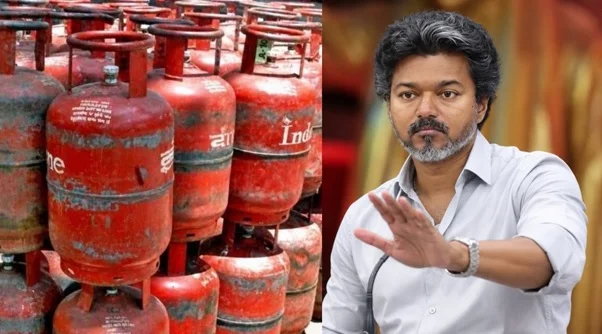
Tamil Nadu Chief Minister C. Vijay Joseph has announced the Annapoorani Super Six Scheme, under which eligible families in the state will receive six free LPG cylinders every year.
Important Point

  • The scheme was one of the major welfare promises made during Vijay’s election campaign and is aimed at reducing the financial burden of cooking gas expenditure on households.
  • The Tamil Nadu government plans to roll out the scheme after Pongal, by January 2027, with preparatory work already underway.

What is the Annapoorani Super Six Scheme?

The Annapoorani Super Six Scheme is a proposed welfare initiative of the Tamil Nadu government aimed at providing financial support to households for purchasing LPG cylinders.

Under the scheme:

  • Eligible families will receive the benefit equivalent to six LPG cylinders every year.
  • In the initial phase, the government will provide support for three cooking gas cylinders per family.
  • Subsequently, the cost of LPG cylinders will be credited directly into the bank accounts of beneficiaries.
  • The scheme is expected to cover around 1.30 crore families across Tamil Nadu.
  • The state government proposes to allocate around ₹4,000 crore annually for the scheme.

When Will the Scheme Be Launched?

According to the announcement by the Chief Minister, the Annapoorani LPG Cylinder Scheme is expected to be launched by January 2027, after the Pongal harvest festival. The government has stated that preparatory work for implementation has already begun.

Who Can Avail the Annapoorani Super Six Scheme?

The scheme is intended primarily for economically weaker and vulnerable households.

The proposed beneficiaries include:

  • Families with an annual income of around ₹2.5 lakh
  • Economically backward families
  • Small and medium farmer families
  • Families with differently abled members
  • Poor and vulnerable households

The detailed eligibility conditions, documentation requirements and application procedure are expected to become clearer once the government issues the formal operational guidelines.

How Will the LPG Benefit Be Provided?

The government plans to use a Direct Benefit Transfer (DBT)-based mechanism.

Expected Process

Eligible Household LPG Cylinder Purchase Government Assistance Amount Credited to Bank Account

  • Instead of permanently altering the market price of LPG, the government can reimburse eligible beneficiaries for the cost of the specified number of cylinders.
  • This approach can also help in maintaining a digital record of beneficiaries and reducing duplication or leakage in welfare delivery.

Why Has Tamil Nadu Announced the Scheme?

  1. Reduce Household Expenditure: LPG cylinders form an important part of the monthly expenditure of many families. Providing support for six cylinders annually can reduce this burden.
  2. Support Economically Weaker Families: The scheme specifically targets poorer households and families with limited annual income.
  3. Support Farmers: Small and medium farmer families are also proposed to be included among the beneficiaries, extending the scheme beyond purely urban welfare.
  4. Promote Clean Cooking Fuel: Affordable LPG access can encourage households to continue using cleaner cooking fuel instead of shifting towards traditional biomass fuels such as firewood.
  5. Women-Centric Welfare Impact: Women often bear a disproportionate burden from the use of traditional cooking fuels. Greater affordability of LPG can therefore have indirect benefits for women’s health, convenience and time use.

Significance of the Scheme

The Annapoorani Super Six Scheme combines social welfare with household energy security.

If implemented effectively, the scheme could:

  • Reduce the cost of cooking fuel for vulnerable households
  • Improve access to clean cooking energy
  • Increase disposable income available for food, education and healthcare
  • Provide additional support to small farmer households
  • Strengthen the use of DBT-based welfare delivery

With around 1.30 crore families expected to benefit, the scheme could become one of Tamil Nadu’s major household welfare programmes.

Challenges

  • Fiscal Burden: An annual allocation of around ₹4,000 crore represents a significant recurring expenditure for the state government.
  • Identification of Beneficiaries: The government will need an effective mechanism to identify eligible households and prevent inclusion and exclusion errors.
  • DBT and Banking Access: Accurate linking of beneficiary databases, bank accounts and LPG consumer records will be important for smooth implementation.
  • Long-Term Sustainability: Since six cylinders are proposed to be supported every year, the scheme creates a recurring fiscal commitment rather than a one-time expenditure.
  • Centre-State Coordination: Domestic LPG supply and existing subsidy mechanisms involve central government systems and oil marketing companies. Effective data and administrative coordination could therefore be important.

Annapoorani Scheme and PM Ujjwala Yojana: Key Difference

The two schemes address clean cooking access from different angles.

  • Pradhan Mantri Ujjwala Yojana (PMUY) primarily seeks to expand LPG access among eligible poor households by providing LPG connections and associated support.
  • The Annapoorani Super Six Scheme, on the other hand, focuses on reducing the recurring cost of LPG consumption by supporting eligible Tamil Nadu families for up to six cylinders annually.

Thus, the broader policy chain can be understood as: LPG Connection Affordable Refill Sustained LPG Usage Clean Cooking Energy

Way Forward

  • Tamil Nadu should develop a transparent beneficiary database and clearly define income and socio-economic eligibility criteria before implementation.
  • The government should integrate LPG consumer IDs, Aadhaar-linked authentication where legally applicable, and bank accounts to make DBT efficient while ensuring adequate safeguards for privacy and grievance redressal.
  • Regular evaluation should also examine whether the scheme is increasing LPG refill frequency and reducing household dependence on traditional cooking fuels.

Prelims MCQ

Q. The Annapoorani Super Six Scheme is associated with which state?

(a) Keralam
(b) Karnataka
(c) Tamil Nadu
(d) Telangana

Mains Practice Question

“Affordable access to clean cooking fuel requires not only LPG connections but also the ability of households to afford regular refills.” Discuss in the context of state-level LPG subsidy schemes in India.

FAQs

1. What is the Annapoorani Super Six Scheme?

It is a Tamil Nadu government initiative to provide eligible families with six free LPG cylinders every year.

2. When will the scheme be launched?

The scheme is expected to be launched after Pongal, by January 2027.

3. How many families will benefit from the scheme?

Around 1.30 crore families are expected to benefit.

4. What is the annual allocation for the scheme?

The Tamil Nadu government plans to allocate around ₹4,000 crore annually.

5. Who will be eligible for the scheme?

Low-income, economically weaker, small and medium farmer, differently-abled and poor families are expected to be covered.

upsc english
« »
  • SUN
  • MON
  • TUE
  • WED
  • THU
  • FRI
  • SAT
Have any Query?

Our support team will be happy to assist you!

OR