- UPSC Exam
- State PCS
- One Day Exam
- Current Affairs
- PT Quiz
- Downlaods
- About Coaching
- Blog
- Videos

| Prelims: (Defence + CA) Mains: (GS 1 – Ancient Maritime History; GS 3 – Defence, Maritime Security) |
The Indian Navy’s stitched sailing vessel INSV Kaundinya is set to undertake her maiden overseas voyage, marking a significant milestone in showcasing India’s ancient maritime traditions and seafaring heritage through a living naval experiment.

India has a long and rich history of maritime trade and cultural exchange, particularly with Southeast Asia, dating back over two millennia. Ancient Indian ships played a crucial role in the spread of commerce, religion, art, and political ideas across the Indian Ocean region.
Recent years have seen renewed efforts to highlight this heritage as part of India’s maritime diplomacy and cultural soft power, aligning with initiatives such as Project Mausam and the broader Indo-Pacific vision.
INSV Kaundinya represents a fusion of archaeology, traditional craftsmanship, and naval expertise, transforming historical knowledge into a functional seafaring vessel.
A stitched sailing vessel, inspired by a 5th-century ship depiction in Ajanta cave paintings
FAQsQ1. What is INSV Kaundinya ? A stitched sailing vessel of the Indian Navy inspired by ancient Indian shipbuilding traditions. Q2. Why is it called a stitched ship ? Because it is built using stitched joints with coir rope instead of metal nails. Q3. Which historical source inspired its design ? A 5th-century ship depiction from the Ajanta cave paintings. Q4. Who was Kaundinya ? A legendary Indian mariner who founded the Funan kingdom in Southeast Asia. Q5. Why is INSV Kaundinya significant for India ? It showcases India’s ancient maritime heritage and strengthens cultural and maritime diplomacy. |
| Prelims: (Defence + CA) Mains: (GS 1 – Ancient Maritime History; GS 3 – Defence, Maritime Security) |
The Indian Navy’s stitched sailing vessel INSV Kaundinya is set to undertake her maiden overseas voyage, marking a significant milestone in showcasing India’s ancient maritime traditions and seafaring heritage through a living naval experiment.
India has a long and rich history of maritime trade and cultural exchange, particularly with Southeast Asia, dating back over two millennia. Ancient Indian ships played a crucial role in the spread of commerce, religion, art, and political ideas across the Indian Ocean region.
Recent years have seen renewed efforts to highlight this heritage as part of India’s maritime diplomacy and cultural soft power, aligning with initiatives such as Project Mausam and the broader Indo-Pacific vision.
INSV Kaundinya represents a fusion of archaeology, traditional craftsmanship, and naval expertise, transforming historical knowledge into a functional seafaring vessel.
A stitched sailing vessel, inspired by a 5th-century ship depiction in Ajanta cave paintings
FAQsQ1. What is INSV Kaundinya ? A stitched sailing vessel of the Indian Navy inspired by ancient Indian shipbuilding traditions. Q2. Why is it called a stitched ship ? Because it is built using stitched joints with coir rope instead of metal nails. Q3. Which historical source inspired its design ? A 5th-century ship depiction from the Ajanta cave paintings. Q4. Who was Kaundinya ? A legendary Indian mariner who founded the Funan kingdom in Southeast Asia. Q5. Why is INSV Kaundinya significant for India ? It showcases India’s ancient maritime heritage and strengthens cultural and maritime diplomacy. |
| Prelims: (Infrastructure + Disaster Management + CA) Mains: (GS Paper 3 – Infrastructure, Disaster Management, Security, Ecology) |
Following the Silkyara Bend–Barkot Tunnel collapse on NH-134 (Char Dham Mahamarg Pariyojana) in Uttarakhand on 12 November 2023, the Ministry of Road Transport and Highways (MoRTH) has issued comprehensive tunnel safety guidelines.
The collapse trapped 41 workers for 17 days, exposing serious gaps in geological assessment, tunnel design, and emergency preparedness, especially in the fragile Himalayan region.
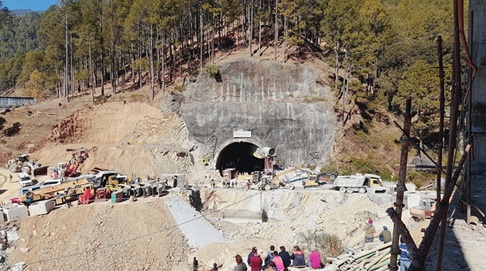
India’s recent infrastructure push—particularly under Char Dham Connectivity, strategic border roads, and mountain highways—has significantly increased tunnelling activity in geologically young and unstable terrains.
The Himalayas, being a fold mountain system, are prone to:
The Silkyara incident became a watershed moment, highlighting how procedural compliance-driven project execution failed to address ground realities, necessitating a risk-based engineering approach.
Issues Identified
Guidelines
Core Concerns
Special Conditions to be Assessed
New Austrian Tunnelling Method (NATM)
Tunnel Boring Machine (TBM)
As per MoRTH’s reply in Parliament (December 12, 2024):
FAQsQ1. What was the Silkyara tunnel incident ? A tunnel collapse in Uttarakhand in November 2023 that trapped 41 workers for 17 days. Q2. Why are tunnels risky in the Himalayas ? Due to young fold mountains, seismicity, weak rock mass, and high water ingress. Q3. What is a Geotechnical Baseline Report (GBR) ? A document defining baseline geological conditions for risk allocation and contract transparency. Q4. What is the NATM method of tunnelling? A flexible “design-as-you-go” tunnelling method suitable for variable geology. Q5. How do the new guidelines improve safety ? By mandating risk zoning, emergency preparedness, scientific planning, and human capacity-building. |
| Prelims: (Polity + Geography + CA) Mains: (GS 2 – Polity, Constitution; GS Paper 3 – Internal Security) |
Fresh violence erupted in West Karbi Anglong district of Assam, resulting in two deaths, multiple injuries, arson of shops and markets, suspension of mobile internet services, and imposition of prohibitory orders.
The violence is rooted in long-standing land disputes, particularly over alleged encroachments on Professional Grazing Reserve (PGR) and Village Grazing Reserve (VGR) lands under the jurisdiction of the Karbi Anglong Autonomous Council (KAAC).
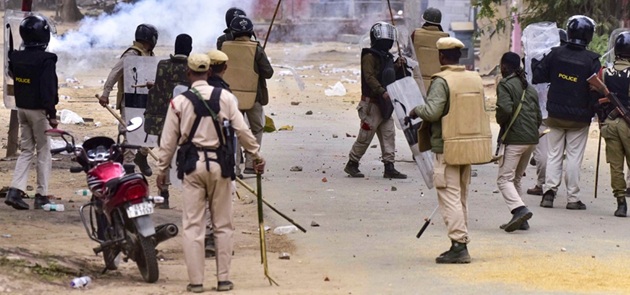
Karbi Anglong and West Karbi Anglong are tribal-majority hill districts governed under the Sixth Schedule of the Constitution, which provides autonomous councils to safeguard tribal identity, land, and customary practices.
Over decades, demographic pressures, migration, and weak land governance have created friction between indigenous Karbi tribes and non-tribal settlers, particularly over land reserved for traditional livelihoods.
The issue has periodically erupted into unrest, reflecting the structural challenges of balancing tribal autonomy with constitutional rights of settlers.
FAQsQ1. What triggered the recent violence in Karbi Anglong ? The perceived arrest of hunger-striking protesters demanding eviction of encroachers from grazing reserve lands. Q2. What is the Sixth Schedule of the Constitution ? It provides autonomous governance to tribal areas to protect land, culture, and customary practices. Q3. What are PGR and VGR lands ? Professional and Village Grazing Reserves reserved for livestock grazing, especially for tribal livelihoods. Q4. Why are evictions legally constrained ? Due to a PIL pending in the Gauhati High Court, restricting administrative action. Q5. Why is Karbi Anglong prone to ethnic tensions ? Due to historical insurgency, land disputes, migration pressures, and weak land governance mechanisms. |
| Prelims: (Economy + CA) Mains: (GS 3 – Industrial Growth, Employment, Economic Development) |
India’s persistent underperformance in manufacturing growth has come under renewed focus amid debates on structural constraints, public sector wage dynamics, productivity gaps, and their implications for industrial competitiveness and job creation.
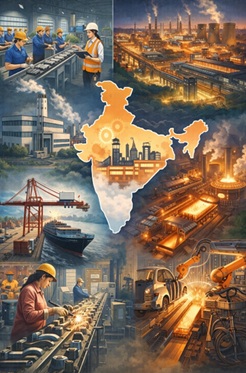
Manufacturing has historically been the backbone of economic transformation across countries. Economies such as China and South Korea leveraged manufacturing to absorb surplus labour, raise productivity, and integrate into global trade.
India, however, has followed an atypical development trajectory. While services expanded rapidly, manufacturing failed to emerge as a dominant growth engine. Despite starting the 20th century at development levels comparable to several East Asian economies, India did not witness a sustained manufacturing boom. This divergence has raised concerns about structural weaknesses in India’s industrialisation strategy.
FAQsQ1. Why is manufacturing important for development ? It absorbs surplus labour, raises productivity, and supports exports. Q2. How has India’s development path differed from East Asia ? India skipped manufacturing-led growth and moved directly to services. Q3. What is the Dutch disease analogy in India’s case ? High public sector wages raised prices and hurt manufacturing competitiveness. Q4. Why didn’t Indian manufacturing upgrade technologically ? Reliance on cheap labour and weak incentives for innovation limited productivity growth. Q5. What is the main policy challenge ahead ? Preventing premature de-industrialisation and reviving manufacturing-led job creation. |
| Prelims: (Art & Culture + CA) Mains: (GS 1 – Indian Culture, Ancient History, Archaeology) |
Archaeologists have discovered a large circular stone labyrinth in the Boramani grasslands of Solapur district, Maharashtra, identified as the largest circular stone labyrinth ever recorded in India.
The discovery has generated significant interest due to its unique design, exceptional scale, and its possible links to Indo-Roman trade networks during the Satavahana period.
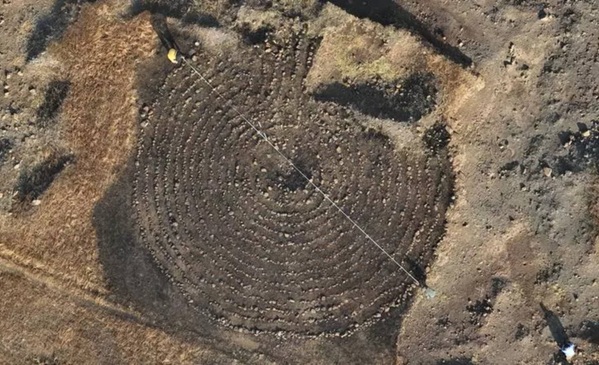
India’s archaeological landscape continues to reveal evidence of cross-cultural interactions, particularly during the early historic period (circa 1st century BCE to 3rd century CE).
The Satavahana dynasty, which ruled large parts of the Deccan, played a pivotal role in facilitating maritime and overland trade with the Roman world, reflected in coinage, ports, and material culture.
Labyrinth motifs—though rare in India—are globally significant symbols, often associated with ritual movement, cosmology, and symbolic journeys, making the Solapur discovery archaeologically and culturally significant.
Though often used interchangeably, they are structurally and conceptually distinct
FAQsQ1. Where was India’s largest circular stone labyrinth discovered ? In the Boramani grasslands of Solapur district, Maharashtra. Q2. Which historical period is the labyrinth linked to ? It is associated with the Satavahana dynasty period. Q3. What is the Chakravyūha ? A complex circular military formation described in the Mahabharata. Q4. How is a labyrinth different from a maze ? A labyrinth has a single winding path, while a maze has multiple paths and dead ends. Q5. Why is this discovery significant ? It represents the largest circular stone labyrinth in India and highlights Indo-Roman cultural interactions. |

Our support team will be happy to assist you!

 Contact Us
  New Batch : 9555124124/ 7428085757
  Tech Support : 9555124124/ 7428085757