New
Hindi Medium: (Delhi) - GS Foundation (P+M) : 8th June 2026, 6:30 PM Hindi Medium: (Prayagraj) - GS Foundation (P+M) : 1st June 2026, 5:30 PM English Medium: (Prayagraj) - GS Foundation (P+M) : 7th June 2026, 8:00 AM Hindi Medium: (Delhi) - GS Foundation (P+M) : 8th June 2026, 6:30 PM Hindi Medium: (Prayagraj) - GS Foundation (P+M) : 1st June 2026, 5:30 PM English Medium: (Prayagraj) - GS Foundation (P+M) : 7th June 2026, 8:00 AM

Current Affairs for 26 May 2026

Initiatives towards conservation of biological resources: First national report on Nagoya Protocol released

Why in the news ?

  • Recently, the Union Ministry of Environment, Forest and Climate Change (MoEFCC) released key findings (Insights) from India's first national report on the Nagoya Protocol on Access and Benefit Sharing (ABS).
  • This report was submitted by India to the Convention on Biological Diversity (CBD) Secretariat on February 27, 2026.
  • The report aims to assess the status of access to genetic resources and fair and equitable benefit sharing (Fair and Equitable Benefit Sharing) in the country.


What is the Nagoya Protocol ?

  • The Nagoya Protocol is an international agreement adopted under the Convention on Biological Diversity (CBD), which was adopted in 2010, while the CBD was adopted globally in 1992.
  • Its objective is to regulate access to biological resources, ensure equitable and just distribution of benefits arising from their use, and protect the rights and interests of local communities and traditional knowledge holders.
  • It also emphasizes promoting biodiversity conservation and sustainable use of biological resources.
  • In India, it is implemented through the Biodiversity Act, 2002 and the Access and Benefit Sharing (ABS) Regulations, 2014.

Key Points of the Report

Increase in ABS Approvals Across the Country

  • According to the report, a total of 12,830 approvals were granted under the Access and Benefit Sharing (ABS) framework in the country between November 1, 2017, and December 31, 2025.
  • Of these, 5,913 approvals were issued by the National Biodiversity Authority (NBA), while 6,917 approvals were granted by State Biodiversity Boards (SBBs) and Union Territory Biodiversity Councils. This reflects the increasing implementation of the ABS mechanism in the country.

India's Contribution Globally

  • India has published 3,556 Internationally Recognized Certificates of Compliance (IRCC) under the Access and Benefit Sharing Clearing-House.
  • This number represents approximately 60 percent of the total certificates issued globally.
  • This clearly shows that India is among the leading countries in implementing access and benefit sharing arrangements for biological resources.

 Economic Gains from Benefit Sharing

  • A total amount of ₹216.31 crore was received through ABS agreements.
  • Of this, approximately ₹139.69 crore was distributed to beneficiaries, local communities, and stakeholders.
  • However, the report also mentions that no consolidated public data repository is yet available for information and data related to these agreements, which limits access to information.

Key Case Studies Included in the Report

  • The report includes 12 successful case studies demonstrating the effective implementation of the Access and Benefit Sharing (ABS) mechanism and the economic and social benefits it has generated for local communities.

Madhya Pradesh: Use of Medicinal Plants for Dengue Treatment

  • In 2017, Sun Pharmaceutical Industries obtained access to a medicinal plant called Cocculus hirsutus from forest areas in Chhindwara district, Madhya Pradesh. The company believed the plant had potential for treating dengue.
  • An advance payment of ₹4.5 lakh was stipulated in this case under the Access and Benefit Sharing (ABS) mechanism. The company requested a fee waiver, which was declined. Subsequently, an agreement was concluded on January 24, 2019, and the company paid the agreed amount.
  • In accordance with ABS regulations, 95 percent of the funds received (₹427,500) were transferred to the Madhya Pradesh Minor Forest Produce Cooperative Federation. This amount was used for biodiversity conservation, resource management, and community development activities, while the remaining amount was kept for administrative purposes.
  • This example demonstrates the important role the ABS mechanism is playing in providing direct economic benefits to local communities through the commercial exploitation of biological resources.

Uttar Pradesh: Bioethanol Research Project

  • Indian Oil Corporation Limited used agricultural residues obtained from Narau village in Aligarh district, Uttar Pradesh, for research on improving bioethanol production. The project aimed to increase biofuel production capacity through better utilization of agricultural waste.
  • An advance payment of ₹18.60 lakh was determined in this case under the Access and Benefit Sharing (ABS) arrangement. Of the amount received, ₹17.67 lakh was transferred to the Uttar Pradesh State Biodiversity Board (SBB), while the remaining amount was retained by the National Biodiversity Authority (NBA) and the State Biodiversity Board as administrative expenses.
  • This example demonstrates that the use of bioresources and agricultural residues can ensure research, energy production, and benefits to local stakeholders.

Maharashtra: Soil Samples Benefit Villagers

  • Locals in Dapur village, Maharashtra, provided soil samples that were used to identify microorganisms of industrial importance and commercialize probiotics.
  • In this case, Advanced Enzyme Technologies paid a benefit-sharing amount of approximately ₹71.25 lakh.
  • This case is considered a significant example of the success of the ABS system, as it provided direct economic benefits to local communities in exchange for their biological resources and traditional contributions. This demonstrates that biodiversity conservation and local development can complement each other.

Key Challenges Identified by the Report

The report identified some key challenges in ABS implementation:

Strengthening digital systems

  • Improved monitoring systems
  • Data integration

Valuation of biological resources

  • Need to develop appropriate methodology for economic valuation of biological resources

Institutional capacity building

  • Need for capacity development at the state and local levels

Awareness and coordination

  • Increasing institutional coordination among stakeholders
  • Raising awareness of the ABS mechanism

Importance of ABS Mechanisms in India

  • Economic benefits to local communities
  • Promotion of biodiversity conservation
  • Protection of traditional knowledge
  • Promotion of sustainable use of biological resources
  • Support to research and innovation

Conclusion

  • India's first national report on the Nagoya Protocol provides an important picture of the country's biological resource use, benefit sharing, and community-based conservation model.
  • The report clearly demonstrates that India has not only established global leadership through the ABS mechanism but has also made significant progress in delivering economic benefits to local communities. In the future, this system can be further strengthened by strengthening digital infrastructure, data management, and institutional coordination.

Kerala’s Ageing Population Crisis: India’s First Dedicated Department for Senior Citizens

Why in News ?

  • Recently, the newly elected government of Kerala announced the establishment of a dedicated department for elderly welfare, becoming the first state in India to create an exclusive institutional mechanism for senior citizens.
  • Earlier, welfare of elderly persons was managed under the Social Welfare Department. The decision reflects Kerala’s rapidly ageing population and the growing need to treat geriatric governance as an independent policy domain.


Kerala – India’s Most Rapidly Ageing State

  • Kerala is undergoing an advanced stage of demographic transition and its population structure increasingly resembles ageing societies of East Asia and Europe rather than other Indian states. According to the Elderly in India Report 2021, nearly 16.5% of Kerala’s population is already above 60 years of age and this proportion is projected to rise to around 20.9% by 2031 compared to the national estimate of 13.1%.
  • The Old Age Dependency Ratio, which indicates the number of elderly persons per 100 working-age people, increased from 19.6% in 2011 to 26.1% in 2021 and is expected to reach 34.3% by 2031. This means that within a decade nearly one out of every three working-age people in Kerala may have to support an elderly dependent.
  • Furthermore, the number of residents living in old-age homes in Kerala increased significantly from 19,149 during 2016–17 to 37,895 during 2024–25, indicating the rapid growth of elderly care requirements.

Why is Kerala Ageing So Rapidly ?

Declining Fertility Rate

  • One of the main reasons behind Kerala’s rapid ageing is the sharp decline in fertility levels. Kerala’s Total Fertility Rate (TFR), which represents the average number of children born to a woman during her lifetime, has declined to only 1.35, which is significantly below the replacement level of 2.1 and also lower than India’s national TFR of 1.9. Lower fertility means fewer young people entering the population, thereby increasing the share of elderly citizens.

Rising Life Expectancy

  • Improved healthcare services and better living conditions have considerably increased life expectancy in Kerala. Female life expectancy is estimated at around 78.4 years while male life expectancy stands at around 71.9 years. Longer life spans have naturally expanded the elderly population.

Large-Scale Migration of Working Population

  • Kerala has experienced substantial migration of its working-age population to foreign countries. Many migrants who move to non-West Asian countries permanently settle abroad, leaving their elderly parents behind in Kerala. As a result, many households in the state now consist only of elderly members.
  • At the same time, return migration from West Asian countries after retirement also contributes to the elderly population, creating a dual demographic burden for the state.

Geographic and Gender Dimensions of Ageing

  • According to the India Ageing Report 2023, around 17.5% of Kerala’s rural population consists of people aged 60 years and above compared to 15.4% in urban areas. The higher concentration of elderly people in villages is mainly due to migration of working-age individuals to cities and foreign destinations.
  • Kerala also exhibits a clear feminisation of ageing. The number of elderly women significantly exceeds elderly men, particularly in advanced age groups. Among people aged 80 years and above, the sex ratio is approximately 1,651 women per 1,000 men.
  • Higher female life expectancy and widowhood have resulted in a large number of elderly women living alone with limited social and financial support.

Health Challenges of Kerala’s Elderly Population

  • According to the Longitudinal Ageing Study in India (LASI) Wave-1 (2017–18), more than 70% of elderly people in Kerala suffer from at least one chronic disease. The most common illnesses include hypertension, diabetes, arthritis and cardiovascular diseases.
  • Mental health challenges are also increasing among senior citizens. The India Ageing Report 2023 noted that nearly one out of every four elderly persons in Kerala experiences symptoms of psychological distress.
  • Kerala’s dementia initiative known as “Smruthipadham” estimates that nearly 4.86% of people aged 65 years and above are affected by dementia. This situation demands expansion of dementia care facilities, caregiver training, public awareness campaigns and early diagnosis systems.

Existing Initiatives Undertaken by Kerala

  • Kerala has already implemented several programmes to support elderly welfare.
  • The State Elderly Commission established in 2025 functions as a first-of-its-kind quasi-judicial body for protecting the rights and welfare of senior citizens.
  • The Vayomithram programme provides doorstep healthcare services through mobile medical units for elderly people.
  • Samayaprabha operates as a day-care initiative aimed at promoting social interaction and support among senior citizens.
  • The Kerala Care Palliative Grid was established in collaboration with Digital University Kerala to coordinate palliative care services across the state. The grid includes around 1,387 government institutions and 1,227 NGOs and currently supports approximately 1.5 lakh bedridden persons and nearly 4 lakh other ailing individuals.
  • Additionally, nearly 75% of Kerala’s elderly population is covered under welfare pension schemes.

Resource and Workforce Challenges

  • Kerala currently faces shortages in geriatric care professionals. In 2023, the state had approximately 120 geriatricians, 600 elderly-care nurses, 400 physiotherapists and only 50 occupational therapists.
  • However, according to projections based on the recommendations of the World Health Organization multidisciplinary care model, Kerala will require around 300 geriatricians, 1,500 nurses, 900 physiotherapists and 250 occupational therapists by 2030.
  • Therefore, Kerala must strengthen its geriatric healthcare infrastructure and expand its care economy.

Broader Significance – India’s Demographic Transition

  • India is also entering a demographic transition phase. According to the Sample Registration System (SRS) Statistical Report 2024, India’s Total Fertility Rate has declined to 1.9, which is below the replacement level of 2.1.
  • India’s birth rate has declined to 18.3 per thousand population while the death rate has reduced to 6.4 per thousand. Life expectancy at birth has reached approximately 72 years and the infant mortality rate stands at 24 per 1,000 live births.
  • Despite this decline in fertility, India still enjoys a demographic dividend with a median age of only 29.2 years compared with ageing countries such as China and several European nations.
  • India currently has around 370–380 million youth aged between 15 and 29 years, representing nearly 27% of the total population, while more than 65% of the population remains below the age of 35 years.

India’s Future Challenge – Towards an Ageing Society

  • India is gradually shifting from concerns related to population growth towards challenges associated with ageing populations and slower workforce expansion. Countries such as Japan, South Korea and several European nations have already faced similar transitions.
  • India must therefore proactively strengthen elderly healthcare systems, pension mechanisms, labour market reforms, social security frameworks and care economy infrastructure before the demographic dividend window closes.

Conclusion

Kerala’s decision to establish a separate department for elderly welfare marks a significant shift towards age-responsive governance. The state has effectively become India’s demographic laboratory, demonstrating challenges that many other states may experience in the coming decades. Kerala’s experience underlines the urgent need for India to prepare institutional systems, healthcare infrastructure and social protection mechanisms for an ageing society.

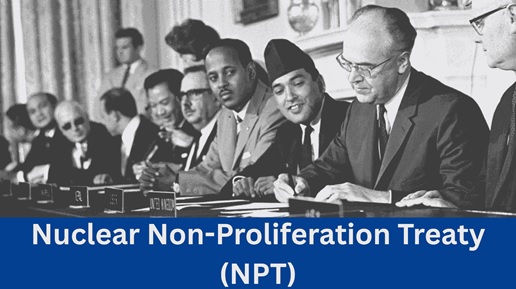
Treaty on the Non-Proliferation of Nuclear Weapons (NPT): Objectives, Provisions and Recent Developments

Why in the News ?

Recently, the 11th Review Conference of the States Parties to the Treaty on the Non-Proliferation of Nuclear Weapons (NPT) ended without a unanimous outcome document, re-emerging the challenges of global nuclear disarmament efforts and international consensus-building.

What is the Treaty on the Non-Proliferation of Nuclear Weapons (NPT) ?

  • The Treaty on the Non-Proliferation of Nuclear Weapons (NPT) is an international treaty aimed at preventing the spread of nuclear weapons in the world and promoting the peaceful uses of nuclear energy.
  • It is considered the cornerstone of global nuclear governance.

Major Objectives of the NPT

  1. Nuclear Non-Proliferation: Preventing the spread of nuclear weapons and related technology.
  2. Peaceful Use of Nuclear Energy: Encouraging the peaceful and developmental use of nuclear energy.
  3. Nuclear Disarmament: Working towards complete nuclear disarmament by reducing nuclear weapons globally.

    Key Features

    • The treaty establishes safeguards under the supervision of the International Atomic Energy Agency (IAEA).
    • The IAEA monitors compliance with the treaty by member states through inspection and verification mechanisms.
    • It is a legally binding international treaty.
    • Signatures of the treaty began in 1968 and it came into effect in 1970.

    States Parties to the NPT

    • Currently, there are 191 States Parties to the NPT.
    • Five countries are recognized as Nuclear Weapon States:
      • United States
      • Russia
      • China
      • United Kingdom
      • France

    India and the NPT

    • India is not a party to the NPT. India believes the treaty is discriminatory because it recognizes only five countries as nuclear weapon states, while imposing restrictions on others.
    • India supports universal, non-discriminatory, and verifiable nuclear disarmament.

    Importance of the NPT

    • The cornerstone of the global nuclear non-proliferation regime.
    • The primary means of controlling the nuclear arms race.
    • Promoting the peaceful use of nuclear energy.
    • Strengthening international security and strategic stability.
    • Providing the institutional basis for nuclear disarmament efforts.

    Conclusion

    • The Treaty on the Non-Proliferation of Nuclear Weapons (NPT) is considered the cornerstone of the global nuclear non-proliferation regime, having played a vital role in limiting the spread of nuclear weapons and promoting the peaceful uses of nuclear energy.
    • However, slow progress on nuclear disarmament, geopolitical competition, and differences among member states continue to challenge its effectiveness. A more inclusive, balanced, and universal nuclear disarmament regime is needed to ensure global peace and security.

    Role of Private Sector in Transforming India into a Global Defence Manufacturing Hub: Opportunities, Strategic Importance and Challenges

    Context

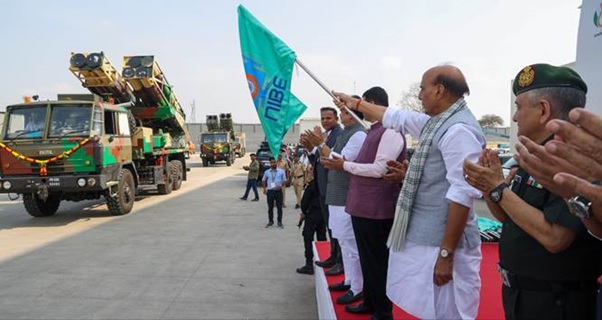
    • Recently, during the inauguration of the Defence Manufacturing Complex of private sector company NIBE Limited (NIBE Group) at Shirdi, Maharashtra, the Defence Minister stated that the private sector can play a decisive role in transforming India into a Global Defence Manufacturing Hub. 
    • On this occasion, India’s first 300 km range Universal Rocket Launching System “Suryastra” was also flagged off. This is not merely a technological achievement but also signifies India’s transition from a government-controlled defence production model to an innovation-driven, industry-led and export-oriented defence ecosystem. 
    • In the present era of geopolitical competition, supply chain disruptions, trade conflicts and technological restrictions, defence self-reliance is no longer merely an economic necessity but has become a matter of Strategic Sovereignty. In such a scenario, private sector participation can simultaneously strengthen India’s defence capabilities, economic growth and global competitiveness. 
    Current Status of Private Participation in India’s Defence Sector

    • India’s defence sector remained largely centred around public sector undertakings, ordnance factories and government research institutions for decades. However, policy reforms, the Atmanirbhar Bharat initiative and defence sector liberalisation have significantly increased the participation of private companies, startups and MSMEs over the last decade. 
    • At present, private participation in India’s defence sector stands at around 25–30 percent, with the target of increasing it to 50 percent in the coming years. 
    • In FY 2024–25, defence exports from the private sector reached approximately ₹15,233 crore, while exports from Defence Public Sector Undertakings (DPSUs) stood at around ₹8,389 crore. This indicates that private companies are no longer confined to domestic supply but are increasingly entering global defence markets. 

    India’s Defence Industrial Base Currently Consists of:

    • 16 Defence Public Sector Undertakings (DPSUs)
    • More than 430 licensed defence companies
    • Around 16,000 MSMEs
    • Several defence startups and innovation platforms

    This structure is enabling India to move towards an Integrated Defence Industrial Ecosystem.

    Strategic and Economic Significance of Private Sector Participation

    1. Strengthening Defence Self-Reliance and Strategic Autonomy

    • Global developments such as the Russia–Ukraine conflict, tensions in West Asia and the political use of rare earth minerals and supply chains have demonstrated that dependence on external defence sources can pose risks to national security.
    • India has historically remained one of the world’s major defence importers, resulting in dependence on foreign equipment, spare parts and technologies. Private sector participation can reduce this dependence and accelerate India’s transition from a defence importer to a defence exporter.
    • Thus, private sector involvement can strengthen India’s Strategic Autonomy by expanding domestic defence production capacity.

    2. Economic Growth, Employment and Multiplier Effect

    • Defence manufacturing is not limited to weapon production; it influences several sectors including metallurgy, electronics, aerospace, machine tools, software, AI and logistics.

    Increased private investment will lead to:

    • Creation of new markets for MSMEs.
    • Strengthening of local supply chains.
    • Expansion of high-skilled employment opportunities.
    • Acceleration of regional industrial development.

    Investment in defence manufacturing generates a strong multiplier effect, leading to broader economic activity.

    3. Accelerating Research, Innovation and Technological Transformation

    The importance of advanced military technologies is continuously increasing in areas such as:

    • Artificial Intelligence (AI)
    • Drones and autonomous systems
    • Cyber security
    • Electronic warfare systems
    • Space-based defence technologies
    • Robotics and quantum technologies

    Private companies possess greater capital availability, technological expertise and risk-taking capacity, enabling them to accelerate innovation and R&D activities.

    This model can effectively complement government research institutions.

    4. Defence Entrepreneurship and Competitive Efficiency

    Government institutions often function through relatively slower and process-oriented decision-making mechanisms, whereas the private sector operates through innovation, cost efficiency and rapid production models.

    Private participation can promote:

    • Growth of defence startup culture.
    • Greater competition in defence production.
    • Reduction in production costs.
    • Improvement in product quality and adherence to global standards.

    This can help India become an integral part of global defence supply chains.

    5. Building an Export-Oriented Defence Economy

    India has set a target of achieving ₹3 lakh crore defence production by 2029.

    With adequate opportunities for private participation, India can:

    • Expand defence exports.
    • Earn foreign exchange revenues.
    • Emerge as a defence supplier for countries in South Asia, Africa and West Asia.

    This would further strengthen India’s geopolitical position.

    Key Reforms to Promote Private Sector Participation

    Liberalised FDI Policy

    The Government has permitted up to 74 percent Foreign Direct Investment (FDI) through the automatic route in the defence sector, encouraging global investments, technology transfer and joint ventures.

    Priority to Domestic Procurement

    Through the Defence Acquisition Procedure (DAP)–2020, priority has been given to procurement from domestic sources.

    This policy promotes:

    • Buy Indian
    • Buy and Make Indian
    • Indigenous Content Requirement

    Defence Industrial Corridors

    The Government has established two Defence Industrial Corridors:

    • Uttar Pradesh Defence Industrial Corridor
    • Tamil Nadu Defence Industrial Corridor

    These corridors aim to attract investments, create manufacturing clusters and integrate local industries into defence supply chains.

    Industry-led Innovation Ecosystem

    Innovations for Defence Excellence (iDEX) provides opportunities for private companies, startups and MSMEs to participate in defence innovation and technology development.

    Major Challenges and Constraints

    Despite growing private participation, several structural challenges continue to persist:

    • Technological Dependence: India still depends on foreign technologies for engines, sensors, advanced materials and certain defence systems.
    • High Capital Requirement: Defence manufacturing involves large investments, long project cycles and high risks, making it challenging for private investors.
    • Complex Procurement Procedures: Lengthy approval mechanisms, testing standards and contract delays often affect production timelines.
    • Limited R&D Investment: Private sector expenditure on defence research remains relatively low compared to developed nations.
    • Export Challenges: International competition, certification standards, quality benchmarks and geopolitical factors affect defence exports.

    Way Forward

    To transform India into a genuine Global Defence Manufacturing Hub, the following measures are essential:

    • Provide long-term procurement assurance to private companies.
    • Strengthen collaboration among DRDO, industry and academic institutions.
    • Establish dedicated funds to promote defence R&D.
    • Integrate MSMEs into global supply chains.
    • Strengthen export-oriented defence policies.
    • Prioritise indigenisation in advanced technologies.

    Conclusion

    • India’s defence sector is undergoing a historic transformation from a state-dominated model to a Public–Private Partnership (PPP)-driven defence ecosystem. 
    • The private sector is not merely a production enabler but a key driver of innovation, technological self-reliance, export expansion and strategic autonomy. 
    • If policy reforms, research investments and industry collaboration continue to receive sustained support, India can emerge not only as an Atmanirbhar defence power but also as a global defence manufacturing and export leader.

    « »
    • SUN
    • MON
    • TUE
    • WED
    • THU
    • FRI
    • SAT
    Have any Query?

    Our support team will be happy to assist you!

    OR