Why in News ?
- Recently, the newly elected government of Kerala announced the establishment of a dedicated department for elderly welfare, becoming the first state in India to create an exclusive institutional mechanism for senior citizens.
- Earlier, welfare of elderly persons was managed under the Social Welfare Department. The decision reflects Kerala’s rapidly ageing population and the growing need to treat geriatric governance as an independent policy domain.
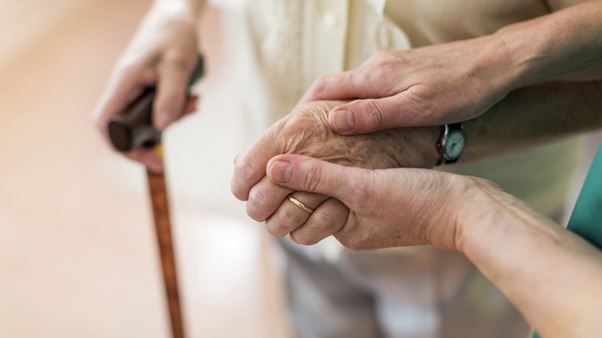
Kerala – India’s Most Rapidly Ageing State
- Kerala is undergoing an advanced stage of demographic transition and its population structure increasingly resembles ageing societies of East Asia and Europe rather than other Indian states. According to the Elderly in India Report 2021, nearly 16.5% of Kerala’s population is already above 60 years of age and this proportion is projected to rise to around 20.9% by 2031 compared to the national estimate of 13.1%.
- The Old Age Dependency Ratio, which indicates the number of elderly persons per 100 working-age people, increased from 19.6% in 2011 to 26.1% in 2021 and is expected to reach 34.3% by 2031. This means that within a decade nearly one out of every three working-age people in Kerala may have to support an elderly dependent.
- Furthermore, the number of residents living in old-age homes in Kerala increased significantly from 19,149 during 2016–17 to 37,895 during 2024–25, indicating the rapid growth of elderly care requirements.
Why is Kerala Ageing So Rapidly ?
Declining Fertility Rate
- One of the main reasons behind Kerala’s rapid ageing is the sharp decline in fertility levels. Kerala’s Total Fertility Rate (TFR), which represents the average number of children born to a woman during her lifetime, has declined to only 1.35, which is significantly below the replacement level of 2.1 and also lower than India’s national TFR of 1.9. Lower fertility means fewer young people entering the population, thereby increasing the share of elderly citizens.
Rising Life Expectancy
- Improved healthcare services and better living conditions have considerably increased life expectancy in Kerala. Female life expectancy is estimated at around 78.4 years while male life expectancy stands at around 71.9 years. Longer life spans have naturally expanded the elderly population.
Large-Scale Migration of Working Population
- Kerala has experienced substantial migration of its working-age population to foreign countries. Many migrants who move to non-West Asian countries permanently settle abroad, leaving their elderly parents behind in Kerala. As a result, many households in the state now consist only of elderly members.
- At the same time, return migration from West Asian countries after retirement also contributes to the elderly population, creating a dual demographic burden for the state.
Geographic and Gender Dimensions of Ageing
- According to the India Ageing Report 2023, around 17.5% of Kerala’s rural population consists of people aged 60 years and above compared to 15.4% in urban areas. The higher concentration of elderly people in villages is mainly due to migration of working-age individuals to cities and foreign destinations.
- Kerala also exhibits a clear feminisation of ageing. The number of elderly women significantly exceeds elderly men, particularly in advanced age groups. Among people aged 80 years and above, the sex ratio is approximately 1,651 women per 1,000 men.
- Higher female life expectancy and widowhood have resulted in a large number of elderly women living alone with limited social and financial support.
Health Challenges of Kerala’s Elderly Population
- According to the Longitudinal Ageing Study in India (LASI) Wave-1 (2017–18), more than 70% of elderly people in Kerala suffer from at least one chronic disease. The most common illnesses include hypertension, diabetes, arthritis and cardiovascular diseases.
- Mental health challenges are also increasing among senior citizens. The India Ageing Report 2023 noted that nearly one out of every four elderly persons in Kerala experiences symptoms of psychological distress.
- Kerala’s dementia initiative known as “Smruthipadham” estimates that nearly 4.86% of people aged 65 years and above are affected by dementia. This situation demands expansion of dementia care facilities, caregiver training, public awareness campaigns and early diagnosis systems.
Existing Initiatives Undertaken by Kerala
- Kerala has already implemented several programmes to support elderly welfare.
- The State Elderly Commission established in 2025 functions as a first-of-its-kind quasi-judicial body for protecting the rights and welfare of senior citizens.
- The Vayomithram programme provides doorstep healthcare services through mobile medical units for elderly people.
- Samayaprabha operates as a day-care initiative aimed at promoting social interaction and support among senior citizens.
- The Kerala Care Palliative Grid was established in collaboration with Digital University Kerala to coordinate palliative care services across the state. The grid includes around 1,387 government institutions and 1,227 NGOs and currently supports approximately 1.5 lakh bedridden persons and nearly 4 lakh other ailing individuals.
- Additionally, nearly 75% of Kerala’s elderly population is covered under welfare pension schemes.
Resource and Workforce Challenges
- Kerala currently faces shortages in geriatric care professionals. In 2023, the state had approximately 120 geriatricians, 600 elderly-care nurses, 400 physiotherapists and only 50 occupational therapists.
- However, according to projections based on the recommendations of the World Health Organization multidisciplinary care model, Kerala will require around 300 geriatricians, 1,500 nurses, 900 physiotherapists and 250 occupational therapists by 2030.
- Therefore, Kerala must strengthen its geriatric healthcare infrastructure and expand its care economy.
Broader Significance – India’s Demographic Transition
- India is also entering a demographic transition phase. According to the Sample Registration System (SRS) Statistical Report 2024, India’s Total Fertility Rate has declined to 1.9, which is below the replacement level of 2.1.
- India’s birth rate has declined to 18.3 per thousand population while the death rate has reduced to 6.4 per thousand. Life expectancy at birth has reached approximately 72 years and the infant mortality rate stands at 24 per 1,000 live births.
- Despite this decline in fertility, India still enjoys a demographic dividend with a median age of only 29.2 years compared with ageing countries such as China and several European nations.
- India currently has around 370–380 million youth aged between 15 and 29 years, representing nearly 27% of the total population, while more than 65% of the population remains below the age of 35 years.
India’s Future Challenge – Towards an Ageing Society
- India is gradually shifting from concerns related to population growth towards challenges associated with ageing populations and slower workforce expansion. Countries such as Japan, South Korea and several European nations have already faced similar transitions.
- India must therefore proactively strengthen elderly healthcare systems, pension mechanisms, labour market reforms, social security frameworks and care economy infrastructure before the demographic dividend window closes.
Conclusion
Kerala’s decision to establish a separate department for elderly welfare marks a significant shift towards age-responsive governance. The state has effectively become India’s demographic laboratory, demonstrating challenges that many other states may experience in the coming decades. Kerala’s experience underlines the urgent need for India to prepare institutional systems, healthcare infrastructure and social protection mechanisms for an ageing society.






 Contact Us
  New Batch : 9555124124/ 7428085757
  Tech Support : 9555124124/ 7428085757