New
Hindi Medium: (Delhi) - GS Foundation (P+M) : 6th July 2026, 6:00 PM Hindi Medium: (Prayagraj) - GS Foundation (P+M) : 5th July 2026, 8:00 AM English Medium: (Delhi) - GS Foundation (P+M) : 20th July 2026 English Medium: (Prayagraj) - GS Foundation (P+M) : 15th July 2026, 8:00 AM Hindi Medium: (Delhi) - GS Foundation (P+M) : 6th July 2026, 6:00 PM Hindi Medium: (Prayagraj) - GS Foundation (P+M) : 5th July 2026, 8:00 AM English Medium: (Delhi) - GS Foundation (P+M) : 20th July 2026 English Medium: (Prayagraj) - GS Foundation (P+M) : 15th July 2026, 8:00 AM

What is transnational organized crime? The India-Canada dispute, the Nijjar case, and Operation Hard Ball explained.

Preliminary Examination

Facts and objectives related to UNTOC, FATF, Interpol, UNODC, UAPA, and the Guwahati Declaration of BRICS.

GS Paper-II : India-Canada relations, India-US relations, international cooperation and diplomacy.

GS Paper-III : Internal security, cross-border terrorism and organized crime, drug trafficking, cybercrime, and international security cooperation.

Why in the news ?

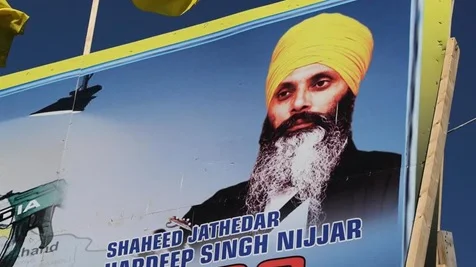
  • Nearly three years ago, the murder of Khalistani separatist Hardeep Singh Nijjar sparked a serious diplomatic row between India and Canada. Canada has now clarified that its investigation has found no direct evidence of Indian government involvement, although the investigation is ongoing.
  • Meanwhile, the United States of America (USA) has filed murder and transnational organized crime charges against Lawrence Bishnoi and Goldy Brar under Operation Hard Ball.

What is Transnational Organized Crime ?

  • Organized crime is criminal activity carried out by an organized group using violence, corruption, or other illegal means for the purpose of obtaining economic or other benefits.
  • When such criminal activities are conducted in more than one country, they are called transnational organized crime.

Canada's changed stance

  • Canadian officials stated that the investigation so far has found no evidence of involvement by the Indian government or its officials.
  • However, the investigation is still ongoing and the case has not been closed.
  • This differs from former Prime Minister Justin Trudeau's 2023 allegations of possible involvement of Indian agencies.
  • India has initially dismissed these allegations as baseless.
  • The process of improving diplomatic relations between the two countries has begun since 2025.

Hardeep Singh Nijjar Case

Who was Hardeep Singh Nijjar ?

  • A resident of Canada since 1997.
  • He was the head of the Khalistan Tiger Force (KTF).
  • India declared the KTF a terrorist organization under the UAPA in 2023.
  • He was also the president of the Guru Nanak Sikh Gurdwara in Surrey, Canada.

India's Allegations

  • According to India, Nijjar raised funds for Khalistani activities.
  • He recruited militants.
  • He was involved in several terrorist and violent incidents.

US Action: Lawrence Bishnoi and Goldy Brar

  • A US federal court has filed murder and organized crime charges against Lawrence Bishnoi (currently in a Gujarat jail) and Goldy Brar (Satinderjit Singh).

Operation Hard Ball

  • This is a US-led operation aimed at cracking down on an international crime syndicate of Indian origin.
  • These crimes include murder, extortion, kidnapping, drug trafficking, money laundering, and organized corruption.
  • The FBI has announced a reward of up to $50,000 for information leading to the arrest of Goldy Brar.

India-US Security Cooperation

  • Intelligence exchanges between India and the United States have increased.
  • Joint action is being taken against organized crime networks.
  • India has shared evidence related to criminals operating abroad.
  • Information obtained through technical surveillance and interrogations has also been exchanged.

New Trends in Transnational Organized Crime

  • Recent investigations have revealed links between Indian criminal gangs and drug traffickers based in Pakistan.
  • Proceeds from drug trafficking are being used to fund targeted killings.
  • The use of drones has increased along sea routes and the India-Pakistan border.
  • Criminals evade surveillance by using VPNs, encrypted messaging apps, and modern digital technologies.

Key Implications for India

1. Diplomatic Implications

  • India-Canada Relations
  • India-US Security Cooperation
  • Importance of Evidence-Based Investigations

2. Internal Security

  • Cross-Border Drug Trafficking
  • Prison-Operated Crime
  • Cyber-Based Organized Crime
  • Transnational Crime Networks

3. Legal and Administrative Aspects

  • Use of the UAPA
  • Challenges of Extradition
  • International Police Cooperation
  • Coordination Between Intelligence Agencies

International Efforts

  • Major initiatives to combat transnational organized crime :
    • United Nations Convention against Transnational Organized Crime (UNTOC)
    • Financial Action Task Force (FATF)
    • Interpol
    • United Nations Office on Drugs and Crime (UNODC)
    • Guwahati Declaration of BRICS - Promotes cooperation against drug trafficking and transnational organized crime.

Conclusion

This case demonstrates that transnational organized crime is no longer just a matter of law and order, but also a significant issue of national security, diplomacy, and global cooperation. Intelligence sharing, legal cooperation, and the role of multilateral institutions have become more important than ever to address changing technologies and cross-border criminal networks.

Preliminary Exam Questions

Q. Consider the following statements:

  1. UNODC is the United Nations agency that works on matters related to drugs and crime.

  2. Interpol promotes international police cooperation.

  3. FATF is a specialized agency of the United Nations.

Which of the above statements is/are correct?

  1. 1 and 2 only

  2. 2 and 3 only

  3. 1 and 3 only

  4. 1, 2, and 3

 Mains Question

How is transnational organized crime posing a challenge to global security and national relations? Explain.

FAQs: Transnational Organized Crime, the Nijjar Case, and India-Canada Relations

Question 1. What is transnational organized crime ?

Answer : Transnational organized crime is when an organized criminal group commits crimes in two or more countries. This includes activities such as drug trafficking, human trafficking, money laundering, arms trafficking, cybercrime, and organized violence.

Question 2. Who was Hardeep Singh Nijjar ?

Answer : Hardeep Singh Nijjar was a Canadian resident and the head of the Khalistan Tiger Force (KTF). India has designated the KTF a terrorist organization under the Unlawful Activities (Prevention) Act (UAPA).

Question 3. What has Canada recently said about the Nijjar case ?

Answer : Canadian officials have stated that the investigation so far has found no direct evidence of involvement by the Indian government or its officials, although the investigation is still ongoing.

Question 4. What is Operation Hard Ball ?

Answer : Operation Hard Ball is a US-led campaign aimed at cracking down on transnational organized crime, extortion, drug trafficking, kidnapping, murder, and other organized criminal networks.

Have any Query?

Our support team will be happy to assist you!

OR