Prelims: Agriculture, Fertilizers, Green Ammonia, Government Policies
Mains: GS Paper III – Agriculture, Food Security, Sustainable Farming, Energy Transition
Keywords: Anhydrous Ammonia, Urea, Green Ammonia, Fertilizer Control Order, Nitrogen Fertilizer, ICAR, NTPC NETRA, Green Urea, Fertilizer Imports |
Why in News?
The Union Agriculture Ministry has permitted the manufacture and agricultural use of Anhydrous Ammonia (82% Nitrogen) for three years under the Fertiliser (Inorganic, Organic or Mixed) (Control) Order, 1985. The move aims to reduce India's dependence on imported urea and improve nitrogen-use efficiency.
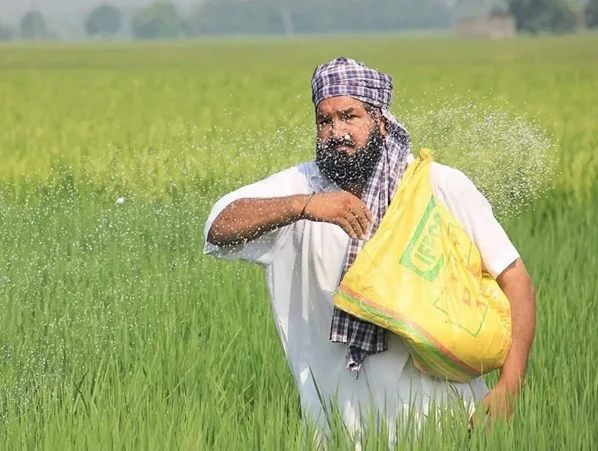
What is Anhydrous Ammonia?
- Anhydrous ammonia is a water-free gaseous fertilizer containing at least 82% nitrogen by weight.
- It has the highest nitrogen concentration among commercially available fertilizers.
- Since it is a gas under normal conditions, it must be stored under pressure and injected below the soil surface to prevent nitrogen loss.
- Widely used in countries like the United States, Canada, and Australia.
Key Government Decision
- Agriculture Ministry issued a Gazette Notification on 23 July.
- Manufacturing of Anhydrous Ammonia fertilizer permitted for three years.
- Approval granted under Clause 20A of the Fertiliser Control Order (FCO), 1985.
- If implemented successfully, India will become the fourth country after the US, Canada and Australia to use ammonia directly in farming.
Why is India Promoting Direct Ammonia Use?
1. Reduce Urea Import Dependence
- India produces around 300 lakh tonnes of urea annually.
- Imports nearly 100 lakh tonnes every year.
- Much of domestic production depends on imported LNG (Liquefied Natural Gas).
2. Higher Nitrogen Content
|
Fertilizer
|
Nitrogen Content
|
|
Urea
|
46%
|
|
Anhydrous Ammonia
|
82%
|
Higher nitrogen concentration means lower transportation volume for the same nutrient supply.
3. Better Utilisation of Surplus Ammonia
- Urea plants generate 2,000–6,000 tonnes of surplus ammonia annually.
- Due to production constraints, this surplus is currently sold to complex fertilizer manufacturers.
Challenges in Implementation
Infrastructure Requirement
- Requires specialised:
- Pressurised storage tanks
- Tanker transport
- Soil injection machines
- Cannot be broadcast like conventional urea.
Safety Concerns
- Risk of ammonia gas leakage.
- Requires trained operators and strict safety protocols.
Application Standardisation
- Uneven injection may cause:
- Non-uniform crop growth
- Variable nitrogen availability
ICAR Field Trials
Trials were conducted during Rabi 2025–26 on Direct Seeded Rice (DSR).
Findings
- Higher crop biomass.
- Improved greenness in several plots.
- Some plots showed uneven growth because of inconsistent ammonia injection.
- Scientists recommended further testing in:
- Transplanted rice
- Maize
- Standardisation of timing and injection techniques.
Green Ammonia: The Future
Green ammonia is produced using:
- Renewable electricity
- Water electrolysis to produce green hydrogen
- Nitrogen from air
- No fossil fuel-based hydrogen
It significantly reduces greenhouse gas emissions compared to conventional ammonia production.
Green Urea Initiative
The Department of Fertilizers is promoting Green Urea production.
Pilot Project
- 150 TPD Green Urea Plant
- Location: Pudimadaka, Andhra Pradesh
- Developed by NETRA, the R&D arm of NTPC.
- Integrates:
- Carbon Capture and Utilisation (CCUS)
- Water electrolysis
- Green hydrogen production
Investment Requirement
- A 1,200 TPD Green Ammonia Plant requires an investment of approximately: ₹13,000–15,000 crore
Demand for Urea Rising
- Good monsoon rainfall increased fertilizer demand.
- By 17 July, over 60% of July's urea demand had already been sold.
- Demand remained much higher than:
- DAP
- Complex fertilizers
- MOP
Environmental Significance
Advantages
- Higher nitrogen-use efficiency.
- Lower fertilizer transportation requirement.
- Potential reduction in urea imports.
- Supports India's green hydrogen and green ammonia mission.
- May reduce overall carbon emissions when produced from renewable energy.
Challenges
- High infrastructure costs.
- Safety risks.
- Requires specialised farm machinery.
- Farmer training essential.
UPSC Prelims Facts
- Nitrogen content in Urea: 46%
- Nitrogen content in Anhydrous Ammonia: 82%
- Legal Framework: Fertiliser (Control) Order, 1985
- Approval Duration: 3 years
- Pilot Green Urea Plant: Pudimadaka, Andhra Pradesh
- Implementing Agency: NTPC-NETRA
- Green Urea uses captured CO₂ from industries such as thermal power, steel and cement.
Conclusion
India's approval for the direct agricultural use of anhydrous ammonia marks an important step towards reducing dependence on imported urea and improving nitrogen-use efficiency. However, its success will depend on creating safe storage and transport infrastructure, standardising application methods, and expanding field trials before large-scale adoption.
Practice MCQ
Q. With reference to Anhydrous Ammonia used as fertilizer, consider the following statements:
- It contains about 82% nitrogen by weight.
- It can be directly broadcast over fields like urea.
- India will become the fourth country to use it directly in agriculture if implementation succeeds.
Which of the statements given above is/are correct?
A. 1 and 3 only
B. 2 and 3 only
C. 1 and 2 only
D. 1, 2 and 3
Mains Practice Question
"Discuss the potential of green ammonia and direct ammonia application in transforming India's fertilizer sector while reducing import dependence and promoting sustainable agriculture."
|
FAQs
Q1. Why has India allowed direct use of anhydrous ammonia in farming?
To reduce dependence on imported urea, improve nitrogen-use efficiency, and promote sustainable fertilizer use.
Q2. How is anhydrous ammonia different from urea?
Anhydrous ammonia contains about 82% nitrogen, whereas urea contains 46% nitrogen.
Q3. Why can't farmers apply ammonia like normal urea?
Because it is a pressurised gas that must be injected below the soil to prevent nitrogen loss and ensure safe application.
Q4. What is green ammonia?
Green ammonia is produced using renewable energy and green hydrogen, resulting in much lower carbon emissions than conventional ammonia.
Q5. Which countries already use direct ammonia application in agriculture?
The United States, Canada, and Australia currently use anhydrous ammonia directly in farming.
|






 Contact Us
  New Batch : 9555124124/ 7428085757
  Tech Support : 9555124124/ 7428085757