Prelims: Environment, Biodiversity Hotspots, Eco-Sensitive Areas (ESA), Environment Protection Act, 1986
Mains: GS Paper III – Conservation, Environmental Protection, Biodiversity, Sustainable Development
Keywords: Western Ghats, Eco-Sensitive Area, ESA Notification, Kasturirangan Committee, Madhav Gadgil Committee, Western Ghats Ecology Expert Panel, High-Level Working Group, MoEFCC, Biodiversity Hotspot, Environment Protection Act 1986 |
Why in News?
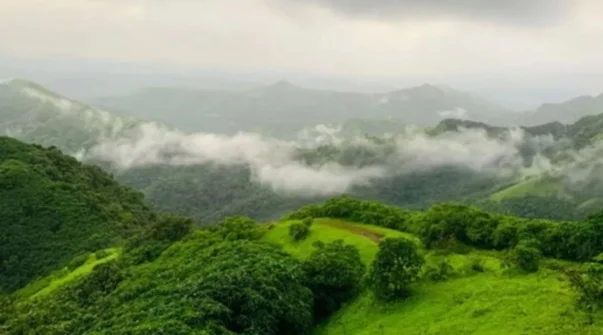
The Union Government has re-issued the seventh draft notification proposing 56,825.7 sq km of the Western Ghats as an Eco-Sensitive Area (ESA).
Important Point
- The fresh notification was issued after the sixth draft notification expired, as consensus among the six Western Ghats states is yet to be achieved.
- The Ministry of Environment, Forest and Climate Change (MoEFCC) has also extended the tenure of the Expert Committee headed by Sanjay Kumar till July 2027.
- The draft aims to balance ecological conservation with the developmental aspirations and livelihood concerns of the region.
What is an Eco-Sensitive Area (ESA)?
An Eco-Sensitive Area (ESA) is a fragile ecosystem notified by the Central Government under the Environment (Protection) Act, 1986 to act as a buffer around ecologically important regions. These areas are regulated to minimise environmental degradation while allowing sustainable development.
Objectives
- Protect biodiversity and ecosystems.
- Prevent unplanned urbanisation.
- Regulate environmentally harmful activities.
- Conserve forests, wildlife and water resources.
- Promote sustainable and climate-resilient development.
State-wise Proposed Eco-Sensitive Area
|
State
|
Proposed ESA (sq km)
|
|
Gujarat
|
449
|
|
Maharashtra
|
17,340
|
|
Goa
|
1,461
|
|
Karnataka
|
20,668
|
|
Tamil Nadu
|
6,914
|
|
Kerala
|
9,993.7
|
Total Proposed ESA: 56,825.7 sq. km
Key Provisions of the Draft Notification
1. Complete Ban on Mining
- No new mining activities.
- Ban on quarrying and sand mining.
- Existing mines to be phased out within five years from the final notification or upon lease expiry, whichever is earlier.
2. Restrictions on Thermal Power Plants
- No new thermal power plants.
- Expansion of existing thermal power plants prohibited.
3. Ban on Highly Polluting Industries
- No new Red Category Industries.
- Expansion of existing red-category industries prohibited.
4. Restrictions on Large Construction Projects
The following projects will not be permitted:
- Buildings having a built-up area of 20,000 sq. metres or more.
- Township projects exceeding 50 hectares.
Status of Different States
- Gujarat: Largely agreed with the proposed ESA boundaries.
- Goa: Broadly accepted the proposed ESA demarcation.
- Maharashtra: Submitted a revised proposal which is under examination.
- Karnataka: Continues to oppose the notification. Expressed concerns regarding farmers, villages and developmental restrictions.
- Kerala: Discussions continue over boundary demarcation and livelihood concerns.
- Tamil Nadu: Certain technical discrepancies regarding mapping are under resolution.
Expert Committee
Chairperson: Sanjay Kumar (Former Director General of Forest, MoEFCC)
Mandate
- Examine suggestions from six state governments.
- Balance ecological conservation with developmental needs.
- Protect the rights and livelihood of local communities.
- Recommend practical implementation measures.
Tenure Extended Till: July 2027
Evolution of the Western Ghats ESA Proposal
1. Madhav Gadgil Committee (Western Ghats Ecology Expert Panel – 2011)
Chairperson: Madhav Gadgil
Recommendations
- Entire Western Ghats should be declared ecologically sensitive.
- Divide the region into ESZ-1, ESZ-2 and ESZ-3.
- Strict restrictions on mining and large industries.
- Greater role for local communities in environmental governance.
2. Kasturirangan Committee (High-Level Working Group – 2013)
Chairperson: K. Kasturirangan
Recommendations
- Around 37% of the Western Ghats should be notified as ESA.
- Exclude human settlements and agricultural lands.
- Strike a balance between conservation and economic development.
The first draft notification was issued in March 2014 based on these recommendations.
About the Western Ghats
- One of the world's eight Biodiversity Hotspots.
- Recognised as a UNESCO World Heritage Site.
- Extends for nearly 1,600 km along India's western coast.
- Passes through Gujarat, Maharashtra, Goa, Karnataka, Kerala and Tamil Nadu.
- Source of major peninsular rivers including:
- Godavari
- Krishna
- Kaveri
- Tungabhadra
- Periyar
Importance of Declaring ESA
- Conserves globally significant biodiversity.
- Protects wildlife habitats and endemic species.
- Reduces landslides and flood risks.
- Safeguards river catchments and water security.
- Supports climate change mitigation and adaptation.
- Encourages sustainable development.
Challenges
- Opposition from state governments.
- Livelihood concerns of farmers and local communities.
- Balancing conservation with infrastructure development.
- Boundary demarcation disputes.
- Political and administrative coordination.
Constitutional and Legal Framework
- Article 48A – Protection and improvement of the environment.
- Article 51A (g) – Fundamental duty of citizens to protect the environment.
- Wild Life (Protection) Act, 1972: Provides legal protection to wild animals, birds, plants, and their habitats through the establishment of protected areas such as National Parks, Wildlife Sanctuaries, and Conservation Reserves.
- Forest (Conservation) Act, 1980: Restricts the diversion of forest land for non-forest purposes without prior approval of the Central Government, helping prevent deforestation.
- Environment (Protection) Act, 1986: Empowers the Central Government to protect and improve the environment by regulating activities that may cause environmental pollution, including the notification of Eco-Sensitive Areas.
- Biological Diversity Act, 2002: Provides for the conservation of biological diversity, sustainable use of its components, and fair sharing of benefits arising from the use of biological resources.
UPSC Prelims Facts
- First ESA Draft Notification: March 2014
- Current Notification: Seventh Draft
- Total Proposed ESA: 56,825.7 sq km
- Expert Committee Chairman: Sanjay Kumar
- Committee Tenure: Till July 2027
- Based on: Kasturirangan Committee Recommendations
Prelims MCQ
Q. With reference to the proposed Eco-Sensitive Area (ESA) in the Western Ghats, consider the following statements:
- The draft notification proposes a complete ban on new mining, quarrying and sand mining activities within the ESA.
- The establishment of new thermal power plants is permitted in the proposed ESA.
- The present draft notification is based on the recommendations of the Kasturirangan Committee.
Which of the statements given above is/are correct?
A. 1 and 2 only
B. 2 and 3 only
C. 1 and 3 only
D. 1, 2 and 3
Mains Practice Question
The Western Ghats Eco-Sensitive Area (ESA) notification reflects the challenge of balancing environmental conservation with socio-economic development. Discuss the significance of the ESA notification and examine the issues involved in its implementation.
|
Frequently Asked Questions (FAQs)
1. What is an Eco-Sensitive Area (ESA)?
An Eco-Sensitive Area is an environmentally fragile region notified under the Environment (Protection) Act, 1986, where developmental activities are regulated to protect biodiversity and ecosystems.
2. Why has the Western Ghats ESA notification been re-issued?
The sixth draft notification expired without finalisation due to disagreements between the Centre and the six Western Ghats states over the extent and demarcation of ESA boundaries.
3. Why are some states opposing the notification?
States such as Karnataka have raised concerns that strict environmental regulations may affect farmers, local livelihoods, infrastructure development and economic activities.
4. Which committee forms the basis of the current ESA proposal?
The present draft notification is primarily based on the recommendations of the Kasturirangan Committee (High-Level Working Group, 2013), which reviewed the earlier recommendations of the Madhav Gadgil Committee.
|







 Contact Us
  New Batch : 9555124124/ 7428085757
  Tech Support : 9555124124/ 7428085757