
- UPSC Exam
- State PCS
- One Day Exam
- Current Affairs
- PT Quiz
- Downlaods
- About Coaching
- Blog
- Videos

| Prelims: History (Ancient Civilizations), Geography (Mediterranean Region & Climate), Environment & Ecology (Climate Change, Drought & Water Scarcity), and Current Affairs (Scientific Research). Mains: GS Paper I: Indian Heritage and Culture, History and Geography of the World and Society - Factors responsible for the rise and fall of civilizations and the influence of physical geography and climate on human settlements. GS Paper III: Environment, Ecology, Biodiversity and Climate Change - Climate Change, Drought and Water Scarcity, Environmental Degradation, Disaster Management, and Food Security. |
A new study by researchers at Stockholm University has found that the collapse of major Late Bronze Age civilisations—including the Mycenaeans, Minoans, and the Hittite Empire—was caused by extreme droughts triggered by the combined effect of multiple natural climate cycles.
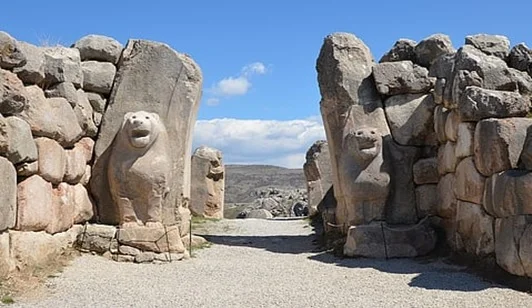
The study concludes that the collapse of the Late Bronze Age civilisations was driven not by a single drought, but by the combined impact of multiple natural climate cycles that created prolonged and severe water shortages. The findings highlight how climate extremes can destabilize societies and underscore the need to better understand the interaction between natural climate variability and human-induced climate change to prepare for future drought risks.
Prelims QuestionQ. Which of the following civilisations were affected by the Late Bronze Age collapse?
Select the correct answer:
Mains QuestionQ. Climate has played a significant role in the rise and fall of civilizations. Discuss with reference to the recent findings on the collapse of the Late Bronze Age civilizations. |
Q1. What was the main cause behind the collapse of the Late Bronze Age civilisations?Answer: According to the recent Stockholm University study, the collapse was primarily caused by extreme droughts triggered by the alignment of multiple natural climate cycles, which severely reduced water availability and agricultural productivity. Q2. What is the key finding of the Stockholm University study?Answer: The study found that the most severe droughts occurred when long-term drying caused by changes in Earth's orbit coincided with short-term climate variability in the Atlantic Ocean and atmosphere, leading to exceptionally severe drought conditions Q3. Why is this study important today?Answer: The study helps scientists understand that future drought risks depend not only on human-induced climate change but also on the interaction of natural climate cycles, improving climate risk assessment and adaptation planning. Q4. Why is the Mediterranean considered a climate change hotspot?Answer: The Mediterranean is expected to become warmer and drier due to climate change, making it more vulnerable to frequent and intense droughts. Q5. What is meant by a "critical hydroclimatic threshold"?Answer: It refers to the point at which water availability declines so significantly that ecosystems, agriculture, and human societies face severe stress, increasing the risk of societal disruption. |



Our support team will be happy to assist you!


 Contact Us
  New Batch : 9555124124/ 7428085757
  Tech Support : 9555124124/ 7428085757