A new biosurfactant has been synthesized by an institute under India’s Department of Science and Technology (DST) in Northeast India. This compound has shown effectiveness against Staphylococcus aureus.
This development is particularly significant because this bacterium often develops resistance to antibiotics, making infections difficult to treat.

Staphylococcus aureus can spread through multiple routes:
Infections can range from mild to life-threatening:
Researchers have recently made significant progress toward developing a vaccine against the Epstein–Barr Virus (EBV). This virus infects nearly 95% of the world’s population at some point in life and has been linked to several serious diseases.
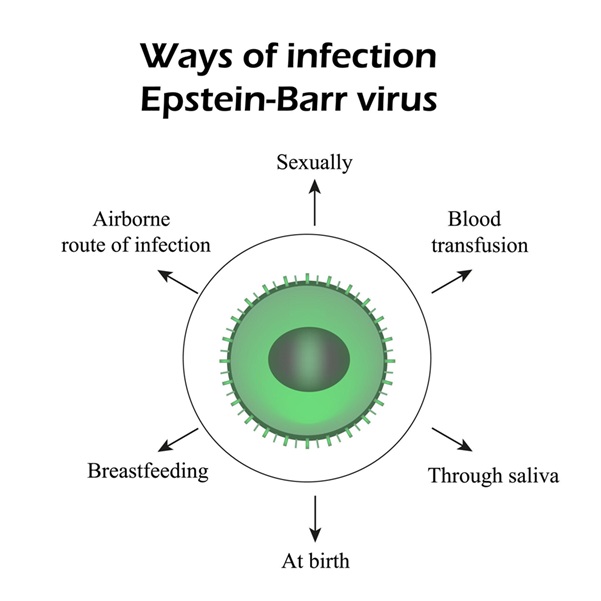
In rare cases, EBV is associated with serious diseases, such as:
EBV has also been linked to certain other lymphomas and autoimmune conditions.
During EBV infection, the following symptoms may appear:
EBV is best known for causing infectious mononucleosis (mono).
Most people recover within a few weeks, though fatigue may persist longer.
Scientists are actively working on developing an effective EBV vaccine.
A successful vaccine could help prevent:
Progress in vaccine research offers hope for reducing the global health burden associated with EBV in the future.
| Prelims: ( Defence & Security + CA) Mains: (GS 2: Governance, Rule of Law; GS 3: Internal Security, Terrorism, Security Architecture) |
The Ministry of Home Affairs has released PRAHAAR, India’s first publicly articulated national counter-terror (CT) strategy document. The eight-page framework outlines India’s comprehensive approach to combating terrorism, consolidating past measures, existing mechanisms, and future priorities under a unified doctrine.

India has faced terrorism in multiple forms over decades — cross-border militancy, insurgencies, urban terror attacks, and global jihadist influences. Groups such as Al-Qaeda and Islamic State have attempted ideological penetration through digital propaganda and online recruitment.
India’s counter-terror architecture has evolved through institutions such as:
However, until now, India lacked a single publicly declared national counter-terror strategy document. PRAHAAR fills this gap by providing a unified doctrinal framework.
PRAHAAR frames terrorism as multi-dimensional, shaped by:
Importantly, it avoids associating terrorism with any specific religion or identity.
Proactive disruption of propaganda networks, sleeper cells, terror financing, and arms supply chains through real-time coordination.
Police-led operations backed by specialised CT forces to ensure calibrated action.
Modernisation of police, standardised training, and inter-agency coordination.
Commitment to due process, civil liberties, and legal safeguards.
Targeted interventions for vulnerable groups, especially youth and women.
Strengthened global cooperation via intelligence sharing, extradition treaties, and multilateral designations.
Whole-of-society approach involving civil administration, NGOs, and communities to rebuild affected regions.
Most instruments cited — NIA, NSG, MAC, UAPA — already existed. PRAHAAR does not create new agencies or legal powers.
Its novelty lies in:
Explicit recognition of rule of law and civil liberties as pillars of CT policy.
The document connects counter-terrorism with:
Affirms zero tolerance for terrorism while rejecting religious profiling — carrying diplomatic significance.
United States
The United States Government National Strategy for Counterterrorism is detailed and includes measurable commitments, annual assessments to Congress, and defined lines of effort.
United Kingdom
The Government of the United Kingdom follows the CONTEST framework (Prevent, Pursue, Protect, Prepare), offering detailed operational roles and oversight mechanisms.
|
Dimension |
PRAHAAR |
US / UK Strategies |
|---|---|---|
|
Length |
8 pages |
34–78 pages |
|
Operational Detail |
Broad framework |
Detailed action plans |
|
Oversight Mechanism |
Not specified |
Formal reporting systems |
|
Ideological Scope |
Focus on cross-border & jihadist threats |
Includes far-right & hybrid extremism |
Institutional Coherence
Provides strategic clarity to India’s CT architecture.
Democratic Legitimacy
Public articulation enhances transparency and policy communication.
International Signalling
Projects India’s commitment to rule-based and rights-respecting counter-terrorism.
Strategic Preparedness
Addresses emerging technological threats including drones and cyber tools.
Societal Resilience
Recognises prevention and community engagement as essential components.
FAQsQ1. What is PRAHAAR ? PRAHAAR is India’s first publicly articulated national counter-terror strategy released by the Ministry of Home Affairs. Q2. Does PRAHAAR create new agencies ? No. It consolidates existing institutions and mechanisms into a unified framework. Q3. What is unique about PRAHAAR ? It publicly integrates intelligence, operational response, development measures, and human rights safeguards under a single doctrine. Q4. How does PRAHAAR differ from Western strategies ? It is shorter and less operationally detailed compared to US and UK counter-terror strategies, and lacks explicit oversight mechanisms. Q5. Why is community engagement included ? Preventing radicalisation and strengthening resilience require addressing socio-economic vulnerabilities and promoting trust between communities and the state. |
| Prelims: (Economics + CA) Mains: (GS 3: Indian Economy – Growth Measurement, Statistical Reforms, Informal Sector; GS 2: Governance & Institutional Reforms) |
The Ministry of Statistics and Programme Implementation (MoSPI) is releasing a new series of National Accounts Statistics (NAS) with 2022–23 as the base year, replacing the earlier 2011–12 base year.
The revised series aims to provide a more accurate, granular, and internationally aligned estimate of Gross Domestic Product (GDP) and Gross Value Added (GVA). The new series is scheduled for release on February 27, 2026, while back-series data (pre-2022–23) will be released later.
Since the last revision (2015), India’s economy has undergone significant changes:
Updating the base year ensures:
Base year updated from 2011–12 to 2022–23, reflecting the current economic structure and enhancing time comparability.
(a) Private Corporate Sector
Impact: More accurate sectoral contribution.
(b) General Government Sector
Impact: Improved measurement of government output.
The household sector—one of India’s largest contributors—will now be estimated using:
Earlier estimates relied on extrapolation; now direct annual estimation improves reliability.
Private Final Consumption Expenditure (PFCE) will use:
Significance: More accurate measurement of domestic demand.
Expanded use of Goods and Services Tax (GST) data for:
Impact: Better measurement of formal economy and reduced estimation errors.
Banking Sector
Uses the Statistical Table Related to Banks in India (STRBI) published by the Reserve Bank of India.
NBFC Sector
Earlier proxy-based estimates replaced by actual financial data from the Ministry of Corporate Affairs.
Result: Improved GVA estimates for financial services.
Enhanced ASUSE usage captures:
Significance: Better representation of India’s informal economy.
Updated methodologies based on studies by:
Impact: Improved livestock, fisheries, and fodder estimation.
Same inflation rate applied to inputs and outputs.
Problem:
Separate deflators for inputs and outputs.
Benefits:
This marks a major statistical reform in GDP estimation.
Supply and Use Tables (SUT) will now be integrated into national accounts.
They capture:
Benefits:
India currently follows the 2008 System of National Accounts (SNA 2008) adopted by the United Nations Statistical Commission. A revised framework—SNA 2025—was adopted recently. India plans to shift to SNA 2025 in its next base year revision.
GDP figures may be revised upward in some years and downward in others.
Example: In 2015 revision, 2013–14 growth was significantly altered.
Improves India’s credibility and comparability with global standards.
1. Statistical Complexity
2. Institutional Issues
3. Credibility and Transparency
Past GDP revisions triggered debate. Transparency in methodology is essential.
The 2022–23 base-year revision marks one of the most significant statistical upgrades in India’s national accounts in over a decade.
If implemented transparently and updated regularly, it will:
FAQsQ1. Why is the base year changed in GDP calculations ? To reflect current economic structure and improve measurement accuracy. Q2. What is double deflation ? A method using separate inflation adjustments for inputs and outputs to estimate real GVA more accurately. Q3. How does GST data improve GDP estimates ? It provides real-time formal sector data for better corporate and regional output estimation. Q4. Will GDP growth rates change ? Yes, revisions may increase or decrease past growth estimates. Q5. What is SNA 2025 ? An updated international standard for compiling national accounts, which India plans to adopt in the future. |
| Prelims: (Economy + CA) Mains: (GS 3: MSME Sector, Industrial Policy, Credit Access, Green Economy, Centre–State Relations) |
The Ministry of Micro, Small and Medium Enterprises organised the fifth meeting of the National MSME Council in New Delhi to review the progress of the World Bank–supported RAMP Programme. The meeting assessed implementation milestones, Centre–State coordination, and reforms aimed at strengthening India’s MSME ecosystem.
Micro, Small and Medium Enterprises (MSMEs) are the backbone of India’s economy:
Despite their significance, MSMEs face structural challenges:
To address these systemic issues through structured reforms, the Government launched the Raising & Accelerating MSME Performance (RAMP) Programme in 2022.
The Raising & Accelerating MSME Performance (RAMP) Programme:
It focuses on improving market access, credit flow, institutional reforms, governance strengthening, and green transformation. The National MSME Council functions as the administrative and functional body overseeing implementation. States receive grants under RAMP for preparing Strategic Investment Plans (SIPs).
(MSME Green Investment and Financing for Transformation)
Significance: Supports decarbonisation and sustainable industrial practices.
(MSE Scheme for Promotion and Investment in Circular Economy)
Goal: Align MSME sector with India’s net-zero target by 2070.
(Online Dispute Resolution for Delayed Payments)
Significance: First-of-its-kind initiative combining legal reform and digital governance for MSMEs.
The National MSME Council:
RAMP also strengthens:
1. Structural Reform of MSME Ecosystem
Unlike traditional subsidy-based schemes, RAMP focuses on institutional and systemic reform.
2. Strengthening Centre–State Partnership
By linking grants to reform performance and SIP preparation, RAMP promotes cooperative federalism.
3. Improving Credit Flow
Through green financing, credit guarantees, and institutional strengthening, RAMP aims to reduce MSMEs’ dependence on informal credit.
4. Addressing Delayed Payments
Delayed payments severely affect working capital cycles of MSMEs. The ODR mechanism introduces digital, time-bound resolution.
5. Green Transition of MSMEs
With global supply chains increasingly emphasizing ESG compliance, RAMP prepares Indian MSMEs for sustainable competitiveness.
FAQsQ1. What is the RAMP Programme ? It is a World Bank–assisted reform programme aimed at strengthening the MSME ecosystem in India through institutional, credit, and governance reforms. Q2. How is RAMP different from traditional MSME schemes ? It focuses on systemic reforms and Centre–State coordination rather than only providing subsidies. Q3. What is the MSME GIFT Scheme ? A sub-scheme promoting adoption of green technologies through interest subvention and credit guarantees. Q4. How does the MSE ODR Scheme help MSMEs ? It provides technology-enabled online dispute resolution for delayed payments. Q5. What is the duration of the RAMP Programme ? It is being implemented from 2022–23 to 2026–27. |
| Prelims: (International Relations + CA) Mains: (GS 2: Bilateral Relations, West Asia; GS 3: Defence Technology, Innovation & Economic Cooperation) |
During Prime Minister Narendra Modi’s 2026 visit to Israel, India and Israel elevated their bilateral ties to a “Special Strategic Partnership for Peace, Innovation and Prosperity.” The visit resulted in 27 outcomes, including the signing of 17 agreements across defence, technology, agriculture, trade, and connectivity sectors.
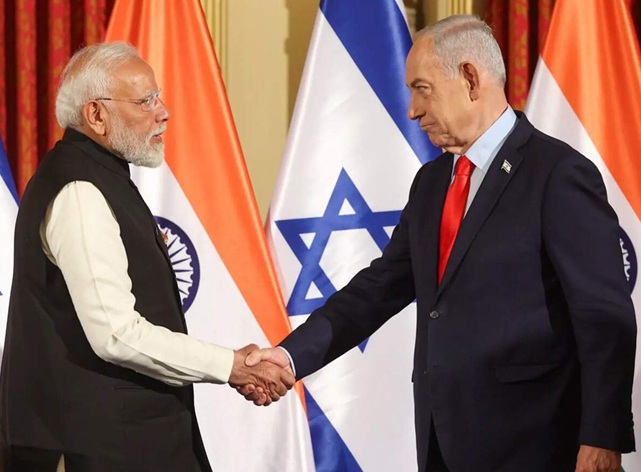
India and Israel established full diplomatic relations in 1992. Prior to that, engagement remained limited due to India’s support for the Palestinian cause and Cold War geopolitical alignments.
Post-1991 economic liberalisation and the end of the Cold War created space for deeper engagement. A major turning point occurred in 2017 when Prime Minister Modi undertook the first standalone visit by an Indian PM to Israel, elevating ties to a “Strategic Partnership.”
Since then, cooperation has expanded beyond defence to innovation, water management, agriculture, cybersecurity, and high technology.
Defence remains the backbone of bilateral ties. Israel is among India’s leading defence suppliers, particularly in:
The two nations share strong intelligence cooperation and maintain a consistent position against terrorism, including cross-border terrorism.
Agricultural cooperation is widely regarded as a model partnership.
Key initiatives:
The collaboration reflects technology-driven rural transformation.
Trade has diversified significantly:
Recent years saw a decline (US$ 6.53 billion in FY 2023-24; US$ 3.75 billion in FY 2024-25), partly due to regional instability and supply chain disruptions.
Innovation cooperation has intensified:
India maintains balanced relations with Israel, Arab states, and Iran. However, India–Israel engagement has become increasingly open and multidimensional.
Regional stability is vital for:
Both countries support peace and stability in West Asia.
The relationship was formally upgraded to a Special Strategic Partnership, marking a new phase in institutional cooperation.
1. Strategic Diversification
Strengthens India’s footprint in West Asia while maintaining strategic autonomy.
2. Defence Indigenisation
Joint production and technology transfer align with India’s defence manufacturing goals.
3. Technology and Innovation Boost
Deepens collaboration in emerging domains critical to 21st-century competitiveness.
4. Economic and Trade Expansion
FTA negotiations and digital cooperation may revitalise bilateral trade.
5. Regional Stability
Joint engagement in IMEC and I2U2 enhances connectivity and economic integration.
India–Israel ties must be viewed alongside India’s engagement with Gulf countries and Iran. India continues to pursue a multi-aligned West Asia policy, balancing strategic partnerships without compromising regional interests.
The elevation to a Special Strategic Partnership signals institutional maturity and long-term commitment.
FAQsQ1. When were full diplomatic relations established between India and Israel ? Full diplomatic relations were established in 1992. Q2. Why is defence cooperation central to the relationship ? Israel supplies advanced defence technologies and collaborates with India in joint development and intelligence sharing. Q3. What is new in the 2026 elevation of ties ? The relationship was upgraded to a Special Strategic Partnership, expanding cooperation in emerging technologies, trade, and connectivity. Q4. How does the partnership affect India’s West Asia policy ? It strengthens India’s strategic presence while maintaining balanced relations with other regional actors. Q5. What is the significance of IMEC in bilateral ties ? IMEC enhances trade and connectivity between India, West Asia, and Europe, reinforcing long-term economic integration. |
| Prelims: (Polity & Governance + CA) Mains: (GS 2: Constitution, Judiciary, Governance; GS 4: Ethics in Public Administration) |
Recent observations by the Allahabad High Court have renewed scrutiny of the practice termed “bulldozer justice” in Uttar Pradesh, where properties of individuals accused of crimes are demolished soon after allegations surface.
Despite clear directions issued in 2024 by the Supreme Court of India against unlawful demolitions, such actions continue to raise concerns about due process, presumption of innocence, and constitutional safeguards.
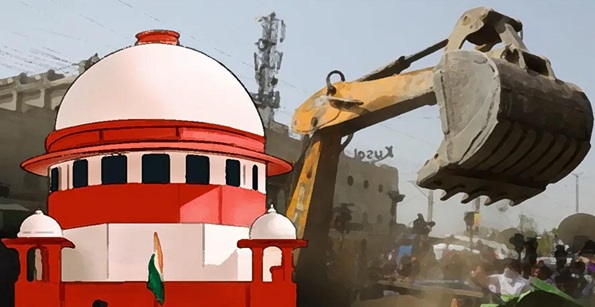
“Bulldozer justice” refers to the demolition of properties belonging to accused persons — often immediately after the registration of an FIR — under municipal or urban planning laws.
Critics argue that such demolitions invert the constitutional sequence:
Allegation → Investigation → Adjudication → Punishment
Instead, executive action precedes judicial determination, raising questions under:
The debate highlights tensions between administrative enforcement and constitutional due process in a democratic system.
A family from Hamirpur district approached the court after municipal authorities threatened demolition of their home and commercial property following an FIR against a relative.
Key facts:
The Division Bench reaffirmed that criminal punishment lies exclusively within the judiciary’s domain, not the executive.
The court framed critical questions, including:
Under statutes such as:
Authorities may remove unauthorised constructions. However, due process requires:
These laws are regulatory — not punitive — in nature.
In In Re: Directions in the Matter of Demolition of Structures (2024), the Supreme Court held:
Courts examine:
If intent appears punitive rather than regulatory, the action may be unconstitutional.
When lawful authority is used to achieve an impermissible objective (e.g., punishment without trial), it constitutes a colourable exercise of power.
Such misuse:
Article 21 protects individuals from deprivation of life and liberty without procedure established by law.
An accused remains innocent until proven guilty.
Punishment is a judicial function; the executive enforces law but cannot impose sanctions without trial.
Demolition can permanently destroy homes, livelihoods, and social standing — even if the accused is later acquitted.
Perceived arbitrariness may weaken faith in rule-based administration.
Municipal authorities must act against illegal constructions to maintain urban order.
However, enforcement must:
|
Regulatory Action |
Punitive Action |
|---|---|
|
Based on building violations |
Triggered by criminal allegation |
|
Follows due process |
Immediate post-FIR action |
|
Neutral application |
Targeted enforcement |
|
Subject to appeal |
Often expedited |
Bulldozers are tools of urban governance — not instruments of criminal adjudication.
FAQsQ1. What is meant by “bulldozer justice” ? It refers to demolition of properties linked to accused individuals, often immediately after criminal allegations arise. Q2. Is demolition illegal in all cases ? No. Demolition of unauthorised constructions is lawful if due process is followed and action is regulatory, not punitive. Q3. What did the Supreme Court clarify in 2024 ? It ruled that property cannot be demolished merely because the owner is accused of a crime and emphasised due process safeguards. Q4. Why is the practice constitutionally contentious ? It may violate Articles 14 and 21 by bypassing judicial adjudication and due process. Q5. What is a “colourable exercise of power” ? It occurs when lawful authority is used to achieve an unlawful objective — such as punishing without trial. |

Our support team will be happy to assist you!


 Contact Us
  New Batch : 9555124124/ 7428085757
  Tech Support : 9555124124/ 7428085757