- UPSC Exam
- State PCS
- One Day Exam
- Current Affairs
- PT Quiz
- Downlaods
- About Coaching
- Blog
- Videos

| Prelims: (Governance + Social Issues + CA) Mains: (GS 2 – Governance, Social Justice; GS 1 – Society, Gender Issues) |
The International Olympic Committee has come under renewed scrutiny over its transgender participation policy, amid global debates on fairness, inclusion, and scientific criteria in competitive sports.
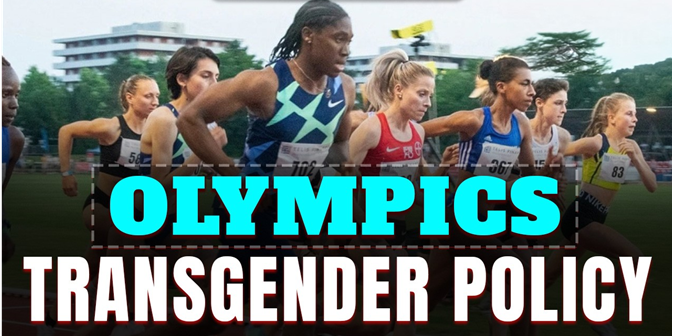
The participation of transgender athletes in sports has emerged as a major global issue, intersecting with:
Historically, sports competitions have been divided into male and female categories based on biological differences. However, evolving understandings of gender identity have challenged traditional frameworks.
The IOC has gradually revised its policies to balance inclusivity with competitive fairness, leading to intense debates worldwide.
The IOC’s transgender policy provides guidelines for the inclusion of transgender and intersex athletes in Olympic sports.
1. No Universal Eligibility Rule
Each sport can define its own criteria based on physical demands and competitive fairness.
2. Focus on Non-Discrimination
Athletes should not be excluded solely based on gender identity.
3. Scientific Basis for Decisions
Policies must rely on robust medical and performance-related evidence.
4. Avoidance of Harmful Testing
No invasive or unethical medical procedures should be imposed.
1. Fairness vs Inclusion
2. Scientific Uncertainty
3. Legal and Policy Differences
4. High-Profile Cases
Participation of transgender athletes in elite competitions has intensified public and legal debates.
1. Sports Governance
Different federations are now framing independent rules, leading to policy fragmentation.
2. Legal Challenges
Policies are increasingly being challenged in courts on grounds of equality and fairness.
3. Social Discourse
The issue has become central to debates on gender identity and rights globally.
4. Impact on Athletes
Athletes face uncertainty regarding eligibility and career progression.
1. Balancing Rights and Fairness
The policy attempts to reconcile inclusivity with the integrity of competition.
2. Human Rights Perspective
Promotes dignity and participation of transgender individuals in sports.
3. Scientific and Ethical Dimensions
Raises questions about how science should inform policy decisions.
4. Precedent for Other Institutions
Influences policies in education, employment, and governance.
5. Global Policy Standard Setting
IOC guidelines act as a reference point for sports bodies worldwide.
FAQs1. What is the IOC transgender policy ? It is a framework that guides the participation of transgender athletes in Olympic sports. 2. Does the IOC have a uniform rule for all sports ? No, each sport sets its own eligibility criteria under IOC guidance. 3. What is the main debate around the policy ? Balancing fairness in competition with inclusion and non-discrimination. 4. Why is the issue controversial ? Due to scientific uncertainty and differing views on competitive advantage. 5. What is the global impact of this policy ? It influences sports governance, legal debates, and broader discussions on gender rights. |
|
Prelims : (Art & Culture + Tribes + Environment & Biodiversity + CA) |
A recent study has documented 39 medicinal plants used by the Sonowal Kachari community to treat a wide range of ailments, highlighting the importance of indigenous knowledge systems in healthcare and biodiversity conservation.
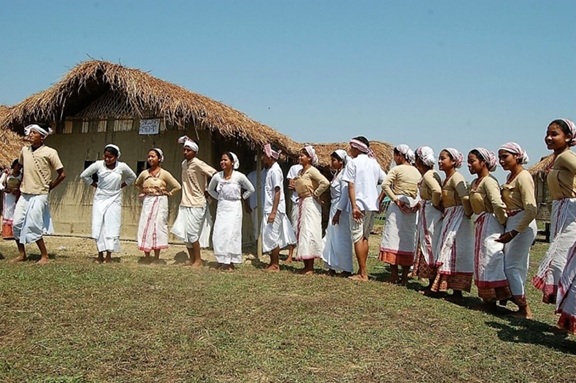
India is home to a vast diversity of indigenous communities whose traditional knowledge has evolved over centuries. Tribal communities, especially in the Northeast, have developed sustainable practices closely linked with nature.
The renewed interest in traditional medicine and biodiversity conservation has brought attention to such communities, as their knowledge systems contribute to :
In this context, the Sonowal Kachari community’s traditional medicinal practices have gained academic and policy attention.
The Sonowal Kacharis possess rich knowledge of indigenous medicine based on local biodiversity.
The protection and promotion of indigenous knowledge, including that of the Sonowal Kacharis, are supported by several national and international frameworks:
They preserve traditional medicinal practices that can contribute to modern healthcare and drug discovery.
Their lifestyle promotes sustainable use of natural resources and conservation of medicinal plants.
They enrich India’s pluralistic cultural fabric through unique traditions and practices.
Agriculture and nature-based living ensure ecological balance.
Their knowledge aligns with national and global efforts on :
FAQs1. Who are the Sonowal Kacharis ? They are an indigenous Scheduled Tribe primarily residing in Assam, known for their cultural heritage and traditional knowledge systems. 2. What is their traditional occupation ? Historically, they were involved in gold panning, but now primarily engage in agriculture. 3. Why are they important in current affairs ? A recent study highlighted their use of 39 medicinal plants, showcasing their rich indigenous medical knowledge. 4. What religion do they follow ? They practice Hinduism influenced by folk traditions, with Shiva as their main deity. 5. What is the significance of their medicinal knowledge ? It contributes to biodiversity conservation, sustainable healthcare, and potential modern drug discovery. |
|
Prelims : (Science & Technology + Defence + CA) |
Recently, Iran reportedly fired Qader cruise missiles targeting the USS Abraham Lincoln (CVN-72), highlighting rising maritime tensions and the growing role of advanced missile systems in naval warfare.
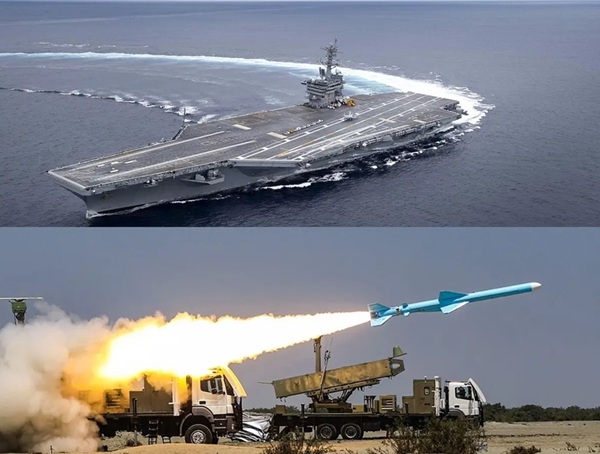
The incident reflects increasing geopolitical tensions in strategically important maritime regions such as the Persian Gulf and surrounding waters.
Modern naval conflicts are increasingly shaped by :
Countries like Iran have invested in indigenous missile technologies to counter technologically superior naval forces, especially aircraft carriers.
Implications :
A cruise missile is a guided missile that flies at low altitudes, often following terrain contours to evade detection and strike targets with high precision.
Examples :
A ballistic missile is a missile that is launched using rocket propulsion and follows a parabolic (ballistic) trajectory, often travelling outside the Earth’s atmosphere before striking its target.
Examples :
|
Feature |
Ballistic Missile |
Cruise Missile (Qader) |
|---|---|---|
|
Trajectory |
Parabolic, space-based |
Low-altitude, within atmosphere |
|
Speed |
Extremely high (hypersonic) |
Subsonic/supersonic |
|
Guidance |
Limited after launch |
Continuous guidance |
|
Detection |
Easier (radar tracking) |
Difficult (sea-skimming) |
|
Role |
Strategic deterrence |
Tactical precision strike |
Provides Iran with the capability to challenge large naval platforms like aircraft carriers.
Allows relatively smaller forces to counter technologically advanced adversaries.
Enhances influence over critical sea lanes such as oil shipping routes.
Missiles offer a cheaper alternative to maintaining large naval fleets.
Raises tensions and increases the risk of escalation in sensitive regions.
FAQs1. What is the Qader cruise missile ? It is an Iranian medium-range anti-ship cruise missile designed to target naval vessels. 2. What is its range ? It has a range of approximately 120 to 300 kilometres. 3. What makes it difficult to detect ? Its low-altitude sea-skimming flight path reduces radar visibility. 4. What are ballistic missiles ? They are missiles that follow a high-speed parabolic trajectory, often travelling through space before hitting targets. 5. Why is this development significant ? It highlights growing naval tensions and the increasing role of both cruise and ballistic missile technologies in modern warfare. |
| Prelims : (Economy + CA) Mains : GS 3 – Economy, Employment | GS 1 – Society, Women Issues |
The Periodic Labour Force Survey (PLFS) 2025 highlights that while women’s wages are growing at a faster rate than men’s, a significant gender wage gap continues to persist across sectors in India.
India’s labour market has undergone structural changes in recent years, with increasing attention on inclusivity, gender equality, and workforce participation.
Despite policy efforts, gender disparities in employment and wages remain deeply entrenched due to :
The gender wage gap reflects broader structural inequalities and remains a critical concern for achieving inclusive growth and social justice.
The Periodic Labour Force Survey (PLFS) is the primary source of data on employment and unemployment in India.
The gender wage gap refers to the difference in average earnings between men and women for similar work or across sectors.
Women earn less than men in :
Women are concentrated in low-paying sectors such as :
A large proportion of women are employed in the informal sector, where :
Fewer women in the workforce reduces bargaining power and economic opportunities.
Women are overrepresented in low-skilled, low-paying jobs.
Skill gaps restrict entry into high-paying sectors like technology and manufacturing.
Unpaid care work and household responsibilities limit women’s working hours and career progression.
Lack of contracts, wage protection, and social security leads to exploitation.
The PLFS data indicates slowing momentum in the informal sector, which is crucial because :
This directly impacts women’s income security and widens inequality.
Reducing wage inequality boosts overall productivity and GDP growth.
Higher wages for women improve household incomes and living standards.
Ensures fair opportunities and economic empowerment.
Enhances workforce participation of women, a key untapped resource.
Improves outcomes in education, health, and nutrition for families.
FAQs1. What is the gender wage gap ? It is the difference in earnings between men and women for similar work or across sectors. 2. What does PLFS 2025 reveal ? It shows faster wage growth for women but persistent overall wage inequality. 3. What is PLFS ? It is a nationwide survey conducted by the National Statistical Office to measure employment, unemployment, and labour market trends. 4. Why does the wage gap persist in India ? Due to factors like informal employment, social norms, skill gaps, and occupational segregation. 5. How does the informal sector affect women ? Most women work in the informal sector, where wages are low and job security is limited. |

Our support team will be happy to assist you!

 Contact Us
  New Batch : 9555124124/ 7428085757
  Tech Support : 9555124124/ 7428085757