|
Prelims : (Art & Culture + Tribes + Environment & Biodiversity + CA)
Mains : (GS 1 – Indian Society, Culture; GS 3 – Environment, Indigenous Knowledge Systems)
|
Why in News ?
A recent study has documented 39 medicinal plants used by the Sonowal Kachari community to treat a wide range of ailments, highlighting the importance of indigenous knowledge systems in healthcare and biodiversity conservation.
Background and Context
India is home to a vast diversity of indigenous communities whose traditional knowledge has evolved over centuries. Tribal communities, especially in the Northeast, have developed sustainable practices closely linked with nature.
The renewed interest in traditional medicine and biodiversity conservation has brought attention to such communities, as their knowledge systems contribute to :
- Sustainable healthcare practices
- Conservation of medicinal plants
- Preservation of cultural heritage
In this context, the Sonowal Kachari community’s traditional medicinal practices have gained academic and policy attention.
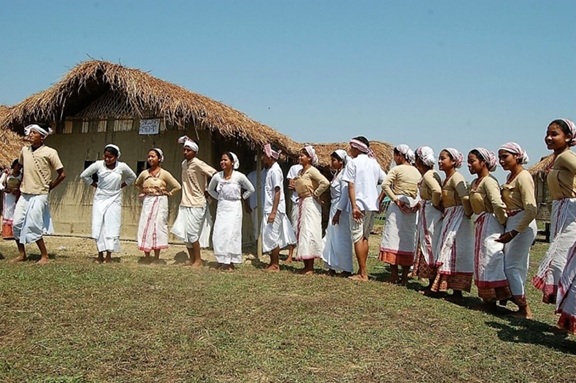
About Sonowal Kacharis
- The Sonowal Kacharis are an indigenous tribe primarily residing in Assam
- They are one of the oldest and third-largest plain tribes of the region
- Smaller populations are found in Arunachal Pradesh and Meghalaya
- Recognised as a Scheduled Tribe (Plains) in Assam
Ethnic and Linguistic Identity
- Belong to Mongoloid ethnic origin
- Linguistically associated with the Tibeto-Burman language family
- Primary language: Assamese, with knowledge of Hindi
Historical Roots and Traditional Occupation
- The name “Sonowal” is derived from “sona” (gold)
- Traditionally engaged in gold panning during the Ahom kingdom
- Over time, shifted primarily to agriculture
Present Occupation
- Agriculture remains the main livelihood
- Crops include rice, betel nut, sweet potato, and cotton
Traditional Knowledge of Medicine
The Sonowal Kacharis possess rich knowledge of indigenous medicine based on local biodiversity.
Key Features
- Use of plant-based remedies for common ailments
- Treatment of diseases such as :
- Fever and cough
- Skin diseases
- Kidney stones
- Knowledge passed through generations orally
Significance of the Recent Study
- Identifies 39 medicinal plants used by the community
- Highlights the role of tribal knowledge in modern pharmacology
- Emphasises need for documentation and protection of traditional knowledge
Legal and Global Framework
The protection and promotion of indigenous knowledge, including that of the Sonowal Kacharis, are supported by several national and international frameworks:
International Frameworks
- Convention on Biological Diversity (1992) :
- Recognises the role of indigenous communities in biodiversity conservation
- Calls for fair and equitable sharing of benefits arising from traditional knowledge
- Nagoya Protocol :
- Provides a legal framework for access to genetic resources
- Ensures benefit-sharing with indigenous communities
- World Intellectual Property Organization (WIPO) :
- Works on protection of traditional knowledge and cultural expressions
- United Nations Declaration on the Rights of Indigenous Peoples :
- Recognises rights of indigenous communities over their cultural heritage and knowledge
National Frameworks (India)
- Biological Diversity Act, 2002 :
- Protects biological resources and associated traditional knowledge
- Establishes Biodiversity Management Committees
- National Biodiversity Authority :
- Regulates access to biological resources and ensures benefit-sharing
- Traditional Knowledge Digital Library :
- Documents traditional medicinal knowledge to prevent biopiracy
- Forest Rights Act, 2006 :
- Recognises rights of forest-dwelling communities over land and resources
Religious and Cultural Practices
- Practice Hinduism with strong folk influences
- Maintain village shrines instead of formal temple worship
- Shiva is considered the primary deity
- Cultural practices are closely linked with nature and seasonal cycles
Significance of Sonowal Kachari Community
1. Indigenous Knowledge Systems
They preserve traditional medicinal practices that can contribute to modern healthcare and drug discovery.
2. Biodiversity Conservation
Their lifestyle promotes sustainable use of natural resources and conservation of medicinal plants.
3. Cultural Diversity
They enrich India’s pluralistic cultural fabric through unique traditions and practices.
4. Sustainable Livelihood Practices
Agriculture and nature-based living ensure ecological balance.
5. Policy Relevance
Their knowledge aligns with national and global efforts on :
- Traditional medicine
- Climate resilience
- Sustainable development
Challenges
- Erosion of traditional knowledge due to modernization
- Lack of proper documentation and intellectual property protection
- Socio-economic marginalisation
- Limited access to healthcare and education
- Threats to biodiversity affecting medicinal plant availability
Way Forward
- Document and digitise traditional knowledge systems systematically
- Promote community-based conservation of medicinal plants
- Integrate indigenous medicine with modern healthcare frameworks
- Ensure legal protection through Intellectual Property Rights (IPR) mechanisms
- Enhance livelihood opportunities through eco-tourism and sustainable agriculture
- Strengthen education and awareness while preserving cultural identity
FAQs
1. Who are the Sonowal Kacharis ?
They are an indigenous Scheduled Tribe primarily residing in Assam, known for their cultural heritage and traditional knowledge systems.
2. What is their traditional occupation ?
Historically, they were involved in gold panning, but now primarily engage in agriculture.
3. Why are they important in current affairs ?
A recent study highlighted their use of 39 medicinal plants, showcasing their rich indigenous medical knowledge.
4. What religion do they follow ?
They practice Hinduism influenced by folk traditions, with Shiva as their main deity.
5. What is the significance of their medicinal knowledge ?
It contributes to biodiversity conservation, sustainable healthcare, and potential modern drug discovery.
|






 Contact Us
  New Batch : 9555124124/ 7428085757
  Tech Support : 9555124124/ 7428085757