New
Final Result - UPSC CSE Result, 2025 GS Foundation (P+M) - Delhi : 23rd March 2026, 11:30 AM Navratri offer UPTO 75% + 10% Off | Valid till 26th March GS Foundation (P+M) - Prayagraj : 17th March 2026 Final Result - UPSC CSE Result, 2025 GS Foundation (P+M) - Delhi : 23rd March 2026, 11:30 AM Navratri offer UPTO 75% + 10% Off | Valid till 26th March GS Foundation (P+M) - Prayagraj : 17th March 2026

Olympics Transgender Policy: What Are the Rules, Debates and Global Impact?

Prelims: (Governance + Social Issues + CA)
Mains: (GS 2 – Governance, Social Justice; GS 1 – Society, Gender Issues)

Why in News ?

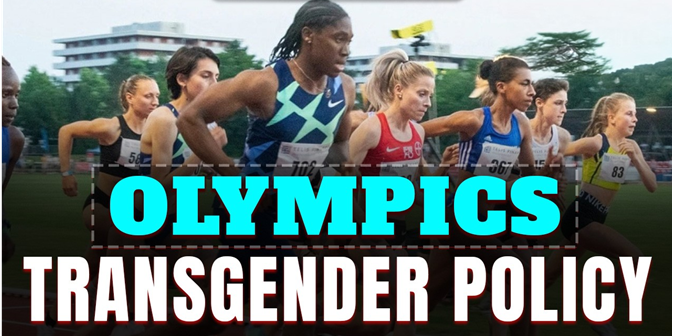
The International Olympic Committee has come under renewed scrutiny over its transgender participation policy, amid global debates on fairness, inclusion, and scientific criteria in competitive sports.
Background and Context

The participation of transgender athletes in sports has emerged as a major global issue, intersecting with:

  • Gender identity and human rights
  • Fair competition in sports
  • Scientific and medical standards

Historically, sports competitions have been divided into male and female categories based on biological differences. However, evolving understandings of gender identity have challenged traditional frameworks.

The IOC has gradually revised its policies to balance inclusivity with competitive fairness, leading to intense debates worldwide.

What is the Olympics Transgender Policy ?

The IOC’s transgender policy provides guidelines for the inclusion of transgender and intersex athletes in Olympic sports.

Key Objective

  • To ensure:
    • Fair competition
    • Non-discrimination
    • Inclusion of all athletes

Evolution of IOC Policy

1. Earlier Approach (Pre-2015)

  • Required gender reassignment surgery
  • Mandatory legal recognition of gender

2. 2015 Guidelines

  • Removed surgery requirement
  • Introduced testosterone limits for transgender women

3. 2021 Framework on Fairness and Inclusion

  • Shifted responsibility to international sports federations
  • Avoided blanket rules
  • Emphasised:
    • Human rights
    • Scientific evidence
    • Case-by-case evaluation

Key Features of Current Framework

1. No Universal Eligibility Rule

Each sport can define its own criteria based on physical demands and competitive fairness.

2. Focus on Non-Discrimination

Athletes should not be excluded solely based on gender identity.

3. Scientific Basis for Decisions

Policies must rely on robust medical and performance-related evidence.

4. Avoidance of Harmful Testing

No invasive or unethical medical procedures should be imposed.

SRY Gene Test and Biological Screening

  • The SRY gene is located on the Y chromosome and plays a key role in male sex determination.
  • Historically, some sports bodies used genetic tests (including SRY detection) to verify an athlete’s biological sex.
  • Presence of the SRY gene typically indicates male chromosomal patterns (XY), though exceptions exist (e.g., intersex variations).
  • Modern Olympic policy does not mandate SRY-based testing, as it is considered overly simplistic and potentially discriminatory.
  • Current approach prefers hormonal, physiological, and sport-specific criteria rather than purely genetic tests.

Exceptions and Other Categories

  • Intersex Athletes (Differences of Sex Development – DSD):
    • Individuals born with variations in chromosomes, hormones, or reproductive anatomy
    • May not fit typical male/female classifications
    • Often subject to specific testosterone-based regulations in some sports
  • Non-Binary Athletes:
    • Identify outside the male-female binary
    • Currently lack a dedicated category in most Olympic events
  • Sport-Specific Exceptions:
    • Some federations (e.g., athletics, swimming) impose stricter eligibility rules
    • Others adopt more inclusive frameworks
  • Open Category Debate:
    • Emerging discussions on introducing an “open” category to include all gender identities without affecting existing categories

Global Debate Around Transgender Participation

1. Fairness vs Inclusion

  • Critics argue transgender women may retain physiological advantages
  • Supporters emphasise equal rights and non-discrimination

2. Scientific Uncertainty

  • Lack of consensus on impact of hormone therapy on performance

3. Legal and Policy Differences

  • Countries and sports bodies have adopted varying rules

4. High-Profile Cases

Participation of transgender athletes in elite competitions has intensified public and legal debates.

Global Impact of the Policy

1. Sports Governance

Different federations are now framing independent rules, leading to policy fragmentation.

2. Legal Challenges

Policies are increasingly being challenged in courts on grounds of equality and fairness.

3. Social Discourse

The issue has become central to debates on gender identity and rights globally.

4. Impact on Athletes

Athletes face uncertainty regarding eligibility and career progression.

Significance of the Issue

1. Balancing Rights and Fairness

The policy attempts to reconcile inclusivity with the integrity of competition.

2. Human Rights Perspective

Promotes dignity and participation of transgender individuals in sports.

3. Scientific and Ethical Dimensions

Raises questions about how science should inform policy decisions.

4. Precedent for Other Institutions

Influences policies in education, employment, and governance.

5. Global Policy Standard Setting

IOC guidelines act as a reference point for sports bodies worldwide.

Challenges

  • Lack of universally accepted scientific benchmarks
  • Divergence in rules across sports
  • Risk of discrimination or exclusion
  • Balancing competitive integrity with inclusivity
  • Political and social polarisation on gender issues

Way Forward

  • Develop sport-specific, evidence-based eligibility criteria
  • Encourage global scientific research on performance impacts
  • Ensure transparency and consistency in rule-making
  • Protect athletes’ dignity and mental well-being
  • Promote dialogue among stakeholders—athletes, scientists, and policymakers
  • Move towards harmonised international standards while respecting diversity

FAQs

1. What is the IOC transgender policy ?

It is a framework that guides the participation of transgender athletes in Olympic sports.

2. Does the IOC have a uniform rule for all sports ?

No, each sport sets its own eligibility criteria under IOC guidance.

3. What is the main debate around the policy ?

Balancing fairness in competition with inclusion and non-discrimination.

4. Why is the issue controversial ?

Due to scientific uncertainty and differing views on competitive advantage.

5. What is the global impact of this policy ?

It influences sports governance, legal debates, and broader discussions on gender rights.

Have any Query?

Our support team will be happy to assist you!

OR
X