
New
Final Result - UPSC CSE Result, 2025 GS Foundation (P+M) - Delhi : 23rd March 2026, 11:30 AM Navratri offer UPTO 75% + 10% Off | Valid till 26th March GS Foundation (P+M) - Prayagraj : 17th March 2026 Final Result - UPSC CSE Result, 2025 GS Foundation (P+M) - Delhi : 23rd March 2026, 11:30 AM Navratri offer UPTO 75% + 10% Off | Valid till 26th March GS Foundation (P+M) - Prayagraj : 17th March 2026

Qader Cruise Missile Explained: Range, Features & Strategic Impact

Prelims : (Science & Technology + Defence + CA)
Mains : GS 3 – Security, Defence Technology, International Relations

Why in News ?

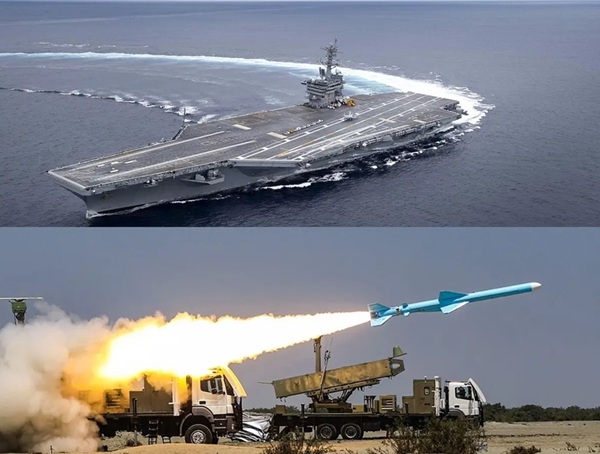
Recently, Iran reportedly fired Qader cruise missiles targeting the USS Abraham Lincoln (CVN-72), highlighting rising maritime tensions and the growing role of advanced missile systems in naval warfare.
Background and Context

The incident reflects increasing geopolitical tensions in strategically important maritime regions such as the Persian Gulf and surrounding waters.

Modern naval conflicts are increasingly shaped by :

  • Precision-guided missile systems
  • Anti-access/area denial (A2/AD) strategies
  • Asymmetric warfare capabilities

Countries like Iran have invested in indigenous missile technologies to counter technologically superior naval forces, especially aircraft carriers.

About Qader Cruise Missile

  • Developed by : Iran
  • Type : Medium-range, shore-based anti-ship cruise missile
  • Deployed by : Iranian naval forces

Key Features

  • Range : Approximately 120–300 km
  • Target : Warships, aircraft carriers, and oil tankers
  • Warhead : Around 200 kg high explosive
  • Origin : Upgraded version of the Noor missile (based on Chinese design)
  • Launch Platform : Primarily land-based coastal batteries

Working Mechanism

  • Powered by a turbojet engine
  • Follows a low-altitude sea-skimming trajectory
  • Flies just a few metres above sea level

Implications :

  • Reduces radar detection
  • Minimises reaction time for enemy defence systems
  • Enhances strike accuracy against moving naval targets

What are Cruise Missiles ?

A cruise missile is a guided missile that flies at low altitudes, often following terrain contours to evade detection and strike targets with high precision.

Key Characteristics of Cruise Missiles

  • Low-altitude flight : Avoids radar detection
  • High manoeuvrability : Can change direction mid-flight
  • Guidance Systems : 
    • GPS
    • Inertial navigation
    • Terrain contour matching
  • Speed : Subsonic to supersonic (Mach 0.8–3)
  • Range : Typically 50–2,500 km
  • Launch Platforms : Land, air, and sea

Examples :

  • BrahMos missile
  • Nirbhay missile
  • Tomahawk missile

What are Ballistic Missiles ?

A ballistic missile is a missile that is launched using rocket propulsion and follows a parabolic (ballistic) trajectory, often travelling outside the Earth’s atmosphere before striking its target.

Key Characteristics of Ballistic Missiles

  • Powered only during initial boost phase
  • Travels largely in exo-atmospheric space
  • Re-enters atmosphere at high speed (terminal phase)
  • Very high speed (often hypersonic)
  • Limited manoeuvrability after launch
  • Used for long-range strategic strikes, including nuclear delivery

Examples :

  • Agni-V
  • DF-41

Ballistic vs Cruise Missiles 

Feature

Ballistic Missile

Cruise Missile (Qader)

Trajectory

Parabolic, space-based

Low-altitude, within atmosphere

Speed

Extremely high (hypersonic)

Subsonic/supersonic

Guidance

Limited after launch

Continuous guidance

Detection

Easier (radar tracking)

Difficult (sea-skimming)

Role

Strategic deterrence

Tactical precision strike

Significance of Qader Missile Deployment

1. Strengthening Naval Deterrence

Provides Iran with the capability to challenge large naval platforms like aircraft carriers.

2. Asymmetric Warfare Advantage

Allows relatively smaller forces to counter technologically advanced adversaries.

3. Strategic Control of Maritime Routes

Enhances influence over critical sea lanes such as oil shipping routes.

4. Cost-Effective Defence Strategy

Missiles offer a cheaper alternative to maintaining large naval fleets.

5. Regional Security Implications

Raises tensions and increases the risk of escalation in sensitive regions.

Challenges and Concerns

  • Risk of escalation into broader naval conflict
  • Increased militarisation of strategic waterways
  • Difficulty in missile interception due to low-altitude flight
  • Threat to global trade and energy supply chains
  • Proliferation of missile technology among regional actors

Way Forward

  • Strengthen maritime security frameworks and regional cooperation
  • Enhance missile defence systems and early warning capabilities
  • Promote diplomatic engagement to reduce tensions
  • Develop international norms on missile deployment and usage
  • Encourage confidence-building measures among regional powers

FAQs

1. What is the Qader cruise missile ?

It is an Iranian medium-range anti-ship cruise missile designed to target naval vessels.

2. What is its range ?

It has a range of approximately 120 to 300 kilometres.

3. What makes it difficult to detect ?

Its low-altitude sea-skimming flight path reduces radar visibility.

4. What are ballistic missiles ?

They are missiles that follow a high-speed parabolic trajectory, often travelling through space before hitting targets.

5. Why is this development significant ?

It highlights growing naval tensions and the increasing role of both cruise and ballistic missile technologies in modern warfare.

Have any Query?

Our support team will be happy to assist you!

OR
X


