Current Affairs for 28 October 2026

China's Grey-Zone Warfare Strategy and India's Challenges

Why is it in the News?

  • Recently, a face-off occurred between Indian and Chinese soldiers near the Line of Actual Control (LAC) in the Upper Subansiri district of Arunachal Pradesh along the India–China border.
  • China attempts to alter the existing status quo in its favour through military pressure, infrastructure development, and other unconventional methods.

Major Areas of the India–China Border Dispute

1. Line of Actual Control (LAC)

  • Line of Actual Control (LAC): The line that separates the areas under the actual control of India and China.
  • Ceasefire line: Following the 1962 India–China War, the armies of both countries were deployed along the disputed border.
  • After the 1962 India–China War, the term LAC was initially used in reference to the western sector.
  • Since the 1990s, it has been used to refer to the entire line of actual control between the two countries.
  • The LAC received formal recognition through the India–China agreements signed in 1993 and 1996.

2. McMahon Line

  • The McMahon Line is the boundary line between India and Tibet.
  • It was established under the 1914 Simla Convention involving representatives of British India and Tibet.
  • In 1937, a Survey of India map depicted the McMahon Line as India's official boundary.
  • China refuses to recognise the 1914 Simla Convention.
  • Chinese official maps claim the area south of the McMahon Line, approximately 56,000 square miles, as part of the Tibet Autonomous Region. China refers to this area as South Tibet.

3. Aksai Chin

  • Aksai Chin is located just below the Kunlun Mountains.
  • It is a salt desert.
  • The name is commonly interpreted as meaning the “desert of the white stony valley.”
  • Aksai Chin includes a river and a lake bearing the same name.
  • Geographically, it forms part of the Tibetan Plateau.
  • It is largely uninhabited, with no permanent settlements.
  • Historically, Aksai Chin provided a route connecting India with the Silk Road.
  • The trade route from India to Turkistan passed through Ladakh and Aksai Chin to Kashgar.
  • China took control of Aksai Chin during the 1950s.
  • Johnson Line: Places Aksai Chin within Indian territory.
  • Macartney–MacDonald Line: Places Aksai Chin within Chinese territory.

4. Daulat Beg Oldi (DBO)

  • Daulat Beg Oldi is located in the Ladakh region of India.
  • The Chip Chap River lies to its south.
  • Historically, it served as a stopping point on the trade route between India and Eastern Turkistan.

5. Pangong Tso Lake

  • Pangong Tso is approximately 134 km long and lies at an altitude of more than 14,000 feet in the Himalayas.
  • Approximately 45 km of the lake's length lies within India.
  • Approximately 90 km lies within China.
  • The LAC passes through the lake.

6. Galwan Valley

  • Galwan Valley is located near the India–China border between Ladakh and Aksai Chin.
  • The LAC separates Aksai Chin from areas under Indian control.
  • Galwan Valley has been a source of India–China tensions since 1962.
  • The Galwan River originates in Aksai Chin and joins the Shyok River.

7. Doklam

  • Doklam lies between China and Bhutan, near the Sikkim border.
  • Both Bhutan and China claim the area.
  • India supports Bhutan's claim.

8. Chumbi Valley

  • Chumbi Valley is located in Tibet.
  • The boundaries of India, Bhutan, and Tibet meet in the surrounding region.
  • The Nathu La and Jelep La passes are located in this area.
  • The valley is approximately 50 km from the Siliguri Corridor.

9. Tawang

  • Tawang is located in Arunachal Pradesh and is an important Buddhist religious centre.
  • China argues that Tawang has strong cultural similarities with Tibet and should be considered part of Tibet.
  • In 1914, an agreement was reached between representatives of British India and Tibet.
  • The agreement established the boundary that India recognises in the region, including Tawang in Arunachal Pradesh.
  • In 1962, Chinese forces occupied Tawang temporarily.
  • China subsequently withdrew, and Indian forces regained control of the area.

10. Nathu La and Cho La

  • The Nathu La and Cho La clashes were military confrontations between India and China in 1967.
  • These clashes took place along the Sikkim–Tibet border, when Sikkim was an Indian protectorate and Tibet was under Chinese control.
  • Nathu La and Jelep La are important historical trade passes between India and Tibet.

What Is Grey-Zone Warfare?

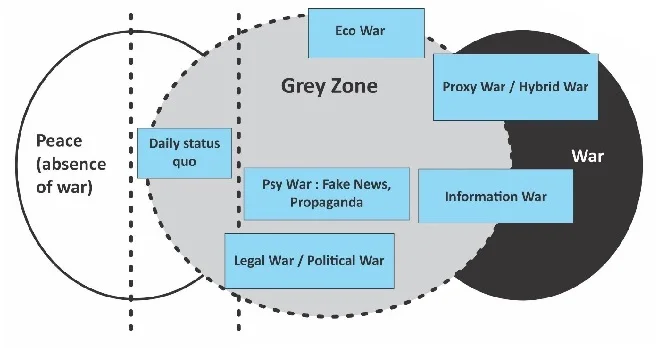
  • Grey-zone warfare is a strategy in which a country puts pressure on an adversary through political, economic, military, cyber, and legal measures without engaging in a direct, full-scale war.
  • Its objective is to gradually change the ground situation and balance of power in its favour, making it difficult for the opposing country to respond effectively.
  • In simple terms, grey-zone warfare involves exploiting the space between peace and conventional war to undermine another country's interests.

Major Characteristics of Grey-Zone Warfare

  • Limited military pressure: Taking small military steps instead of launching a full-scale war.
  • Ambiguity: Conducting activities in ways that make it difficult to classify them as clear acts of war.
  • Gradual alteration of the status quo: Expanding influence in disputed areas through patrolling, construction, and other activities.
  • Legal and political pressure: Strengthening territorial claims through laws, propaganda, and diplomacy.
  • Avoiding the costs of war: Gaining strategic advantages without taking the risks associated with a major military conflict.

Major Methods Used in China's Grey-Zone Warfare Strategy

1. Development of Military Infrastructure

  • Following the 2020 eastern Ladakh crisis, China accelerated the development of roads, railways, airports, and heliports near the border.
  • These facilities enable the Chinese military to move troops, weapons, and other military resources rapidly.
  • Infrastructure development in border areas enhances China's military capabilities and its ability to maintain a prolonged presence along the border.

2. The “Nibble and Negotiate” Strategy

  • This strategy involves gradually gaining advantages through small steps while continuing negotiations.
  • China may attempt to influence the ground situation through patrolling, construction, and an increased military presence in border areas.
  • Since each individual step may appear limited, responding to it can be difficult. However, the cumulative effect of these actions may become significant over time.

3. Development of Border Villages

  • China is developing modern villages in Tibet and other border regions.
  • These villages help maintain civilian populations, improve connectivity, and strengthen administrative presence in border areas.
  • Some villages may also support military logistics and border surveillance.

4. The “Three Warfares” Strategy

China's military strategy gives particular importance to three forms of warfare:

  1. Public Opinion Warfare: Using the media and propaganda to build public support for China's actions.
  2. Psychological Warfare: Creating psychological pressure on the opposing country's soldiers, leadership, and population.
  3. Legal Warfare: Using domestic laws and legal arguments to justify territorial claims.

5. Renaming Places and Using Maps

  • China has continued to issue Chinese names for certain places in Arunachal Pradesh.
  • The objective is to reinforce its territorial claims at the political and administrative levels.
  • Maps, place names, and official documents can therefore be used as instruments of strategic pressure.

6. Expanding Economic and Diplomatic Influence

  • China expands its influence in Asia, Africa, and the Indian Ocean region through investment, trade, connectivity projects, and security cooperation.
  • China's strategic partnership with Pakistan may create security challenges for India on two fronts.
  • Economic dependence and regional influence can be used as instruments in broader geopolitical competition.

7. Cyber and Information Warfare

  • Cyberattacks, misinformation, and digital platforms may be used to influence an adversary's institutions and decision-making processes.
  • Identifying the source and purpose of such attacks can be difficult.
  • Dealing with these threats requires strong technological and intelligence capabilities.

Major Challenges Facing India

1. Differences over the Demarcation of the LAC

  • India and China have different perceptions of the LAC.
  • Uncertainty regarding the actual line of control in several areas can lead to face-offs between soldiers.
  • Since 2020, issues relating to patrolling arrangements and access to traditional patrol points have also emerged in some areas.

2. Differences in Military Capabilities and Infrastructure

  • China has extensively developed roads, railways, airports, and other facilities in border areas.
  • India also needs to continuously improve connectivity, surveillance, and logistical facilities in difficult mountainous terrain.

3. Lack of Coordination among Different Agencies

  • Both the Indo-Tibetan Border Police (ITBP) and the Indian Army play important roles along the India–China border.
  • The ITBP functions under the administrative control of the Ministry of Home Affairs, whereas the Indian Army comes under the Ministry of Defence.
  • Effective coordination, clearly defined responsibilities, and a rapid decision-making process are essential.

4. Surveillance and Intelligence Challenges

  • Monitoring every activity in difficult mountainous terrain is challenging.
  • Delays in receiving information may slow the deployment of troops and resources.
  • Drones, satellites, radars, and modern communication systems are therefore crucial.

5. Diplomatic Pressure and Lack of Trust

  • High-level dialogue can help reduce tensions, but it does not automatically resolve the border dispute permanently.
  • India must maintain military preparedness and credible deterrence alongside diplomatic engagement.

What Should India Do to Counter Grey-Zone Warfare?

1. Develop an Integrated National Strategy

  • India should develop a clear, long-term national strategy to address security challenges arising from China.
  • This strategy should coordinate the armed forces, border security forces, intelligence agencies, foreign policy, and economic policy.
  • Its objective should not merely be to respond to individual incidents, but also to prevent China from unilaterally changing the status quo.

2. Strengthen Border Management

  • Improve coordination between the ITBP and the Indian Army.
  • Clearly define responsibilities and authority along the border.
  • Expand modern surveillance equipment, communication systems, and rapid-response capabilities.
  • Provide border security personnel with the necessary training and modern equipment.

3. Develop Border Infrastructure

  • Accelerate the construction of border roads, tunnels, bridges, and airstrips.
  • Ensure rapid movement of troops and supplies to forward posts.
  • Develop electricity, communication, healthcare, and livelihood facilities in border villages.
  • Strengthen administrative presence in border areas through the participation of local communities.

4. Enhance Surveillance and Technological Capabilities

  • Increase the use of satellite imagery, drones, sensors, and modern communication systems.
  • Develop mechanisms for sharing intelligence in real time.
  • Strengthen capabilities to counter cyber threats and information warfare.

5. Establish Clear Command and Control Mechanisms

  • Clearly define operational responsibilities among the agencies deployed along the border.
  • Speed up decision-making and resource mobilisation during crises.
  • Promote joint exercises and shared operational procedures between the Army and the ITBP.

6. Pursue Balanced and Firm Diplomacy

  • India should keep channels of communication with China open while treating peace along the border as a prerequisite for the normalisation of bilateral relations.
  • Emphasise compliance with border agreements and established mechanisms.
  • Maintain the capability to respond appropriately and promptly to any unilateral attempt to change the status quo.
  • Strengthen cooperation with strategic partners and regional forums.

7. Strengthen Economic and Strategic Self-Reliance

  • Reduce excessive dependence on external sources for critical technologies, defence equipment, and supply chains.
  • Promote domestic defence production and research.
  • Enhance maritime surveillance and regional cooperation in the Indian Ocean.
  • Link economic capabilities with national security and diplomatic influence.

The Way Forward for India

  • India's strategy should not be limited to responding to every Chinese action. It should create conditions in which it becomes difficult and costly for China to change the status quo through incremental steps.
  • This requires simultaneous action at three levels:
    • Strategic level: Strengthen military preparedness, surveillance, and deterrence.
    • Diplomatic level: Effectively use dialogue, border agreements, and regional cooperation.
    • Domestic level: Improve border infrastructure, technology, economic capacity, and institutional coordination.

Conclusion

Grey-zone warfare represents a modern security challenge in which a country's territorial and strategic interests can be affected even without direct warfare. To counter China's strategy effectively, India must focus not only on military strength but also on diplomatic firmness, technological capabilities, economic self-reliance, and improved border management.

An integrated national strategy and credible deterrence can provide the foundation for maintaining peace along the LAC and safeguarding India's territorial integrity.

Mains Examination Question

Question: What do you understand by grey-zone warfare? Discuss its major characteristics and the challenges it poses for India in the context of the India–China border.

Preliminary Examination Question

Question 1. Consider the following statements regarding Grey-Zone Warfare:

  1. It involves putting pressure on an adversary without engaging in direct, full-scale military warfare.
  2. It involves the use of military power alone.
  3. Its objective may be to gradually change the status quo in one's favour.

Select the correct answer using the code given below:

(a) 1 and 2 only
(b) 1 and 3 only
(c) 2 and 3 only
(d) 1, 2 and 3

COP31 2026: Dates, Venue, Presidency, Key Officials and Important Facts

Prelims: COP31, UNFCCC, UNEP, climate adaptation finance, climate mitigation, heat action plans and CBDR-RC.
Mains: General Studies Paper III - Environment, climate change, disaster management, sustainable development and international environmental cooperation.
Keywords: COP31 2026, climate adaptation finance, heatwaves as natural disasters, India heat action plans, global climate finance gap, UNEP Adaptation Gap Report 2025, CBDR-RC, sustainable cooling.

Why in News?

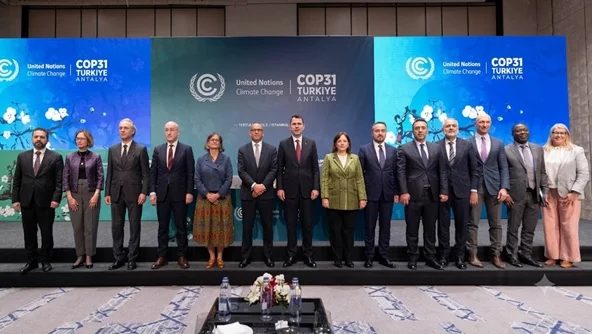
  • The 31st Conference of the Parties (COP31) to the United Nations Framework Convention on Climate Change (UNFCCC) is scheduled to be held in Antalya, Türkiye, from November 9 to 20, 2026. 
  • The conference is significant as countries will discuss measures to address climate change, strengthen climate finance, improve adaptation and accelerate the implementation of the Paris Agreement.
  • The summit is also in focus following India’s call for COP31 to prioritise the fulfilment of existing climate commitments, faster implementation of the Paris Agreement and greater support for countries in need. 

Important Points

  • Conference: 31st Conference of the Parties (COP31)
  • Dates: November 9–20, 2026
  • COP31 President: Murat Kurum
  • Lead for Official Climate Negotiations: Chris Bowen, Australia’s Minister for Climate Change and Energy
  • Climate Convention: United Nations Framework Convention on Climate Change (UNFCCC)
  • UNFCCC Adoption: 1992
  • Paris Agreement Adoption: 2015
  • World Leaders’ Summit: November 11–12, 2026

COP31 will also include CMP21, the 21st session of the meeting of the Parties to the Kyoto Protocol, and CMA8, the eighth session of the meeting of the Parties to the Paris Agreement.

What Is COP31?

  • The Conference of the Parties (COP) is the main decision-making body under the UNFCCC. It brings together countries that are parties to the convention to review progress, negotiate climate policies and strengthen international cooperation.
  • The first COP meeting was held in Berlin, Germany, in 1995. Since then, COP conferences have become a central platform for global climate negotiations.
  • COP31 will focus on implementing existing climate commitments, strengthening international cooperation and addressing the growing impacts of climate change.

Who Will Lead COP31?

COP31 will be hosted by Türkiye, while Australia will lead the official climate negotiations under an agreement between the two countries.

  • Murat Kurum: Türkiye’s Minister of Environment, Urbanisation and Climate Change; President of COP31.
  • Chris Bowen: Australia’s Minister for Climate Change and Energy; will lead the official climate negotiations.
  • Samed Ağırbaş: President of the Zero Waste Foundation; Climate High-Level Champion for COP31, promoting climate action by businesses, cities and citizens.

Key Issues to Be Discussed at COP31

1. Climate Change Mitigation

  • Climate change mitigation refers to efforts to reduce greenhouse gas emissions and limit global warming.
  • Discussions are expected to focus on accelerating the transition to cleaner energy, improving energy efficiency and strengthening countries’ climate commitments.

2. Climate Change Adaptation

  • Adaptation involves adjusting to the actual or expected effects of climate change. It includes measures to address heatwaves, floods, droughts, rising sea levels and other climate-related risks.
  • Developing countries, particularly those with limited resources, require greater support to strengthen their resilience to these impacts.

3. Climate Finance

  • Climate finance is a key issue for developing countries, which often face high costs in reducing emissions and adapting to climate change.
  • COP31 is expected to provide an important platform for discussing the mobilisation of climate finance, the fulfilment of international commitments and improved access to funding for vulnerable countries.

4. Loss and Damage

  • Loss and damage refer to the harmful consequences of climate change that cannot be fully avoided through mitigation or adaptation.
  • The issue is particularly important for countries facing severe climate-related disasters, including small island developing states and other vulnerable nations. 
  • Discussions may focus on support mechanisms and the implementation of existing arrangements.

5. Technology Transfer and Capacity Building

  • Access to affordable climate technologies is essential for developing countries to reduce emissions and adapt to climate impacts. 
  • International cooperation on clean energy, early warning systems, climate-resilient infrastructure and technical expertise will remain important.

6. Implementation of the Paris Agreement

  • A central objective of COP31 will be to advance the implementation of the Paris Agreement, adopted in 2015.
  • The agreement aims to keep the rise in global average temperature well below 2°C above pre-industrial levels and pursue efforts to limit it to 1.5°C. Countries are expected to strengthen their climate action and work towards meeting their commitments.

COP31 World Leaders’ Summit

  • The World Leaders’ Summit is scheduled for November 11–12, 2026, in Antalya. It will provide an opportunity for heads of state and government to discuss climate priorities and build political support for international climate action.
  • A pre-COP meeting is also planned in Fiji from October 5–8, 2026, alongside a leaders’ event in Tuvalu. These Pacific-focused engagements are intended to bring greater attention to the concerns of climate-vulnerable island nations ahead of COP31.
  • Small island states in the Pacific face serious threats from rising sea levels, coastal erosion and extreme weather events. Their priorities include adaptation support, climate finance and stronger international action to limit global warming.

Why Is COP31 Significant?

COP31 is important because the world continues to face rising temperatures, extreme weather events and increasing economic and social losses associated with climate change.

The conference will provide an opportunity to:

  • Strengthen the implementation of the Paris Agreement.
  • Accelerate global efforts to reduce greenhouse gas emissions.
  • Improve access to climate finance for developing countries.
  • Strengthen adaptation and resilience against climate-related disasters.
  • Address loss and damage in vulnerable countries.
  • Promote cooperation on climate technologies and capacity building.

The success of COP31 will depend not only on new announcements but also on countries’ willingness to implement existing commitments and provide the financial and technical support needed to achieve them.

Most Important COP Summits

COP

Year

Host Country

Key Outcome

COP 3

1997

Japan

Kyoto Protocol adopted

COP 8

2002

India

Delhi Ministerial Declaration

COP 15

2009

Denmark

Copenhagen Accord

COP 21

2015

France

Paris Agreement adopted

COP 26

2021

United Kingdom

Glasgow Climate Pact

COP 27

2022

Egypt

Loss and Damage Fund agreed upon

COP 28

2023

UAE

First Global Stocktake; call to transition away from fossil fuels

COP 29

2024

Azerbaijan

New climate finance goal: at least $300 billion annually by 2035

COP 30

2025

Brazil

Focus on implementing climate commitments

COP 31

2026

Türkiye

Scheduled for November 9–20, 2026

India’s COP History

  • India has played an active role in international climate negotiations, particularly in advocating climate equity, sustainable development and the principle of common but differentiated responsibilities and respective capabilities (CBDR-RC).
  • India hosted COP8 in New Delhi in 2002. The conference adopted the Delhi Ministerial Declaration, which emphasised sustainable development and the implementation of climate commitments while recognising the different capacities and responsibilities of developed and developing countries.
  • India has also emphasised the importance of climate finance, technology transfer and the need to balance climate action with development priorities.
  • The Paris Agreement, adopted at COP21 in Paris in 2015, was a major milestone in international climate cooperation. It established a framework under which countries submit and strengthen their national climate commitments to address global warming.
  • India’s climate priorities include expanding renewable energy, improving energy efficiency, strengthening climate resilience and ensuring that the global transition to a low-carbon economy remains fair and inclusive.

Challenges

  • Insufficient Climate Finance: Lack of adequate funding for developing countries.
  • Implementation Gap: Failure to translate climate commitments into action.
  • Global Disagreements: Differences over historical emissions and climate responsibilities.
  • Rising Emissions: Continued dependence on fossil fuels.
  • Adaptation and Loss and Damage: Inadequate support for climate-vulnerable countries.
  • Technology Transfer: High costs and limited access to clean technologies.
  • Geopolitical Tensions: Conflicts that hinder international cooperation.
  • Accountability: Weak monitoring and implementation of climate commitments.

Way Forward

  • Strengthening Climate Finance: Developed countries and international financial institutions should provide predictable, accessible and adequate finance to developing countries for mitigation and adaptation.
  • Effective Implementation of the Paris Agreement: Countries should strengthen their Nationally Determined Contributions (NDCs) and translate climate targets into measurable actions.
  • Promoting Climate Justice: Climate policies should follow the principle of Common but Differentiated Responsibilities and Respective Capabilities (CBDR-RC), recognising differences in countries’ historical emissions and capacities.
  • Accelerating the Clean Energy Transition: Countries should expand renewable energy, improve energy efficiency and gradually reduce dependence on fossil fuels through a just and inclusive transition.
  • Strengthening Adaptation and Resilience: Greater investment is needed in climate-resilient infrastructure, early warning systems, sustainable agriculture and disaster risk reduction.
  • Addressing Loss and Damage: Existing international arrangements should be made more effective to support vulnerable countries facing irreversible climate-related losses.
  • Enhancing Technology Transfer: International cooperation should facilitate affordable access to clean technologies, research, innovation and capacity-building support.
  • Ensuring Accountability: Transparent monitoring, regular progress assessments and stronger international cooperation are essential to ensure that climate commitments translate into tangible results.

Conclusion

COP31 will provide an important platform to strengthen global climate cooperation and implement the Paris Agreement. Its success will depend on translating climate commitments into action, ensuring adequate climate finance, promoting technology transfer and addressing the needs of developing and vulnerable countries.

Prelims Practice Question

Q. With reference to climate adaptation finance and COP31, consider the following statements:

  1. COP31 is scheduled to be held in Antalya, Türkiye, from November 9 to 20, 2026.
  2. Climate adaptation finance aims to reduce vulnerability to the impacts of climate change.
  3. The principle of Common but Differentiated Responsibilities and Respective Capabilities (CBDR-RC) recognises that all countries have identical responsibilities and financial capacities to address climate change.

Which of the statements given above is/are correct?

(a) 1 and 2 only

(b) 2 and 3 only

(c) 1 and 3 only

(d) 1, 2 and 3

Mains practice Question

Q. “The growing frequency of extreme heat events highlights the need for adequate climate adaptation finance in developing countries.” Discuss the major challenges in accessing climate adaptation finance and suggest measures to strengthen India’s climate resilience.

FAQs

1. What is COP31? 

COP31 is the 31st Conference of the Parties to the United Nations Framework Convention on Climate Change (UNFCCC), where countries discuss climate action and international cooperation.

2. When and where will COP31 2026 be held?

COP31 is scheduled to take place in Antalya, Türkiye, from November 9 to 20, 2026.

3. What is climate adaptation finance?

It is funding used to help countries and communities prepare for and manage climate change impacts, including heatwaves, floods and droughts.

4. How much adaptation funding does India require by 2030?

India’s first Adaptation Communication to the UNFCCC estimated a cumulative adaptation expenditure requirement of ₹56.68 trillion by 2030.

5. What is the CBDR-RC principle?

It is the principle that all countries share responsibility for addressing climate change, but their responsibilities and capacities differ, with developed countries expected to take the lead.

AM Green–JERA Agreement: India to Supply Green Ammonia to Japan

Why in News?

  • India’s AM Green Ammonia (India) Private Ltd and Japan’s energy company JERA have signed a binding agreement for the long-term supply of green ammonia from India to Japan. 
  • The agreement aims to support maritime decarbonisation and develop Japan’s low-carbon ammonia supply chain.
  • The deal is significant for India’s clean energy exports and the development of its green hydrogen economy.

Key Highlights of the Agreement

  • Companies involved: AM Green Ammonia (India) Private Ltd and JERA Co. Inc.
  • Supply volume: Approximately 70,000 tonnes of green ammonia annually.
  • Duration: Five years, with the possibility of extension for additional supplies.
  • Production location: AM Green’s proposed facility at Kakinada, Andhra Pradesh.
  • Expected operational timeline: 2028–2029.
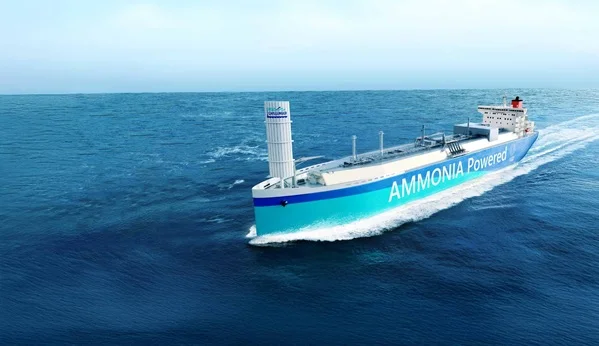
  • Primary application: Fuel for ammonia-powered vessels, particularly car carriers transporting automobiles.
  • Japanese infrastructure: JERA plans to use receiving, storage and distribution facilities being developed near its Hekinan Thermal Power Station in Aichi Prefecture.

The companies describe the project as one of the early large-scale green ammonia bunkering initiatives globally.

What Is Green Ammonia?

  • Green ammonia is ammonia (NH3) produced using hydrogen generated through renewable energy, combined with nitrogen obtained from the air.
  • It can be used in fertiliser production, chemical industries, energy storage and potentially as a fuel for maritime transport. 
  • Compared with hydrogen, ammonia can also be more convenient to store and transport under appropriate conditions.

How Is Green Ammonia Produced?

Green ammonia (NH3) is produced by combining green hydrogen, generated using renewable energy, with nitrogen extracted from the air.

  1. Renewable Energy: Solar and wind energy provide electricity for the production process.
  2. Electrolysis of Water: Electricity is used to split water into hydrogen and oxygen. Alkaline electrolysis is one of the technologies used for this process.
  3. Nitrogen Separation: Nitrogen is separated from the air.
  4. Ammonia Synthesis: Hydrogen reacts with nitrogen under controlled temperature and pressure in the Haber–Bosch process to produce ammonia.
  5. Storage and Transportation: The resulting green ammonia is stored and transported for use in fertilisers, chemical industries and potentially as a maritime fuel.

AM Green’s Kakinada project will use alkaline electrolysis technology and pumped-hydro energy storage. These technologies can support the use of renewable electricity and help manage fluctuations in its availability.

Significance of the Agreement for India

  1. Promoting clean energy exports: India can emerge as a major international supplier of green ammonia and other low-carbon energy products, creating new export opportunities.
  2. Supporting the National Green Hydrogen Mission: The agreement can contribute to the development of India’s green hydrogen and green ammonia ecosystem, including production, industrial applications and exports.
  3. Strengthening energy security: Japan gains an additional renewable-based source of ammonia, while India can build long-term commercial partnerships in the clean energy sector.
  4. Decarbonising maritime transport: Ammonia-powered ships could reduce dependence on conventional marine fossil fuels. However, the actual climate benefits depend on production methods, engine technology and emissions controls.
  5. Industrial development and employment: Investments in renewable energy, electrolysers, storage facilities, ports and ammonia handling infrastructure can generate economic opportunities.

Link with the National Green Hydrogen Mission

Launched in January 2023, India’s National Green Hydrogen Mission aims to make the country a global hub for the production, use and export of green hydrogen.

Its key objectives include:

  • Promoting domestic electrolyser manufacturing.
  • Scaling up green hydrogen production.
  • Reducing dependence on fossil fuels.
  • Supporting decarbonisation in hard-to-abate sectors.
  • Developing export opportunities for green hydrogen and its derivatives.

Green ammonia is an important derivative of green hydrogen because it can facilitate the storage, transportation and use of hydrogen-derived energy in fertilisers, chemicals and maritime transport.

Major Challenges

  • High production costs: Green ammonia can be more expensive than conventional ammonia produced using fossil fuels.
  • Renewable energy requirements: Large quantities of clean electricity are needed for electrolysis and ammonia production.
  • Infrastructure constraints: Specialised facilities are required for storage, transportation, distribution and ship bunkering.
  • Safety concerns: Ammonia is toxic and corrosive. Leakage can pose serious risks to human health and the environment.
  • Emissions from combustion: Ammonia combustion can produce nitrogen oxides and other nitrogen-based pollutants, requiring appropriate engine technology and emissions controls.
  • International certification: Export markets require compliance with applicable standards for carbon intensity, lifecycle emissions and sustainability.

Way Forward

  • India should expand renewable energy capacity, strengthen domestic electrolyser manufacturing and develop transparent certification standards for green ammonia.
  • Cooperation with Japan and other potential importing countries can help secure long-term demand and encourage investment in production and port infrastructure.
  • Research into ammonia-powered engines, safe bunkering systems and emissions control is also essential. Projects should be assessed on the basis of their entire lifecycle emissions, water consumption and environmental impacts rather than production capacity alone.

Conclusion

  • The AM Green–JERA agreement represents an important step towards expanding India’s clean energy exports and developing lower-carbon fuel options for Japan. 
  • With appropriate infrastructure, safety standards and lifecycle emissions management, green ammonia could contribute to India’s energy transition and the global decarbonisation of maritime transport.

UPSC Prelims MCQ

Question 1. Consider the following statements regarding green ammonia:

  1. It can be produced using hydrogen generated from renewable energy.
  2. Its chemical formula is \(NH3\).
  3. It can potentially be used as an alternative fuel in maritime transport.

Which of the statements given above are correct?

(A) 1 and 2 only

(B) 2 and 3 only

(C) 1 and 3 only

(D) 1, 2 and 3

RELIEF Scheme Extended Till March 2027 to Support Indian Exporters Amid West Asia Crisis

Why in News?

  • The Department of Commerce has extended the operational timeline of Component II of the Resilience & Logistics Intervention for Export Facilitation (RELIEF) scheme until March 31, 2027. 
  • The extension aims to protect Indian exporters from rising insurance costs and trade-related risks caused by ongoing geopolitical tensions and disruptions along maritime routes in West Asia.

What Is the RELIEF Scheme?

  • The RELIEF scheme was launched by the Government of India on March 19, 2026, under the Export Promotion Mission (EPM).
  • It is a targeted intervention designed to support Indian exporters facing extraordinary increases in freight costs, higher insurance premiums and war-related risks arising from disruptions in the Gulf and the wider West Asian maritime corridor.

Key Features of Component II

1. 95% Risk Coverage: The scheme encourages exporters to obtain insurance cover from the Export Credit Guarantee Corporation of India (ECGC) for upcoming shipments to specified regions. Eligible shipments receive 95% risk coverage under the prescribed conditions.

2. Protection Against Rising Insurance Premiums: Eligible exporters receive protection against increases in insurance premiums beyond pre-disruption levels during the eligible period. This helps reduce the financial burden arising from geopolitical instability.

3. Eligible Insurance Policies: The benefit is available for Standalone Policies and Whole Turnover Policies obtained on or after March 16, 2026, subject to the scheme's eligibility conditions.

4. Eligible Cargo Categories: The scheme covers:

  • Full Container Load (FCL)
  • Less than Container Load (LCL)
  • Refrigerated containers (reefer containers)

Energy shipments are excluded from the coverage.

5. Claim Submission: Eligible exporters can submit claims and supporting documents through the official ECGC customer portal at ECGC also provides video tutorials to guide exporters through registration and claim submission.

Significance of the RELIEF Scheme for India

  1. Support for Exporters: The scheme helps reduce the financial risks associated with rising freight and insurance costs, thereby supporting exporters operating in uncertain international markets.
  2. Continuity of International Trade: Insurance support can help exporters maintain shipments despite disruptions along key maritime trade routes in the Gulf and West Asia.
  3. Support for MSMEs: Eligible micro, small and medium enterprises (MSMEs), which often have limited financial resources to absorb sudden cost increases, may benefit from reduced insurance-related financial pressure.
  4.  Strengthening Export Competitiveness: Lower exposure to exceptional insurance costs can help Indian exporters remain competitive in global markets.
  5. Economic Stability: Sustaining export activity supports employment, foreign exchange earnings and India's integration into global value chains.

Major Challenges

  • Geopolitical uncertainty: Prolonged conflicts in West Asia may continue to disrupt shipping routes and international trade.
  • Rising logistics costs: Higher freight charges, insurance premiums and shipping delays can reduce exporters' profit margins.
  • Supply chain disruptions: Dependence on vulnerable maritime corridors can affect the timely movement of goods.
  • Limited awareness: Smaller exporters may face difficulties understanding eligibility conditions and claim procedures.
  • Need for long-term resilience: Insurance support alone cannot eliminate the structural risks associated with concentrated export markets and vulnerable trade routes.

Way Forward

  • The government should improve awareness of the scheme, ensure timely settlement of eligible claims and simplify access for smaller exporters. India should also diversify export destinations, strengthen port infrastructure, develop alternative trade routes where feasible and improve access to export credit insurance.
  • Greater coordination among government agencies, insurers, shipping companies and exporters would further strengthen India's ability to withstand external trade disruptions.

New GST Registration Rules 2026: Documents Required, Approval Deadlines and 5 Key Changes

Prelims: Goods and Services Tax (GST), Central Board of Indirect Taxes and Customs (CBIC), Central Goods and Services Tax Act, 2017, GST Council, Input Tax Credit (ITC), GST Network (GSTN).
Mains: GS Paper III: Indian Economy, Taxation, Fiscal Reforms, Formalisation of the Economy, Ease of Doing Business and Digital Governance.

Why in news?

On 26 October 2026, CBIC issued Circular No. 257/03/2026-GST to guide applicants and tax officers on the processing of GST registration applications.

Key Facts 

Particular

Details

Full form

Goods and Services Tax

Introduced in India

1 July 2017

Main legislation

Central Goods and Services Tax Act, 2017, along with corresponding GST laws

Central authority

Central Board of Indirect Taxes and Customs (CBIC)

Registration application

FORM GST REG-01 for most applicants

Official portal

www.gst.gov.in

Latest guidelines

Circular No. 257/03/2026-GST

Date of circular

26 October 2026

Main objective

Clearer documentation, predictable processing and fewer avoidable delays

What is GST?

Launch

1 July 2017

Constitutional Amendment

101st Constitutional Amendment Act, 2016

Constitutional Body

GST Council under Article 279A

Nature

Destination-based, indirect tax

Key Principle

One Nation, One Tax, One Market

Tax Structure

CGST, SGST, IGST and UTGST

Decision-making

GST Council recommends rates, exemptions and policy changes

Input Tax Credit (ITC)

Reduces the cascading effect of taxes

GST Network (GSTN)

Provides the technology backbone for GST compliance

GST Exclusions

Alcohol for human consumption; five petroleum products remain outside GST until a date recommended by the GST Council

Major Benefits

Tax harmonisation, formalisation of the economy and improved interstate trade

What is GST Registration?

  • GST registration is the process through which a business or other eligible person obtains a Goods and Services Tax Identification Number (GSTIN). 
  • It allows a taxpayer liable to pay GST to comply with the applicable requirements for collecting and depositing tax, filing returns and claiming eligible Input Tax Credit.
  • Registration is generally mandatory for persons who meet the applicable turnover thresholds or fall under specific compulsory-registration provisions. 
  • The threshold and exemptions depend on factors such as the nature of supplies, the state or Union Territory, and the provisions applicable to the taxpayer. Voluntary registration is also permitted in appropriate cases.
  • Under Section 25 of the CGST Act, a person liable for registration generally has to apply within 30 days of becoming liable. 

Five Key Changes and Clarifications in GST Registration Rules 2026

  • Clearer approval timelines for GST registration
    • Under the simplified registration scheme in Rule 14A, eligible small businesses can receive automatic registration within three working days. 
    • The scheme is optional and applies subject to its prescribed conditions, including the limit on Input Tax Credit to be passed on to registered recipients.
    • Certain applicants identified through risk-based system checks under Rule 9A can also receive automatic registration within three working days.
    • Where an application requires clarification, the officer may issue a notice in FORM GST REG-03 within the prescribed period. 
    • The applicant generally has seven working days from receipt of the notice to respond through FORM GST REG-04. 
    • The officer must then decide the application within seven working days of receiving the reply. 
  • Documents required depend on the business premises

Type of premises

Important documents

Owned property

Any one of the prescribed documents, such as a recent property tax receipt or electricity bill

Rented or leased property

Valid rent or lease agreement and applicable supporting property documents

Premises used with consent

Consent letter from the owner and prescribed supporting address proof

Co-working space

Membership agreement showing the allocated desk, cabin or suite, with supporting property documents as applicable

  • Tax officers are expected to avoid unnecessary document demands
    • The circular addresses a common concern among applicants: repeated requests for additional documents even when the prescribed information has already been provided.
    • Officers are expected to examine applications carefully, particularly identity details, business constitution, authorised signatory information and proof of the principal place of business. 
    • Clarifications should relate to genuine deficiencies or inconsistencies rather than unsupported assumptions.
    • Where a clarification is necessary, the applicant may receive a notice in FORM GST REG-03. The response must be submitted through FORM GST REG-04 within the applicable deadline.
    • If the application is rejected, the officer must record the reasons and communicate the decision in the prescribed manner. 
  • Bank account details are not compulsory at the initial application stage
    • A business does not necessarily have to provide bank account details at the time of submitting its GST registration application. However, this is not a permanent exemption. 
    • Under Rule 10A of the CGST Rules, the registered person must furnish the required bank account details within 30 days of registration or before filing details of outward supplies in FORM GSTR-1 or through the Invoice Furnishing Facility, whichever is earlier. 
    • The account should be in the name of the applicant or registered person and linked to the relevant PAN. 
    • Applicants who already have an appropriate account are advised to provide the details during registration itself.
    • For a newly established business, this clarification offers some flexibility at the initial stage. But the bank account requirement still needs to be completed within the prescribed time.
  • More guidance for applicants using the online GST portal
    • The 2026 guidelines provide detailed instructions on completing FORM GST REG-01, selecting the correct business category and submitting the appropriate documents.
    • Applicants are expected to enter the legal name consistently with their PAN and, where applicable, the company's incorporation documents. 
    • They must also select the correct constitution of the business, such as proprietorship, partnership, LLP or company, and provide the corresponding supporting records.

Documents Required for GST Registration in 2026

Document

Purpose

PAN card

Identity and tax identification of the applicant or business

Aadhaar details

Identity verification, where applicable

Photograph

Photograph of the proprietor or relevant partners, directors or authorised persons, as applicable

Constitution documents

Partnership deed, certificate of incorporation or other prescribed proof of business constitution

Address proof

Evidence of the principal place of business

Authorisation document

Proof of authority of the authorised signatory, where applicable

Bank account proof

Relevant account details and supporting documents where available; details must be furnished within the given deadline

How to apply for GST Registration online?

Step 1: Visit the GST portal

Open the official GST portal and select Services → Registration → New Registration.

Step 2: Complete the application

Enter the required PAN, legal name, contact details, business constitution and reason for registration. Complete the prescribed verification steps.

Step 3: Upload supporting documents

Provide the applicable identity, business constitution, address and authorised signatory documents. Check that the files are legible.

Step 4: Submit and track the application

Submit the completed application and retain the acknowledgement or reference number. Monitor the portal for verification requests or notices.

Step 5: Respond to queries and complete compliance

If a notice is issued, reply within the prescribed deadline. Once registered, complete the bank account formalities and other applicable GST compliance requirements.

Significance 

  • Ease of doing business: Clearer documentation requirements can reduce uncertainty for entrepreneurs and small businesses.
  • Faster formalisation: Predictable processing routes can help eligible businesses enter the formal economy more smoothly.
  • Digital governance: Better application guidance can reduce filing mistakes and unnecessary back-and-forth communication.
  • Transparency and accountability: Prescribed procedures and reasoned rejection decisions make the process easier to understand.
  • Fraud prevention: Document verification and risk-based scrutiny remain important for preventing fake registrations and fraudulent Input Tax Credit claims.

Challenges 

  • Document-related errors: Incomplete or inconsistent records may still delay registration.
  • Verification requirements: Certain cases may require additional scrutiny or physical verification.
  • Digital access: First-time entrepreneurs may need assistance navigating the online process.
  • Compliance after registration: Applicants must track deadlines for bank details, returns and other applicable obligations.
  • Fraudulent registrations: Authorities must simplify access without weakening checks against tax evasion.

Prelims MCQ

Q. GST registration in India is governed by which Act?

(a) Finance Act, 2017

(b) CGST Act, 2017

(c) Companies Act, 2013

(d) Income Tax Act, 1961

Mains Practice Question

Q. How can GST reforms improve ease of doing business in India?

FAQs 

What are the new GST registration rules for 2026?

CBIC Circular No. 257/03/2026-GST, dated 26 October 2026, clarifies documentation, processing timelines and registration procedures.

How many days does GST registration take?

Eligible applicants under specified automatic registration routes can receive registration within three working days. 

Is a bank account mandatory for GST registration?

Bank account details are not mandatory at the initial application stage, but must be furnished within the prescribed deadline after registration.

Which form is used to apply for GST registration?

FORM GST REG-01 is used by most applicants.

What is the deadline to apply for GST registration?

Generally, a person must apply within 30 days of becoming liable for registration.

UAE President Honour’s flydubai Crew with First Class Order of Zayed II

Why in news?

The UAE President honoured the flydubai crew on 27 October 2026. The award recognised their actions during a serious cockpit incident on 30 September 2026.

Key Facts 

Particular

Details

Award

First Class Order of Zayed II

Awarding authority

UAE President Sheikh Mohamed bin Zayed Al Nahyan

Presentation of honour

Sheikh Hamdan bin Mohammed bin Rashid Al Maktoum

Airline

Fly Dubai

Flight number

FZ1073

Incident date

30 September 2026

Route

Dubai to Tel Aviv

Emergency diversion

Tabuk, Saudi Arabia

Main reason for honour

Courage and efforts to protect passengers

What happened on flydubai Flight FZ1073?

  • On 30 September 2026, flydubai flight FZ1073 was travelling from Dubai to Tel Aviv when a serious incident occurred inside the cockpit. 
  • Captain Smit Machchhar was attacked by his co-pilot and sustained injuries. 
  • Despite the emergency, the captain managed to open the cockpit door, allowing other crew members and passengers to intervene.
  • Passengers, including off-duty pilots, helped restrain the co-pilot and bring the situation under control. 
  • The aircraft was diverted to Tabuk in Saudi Arabia, where it landed safely. 
  • The incident highlighted the importance of teamwork, quick decision-making and emergency preparedness in aviation. 

What is the First Class Order of Zayed II?

  • The Order of Zayed II is a UAE state honour awarded in recognition of distinguished service and contributions. 
  • The First Class distinction is a high-level honour associated with notable public service and contributions to the UAE.
  • The award recognised the flydubai crew's courage, responsibility and commitment to passenger safety during an extraordinary emergency. 
  • The honours were presented by Sheikh Hamdan bin Mohammed bin Rashid Al Maktoum, Crown Prince of Dubai, Deputy Prime Minister and Minister of Defence. 

Why is this recognition important?

  • Passenger safety: Highlights the importance of protecting human life during emergencies.
  • Professional courage: Recognises the ability to act responsibly under extreme pressure.
  • Teamwork: Shows how coordination between crew members and passengers can help manage an unexpected crisis.
  • Aviation preparedness: Reinforces the need for emergency training, cockpit security and clear response procedures.
  • India–UAE connections: The recognition of Indian Captain Smit Machchhar highlights the contribution of Indian professionals working in international aviation. 

Prelims MCQ

Q. The First Class Order of Zayed II is associated with which country?

A. Saudi Arabia
B. United Arab Emirates
C. Qatar
D. Oman

Mains Practice Question

Q. How can professional training and international cooperation improve civil aviation safety? 

FAQs

Why did the UAE honour the flydubai crew?

For their courage and efforts to protect passengers during a serious in-flight incident.

Who is Captain Smit Machchhar?

He is the Indian pilot involved in the September 2026 flydubai flight incident.

Which flight was involved?

Fly Dubai flight FZ1073, travelling from Dubai to Tel Aviv.

Where did the aircraft land after the incident?

It was diverted to Tabuk, Saudi Arabia, and landed safely.

Who presented the honour?

Sheikh Hamdan bin Mohammed bin Rashid Al Maktoum presented the honours on behalf of the UAE President. 

upsc english
« »
  • SUN
  • MON
  • TUE
  • WED
  • THU
  • FRI
  • SAT