New
Hindi Medium: (Delhi) - GS Foundation (P+M) : 6th July 2026, 6:00 PM Hindi Medium: (Prayagraj) - GS Foundation (P+M) : 5th July 2026, 8:00 AM English Medium: (Delhi) - GS Foundation (P+M) : 20th July 2026 English Medium: (Prayagraj) - GS Foundation (P+M) : 15th July 2026, 8:00 AM Hindi Medium: (Delhi) - GS Foundation (P+M) : 6th July 2026, 6:00 PM Hindi Medium: (Prayagraj) - GS Foundation (P+M) : 5th July 2026, 8:00 AM English Medium: (Delhi) - GS Foundation (P+M) : 20th July 2026 English Medium: (Prayagraj) - GS Foundation (P+M) : 15th July 2026, 8:00 AM

Current Affairs for 29 June 2026

ADR Report 2026: 31% of Rajya Sabha MPs face criminal charges, raising serious questions about the criminalization of politics.

Why in News?

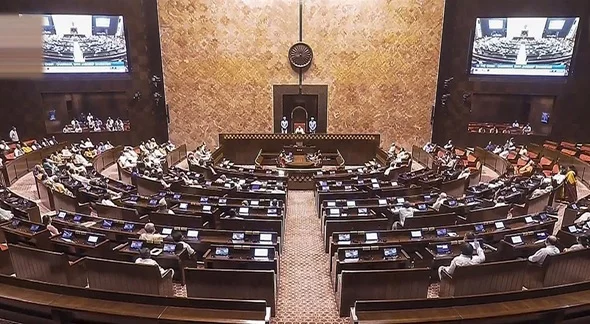
The Association for Democratic Reforms (ADR) and National Election Watch (NEW) have released an analysis of the affidavits of sitting Rajya Sabha Members of Parliament (MPs), revealing that 31% of Rajya Sabha MPs have declared criminal cases against themselves, while 16% have declared serious criminal cases

The report has once again brought the issue of criminalisation of politics and the growing influence of money power in Indian democracy into focus.
What are ADR and National Election Watch?

  • The Association for Democratic Reforms (ADR) is a non-governmental, non-profit organization established in 1999 with the objective of promoting transparency, accountability, and electoral reforms in India. It works on issues such as electoral transparency, political funding, candidate disclosures, and voter awareness.
  • National Election Watch (NEW) is a nationwide network of civil society organizations that collaborates with ADR to analyze the criminal, financial, educational, and other background details of electoral candidates and elected representatives based on their election affidavits.

Key Highlights of the Report

  • The report analyzed the affidavits of 226 out of the 233 sitting Rajya Sabha MPs. Four Rajya Sabha seats from West Bengal are currently vacant, while affidavits of three MPs were unavailable and therefore could not be analyzed.
  • Out of the 226 MPs analyzed, 69 MPs (31%) have declared criminal cases against themselves, whereas 36 MPs (16%) have declared serious criminal cases.
  • The report further reveals that one Rajya Sabha MP has declared a case related to murder, four MPs have declared cases related to attempt to murder, and four MPs have declared cases related to crimes against women.
  • The financial analysis shows that 31 MPs (14%) have declared assets worth more than ₹100 crore, while the average assets of all sitting Rajya Sabha MPs stand at ₹115.25 crore.

What Constitutes a Serious Criminal Case ?

  • According to ADR, a serious criminal case refers to a non-bailable, cognizable offence punishable with imprisonment of five years or more.
  • It includes offences involving murder, attempt to murder, crimes against women or children, corruption, electoral offences, violent crimes, and offences causing financial loss to the public exchequer.

Political Party-wise Criminal Cases

  • Among major political parties, 28 out of 107 BJP MPs (26%), 12 out of 29 Congress MPs (41%), 2 out of 9 AITC MPs (22%), 2 out of 8 DMK MPs (25%), and 2 out of 4 SP MPs (50%) have declared criminal cases.
  • Similarly, 3 out of 4 TDP MPs (75%), all 3 BRS MPs (100%), all 3 CPI(M) MPs (100%), 2 out of 3 RJD MPs (67%), 1 out of 4 AIADMK MPs (25%), 1 out of 4 NCP MPs (25%), and 1 out of 3 AAP MPs (33%) have also declared criminal cases in their affidavits.

Money Power in the Rajya Sabha

  • The report also highlights the increasing role of wealth in Indian politics. It states that 31 sitting Rajya Sabha MPs (14%) have declared assets exceeding ₹100 crore.
  • Among major political parties, 7% of BJP MPs, 21% of Congress MPs, 50% of YSRCP MPs, 50% of TDP MPs, 67% of BRS MPs, and 50% of NCP MPs have declared assets worth more than ₹100 crore.

What is Criminalisation of Politics ?

  • Criminalisation of politics refers to the increasing participation of individuals with criminal backgrounds in electoral politics, their election to legislatures, and the willingness of political parties to nominate candidates with criminal records due to their financial strength, political influence, or perceived electoral viability.

Reasons Behind Criminalisation of Politics

  • One of the major reasons is the politico-criminal nexus, where politicians and criminals develop mutually beneficial relationships involving campaign finance, muscle power, and political protection. This issue was highlighted by the N.N. Vohra Committee (1993).
  • Political parties often prioritize winnability over integrity by selecting candidates with strong financial resources and local influence.
  • The slow pace of judicial proceedings allows accused individuals to contest elections for several years before their cases are decided.
  • The high cost of elections encourages parties to field wealthy candidates capable of financing expensive election campaigns.
  • In many constituencies, voter preferences based on caste, community, local influence, or patronage also contribute to the electoral success of candidates with criminal backgrounds.

Other Important Findings

  • According to ADR, nearly 45% (1,861) of MLAs across India have declared criminal cases, indicating that criminalisation is not confined to Parliament but is also widespread in State Legislatures.

Measures Taken to Address Criminalisation of Politics

  • The Representation of the People Act, 1951 (RPA) contains provisions to curb criminalisation.
  • Section 8 of the Act disqualifies convicted representatives from contesting elections or continuing as legislators under specified conditions.
  • Section 33A mandates every election candidate to disclose all pending criminal cases through a sworn affidavit.

Committees and Commission Recommendations

  • The Goswami Committee (1990) recommended comprehensive electoral reforms and greater transparency in candidate disclosures.
  • The Law Commission of India, through its 170th and 244th Reports, recommended barring candidates from contesting elections after charges are framed in serious criminal offences and strengthening disclosure norms.
  • The Second Administrative Reforms Commission (2nd ARC, 2008) also recommended comprehensive reforms to reduce the criminalisation of politics and improve electoral integrity.

Important Supreme Court Judgments

  • In Union of India v. Association for Democratic Reforms (2002), the Supreme Court made it mandatory for candidates to disclose their criminal antecedents, assets, liabilities, and educational qualifications.
  • In Lily Thomas v. Union of India (2013), the Supreme Court struck down Section 8(4) of the Representation of the People Act, resulting in the immediate disqualification of convicted MPs and MLAs upon conviction.
  • In Public Interest Foundation v. Union of India (2019), the Supreme Court directed political parties to publish the criminal records of their candidates on their websites, social media platforms, and newspapers, along with reasons for selecting such candidates.

Way Forward

  • Addressing the criminalisation of politics requires speedy disposal of serious criminal cases through fast-track courts, greater transparency in political funding, stricter scrutiny of candidates by political parties, enhanced voter awareness, and stronger enforcement powers for the Election Commission of India. 
  • Implementing the recommendations of various committees, commissions, and judicial pronouncements will be crucial for strengthening the integrity of India's democratic institutions.

Bharat Taxi Service: India’s First Cooperative-Based Ride-Hailing Platform

Why in News ?

  • The Union Home Minister recently launched Bharat Taxi, a cooperative-based ride-hailing platform, in Gujarat. The initiative aims to provide a fair, transparent, and driver-centric alternative to private cab aggregators while promoting the government's vision of "Sahkar Se Samriddhi". 

Institutional Framework

  • Bharat Taxi is India's first cooperative-led and driver-owned ride-hailing platform, where drivers are not merely service providers but also stakeholders in the enterprise. 
  • It is registered under the Multi-State Cooperative Societies Act, 2002, enabling it to operate across multiple states under a cooperative governance framework. 
  • The initiative is supported by the Ministry of Cooperation and the National e-Governance Division (NeGD), ensuring robust institutional backing and digital integration. 

Cooperative Governance Model

  • Drivers are recognised as "Sarathis" and can become shareholders in the cooperative, allowing them to participate in decision-making and benefit from the platform's growth. 
  • The platform is operated by Sahkar Taxi Cooperative Limited, which functions on cooperative principles of democratic ownership and collective benefit. 
  • It is supported by major cooperative institutions, including NCDC, Amul (GCMMF), NDDB, NAFED, IFFCO, KRIBHCO, NABARD, and NCEL, providing financial, institutional, and operational support. 

Digital and Economic Features

  • Bharat Taxi follows a zero-commission model, ensuring that the entire fare paid by passengers is transferred directly to the Sarathis, thereby increasing drivers' earnings. 
  • It offers transparent and affordable pricing without surge charges, making fares predictable for passengers. 
  • The platform is integrated with key Digital Public Infrastructure (DPI) platforms such as DigiLocker, UMANG and API Setu, enabling seamless digital verification and service delivery. 
  • Sarathis are provided access to institutional loans, insurance coverage, vehicle financing, skill development, and business expansion opportunities, promoting long-term financial security and entrepreneurship.

Protection of neutral ships during war: What does international law say and what legal options does India have?

Why in the news ?

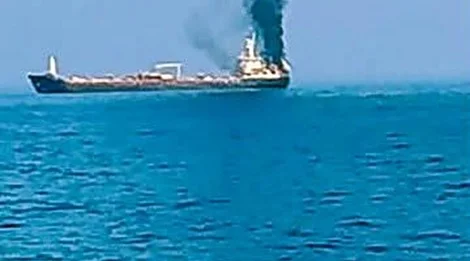
  • Following the recent attacks on merchant oil tankers in conflict-ridden waters that killed three Indian sailors, the question of whether attacking neutral merchant ships during war is legal under international law has become a topic of international discussion.
  • International Humanitarian Law (IHL), the Law of Naval Warfare, and the Law of the Sea lay down clear rules regarding the protection of neutral ships. However, under certain circumstances, these ships may be considered military targets.

What are neutral ships ?

  • Neutral ships are merchant vessels that are not part of any belligerent party and operate under the flag of a neutral country.
  • Under normal circumstances, such ships cannot be directly targeted in war because they are considered civilian property.

Legal Basis for the Protection of Neutral Ships

  • According to international law, the protection of neutral merchant ships is primarily ensured by three legal regimes:
    • International Humanitarian Law (IHL)
    • Law of Naval Warfare
    • United Nations Convention on the Law of the Sea (UNCLOS)
  • These laws determine how warfare at sea is conducted, which targets may be attacked, and how neutral ships are treated.

Two Major Legal Frameworks

1. Law of Naval Warfare

  • It regulates military activities at sea during war.
  • It includes :
    •  Attacks on ships
    • Visit and Search
    • Seizure of ships
    • Naval Blockade
    • Rights and obligations of belligerent and neutral countries

2. Law of the Sea (UNCLOS)

  • The United Nations Convention on the Law of the Sea (UNCLOS) determines the legal status of the following maritime zones:
    • Territorial Sea
    • Exclusive Economic Zone (EEZ)
    • International Waters (High Seas)
    • International Straits
    • Transit Passage
  • Although not all countries are parties to UNCLOS, many of its rules are today considered part of customary international law.

What protections are offered to neutral merchant ships ?

  • International humanitarian law prohibits attacks on civilians and civilian property.
  • For this reason, the following types of merchant ships are generally protected:
    • Oil tankers
    • Container ships
    • Ships carrying food grains
    • Ships carrying fertilizers and other commercial goods
    • Undersea pipelines and communication cables
  • Similarly, neutral ships have the right of transit through international sea lanes such as the Strait of Hormuz, even during wartime.

Under what circumstances can neutral ships lose their protection ?

  • The protection of neutral ships is not absolutely absolute.
  • According to San Remo Manual (1994), action can be taken against neutral merchant ships in the following circumstances-
    • If they are carrying war material (contraband).
    • If they are in violation of a lawful naval blockade.
    • Refuse to stop even after warning.
    • Resist search or arrest.
    • Make direct and effective contribution to the enemy's military action.
  • That is, merely carrying out commercial activity does not make a ship a military target. It is necessary to have a solid legal basis against it.

Can oil tankers be attacked ?

  • In some circumstances, the legal situation may change if the oil directly serves the enemy's military needs or is considered contraband.
  • However, not every tanker carrying only oil automatically becomes a legitimate military target.
  • According to international law, a ship is considered a military target only if :
    • It directly contributes to the enemy's military operations.
    • Its destruction provides a clear military advantage.
  • Although some countries, including the United States, have supported the "War-Sustaining Theory," which states that objects that provide economic resources for war can also be targets, this theory is still not widely accepted in international law.

What is a naval blockade ?

  • A naval blockade can be a legitimate military measure used during war, provided it is publicly announced. It must be effective. It must apply equally to ships of all nations. It must be enforced in accordance with international law.
  • If a neutral ship intentionally breaks a legitimate blockade, action can be taken against it.

Difference between Jus ad Bellum and Jus in Bello

  • Two important principles apply in international law:
    • Jus ad Bellum - relates to the legality of initiating war or using force.
    • Jus in Bello - relates to the legality of conduct and military action during war.
  • A blockade may have a weak legal basis if it does not have the authorization of the United Nations Security Council or cannot be justified on the basis of self-defense (Article 51).

What legal options does India have ?

  • The death of Indian sailors is not just a humanitarian or diplomatic issue but also a significant international legal question.
  • Under the principle of Diplomatic Protection, India can file an international claim on behalf of its citizens.
  • India can take the following steps :
    • Seek clarification from the concerned country.
    • Demand accountability.
    • Demand an independent international investigation.
    • Demand compensation.
    • Raise the issue at the United Nations and other international forums.

Important Legal Questions

  • Several important questions arise in the context of this incident :
    • What intelligence underpinned the attack?
    • Were the ships given adequate warning?

Was the attack a last resort?

  • Could less drastic measures, such as stopping and searching or seizing the ship, have been adopted?
  • Was an effort made to ensure the safety of the civilian sailors?
  • All of these questions relate to four key principles of international humanitarian law :
    • Distinction
    • Proportionality
    • Military Necessity
    • Precaution

Conclusion

Neutral merchant ships are generally protected under international law during war and can only be targeted militarily in limited and clear legal circumstances. The recent deaths of Indian sailors have once again brought serious questions concerning maritime security, international humanitarian law, and the legal protection of neutral ships to the forefront of global discussion. India has ample legal and diplomatic options available to seek accountability, independent investigation, and compensation under international law.
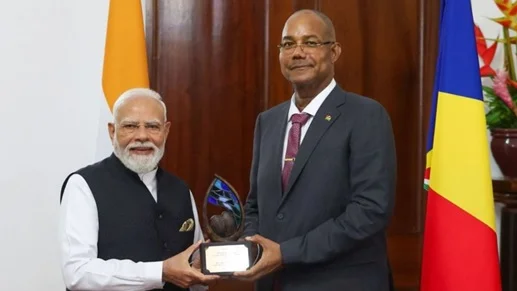
India-Seychelles relations gain new strength: The MAHASAGAR vision in the Indian Ocean expands

Why in the news ?

  • Prime Minister Narendra Modi's state visit to Seychelles from June 27-29, 2026, took India-Seychelles relations to new heights. During the visit, the two countries signed several important agreements and agreed to further expand the bilateral strategic partnership.
  • The visit marked the 50th anniversary of diplomatic relations between the two countries and gave India new impetus to its MAHASAGAR (Mutual and Holistic Advancement for Security and Growth Across Regions) vision in the Indian Ocean Region (IOR).

India's Vision for the Indian Ocean

  • Prime Minister Modi reiterated India's commitment to making the Indian Ocean an "Ocean of Opportunity."
  • According to India, this region should be based on the following principles :
    • Maritime security and regional stability
    • Sustainable and inclusive economic development
    • Partnership based on mutual respect and trust
    • Shared responsibility for security, stability, and development
    • Collectively addressing traditional and non-traditional maritime challenges
  • India clarified that the Indian Ocean is not a region of any one country, but a shared strategic region, whose security and prosperity are the shared responsibility of all countries.

Major achievements of the journey

  • During the Prime Minister's visit, both countries decided to expand the strategic partnership to many new areas.
  • Major areas of cooperation -
    • Health and medicine
    • Education and skill development
    • Capacity Building
    • Digital transformation
    • Renewable energy
    • Sustainable development
    • Social infrastructure
    • Maritime Security and Defense Cooperation
  • Both countries also reviewed the progress of the special economic assistance package administered by India.

Signing of several important agreements

  • Several Memorandums of Understanding (MoUs) were signed during the visit in the following areas :
    • Implementation of the Unified Payments Interface (UPI)
    • Healthcare Services
    • Agriculture
    • Banking and Exim Bank Cooperation
    • Shipping
    • Space Cooperation
    • Capacity Building
    • Extradition
    • Line of Credit (LoC)
  • These agreements aim to modernize Seychelles' economy and further strengthen India's development partnership.

175 million special economic package

  • India announced a US$175 million special economic package for Seychelles.
  • This includes :
    • A line of credit of $125 million in Indian rupees
    • Grant assistance of $50 million
  • This assistance will be used in the following areas :
    • Infrastructure
    • Food security
    • Health services
    • Vocational training
    • Maritime security
    • Defense cooperation
  • India reiterated that its development partnership will be completely demand-driven and in line with Seychelles' national priorities.

Maritime Security Becomes the Cornerstone of Partnership

  • India and Seychelles described maritime security as the most important pillar of their relationship.
  • The two countries will work together to :
    • Prevent piracy
    • Combat illegal, unregulated, and unregulated (IUU) fishing
    • Combat drug trafficking
    • Combat maritime crime
    • Enhance maritime surveillance
    • Build defense capacity
  • India refitted the PS Zoroaster and gifted the Fast Attack Vessel 'PS Lespwar' to strengthen Seychelles' maritime security.

MAHASAGAR Vision Gains New Strength

  • Seychelles reaffirmed its special role in India's MAHASAGAR Vision.
  • The initiative aims to :
    • Collective Maritime Security
    • Promote the Blue Economy
    • Disaster Resilient Capacity
    • Sustainable Development
    • Regional Connectivity
    • Inclusive Economic Growth
  • MAHASAGAR is considered an expanded and more comprehensive version of India's former SAGAR (Security and Growth for All in the Region) policy.

Other important achievements

  • First Indian Prime Minister to address Parliament
  • Prime Minister Narendra Modi became the first Indian Prime Minister to address the National Assembly of Seychelles.
  • In his address, he highlighted :
    • Democratic values
    • Rule of law
    • People-centered governance
    • Parliamentary cooperation as a strong foundation of relations between the two countries.

Highest Environmental Honor

  • Prime Minister Modi was awarded Seychelles' highest honor, "Guardian of the Blue Horizon," for his contributions to environmental protection and sustainable development.

Seychelles to Join CDRI

  • Seychelles announced its participation in the Coalition for Disaster Resilient Infrastructure (CDRI), which will further strengthen cooperation between the two countries in the areas of climate change and disaster management.

India-Seychelles Relations :

Historical and Strategic Partnership

  • India and Seychelles' relations are based on maritime security, historical connections, and shared strategic interests.

Indian Community

  • The history of Indians in Seychelles dates back to 1770. Currently, people of Indian origin are making significant contributions to the country's business, health, education, and other professional sectors.

Joint Military Exercises

  • A joint military exercise called 'LAMITYE' has been conducted regularly between the two countries since 2001.

Historical Cooperation

  • India also played a key role in protecting Seychelles' sovereignty through Operation Flowers are Blooming in 1986.

Why is Seychelles important to India ?

  • Seychelles is a very important strategic partner for India in the Indian Ocean as it is located on the major sea trade routes (Sea Lines of Communication) in the western Indian Ocean.

It is a key component of India's maritime security strategy.

  • Strengthens the Indo-Pacific strategy and the Blue Economy.
  • Partners in monitoring maritime terrorism, piracy, and other maritime threats.
  • Is a key focus of India's development partnership with Small Island Developing States (SIDS).
  • Strengthens India's strategic presence in the increasingly competitive geopolitical environment in the Indian Ocean region.

Conclusion

Prime Minister Narendra Modi's visit to Seychelles has provided a new strategic direction to India-Seychelles relations. This relationship, based on the MAHASAGAR vision, maritime security, digital cooperation, defense partnership, climate resilience, and development cooperation, further strengthens India's growing role in the Indian Ocean region. This visit also reinforces India's image as a "trusted development partner" and "net security provider."

Madhya Pradesh's Four GI-Tagged Crops: Sitahi Kutki, Nagdaman Kutki, Baigani Arhar and Chhatriya Dhan

Why in News ?

  • Four traditional tribal crops of Madhya Pradesh have recently received Geographical Indication (GI) Tags.

Traditional Heritage and Communities

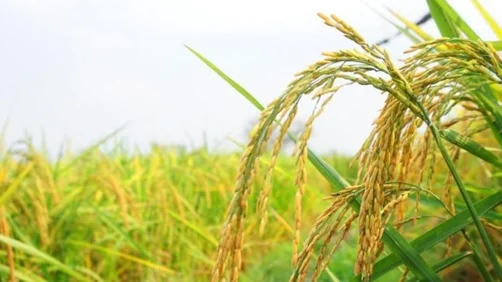
  • The recognised crops are Sitahi Kutki, Nagdaman Kutki, Baigani Arhar, and Chhatriya Dhan.
  • These crops have been preserved for generations by the Baiga tribe of Dindori district.

Agricultural and Nutritional Value 

  • Sitahi Kutki and Nagdaman Kutki are climate-resilient minor millets rich in fibre, minerals and antioxidants.
  • Baigani Arhar is an organically cultivated pigeon pea variety known for higher protein content and sweet taste.
  • Chhatriya Dhan retains its bran layer, making it rich in Vitamin B1 (Thiamine) and essential minerals.

Geographical Focus

  • Baigani Arhar is closely associated with the Baiga tribal region of Madhya Pradesh.
  • Chhatriya Dhan is cultivated mainly in the wetlands of Jabalpur and Katni districts.
  • The GI tags promote conservation of indigenous crop diversity and tribal agricultural knowledge.

GI Tag Framework

  • GI registration is granted under the Geographical Indications of Goods (Registration and Protection) Act, 1999.
  • GI status protects products possessing unique qualities linked to a specific geographical origin.
« »
  • SUN
  • MON
  • TUE
  • WED
  • THU
  • FRI
  • SAT
Have any Query?

Our support team will be happy to assist you!

OR