New
Hindi Medium: (Delhi) - GS Foundation (P+M) : 8th June 2026, 6:30 PM Hindi Medium: (Prayagraj) - GS Foundation (P+M) : 1st June 2026, 5:30 PM English Medium: (Prayagraj) - GS Foundation (P+M) : 7th June 2026, 8:00 AM Hindi Medium: (Delhi) - GS Foundation (P+M) : 8th June 2026, 6:30 PM Hindi Medium: (Prayagraj) - GS Foundation (P+M) : 1st June 2026, 5:30 PM English Medium: (Prayagraj) - GS Foundation (P+M) : 7th June 2026, 8:00 AM

Current Affairs for 29 May 2026

The Abraham Accords: Reshaping Middle Eastern Geopolitics

Why in News ?

Trump has renewed efforts to expand the Abraham Accords by urging more Muslim-majority countries to recognize Israel. The move is being linked to broader peace initiatives in West Asia, but has sparked debate as Pakistan opposes the proposal while Saudi Arabia and Qatar insist on progress toward Palestinian statehood before normalization.

What are the Abraham Accords ?

Arab nations followed the 2002 Arab Peace Initiative, which stated that no country would recognize Israel until an independent Palestinian state was created. However, by 2020, changing geopolitical realities created an urgent need for a new approach. The Abraham Accords are a series of agreements that normalize diplomatic, economic, and security relations between Israel and several Arab and Muslim-majority countries.

The accords were brokered by the United States and signed in 2020. They are named after Abraham, a figure respected in Judaism, Islam, and Christianity.

Unlike traditional peace treaties between countries at war, the accords focus on cooperation in trade, technology, investment, tourism, and security.

Why Were the Abraham Accords Needed ?

1. Shared Concerns about Iran

Israel and several Gulf countries were increasingly concerned about Iran’s regional influence, missile program, and support for armed groups across the Middle East.

2. Economic Opportunities

Many Gulf nations wanted to diversify their economies beyond oil. Israel offered expertise in technology, innovation, agriculture, water management, and cyber security.

3. A New Regional Strategy

The United States believed that improving relations between Israel and Arab countries could create a more stable regional environment and open the door for future peace initiatives.

Countries That Joined the Abraham Accords

Phase

Year

Countries Involved

First Phase

September 2020

United States (Mediator), Israel, United Arab Emirates (UAE), Bahrain

Second Phase

2020–2021

Morocco, Sudan

Recent Developments

Several other countries have shown interest in expanding cooperation with Israel, while discussions continue with nations such as Saudi Arabia and others regarding future normalization.

Major Benefits of the Abraham Accords

Economic Growth

Trade and investment between Israel and participating countries have increased significantly.

Security Cooperation

Countries now work more closely on defence, intelligence sharing, and counterterrorism.

Technology and Innovation

Partnerships have expanded in sectors such as artificial intelligence, renewable energy, healthcare, agriculture, and cyber security.

Tourism and Cultural Exchange

Direct flights and people-to-people contacts have increased, improving regional connectivity.

Challenges Ahead

Despite their success, the Abraham Accords still face major challenges:

  • The Palestinian issue remains unresolved.
  • Public opinion in many Arab countries remains divided.
  • Regional tensions involving Iran continue to affect stability.
  • Future expansion depends on balancing strategic interests with domestic political concerns.

Israel’s Establishment and the Abraham Accords

After World War II and the Holocaust, Israel declared its independence in 1948, triggering the first Arab-Israeli War. Over the following decades, major conflicts such as the Six-Day War (1967) and the Yom Kippur War (1973) reshaped Middle Eastern geopolitics. Peace agreements with Egypt in 1979 and later with Jordan gradually increased Israel’s diplomatic acceptance in the Arab world. The Oslo Accords of 1993 opened channels for dialogue between Israel and the Palestinians, while shared concerns about Iran and growing economic interests brought several Gulf countries closer to Israel. This changing geopolitical landscape ultimately paved the way for the Abraham Accords in 2020, under which the UAE, Bahrain, Morocco, and Sudan normalized relations with Israel.

Conclusion

The Abraham Accords have transformed Middle Eastern diplomacy by bringing Israel and several Arab nations closer together. They have created new opportunities for trade, security cooperation, and regional development.

However, lasting peace in West Asia will require more than diplomatic agreements. A sustainable solution to the Palestinian issue and broader regional cooperation will be essential for the long-term success of the accords.
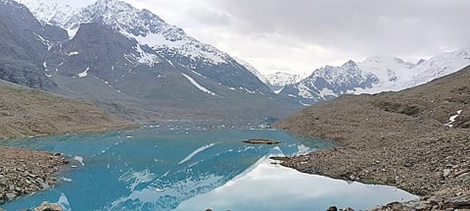
Is Himachal's Ghepan Lake becoming a major threat? Sissu village faces the threat of glacial flooding.

Why in the news ?

  • Sissoo village, located in the Lahaul-Spiti district of Himachal Pradesh, is currently in the news due to a serious environmental threat.
  • Ghepan Lake, located above the village, is continuously increasing in size, leading scientists to fear a Glacial Lake Outburst Flood (GLOF).
  • If this happens, Sissoo, along with several surrounding villages, could suffer significant damage, as could agricultural land and vital infrastructure.

Sissu Becomes a Tourism Hub After the Atal Tunnel

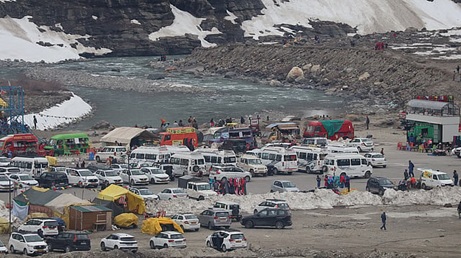
  • Sissu village, located on the banks of the Chandra River, has become one of Himachal Pradesh's major tourist destinations following the opening of the Atal Tunnel.
  • The opening of the Atal Tunnel in October 2020 has seen an unprecedented increase in tourist arrivals. Approximately 2,000 vehicles arrive in Sissu daily, while this number reaches 5,000 during the tourist season.
  • Boating, ziplining, homestays, and adventure activities have boosted the local economy. However, a major natural hazard is also emerging amid growing tourism.

What is Ghepan Lake ?

  • Ghepan Lake, also known as Ghepang Ghat Glacial Lake, is located about 11 kilometers from Sissu village and at an altitude of 4,068 meters above sea level.
  • The lake is located near the Ghepan Glacier and is named after Ghepan, the revered deity of the Lahaul region. It also holds religious and cultural significance for the local people.

Why are scientists worried ?

  • The National Disaster Management Authority (NDMA) has classified Ghepan Lake as a "highly vulnerable" glacial lake. Scientists believe that if the lake's natural dam were to breach, the resulting flood could prove devastating for Sissoo village.
  • According to a report by the National Remote Sensing Centre (NRSC), Sissoo would be the first and most affected village in the event of a lake burst.

Floods could reach in just 21 minutes

  • According to scientific estimates, if the lake's dam breaks, floodwaters could reach Sissoo village in just 21 minutes. During this time, the water speed could reach approximately 43 kilometers per hour and its depth could reach 20 meters.
  • Large boulders, rocks, and a large amount of debris will also flow with the floodwaters, which could further increase the damage.

The lake's size has tripled in three decades

  • According to data from the National Remote Sensing Center, the area of ​​Ghepan Lake, which was 36.49 hectares in 1989, has increased to 101.30 hectares by 2022.
  • This means that the lake has nearly tripled in size in the last three decades. This is considered a clear indication of rapid glacier melt and climate change.

The Ghepan Glacier is rapidly shrinking

  • Scientific studies have shown that the Ghepan Glacier is continuously retreating. Since 1962, it has shrunk by approximately 2.76 kilometers.
  • Between 2015 and 2023, it is projected to lose approximately 0.90 meters of water-equivalent ice per year. Experts attribute this to rising temperatures and an increase in rainfall rather than snowfall.

What is a GLOF ?

  • A glacial lake outburst flood (GLOF) occurs when the natural dam of a glacial lake suddenly breaks. This dam is typically made of rocks, sand, and debris deposited by glaciers.
  • Heavy rainfall, landslides, avalanches, or large pieces of glacier falling into the lake can cause this dam to break and cause a sudden, devastating flood.

How big could the potential damage be ?

  • Experts estimate that if Ghepan Lake bursts, approximately 34 settlements could be affected. Additionally, 204 hectares of agricultural land, 57 bridges, and 106 kilometers of road could be damaged.
  • The Manali-Leh National Highway, the Atal Tunnel, and tourism-related infrastructure could also be at risk. Scientists believe its impact could be felt as far as Jammu and Kashmir via the Chenab River.

Warning System Remains Inadequate

  • Although several scientific institutions are monitoring Ghepan Lake, a full-fledged early warning system has not yet been established.
  • A siren network, real-time warning system, and clear evacuation routes remain lacking. A pilot warning system is currently being tested, but it has yet to be fully implemented.

Are tourism and construction activities also responsible ?

  • Experts do not directly blame tourism, but they believe that increasing human activities increase environmental pressure. Dust from vehicles settles on the snow surface, reducing its reflective capacity and causing it to absorb more heat. This can accelerate the melting of glaciers.

The Growing Climate Crisis in the Himalayas

  • The issue of Ghepan Lake is not limited to Himachal Pradesh. The area of ​​glaciers in the Hindu Kush Himalayan region has decreased by approximately 12 percent between 1990 and 2020.
  • The total area of ​​glacial lakes in India is also increasing rapidly. Himachal Pradesh had 805 glacial lakes in 2016, which increased to 1,619 by 2022. This situation is posing a serious challenge to the Himalayan ecosystem.

Growing Concerns Among Locals

  • The people of Sissoo and surrounding villages are well aware of this danger. Many villagers worry about their rehabilitation and livelihoods if a major disaster strikes in the future.
  • Some locals believe that the lake has existed for years and the likelihood of immediate danger is low. Despite this, people's concerns increase during every heavy rainfall.

Conclusion

  • The ever-increasing size of Ghepan Lake and the rapidly melting glaciers highlight the serious impacts of climate change in the Himalayas. If effective warning systems, scientific monitoring, and disaster management measures are not strengthened in time, this lake could trigger a major natural disaster in the future.
  • Coordinated efforts between the government, scientific institutions, and local communities are needed to protect Sissoo and surrounding areas.

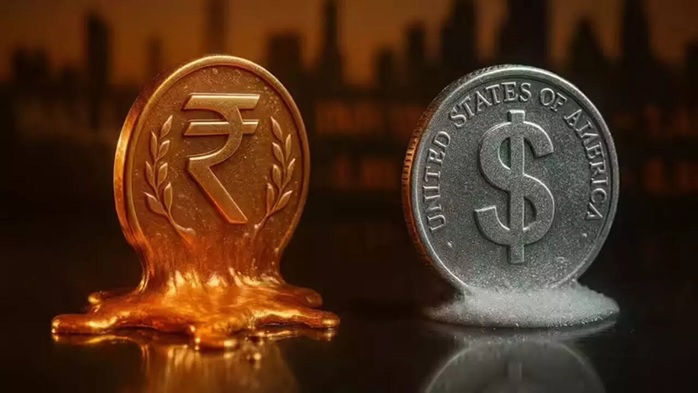
Why Is the Indian Rupee Becoming Weak Against the US Dollar ?

Why Is It In News ?

  • The Indian Rupee recently fell beyond ₹96 per US Dollar, showing strong pressure on India’s foreign exchange system.
  • Global crude oil prices surged because of geopolitical tensions and supply disruptions. India imports nearly 85–90% of its crude oil.
  • Recently, foreign investors withdrew nearly $23 billion from Indian markets, increasing demand for dollars and weakening the rupee.
  • The US Federal Reserve kept interest rates high, making investors move money toward US assets and strengthening the dollar worldwide.


How Does the Dollar Become Strong While the Rupee Becomes Weak ?

The value of a currency depends mainly on demand and supply.

If more people, companies, and countries want dollars, then the demand for dollars rises. When demand rises, the dollar becomes stronger. Similarly, if demand for the Indian Rupee falls, then the rupee weakens.

India imports many essential items such as:

  • Crude oil
  • Electronics
  • Machinery
  • Defence equipment
  • Gold

Almost all international trade for these goods happens in US Dollars. So whenever India buys these products, it needs dollars to make payments.

Now imagine oil prices suddenly rise globally. India will then need even more dollars to buy the same quantity of oil. This increases demand for dollars in India’s foreign exchange market. As demand for dollars rises, the rupee loses value.

In simple words:

  • More demand for Dollar = Dollar becomes expensive
  • More supply of Rupee = Rupee becomes weak

That is why the exchange rate changes from ₹80 per dollar to ₹90 or even ₹96 per dollar over time.

Why Is the US Dollar So Powerful ?

The US Dollar is considered the world’s reserve currency. Most global trade, oil transactions, international loans, and foreign reserves are based on dollars.

Whenever there is:

  • War,
  • Global uncertainty,
  • Inflation,
  • Economic slowdown,
  • Financial crisis,

Investors across the world prefer keeping their money in dollars because they see the US economy as safer and more stable.

Another major reason is the policy of the US Federal Reserve. Recently, America kept interest rates high to control inflation. High interest rates mean investors earn better returns by investing in the US economy. As a result, global investors shifted money from emerging markets like India toward America.

This increased global demand for dollars and strengthened the US currency further.

Why Is the Indian Rupee Falling? 

1. Heavy Dependence on Crude Oil Imports

India imports nearly 85–90% of its crude oil requirement. Since oil is purchased in dollars, higher oil prices directly increase demand for dollars.

When global oil prices rise above $100 per barrel, India needs billions of extra dollars for imports. This weakens the rupee.

2. Trade Deficit and Current Account Deficit

India imports more goods than it exports. This creates a trade deficit.

When more money goes out of the country than comes in:

  • Dollar outflow increases,
  • Pressure on rupee rises,
  • Currency weakens.

This situation is called the Current Account Deficit (CAD).

3. Foreign Investors Pulling Out Money

Recently, foreign investors withdrew nearly $23 billion from Indian markets.

When investors leave India:

  1. They sell Indian shares and bonds.
  2. Convert rupees into dollars.
  3. Take dollars back to their own countries.

This sudden increase in dollar demand weakens the rupee even more.

4. Global Economic Uncertainty

Wars, supply chain disruptions, and geopolitical tensions create uncertainty in world markets.

In such situations:

  • Investors prefer dollars,
  • Emerging market currencies like the rupee become weaker.

Impact on India’s Stock Market

The weakening rupee affects the stock market in multiple ways.

Foreign Investors Sell Indian Stocks

When the dollar becomes stronger and US markets offer better returns, foreign investors move money out of India. This causes:

  • Market decline,
  • Increased volatility,
  • Pressure on Indian companies.

Import-Dependent Industries Suffer

Industries depending on imported goods face rising costs.

Examples include:

  • Airlines,
  • Oil companies,
  • Automobile industries,
  • Electronics manufacturers.

Their profits decline because imports become more expensive.

Inflation Increases

A weaker rupee increases the cost of:

  • Petrol and diesel,
  • Transportation,
  • Fertilizers,
  • Imported food and machinery.

This eventually increases inflation in the economy.

Some Sectors Benefit

Interestingly, some industries gain from a weak rupee.

These include:

  • IT companies,
  • Pharmaceutical exporters,
  • Textile exporters.

Because they earn in dollars while paying expenses in rupees.

Why Did the Government Restrict Gold Imports?

India is one of the world’s largest consumers of gold. Every year, India imports huge amounts of gold from abroad.

Gold imports require payment in dollars. This increases demand for dollars and weakens the rupee further.

To reduce unnecessary dollar outflow, the government tightened rules on gold imports and increased restrictions. The main objective was:

  • To protect foreign exchange reserves,
  • To reduce pressure on the rupee,
  • To control the trade deficit.

Why Did RBI Inject Money Into the Market ?

At the same time, the Reserve Bank of India (RBI) increased liquidity in financial markets.

This was done because:

  • Economic growth was slowing,
  • Banks needed liquidity,
  • Financial markets were under stress.

RBI injected money so banks could continue lending to businesses and consumers.

The RBI also sometimes sells dollars from its forex reserves to stabilize the rupee and reduce panic in currency markets.

So RBI’s strategy works on two levels:

  1. Support the rupee,
  2. Maintain economic growth.

Is the Situation Dangerous for India ?

The weakening rupee is definitely a challenge, but it does not mean the Indian economy is collapsing.

India still has several strengths:

  • Large foreign exchange reserves,
  • Strong domestic consumption,
  • Growing manufacturing sector,
  • Expanding digital economy,
  • Fast economic growth compared too many countries.

However, continuous dependence on imports, especially crude oil, remains a major weakness for the rupee.

Conclusion

  • The fall of the Indian Rupee is mainly the result of rising demand for US Dollars, expensive crude oil imports, foreign investor outflows, and global economic uncertainty. The stronger US economy and high American interest rates have further strengthened the dollar globally.
  • India’s stock market, inflation, and import costs are directly affected whenever the rupee weakens. That is why the government and RBI are trying to stabilize the economy through measures like controlling gold imports, managing forex reserves, and improving liquidity.

In the long run, the real solution lies in:

  • Increasing exports,
  • Reducing dependence on imported oil,
  • Strengthening manufacturing,
  • Expanding domestic production,
  • And improving India’s trade balance.

A stronger economy ultimately creates a stronger currency.

« »
  • SUN
  • MON
  • TUE
  • WED
  • THU
  • FRI
  • SAT
Have any Query?

Our support team will be happy to assist you!

OR