Prelims : Polity + CA
Mains : GS Paper 2 – Polity, Federalism, Electoral Reforms |
Why in News ?
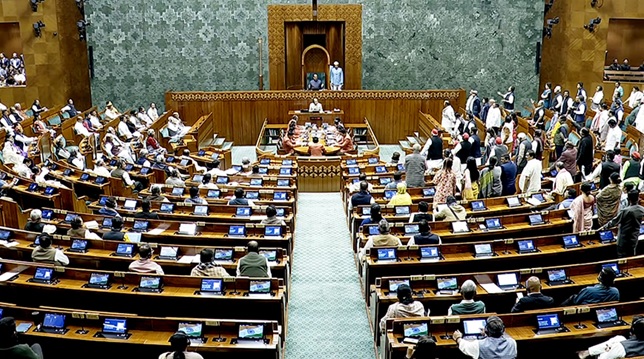
India is approaching a crucial phase where a comprehensive delimitation exercise is expected after 2026, coinciding with proposals to expand the Lok Sabha and redraw electoral constituencies across the country.
This development has triggered widespread political and academic debate because it has the potential to fundamentally alter the balance of political power among states, reshape electoral representation, and influence the implementation of women’s reservation, thereby making it one of the most consequential reforms in India’s democratic framework in recent decades.
What is Delimitation ?
Delimitation refers to the systematic process of redrawing the boundaries of electoral constituencies and reallocation of seats in legislative bodies based on changes in population over time.
- The core principle underlying delimitation is “one person, one vote, one value,” which seeks to ensure that each elected representative represents a roughly equal number of citizens, thereby maintaining fairness in democratic representation.
- The process is carried out by an independent body known as the Delimitation Commission of India, whose decisions are final, legally binding, and cannot be challenged in court, ensuring both authority and efficiency in implementation.
Constitutional Provisions
Delimitation is anchored in a robust constitutional framework that aims to balance democratic representation with institutional stability :
- Article 82
- This provision mandates that after every Census, Parliament must enact a Delimitation Act to enable the readjustment of Lok Sabha constituencies.
- It ensures that representation in the lower house remains aligned with population changes over time.
- Article 170
- It provides for the readjustment of seats in State Legislative Assemblies based on population shifts, thereby extending the principle of equal representation to state-level governance.
- Articles 330 and 332
- These articles ensure that seats are reserved for Scheduled Castes and Scheduled Tribes in Parliament and State Assemblies, with delimitation playing a key role in identifying and allocating such reserved constituencies.
- Article 327
- Empowers Parliament to legislate on matters related to elections, including delimitation, thereby giving it overarching authority in electoral structuring.
- Article 329
- Bars judicial interference in delimitation matters, ensuring that once the process is completed, it is not delayed or obstructed by litigation.
Historical Background
The history of delimitation in India reflects the evolving priorities of democracy, population control, and federal balance :
- Delimitation Commissions were constituted in 1952, 1963, 1973, and 2002, each tasked with redrawing boundaries based on the latest Census data available at the time.
- Initially, delimitation involved both:
- Reallocation of seats among states
- Redrawing of constituency boundaries within states
This ensured that representation was continuously updated in line with population changes.
- However, concerns arose that states which successfully implemented population control measures might be penalised with reduced representation, while states with higher population growth would gain political advantage.
- To address this, the government froze the allocation of seats based on the 1971 Census through constitutional amendments, thereby maintaining a stable balance of power among states.
- This freeze has been extended until 2026, meaning that although internal boundaries have been adjusted, the number of seats allocated to each state has remained unchanged for decades.
What is the Proposed Delimitation Reform ?
The upcoming reform is expected to bring structural and transformative changes to India’s electoral system, with several key proposals:
1. Expansion of Lok Sabha Strength
- One of the most significant proposals is to increase the total number of Lok Sabha seats substantially, potentially up to 800–850 seats.
- This expansion aims to :
- Address the issue of very large constituencies, where MPs currently represent millions of people
- Improve the quality of representation and accessibility of elected representatives
- Align India’s parliamentary size with its population, which has grown significantly since independence
2. Fresh Delimitation Based on Updated Population Data
- The reform proposes to use recent Census data (such as 2011 or a future Census) to redraw constituency boundaries across the country.
- This will help :
- Correct imbalances where some constituencies are disproportionately large or small
- Ensure that representation reflects current demographic realities
- Enhance fairness in electoral competition
3. Linkage with Women’s Reservation
- The implementation of 33% reservation for women in Parliament and State Assemblies is explicitly linked to the completion of the delimitation exercise.
- This means :
- Reserved constituencies for women will be identified only after delimitation
- Delimitation becomes a necessary precondition for operationalising gender-based political reforms
- Thus, delimitation is not just an administrative exercise but also a gateway for transformative social representation.
4. Flexibility in Population Basis
- The reform introduces flexibility by allowing Parliament to determine which Census data will be used for delimitation, rather than strictly adhering to the latest Census.
- This provision is significant because :
- It allows policymakers to balance demographic accuracy with political and federal considerations
- It introduces adaptability in a previously rigid framework
Significance of Delimitation Reform
1. Ensuring Equal Representation in a Growing Democracy
- As India’s population has expanded unevenly across regions, delimitation is essential to ensure that each citizen’s vote carries equal weight, thereby strengthening the democratic principle of equality.
2. Reflecting Changing Demographic Patterns
- Migration, urbanisation, and differential population growth have significantly altered demographic patterns.
- Delimitation helps adjust electoral boundaries to reflect these changes, ensuring that governance structures remain relevant and responsive.
3. Strengthening Democratic Legitimacy and Accountability
- By reducing disparities in constituency sizes, delimitation improves :
- Accountability of elected representatives
- Fairness in electoral competition
- Public trust in democratic institutions
4. Facilitating Women’s Political Empowerment
- Since women’s reservation depends on delimitation, the reform is crucial for :
- Increasing women’s representation in legislative bodies
- Promoting gender-inclusive governance
- Addressing historical underrepresentation of women in politics
5. Improving Governance Efficiency
- Smaller and more balanced constituencies enable representatives to :
- Better understand local issues
- Provide more effective public services
- Enhance responsiveness to citizen needs
Major Challenges and Concerns
1. North-South Political Imbalance
- A key concern is that states in northern India, which have experienced higher population growth, may gain a larger share of seats, while southern states may see a relative decline.
- This creates a perception that states which successfully controlled population growth are being penalised, raising concerns about fairness and equity.
2. Impact on Federal Structure
- Changes in seat allocation could significantly alter the balance of power between states, potentially affecting :
- Centre-state relations
- Federal decision-making processes
- Smaller states and northeastern regions fear marginalisation in national politics.
3. Political Sensitivity and Contestation
- Delimitation has direct implications for electoral outcomes and political power, making it highly sensitive.
- Political parties may resist changes that :
- Affect their electoral strongholds
- Alter voter demographics within constituencies
4. Risk of Gerrymandering
- There is a risk that constituency boundaries could be manipulated for political advantage, which would undermine the fairness of elections.
- Ensuring neutrality and independence of the delimitation process is therefore critical.
5. Delay in Census and Data Constraints
- The absence of updated Census data poses a significant challenge, as delimitation relies on accurate population figures.
- Using outdated data could compromise the objective of fair representation.
Way Forward
1. Building Political Consensus
- A consensus-based approach involving all states and stakeholders is essential to ensure acceptance and legitimacy of the reform.
2. Ensuring Balanced Representation
- Innovative approaches such as increasing total seats without reducing any state’s share or incorporating additional criteria beyond population can help address regional concerns.
3. Strengthening Federal Institutions
4. Ensuring Transparency and Independence
- The delimitation process must remain independent, transparent, and free from political interference to maintain credibility.
5. Conducting Timely Census
- A fresh Census is essential to provide accurate data for delimitation and ensure that reforms are based on current realities.
Practice Questions
Prelims
Q. Delimitation in India is carried out by :
(a) Election Commission
(b) Parliament
(c) Delimitation Commission
(d) Supreme Court
Mains
“Delimitation reform in India raises a fundamental tension between democratic equality and federal balance.” Critically examine.
FAQs
Q1. What is delimitation ?
It is the process of redrawing electoral constituency boundaries.
Q2. When will the next delimitation take place ?
After 2026.
Q3. Why is it controversial ?
Because it may alter the balance of power among states.
Q4. Which body conducts delimitation ?
Delimitation Commission of India.
Q5. Why is it important ?
It ensures fair and equal representation in democracy.
|






 Contact Us
  New Batch : 9555124124/ 7428085757
  Tech Support : 9555124124/ 7428085757